










Should Restaurants Starch Cloth Napkins?
Starch is a finish choice, not a requirement for a well-run restaurant. Use it when a tested light application gives a particular napkin and fold the body your service needs without making the napkin unpleasant to use or harder to process consistently.
Published by Gencer Textiles
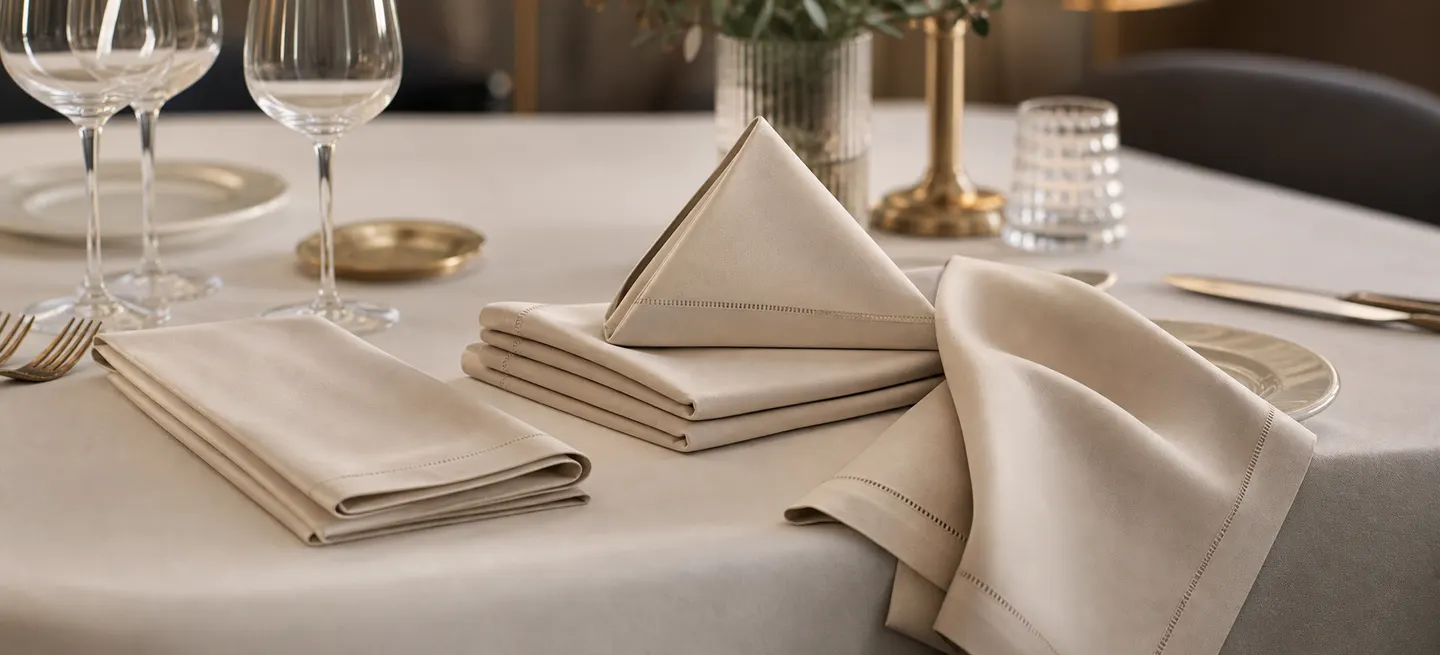
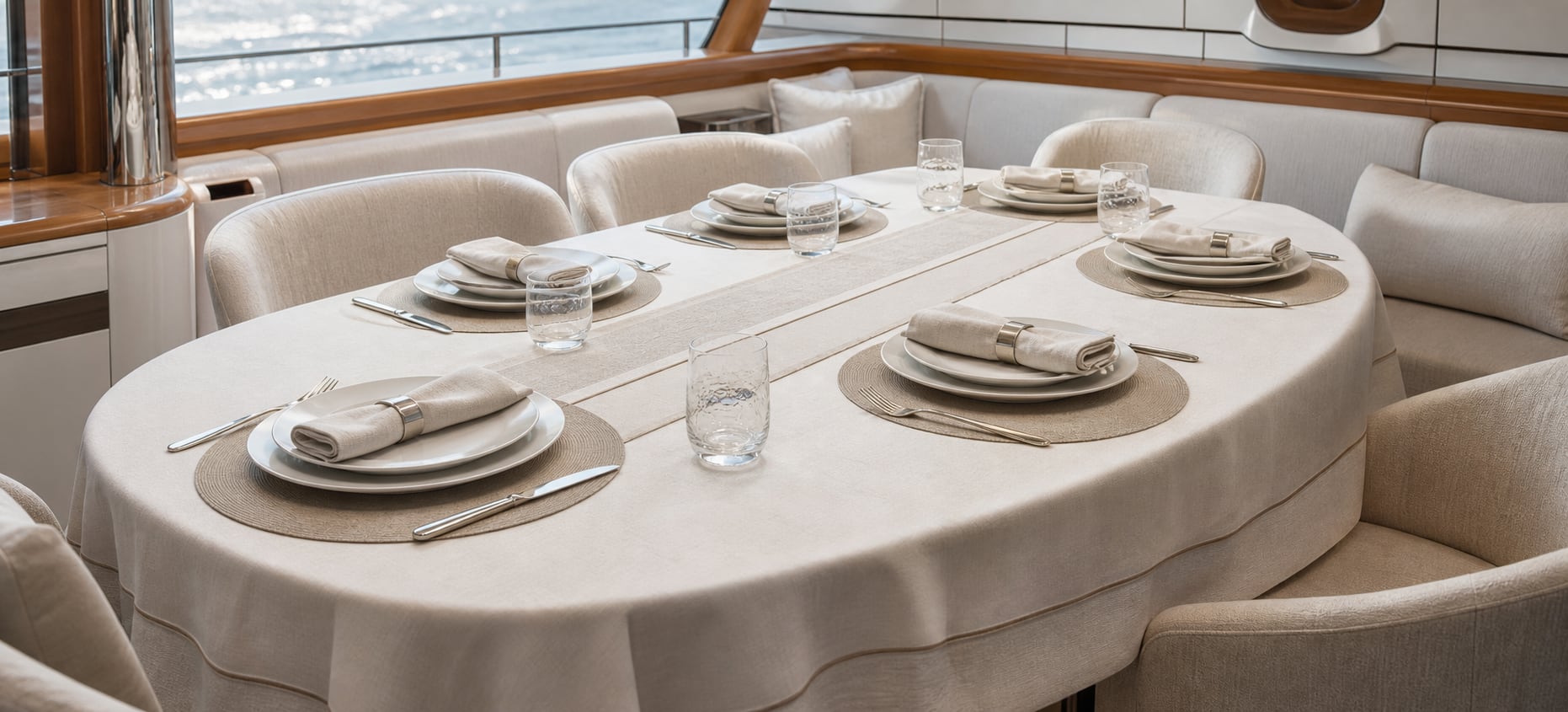
Most restaurants do not need starch on every cloth napkin. It can give a clean napkin extra body and help a formal fold keep its shape, but the guest will soon unfold it, place it on their lap and use it at the mouth or to blot a spill. If a firm finish makes those actions awkward, the sharper table display has not earned its cost.
The useful question is not “starch or no starch?” for the entire linen store. It is whether a particular napkin, after its real wash and finishing process, looks and works better with a specified finish than it does softly pressed. A breakfast service, a plated dinner and a banquet may reasonably make different choices.
What starch can—and cannot—do
Laundry starch adds temporary body to fabric and can make pressing easier. A light application can tidy a simple fold; a firmer finish can support a more upright presentation. Neither finish replaces a clean napkin, accurate folding or proper pressing. Starching a creased or stained piece simply produces a firm creased or stained piece.
“Starch” and “sizing” are not always the same chemistry. Conventional laundry starch is often used on cotton and cotton blends; synthetic napkins may require a different compatible finish, or none. Fibre, weave, colour and any decorative edge also affect the result. Ask the napkin supplier and laundry what finish the actual article can tolerate instead of transferring a cotton recipe to polyester or a delicate trim.
If fabric is still being selected, compare the handling and laundry behaviour of cotton and polyester restaurant napkins before deciding how much finishing work to specify.
Let service set the level of crispness
| Service need | Finish worth trialling | Guest-facing check |
|---|---|---|
| Relaxed everyday service or a napkin laid flat | Clean, well-pressed, often unstarched | Does it feel natural on the lap and wipe comfortably? |
| A neat fold that loses its shape before guests sit | Light body, if fabric and laundry allow it | Does it unfold easily without feeling papery? |
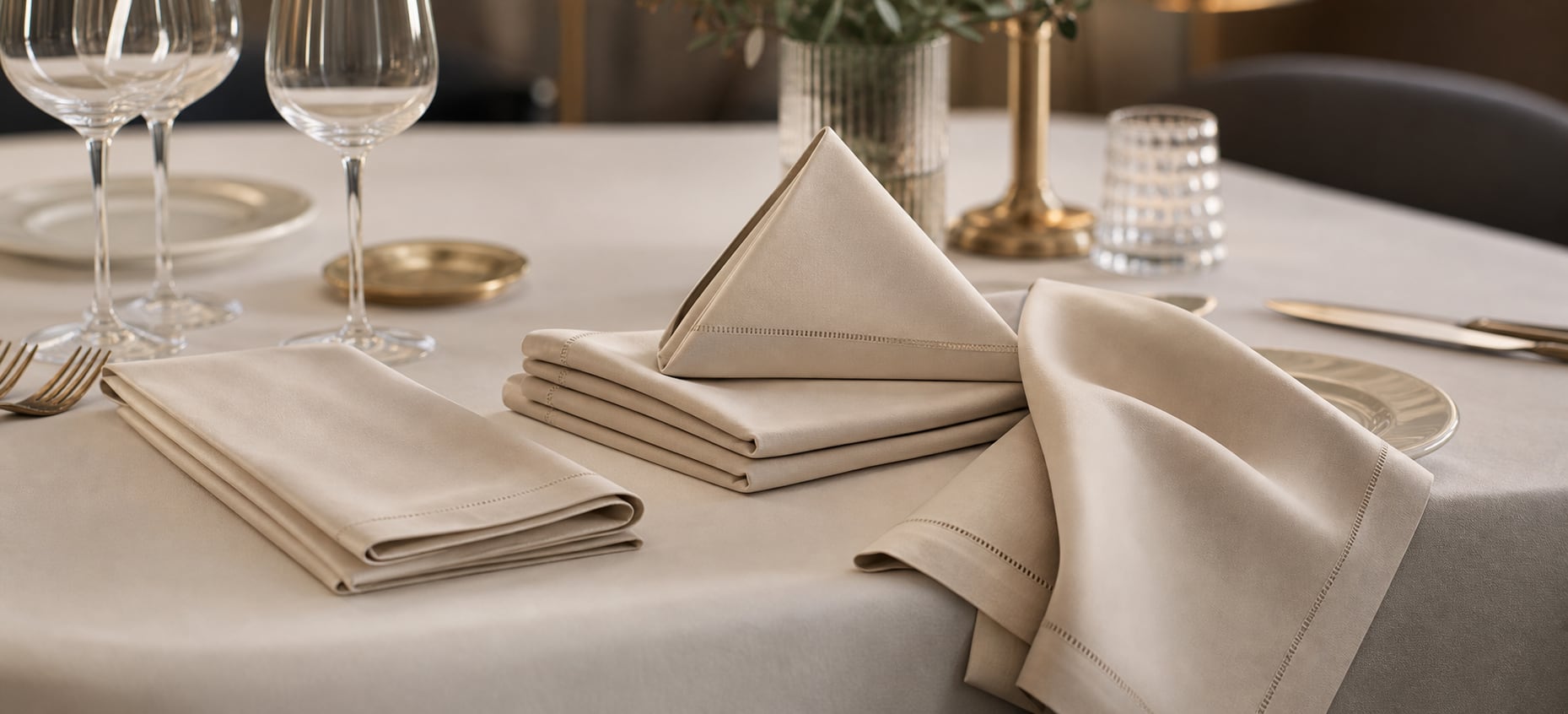
| A sculptural fold for a short formal presentation | A firmer finish only for the approved fold and occasion | Is the visual gain worth the stiffer hand during the meal? |
A napkin is not a miniature tablecloth. The tablecloth stays on the table; the napkin touches the guest repeatedly. Try the finished napkin on the lap and near the lips, not just standing in a photograph. Blot a small spill with it, then check whether it picks up liquid promptly. A finish that makes the fold impressive but the napkin slow or unpleasant to use is the wrong finish for that service.
A good fabric and an appropriate fold may hold their shape without added starch. Conversely, heavy starch should not be used to disguise a napkin whose size or construction is wrong for an elaborate fold. The choice of fold belongs in the service standard; the finishing chemistry only helps execute it.
Finish only clean napkins
Starch is normally a controlled laundry finishing step after soil has been removed, not a substitute for stain treatment. Sort and wash the napkins for their fibre, colour and actual food-soil load; inspect persistent oil, wine and other marks before pressing. Heat can set remaining stains. If pieces are still greasy or unevenly clean, fix the wash route before trying to make them crisp.
Uneven application can leave one corner hard and another limp. The laundry should agree the product, dose, application stage and pressing method for this napkin and document the result; a supplier’s figures are product-specific, not a universal recipe. Avoid turning ad hoc spraying at the table or a different amount on each shift into the standard. If a synthetic sizing agent is used, confirm how it is removed before the next finish is applied.
Inspect a whole returned batch. Look for pale deposits, patches of unequal stiffness, unusual odour, scorching, colour change and edges that no longer lie flat. If a crisp napkin arrives with any of these defects, extra starch is not a quality fix. Rework the process or return to a softer finish.
Test the finish in service, not just on the ironing table
- Process matched samples of the approved napkin with no starch, a light finish and—only if useful—a firmer finish through the same wash and pressing route.
- Have the service team make the intended fold at normal pace; compare appearance immediately and after the usual setup interval.
- Unfold each sample and check feel on skin, ease of use and simple blotting performance. Include a guest-facing reviewer, not only the laundry team.
- After use, wash the samples again and inspect stain removal, finish consistency, colour, seams and repeatability over several turns.
- Record one approved finish by napkin reference and outlet or occasion, plus the condition that sends a defective piece back to laundry.
If the unstarched sample already looks composed and performs well, keep the simpler finish. If a light application improves a specific formal presentation without sacrificing usability, specify it and make sure the laundry can reproduce it. A restaurant can starch one banquet reference and leave its everyday napkins soft; it does not need one rule for all tables.
Bring the approved finish and fold to the restaurant napkin specification. Check the napkin size guide if the fold only works by forcing the fabric into shape.
Product catalogue
Request the Dine catalogue
Share your business email and, if useful, your company or property name. We will carry these details into the secure catalogue-request form with the relevant category already selected.
Journal
Continue reading
Cotton vs Polyester Restaurant Napkins: What Changes in Service and Laundry?
Cotton usually brings easier wetting and a familiar textile hand; polyester usually brings lower moisture retention and stronger crease recovery. Food soils, finishing and the exact construction can reverse a simple cost assumption.
Read Cotton vs Polyester Restaurant Napkins: What Changes in Service and Laundry?What Size Cloth Napkin Should a Restaurant Use?
A 50 × 50 cm cloth napkin is a useful starting point for full-service dining. Move smaller or larger only after testing the fold, place setting, lap coverage and processed dimensions.
Read What Size Cloth Napkin Should a Restaurant Use?How Can Restaurants Stop Cloth Napkins Leaving Lint on Guests’ Clothes?
Do not treat every speck as napkin shedding. Isolate the lot and laundry route, distinguish loose fibre from foreign lint, pills or residue, then approve the corrected process with a controlled clothing-transfer check.
Read How Can Restaurants Stop Cloth Napkins Leaving Lint on Guests’ Clothes?