



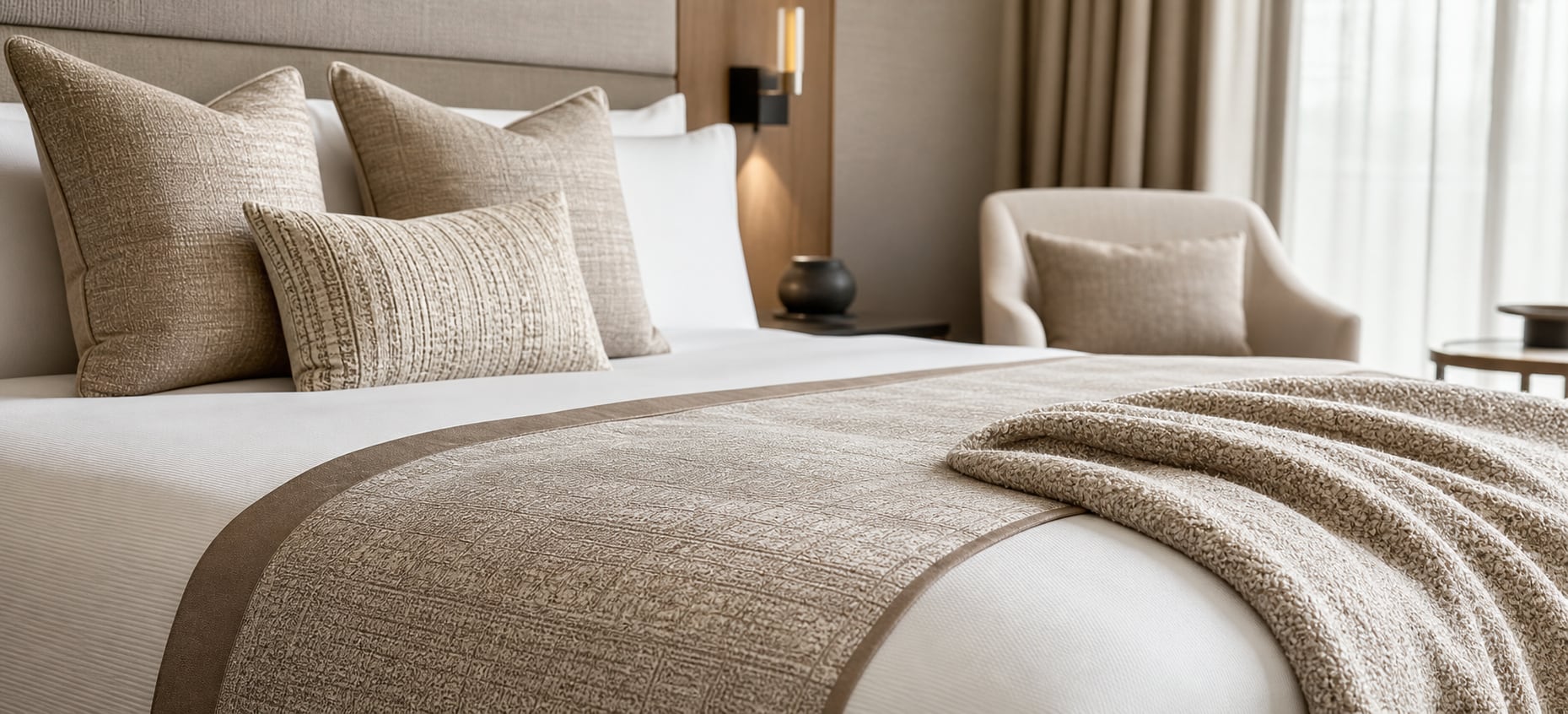

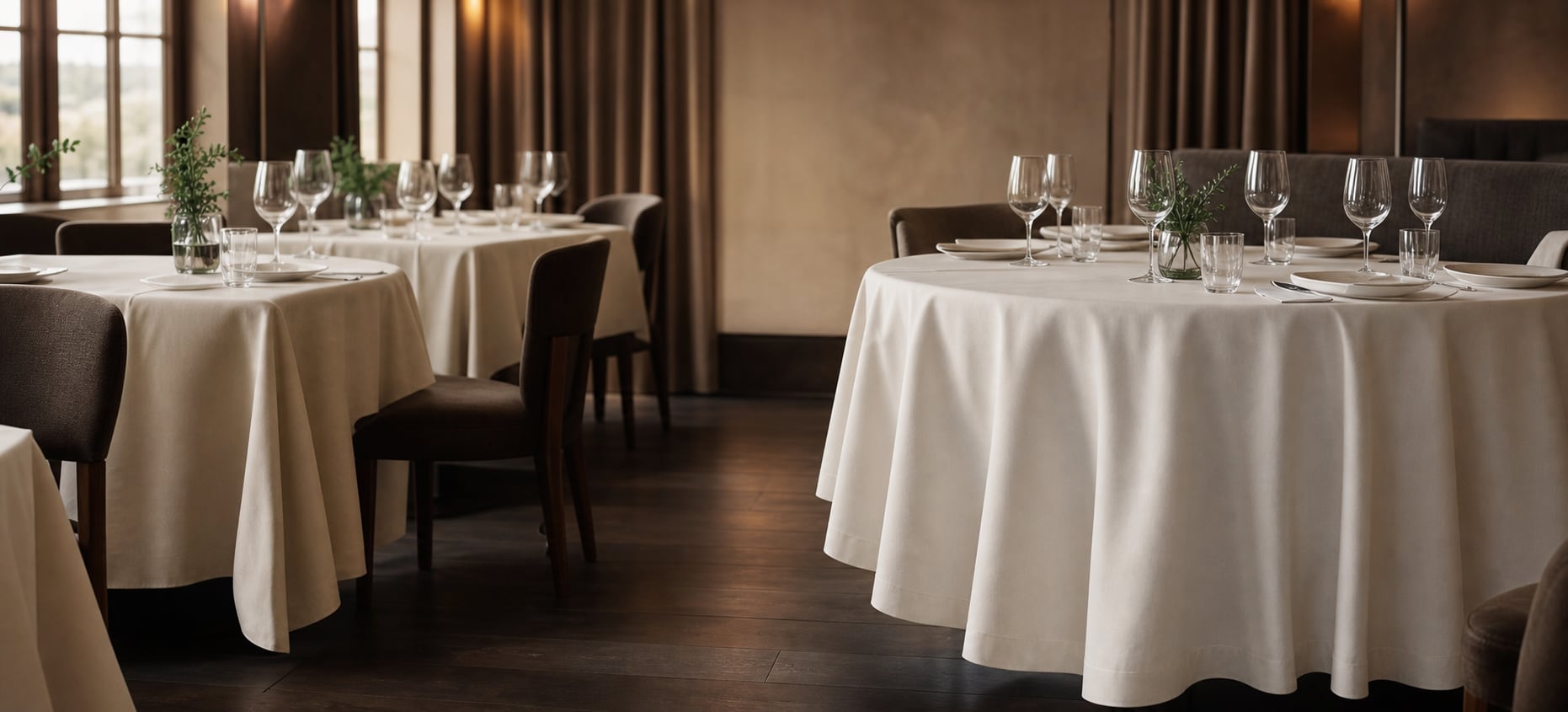
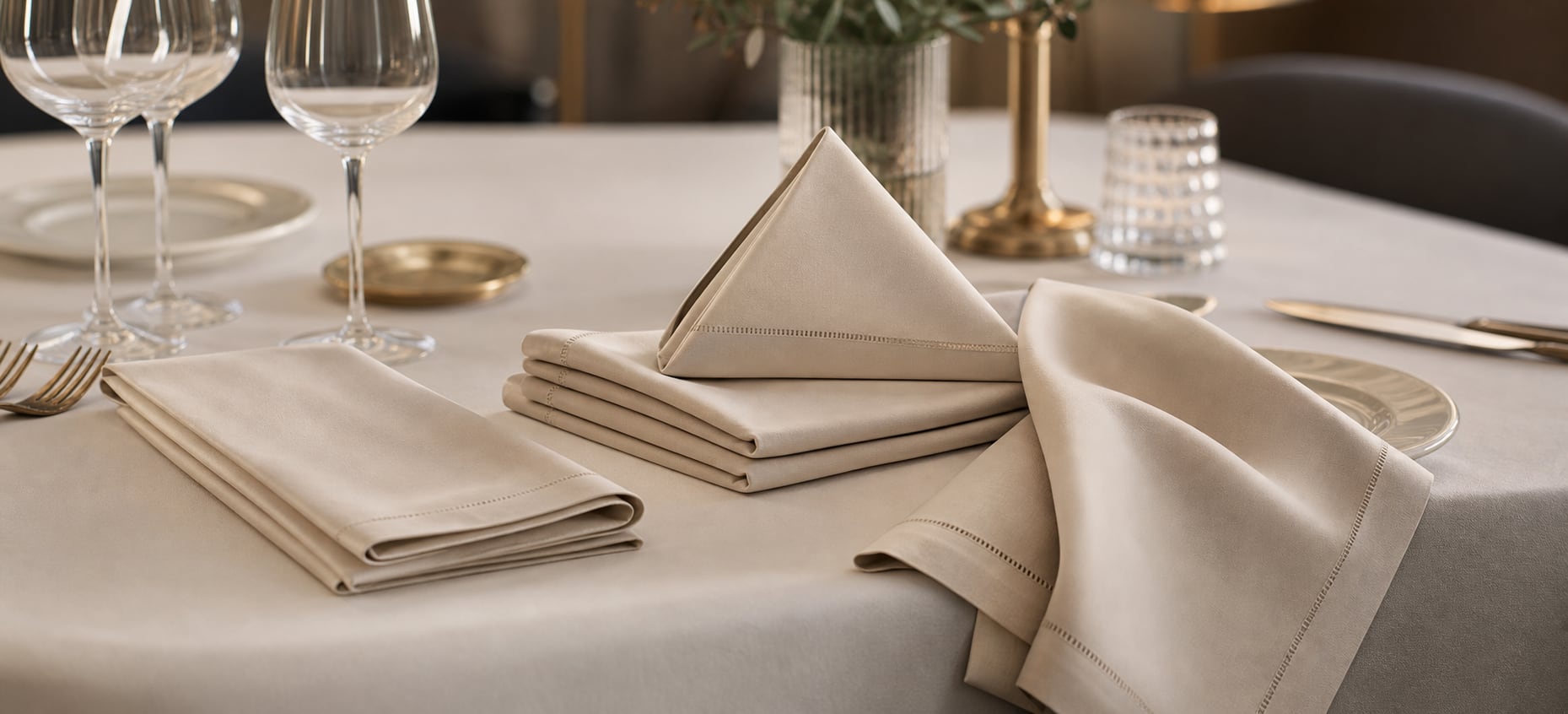
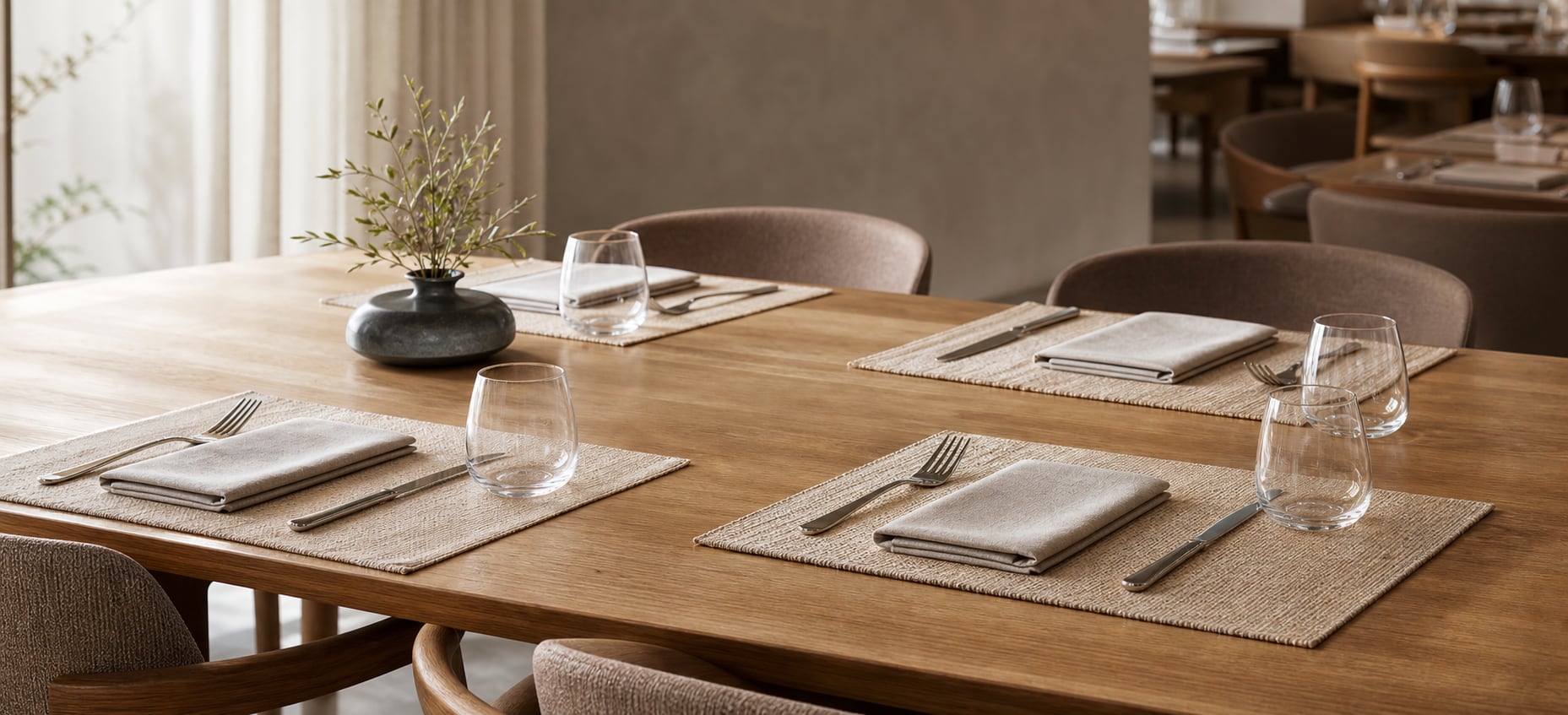
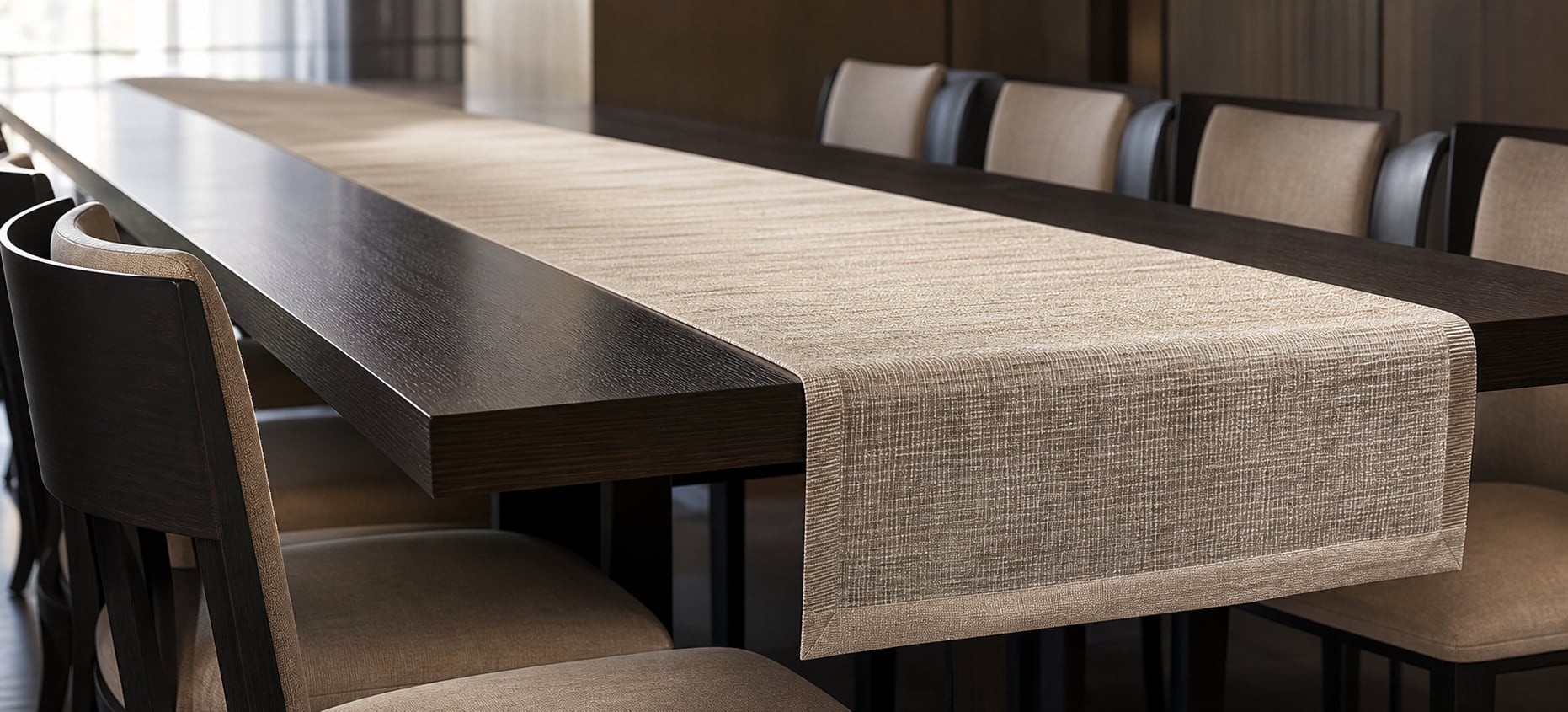
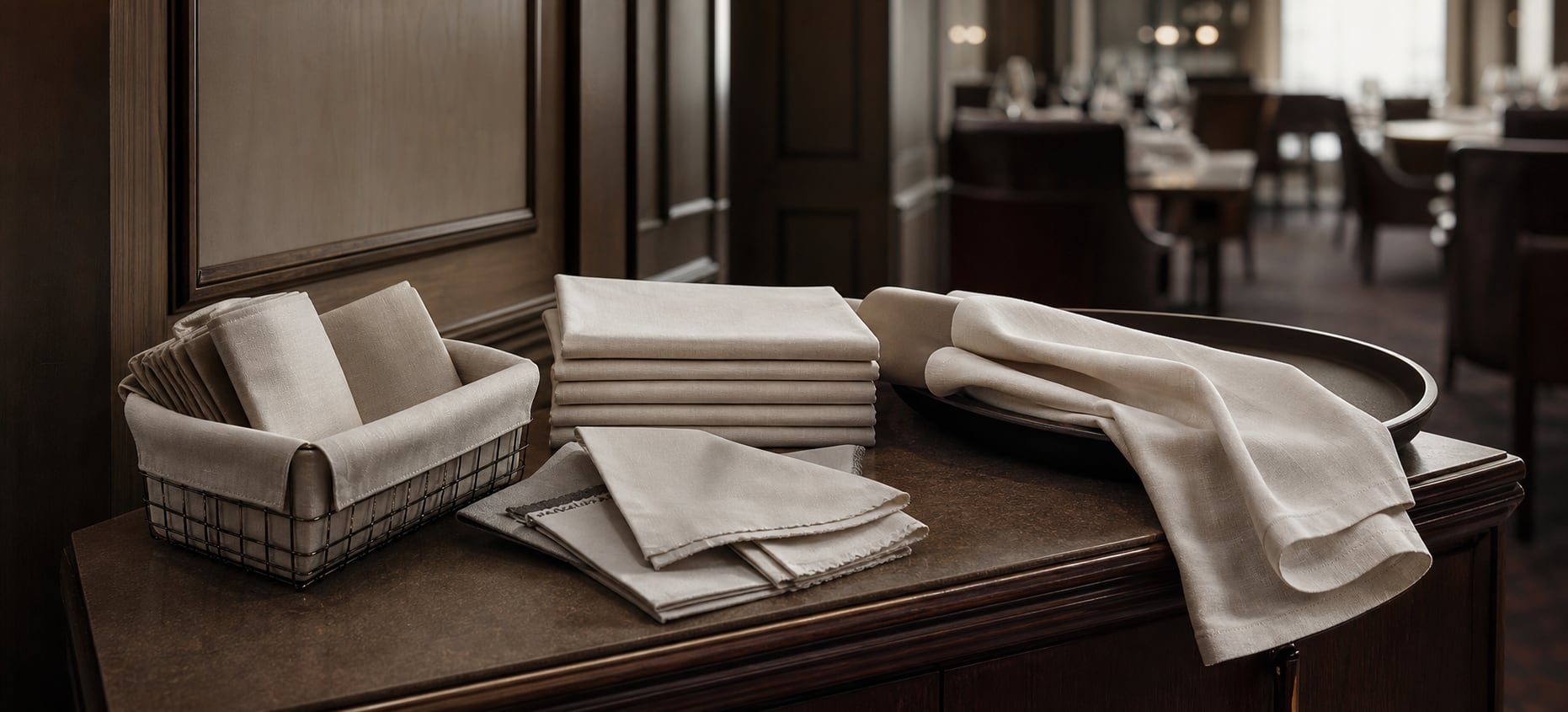
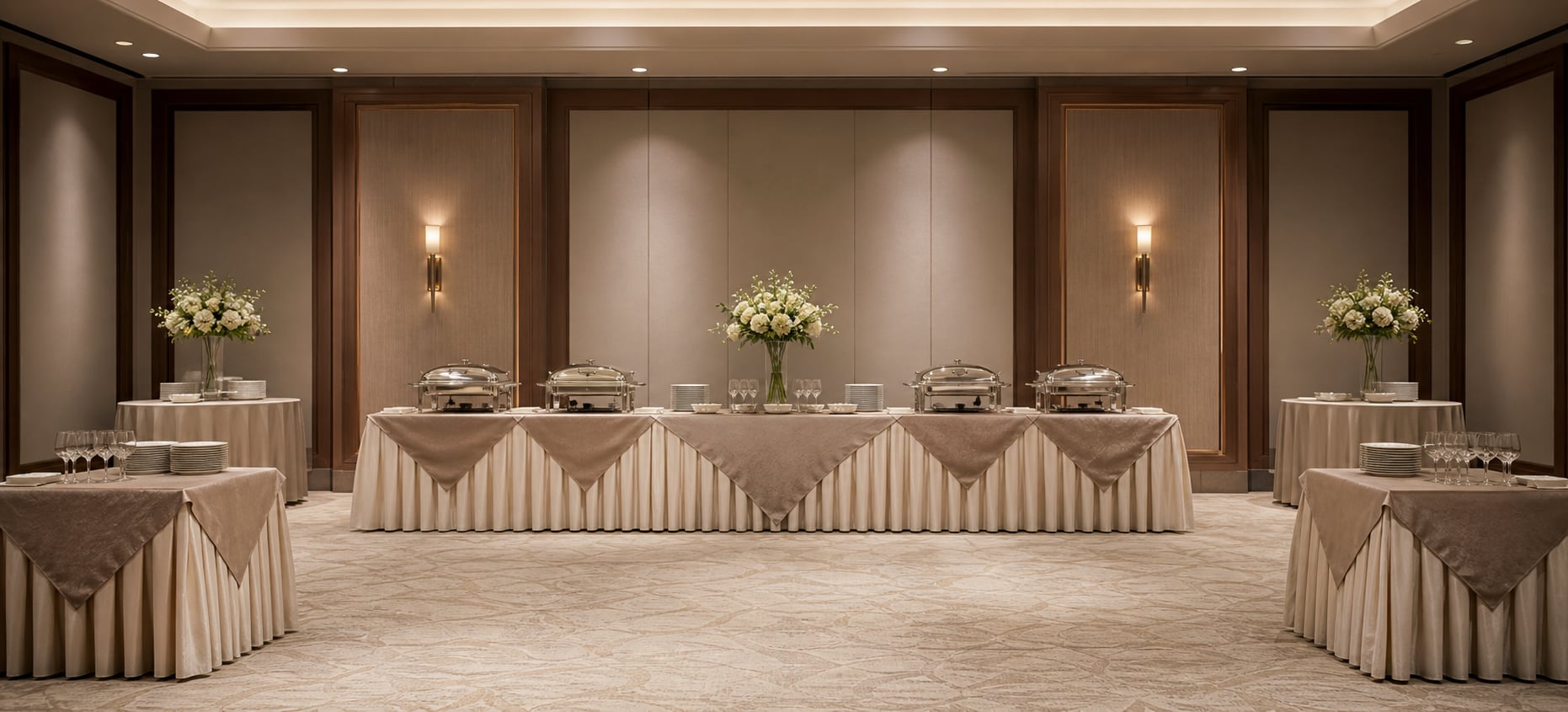




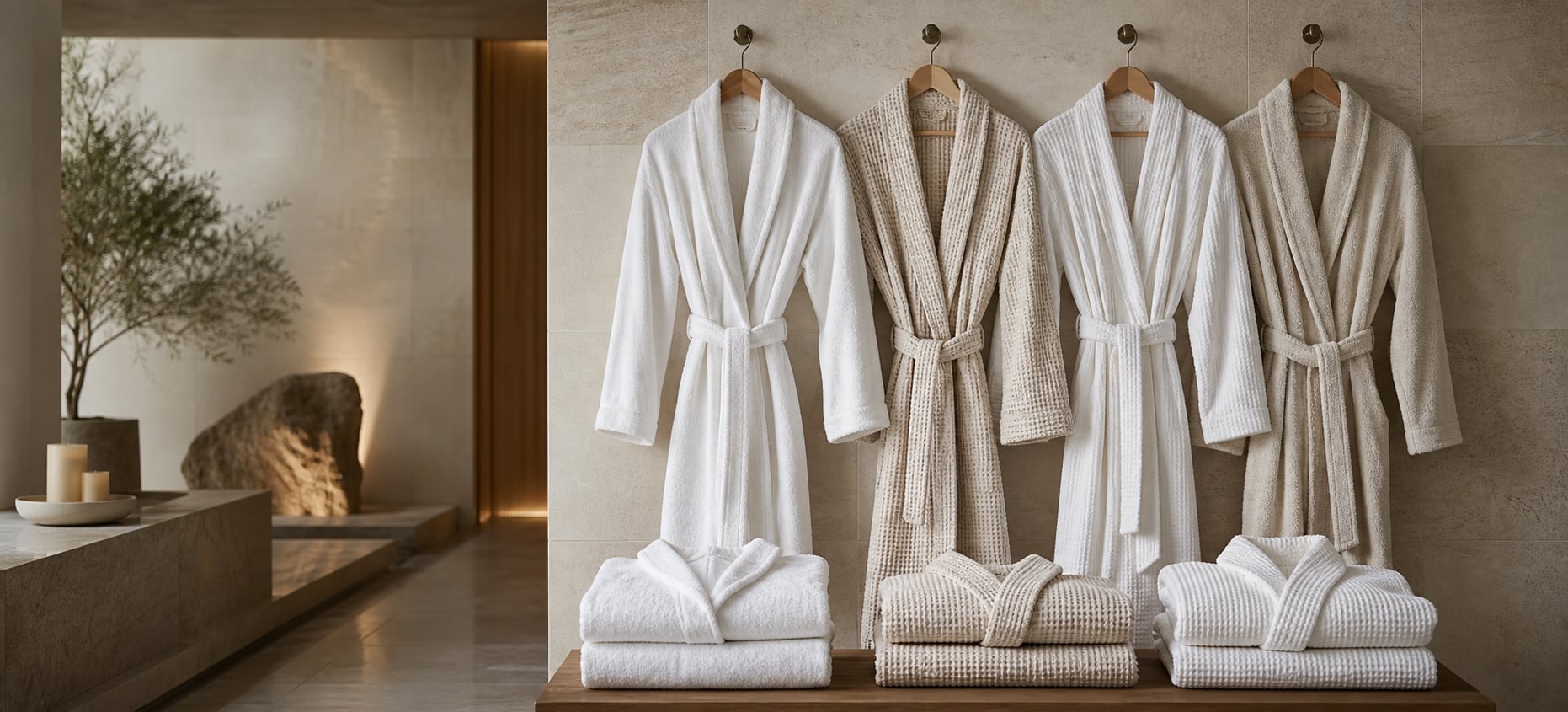


Start with what the product needs to do
We look at where the textile will be used, the dimensions it needs to work with, the expected feel and performance, and any operational requirements that affect the specification.
Gencer Studio
Dimensions, materials, construction, colour, embroidery and finishing developed around your requirements, with a clear specification from first sample to repeat order.
Why Studio
A property may need a different towel weight, a particular tablecloth size, bed linen for non-standard dimensions, embroidery in a specific position, or a product prepared differently for the way it is used.
Studio focuses on those requirements without making the rest unnecessarily complicated.
We look at where the textile will be used, the dimensions it needs to work with, the expected feel and performance, and any operational requirements that affect the specification.
Dimensions, materials, construction, colour, embroidery, finishing and presentation can be adjusted where they add a real purpose to the product.
Once the direction is approved, the relevant details are recorded so future orders, additions and replacements can follow the same specification.
Studio capabilities
Studio can change one detail or several, depending on what the product actually needs. The aim is not to customise for the sake of it, but to arrive at a specification that fits the setting, its use, its identity and the way it needs to operate.
Get the fundamentals right for the space and the way the product will be used.
Shape the material direction around the experience you want to create and the demands of everyday hospitality use.
Carry the character of the property into the textile without turning it into a branded object.
Organise the finished products so the specification remains useful beyond the first order.
Have a requirement that needs a more specific direction? Discuss a Studio Requirement
Frequently Asked Questions
Practical answers about customization, specifications, samples, quantities, timing and repeat orders.
Studio can review dimensions, materials, construction, weight, colour, embroidery, labels, packaging and product grouping across selected hospitality textile categories. What is feasible depends on the product, intended use, quantity and production method.
No. A project may use standard Gencer products throughout, customize one relevant detail or develop a more specific product. The scope should reflect what the operation actually needs.
Yes. Starting from an existing product often gives the project a clear construction and performance reference. Studio can then assess the dimensions, material, colour, identity or presentation details that need to change.
Yes, subject to technical review. A physical sample, specification sheet, care record or test requirement can help define the target, but the resulting Gencer specification must be sampled and approved on its own merits.
Begin with the operational reason for the change, such as fit, durability, handling, guest experience or brand identity. Gencer can help distinguish essential requirements from details that add complexity without a clear practical benefit.
Yes, where the product and production method support it. Changing one detail can still affect minimum quantities, sampling, price or timing, so it is reviewed as part of the complete specification.
Yes. Products for rooms, bathrooms, restaurants, wellness areas or yachts can be developed as a coordinated program while retaining the construction and care requirements appropriate to each item.
Yes. Variations in size, colour, embroidery, label or grouping can be recorded by room type, area or property. Each variation is reviewed for feasibility and may carry its own quantity and approval requirements.
Yes, when the material, construction and production process can support them. Custom dimensions are confirmed only after the required measurements, expected tolerances and intended use have been reviewed.
The required measurements depend on the product and how it must fit or be presented. Gencer may ask for finished dimensions, mattress or table measurements, shrinkage expectations, seam or drop details, and a drawing, template or physical reference.
These elements can be reviewed where suitable materials and production methods are available. Their relationship matters because a change in fibre, weave, construction or weight can alter feel, performance, care and minimum quantities.
Yes. A physical reference and any known technical information can establish the qualities to evaluate. An exact duplication should not be assumed, and the proposed result is confirmed through appropriate sampling and testing.
A colour can be developed from a recognized colour reference or a physical sample, subject to the chosen fibre, material and dye process. Appearance can vary by material and lighting, so the production colour is established through an approved sample and agreed tolerance.
Approve colour on the actual material under relevant lighting, using a dated physical sample or lab dip identified to the project. Screen images are useful for direction but are not a reliable final colour standard.
Yes, when the product construction and embroidery method support the artwork. Scale, thread colour, stitch interpretation, placement and orientation should be confirmed on an embroidery test or product sample before production.
They can be reviewed as part of the Studio specification. Options depend on product type, quantities, operational needs, regulatory information and the availability of the selected packaging or label components.
Share the product type, intended use, quantities, target timing and destination, together with the details that need customization. Measurements, current specifications, artwork, colour references, care requirements and physical samples are helpful when available.
Yes. A clean, representative sample can help assess dimensions, construction, weight, feel and finishing. It is treated as a reference rather than a guarantee of exact replication, and any destructive testing should be agreed before the sample is sent.
Depending on the requirement, review may use material swatches, lab dips, embroidery tests, size samples, pre-production samples or a full prototype. The appropriate route depends on what must be validated and how the product will be made.
No. A minor change may be approved through a swatch, artwork, measurement sheet or component sample. A full prototype is more likely when fit, construction, appearance or operational performance cannot be judged reliably from partial samples.
Each relevant element is documented and linked to an identified sample, drawing, lab dip or embroidery test. Approval should be given in writing against the final reference before production is released.
Wash testing is advisable when laundering may affect size, colour, hand feel, appearance or performance. The test method should reflect the intended hospitality laundry process, and results should be considered alongside the agreed product tolerances.
Yes. Feedback can be incorporated and a revised sample or specification prepared where feasible. Changes may affect development cost, minimum quantities and timing, and production should wait until the final version is approved.
The record can include product code, dimensions and tolerances, material and construction, weight where relevant, colour references, embroidery or identity details, labels, packaging, care and approved samples. The exact record reflects the elements needed to reproduce and verify that product.
Minimum quantities vary by product, material, colour, construction and production method. They are confirmed after the specification and required variations are understood.
Yes. A custom colour, weave, component, embroidery or packaging format may have a different production minimum from a size adjustment or standard option. Gencer will identify the relevant minimum for each customized element.
Sometimes. Whether variations can contribute to one minimum depends on the shared base product, material, production setup and quantities of each version. The combination must be reviewed before it is included in the quotation.
Pricing is based on the approved specification, materials, construction, custom processes, quantities, sampling, packaging and delivery requirements. A reliable quotation follows technical review because apparently small changes can affect production differently.
They may be. Development samples, special artwork, embroidery programs, custom labels, packaging, tooling or testing can carry separate charges, which are identified in the proposal where applicable.
The completeness of the brief, material sourcing, colour or artwork development, sample type, testing and the number of review rounds all affect development time. Prompt, consolidated feedback helps keep the approval sequence clear.
It is confirmed against the final approved specification, quantity, material availability, production capacity and delivery plan. A preliminary indication may change until approvals are complete and the order is accepted.
Yes, these project types can be reviewed with room, area, cabin or delivery phases identified in the brief. Feasibility depends on the specification, quantities, approval schedule, production capacity and required delivery dates.
Usually, provided the approved specification, materials and production methods remain available and the repeat quantity is feasible. Every repeat request is checked against current availability, minimums, pricing and timing before confirmation.
The approved product details and reference identifiers are retained with the project or property record. Clients should quote the relevant product, order or specification reference so the correct version can be reviewed.
Not always. A new approval may be recommended if material or component availability has changed, the production gap is significant, a colour match is sensitive or the requested specification differs from the last approved version.
Gencer will identify the change and propose the closest feasible alternative where possible. The replacement is not treated as identical and should be sampled and approved before the repeat order proceeds.
The approved specification records relevant measurement, colour, weight and construction tolerances. Natural materials and separate production runs can show controlled variation, so repeat goods are assessed against the agreed tolerance rather than assumed to be visually or physically identical.
Often, yes. The unchanged approved specification can remain the base while the revised detail is documented, reviewed and approved as a new version. The change may still affect quantity, price or timing.
Yes. Specifications can be organized by property or project so that local dimensions, identity details and product versions remain distinct. Account and portal access are provisioned according to the client setup.
Provisioned clients can use the Gencer Client Portal to review property-specific specifications and completed orders and submit a replenishment request for approved products. The request remains subject to current material availability, minimum quantities, pricing, timing and delivery confirmation before it becomes an order.
The Journal
Guidance on custom dimensions, embroidery, project specifications, product approval, and preparing hospitality textiles for real spaces.
Customize a textile detail when it solves a measurable fit, use, identity, allocation, or presentation requirement. Keep the rest simple enough to approve and repeat.
A practical field checklist for recording objects, clearances, use conditions, storage, and reference information.
How to coordinate condition reviews, operating inputs, records, and replenishment decisions without relying on universal replacement cycles.
Studio inquiry
Share the products, dimensions, specifications, references or ideas you already have. We can begin from there.