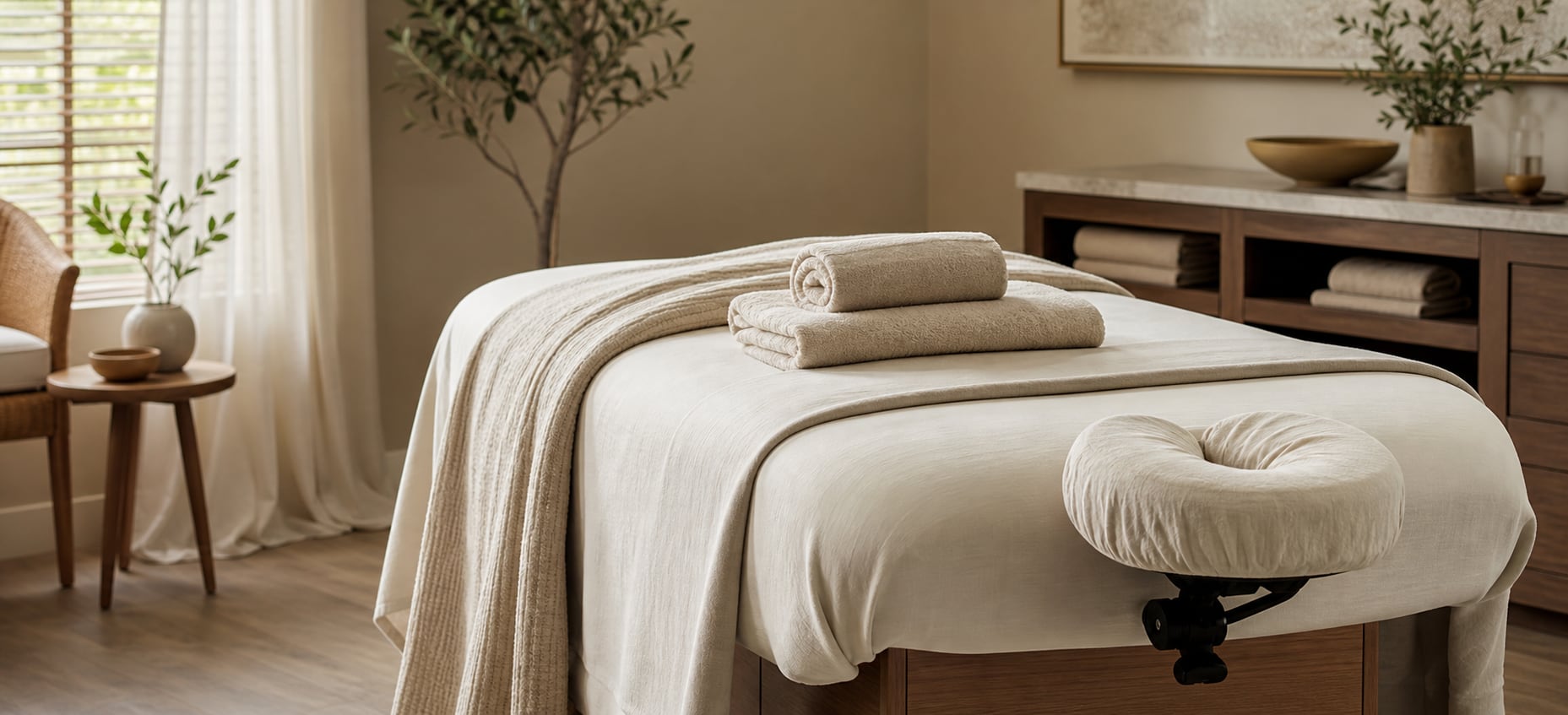
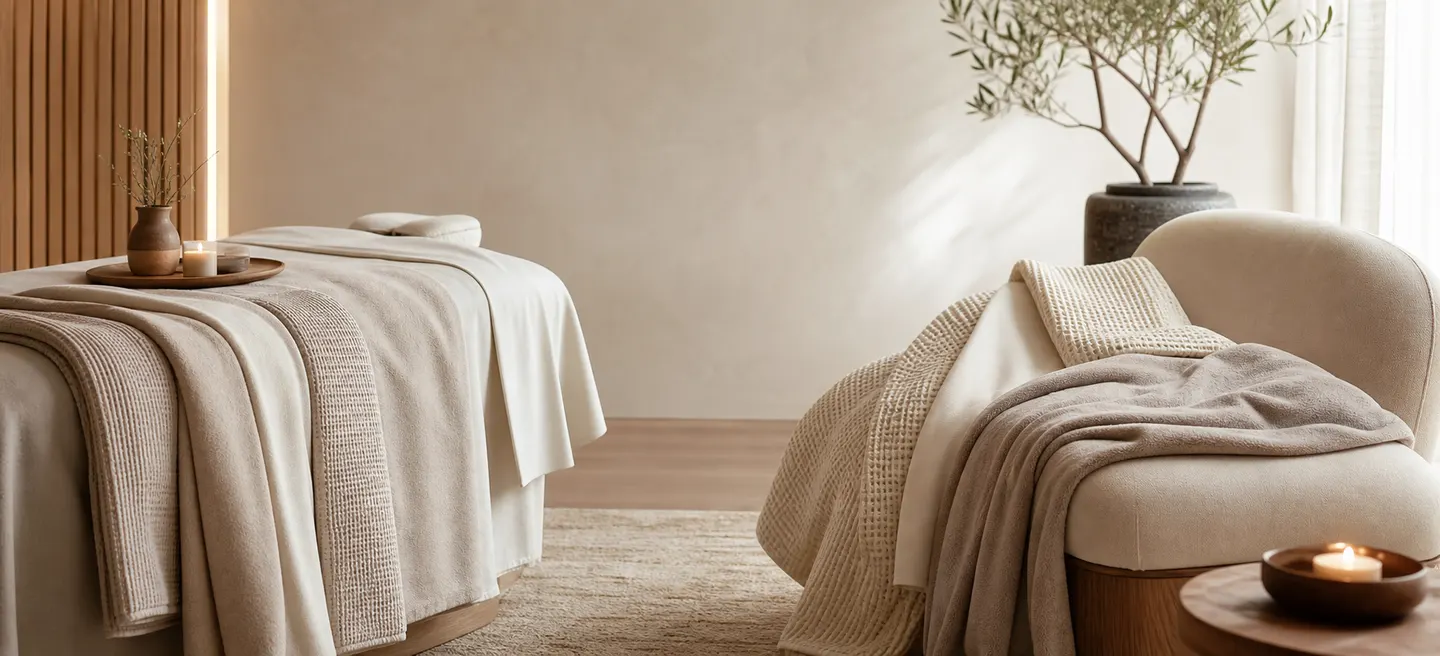
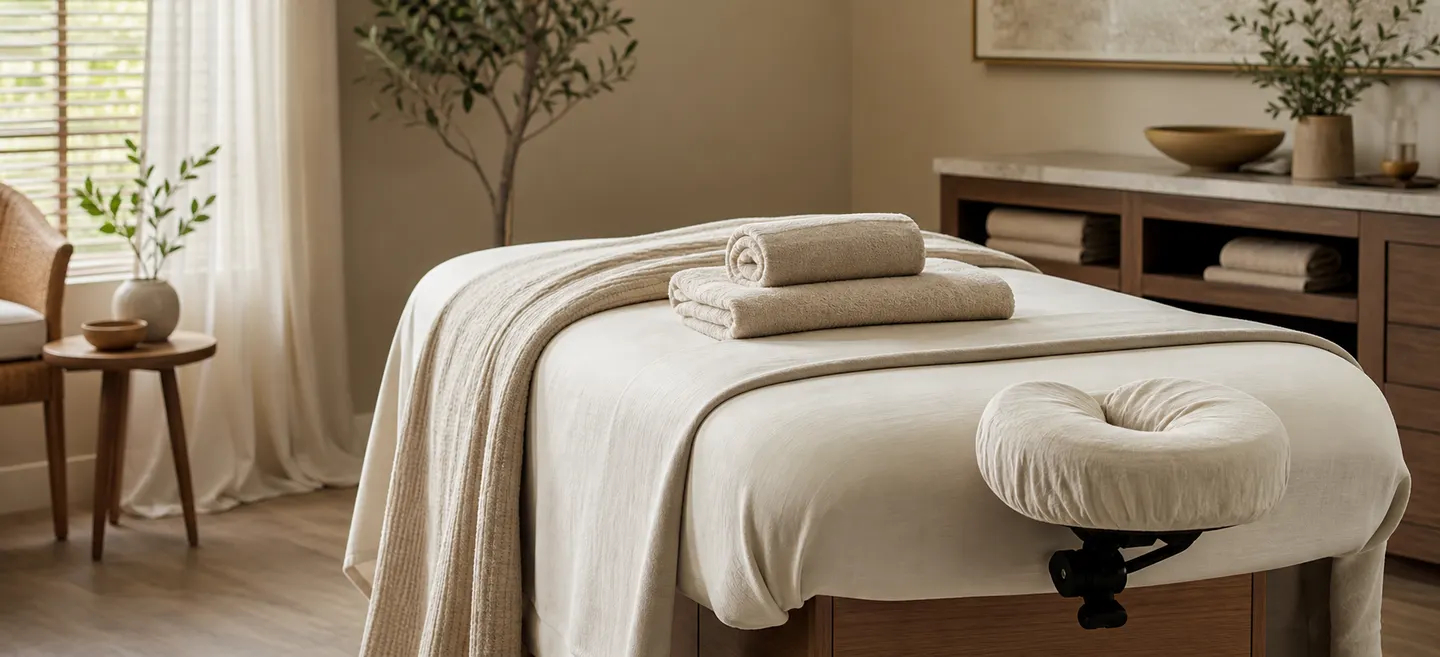
A massage blanket that contacts a client should leave service after that session. A protected warming layer may follow a documented schedule only when the barrier never fails and local rules permit it.
Rental can simplify supply and processing; ownership can protect a distinctive specification. Compare the whole operating system rather than two headline prices.
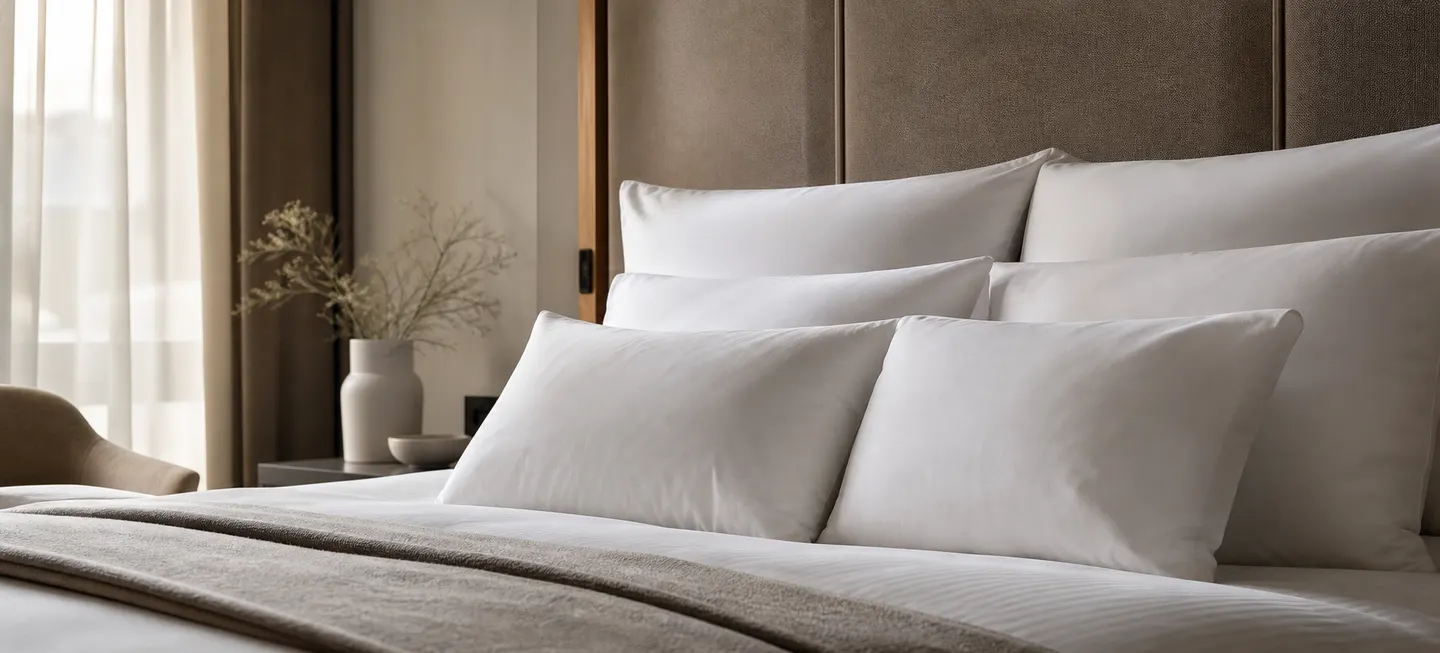
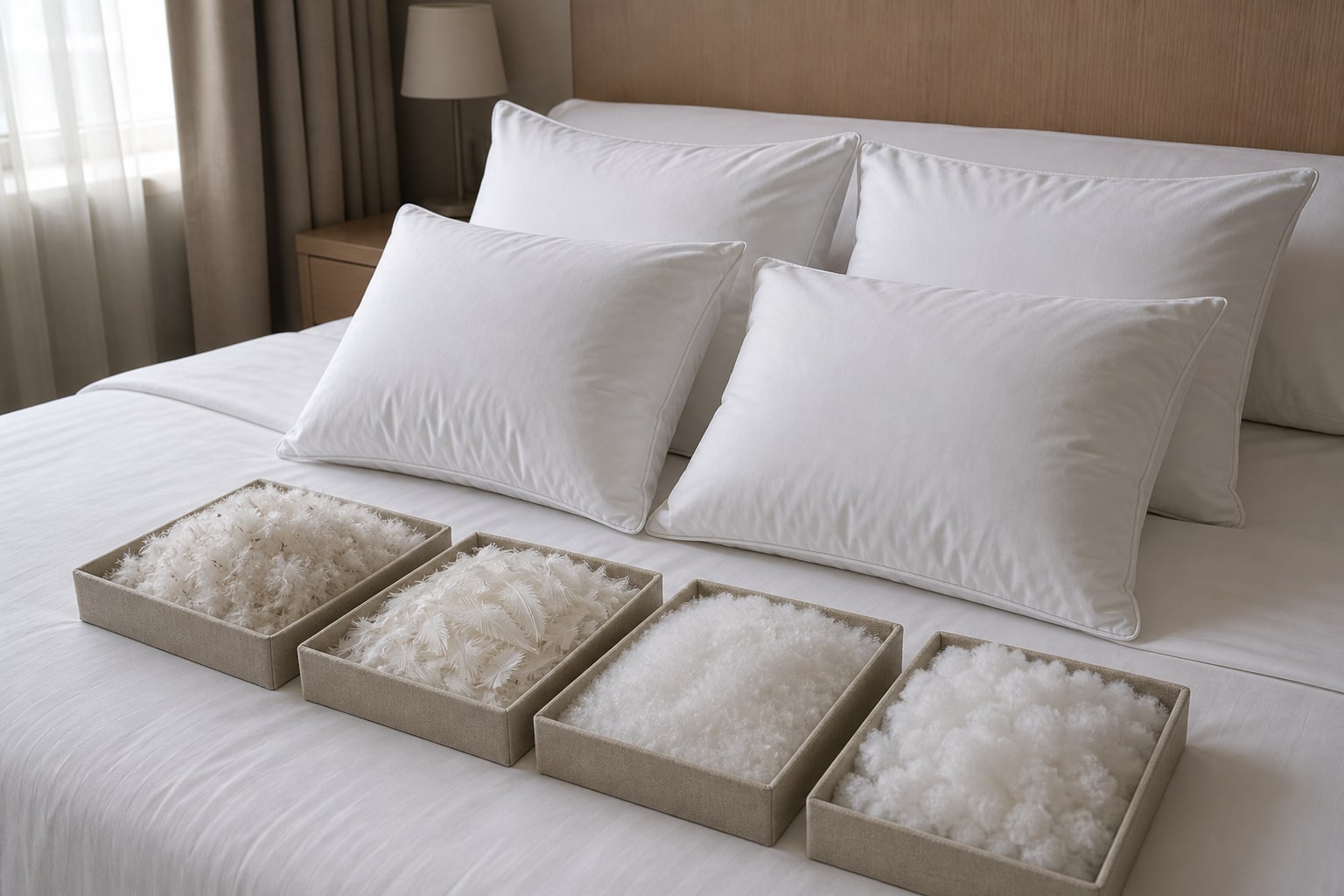
A lumpy pillow may still be damp inside, or its filling may no longer distribute evenly. Diagnose the insert before changing the wash or replacing stock.
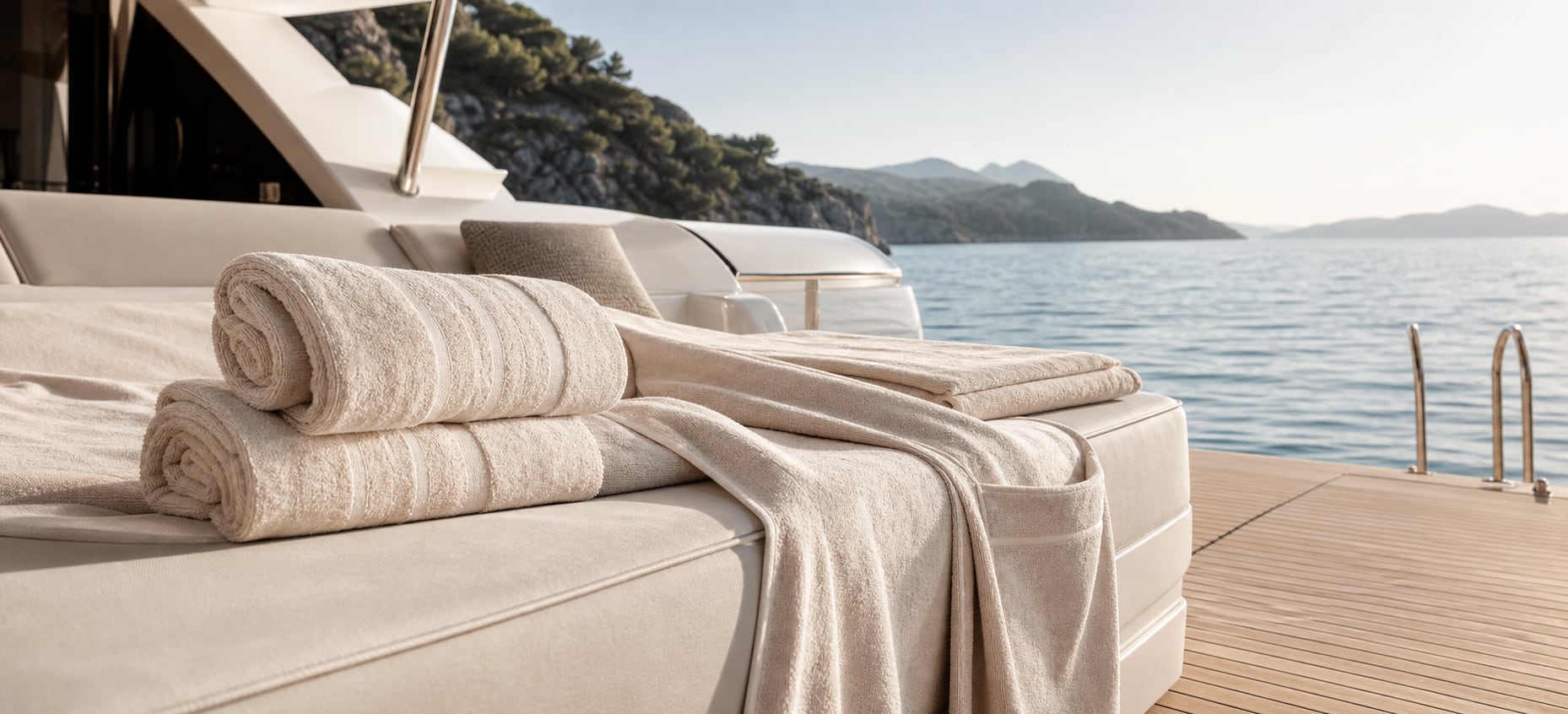
Salt remains when seawater evaporates, but a harsh towel can also reveal static air drying, detergent or hard-water deposits, sunscreen soil, or overdrying. A fresh-water control separates the causes.
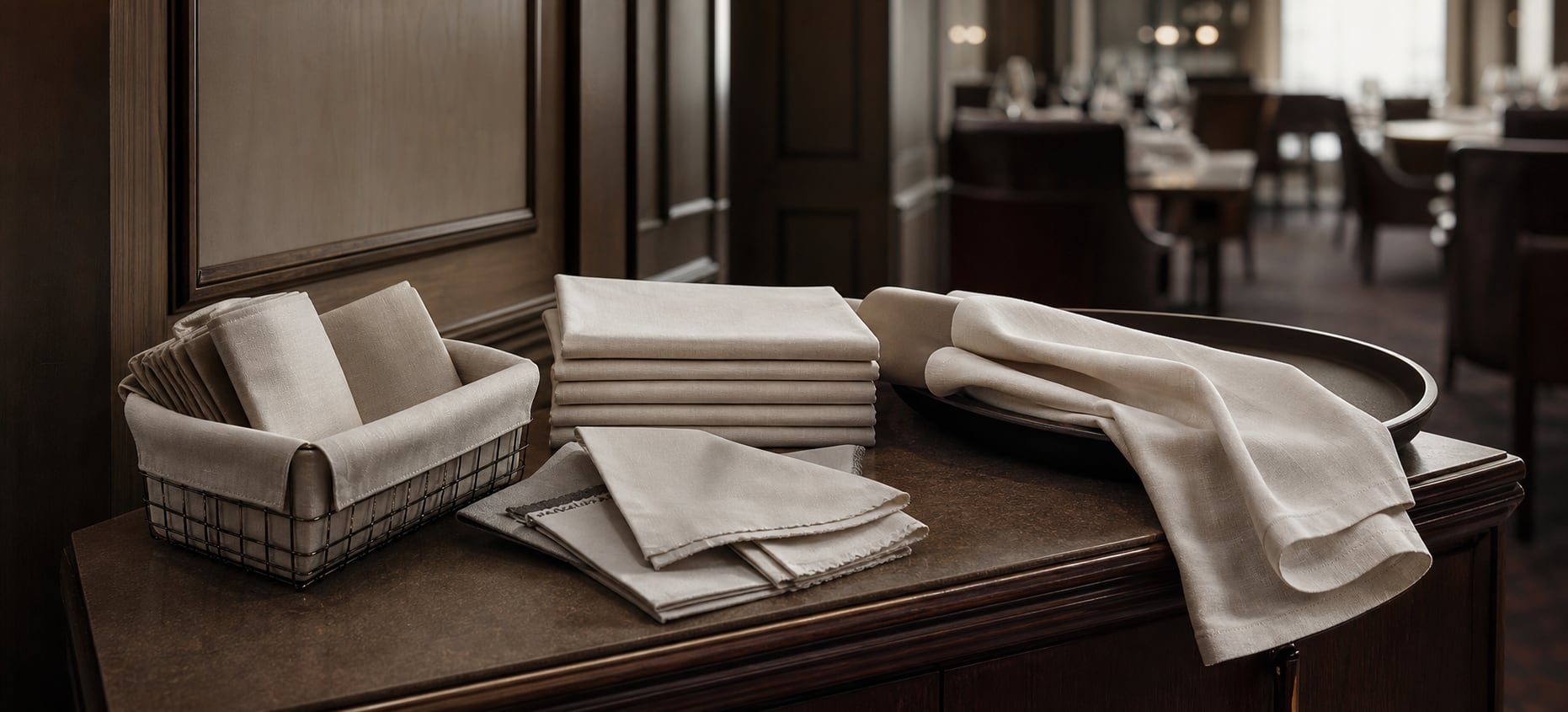
Do not treat every speck as napkin shedding. Isolate the lot and laundry route, distinguish loose fibre from foreign lint, pills or residue, then approve the corrected process with a controlled clothing-transfer check.
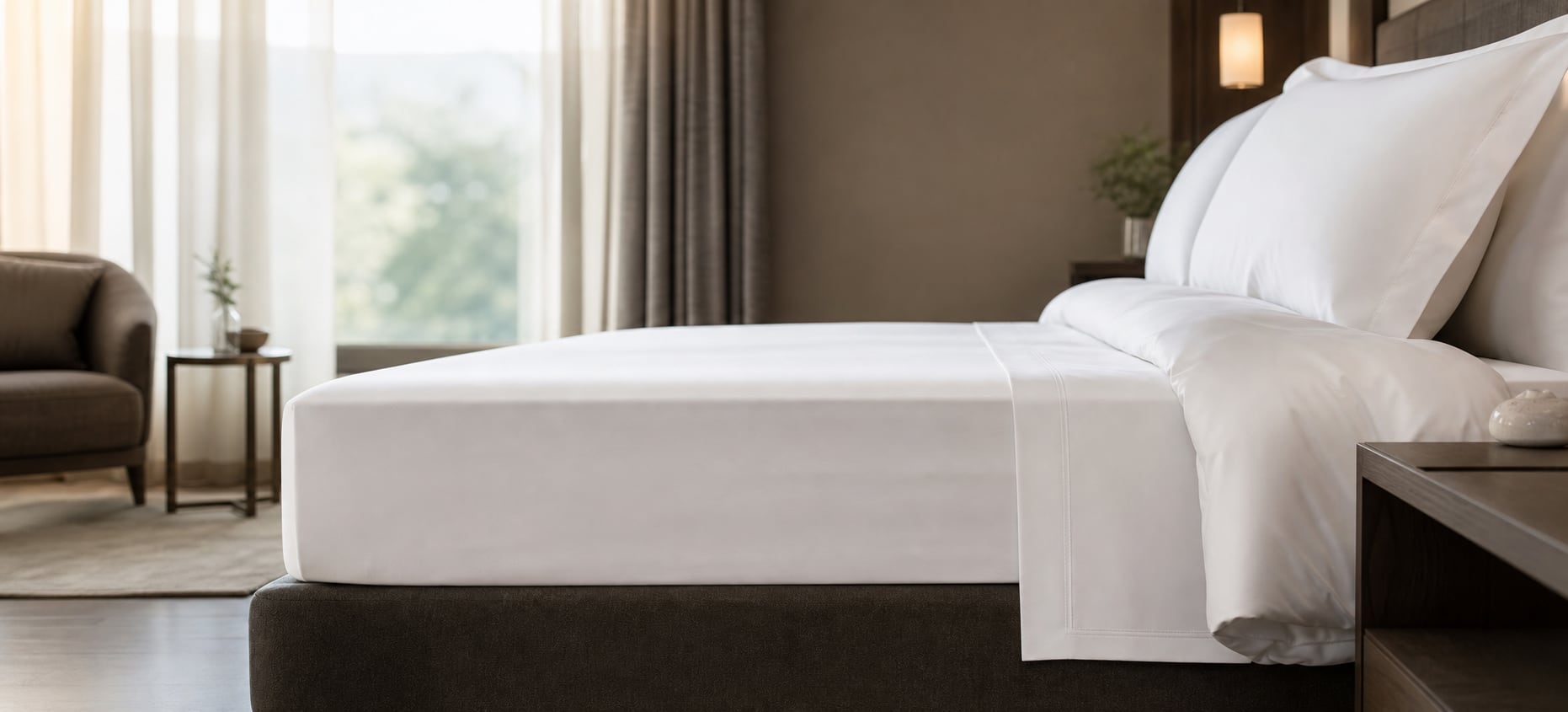
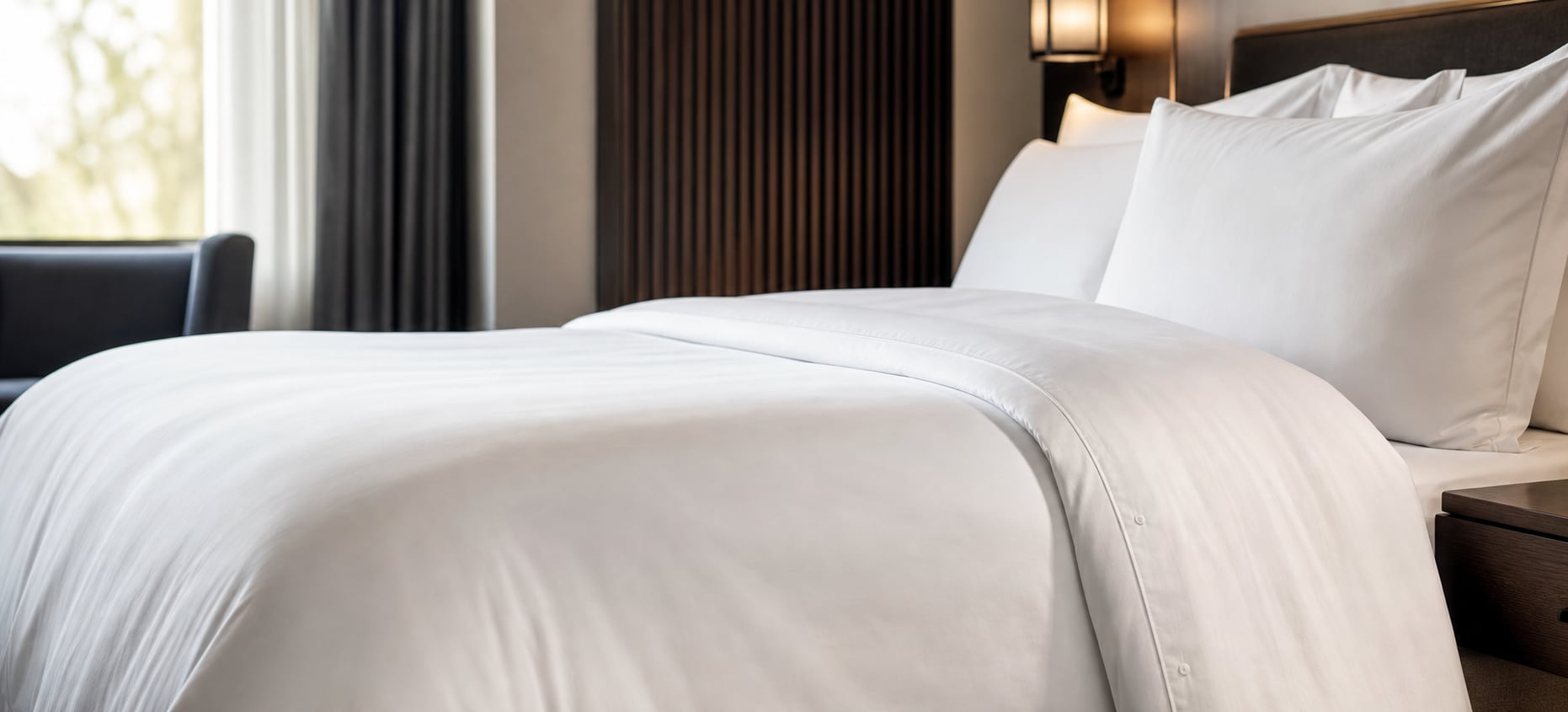
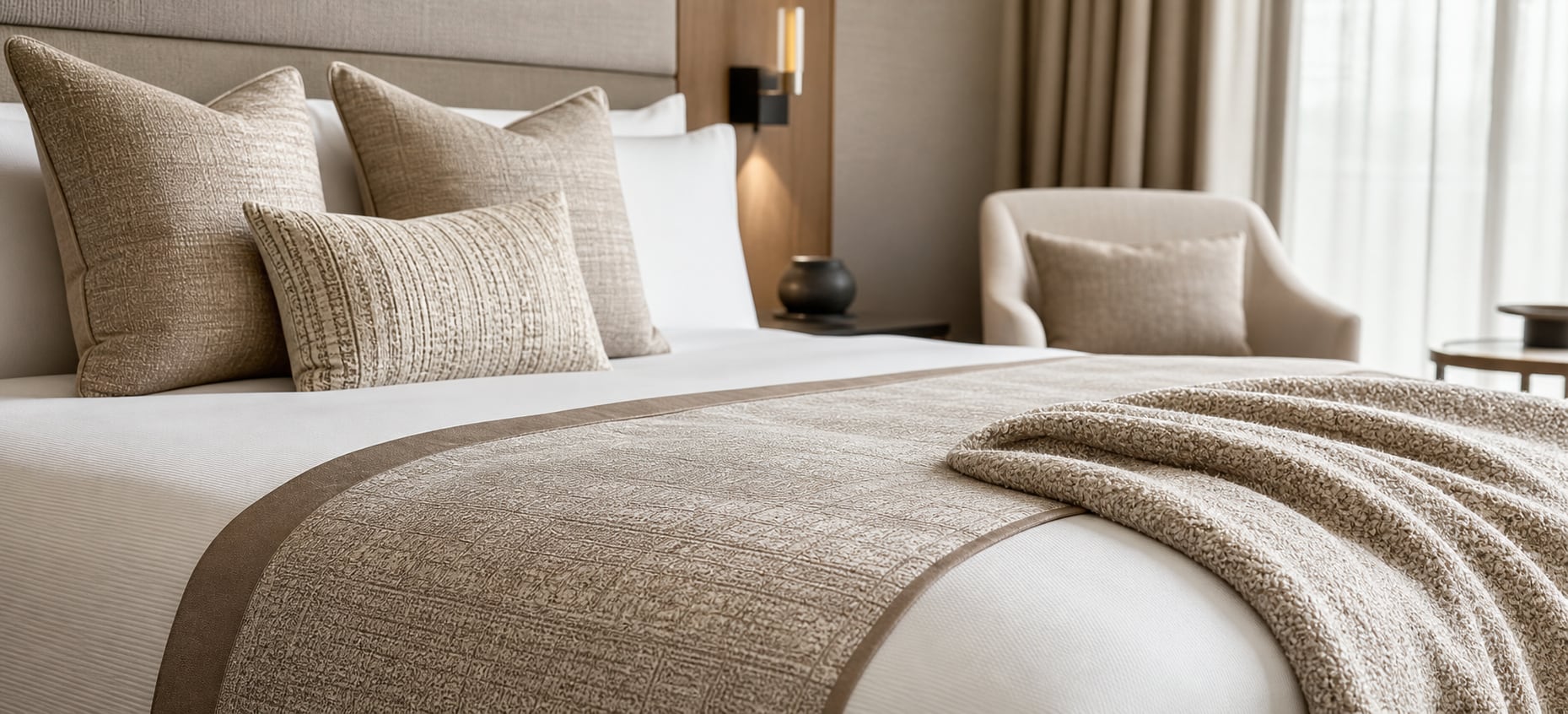
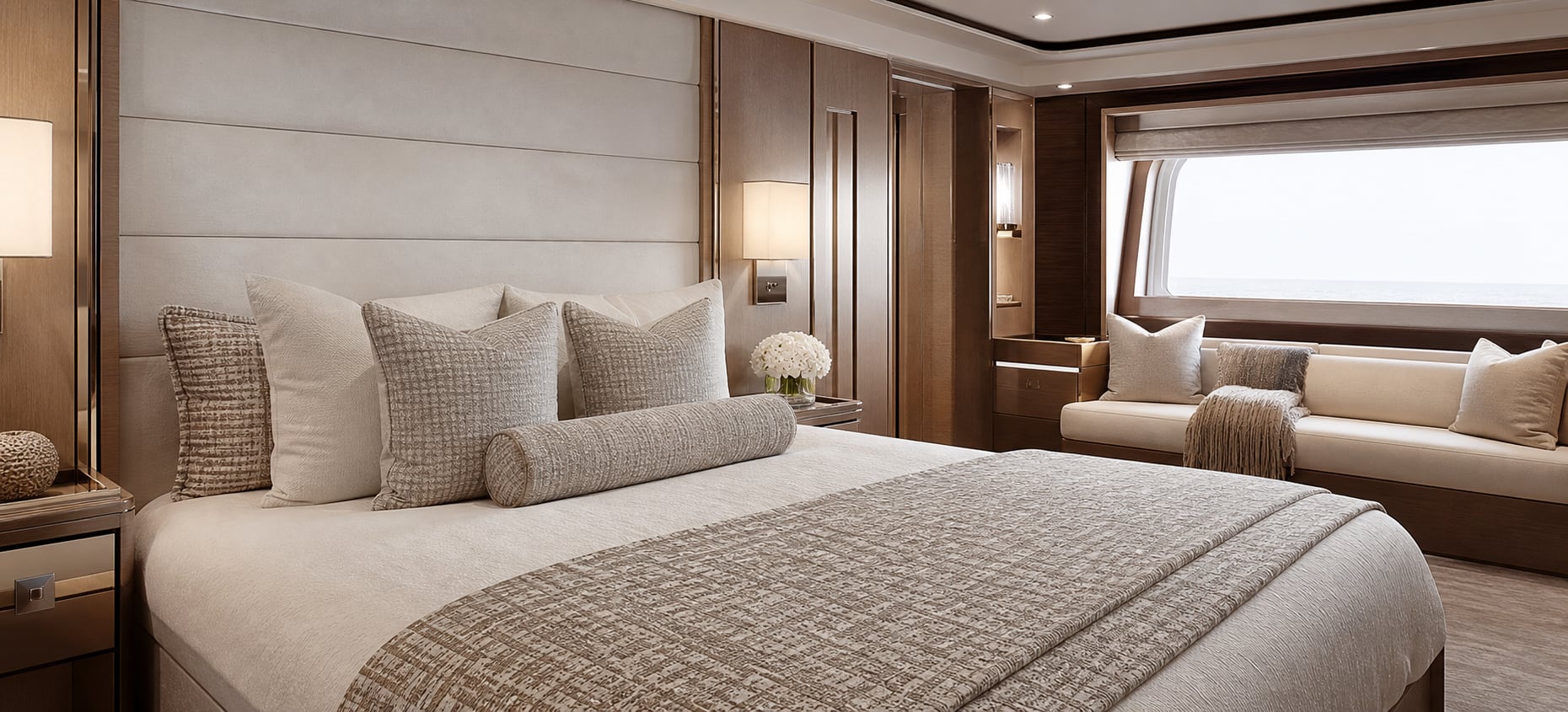
Choose the top-of-bed system that performs best through the hotel’s complete room, laundry and stock workflow—not the one with the strongest generic speed claim.
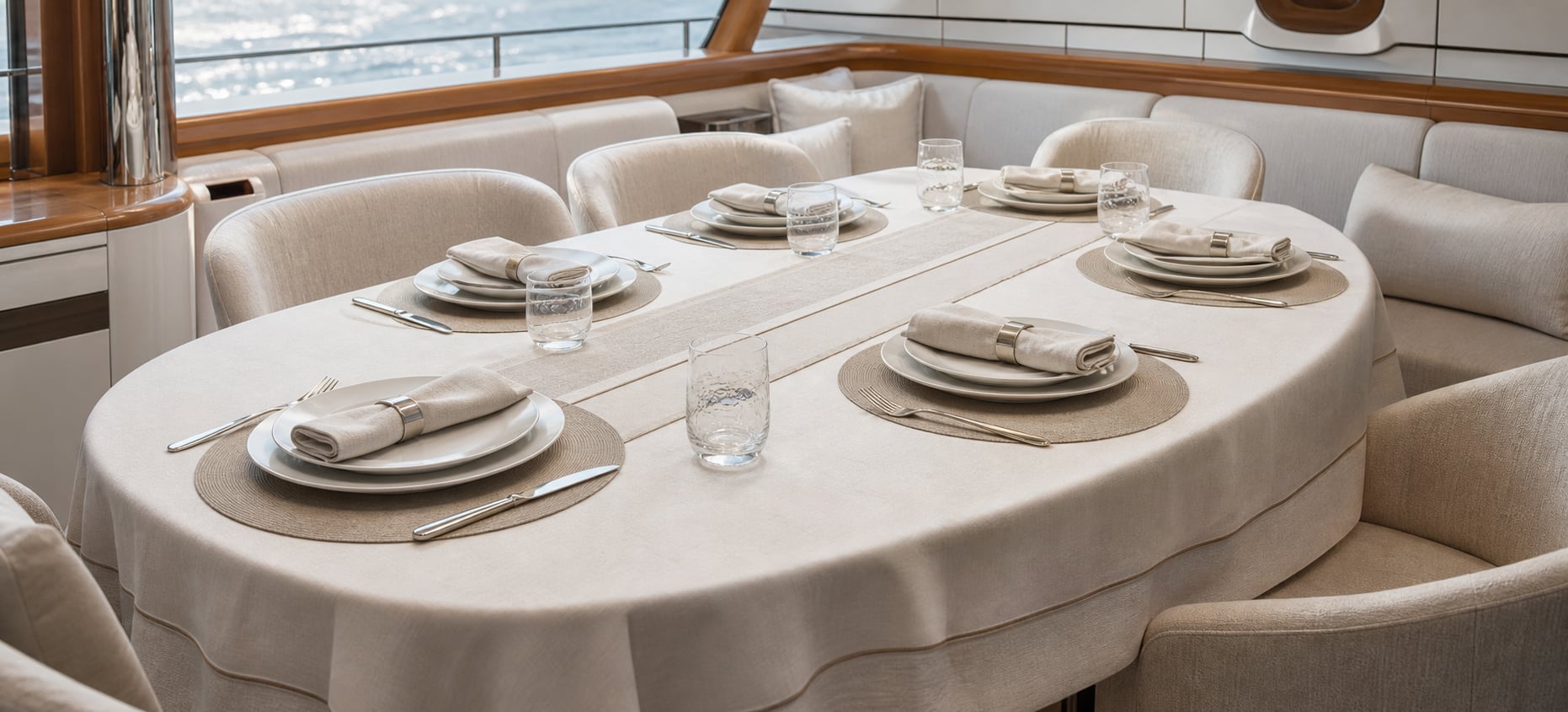
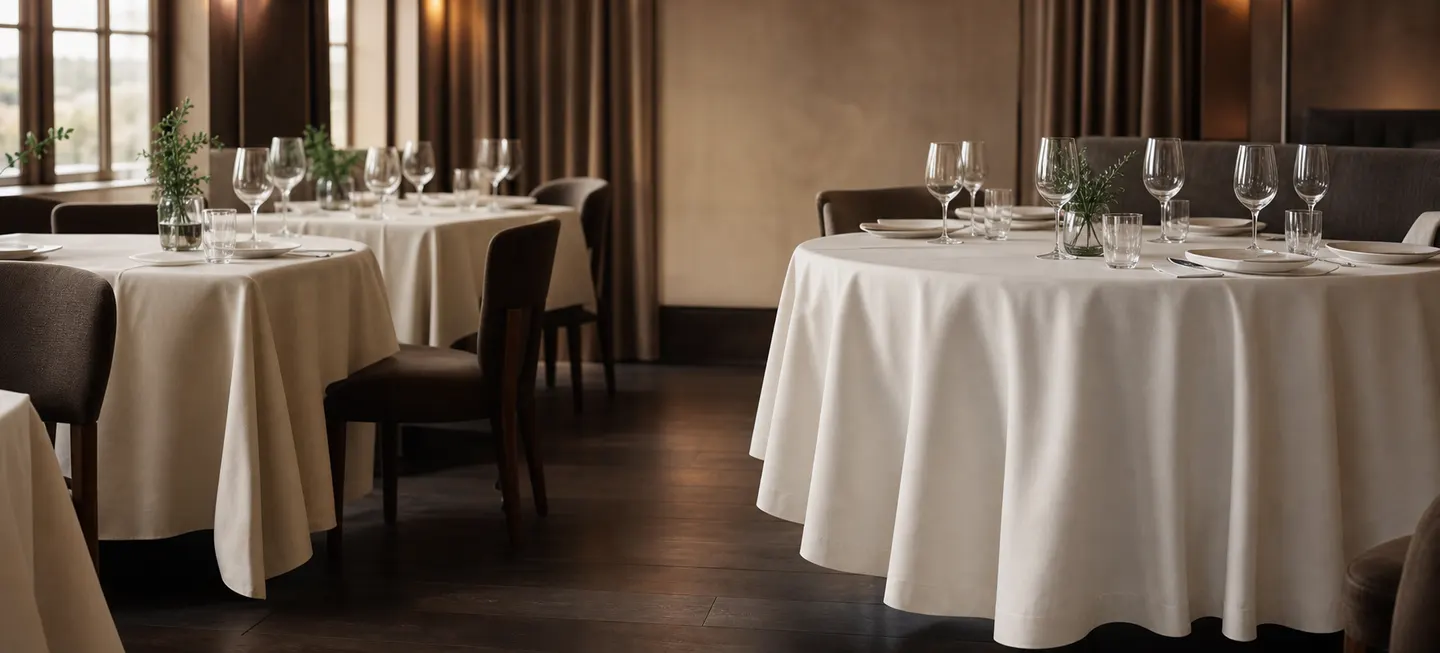
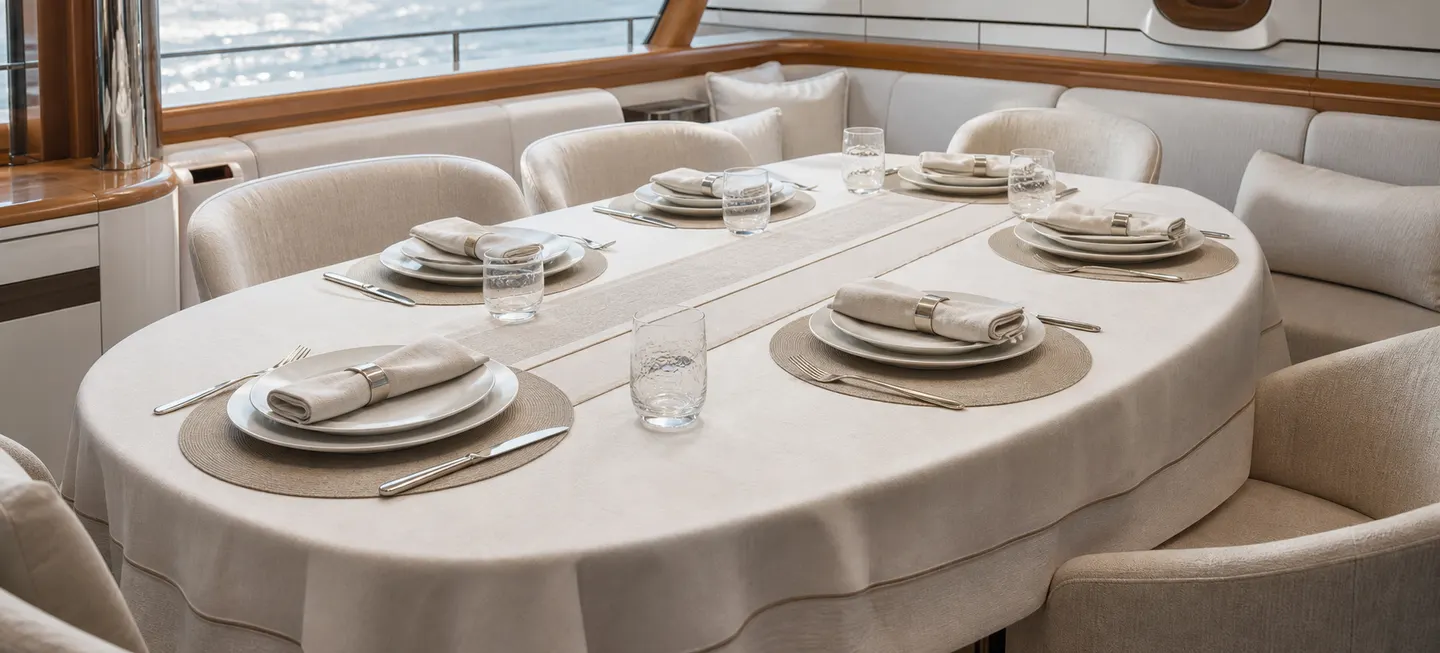
Secure outdoor yacht linen by reducing loose area, fitting the cloth to the table and managing every restraint as onboard equipment—with a clear point at which the table is cleared.
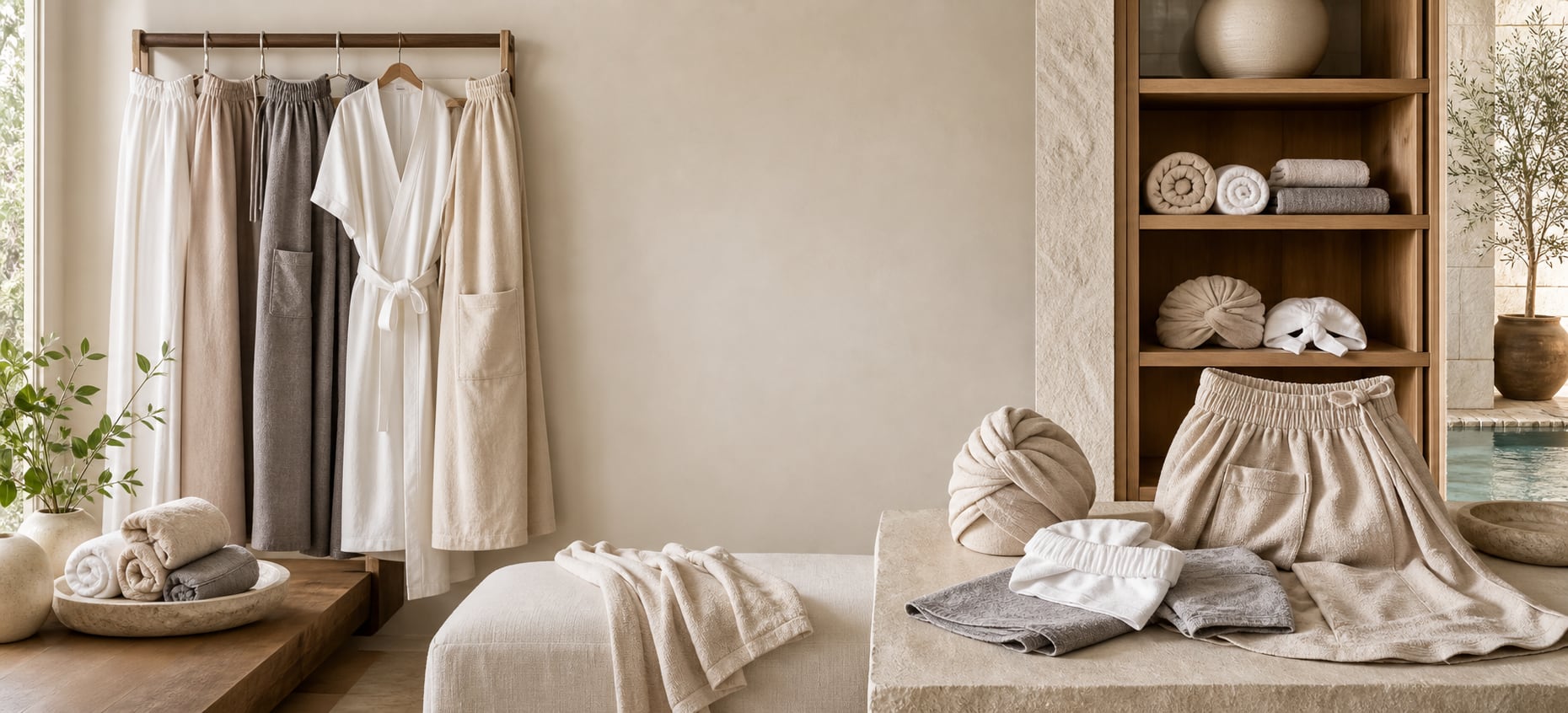
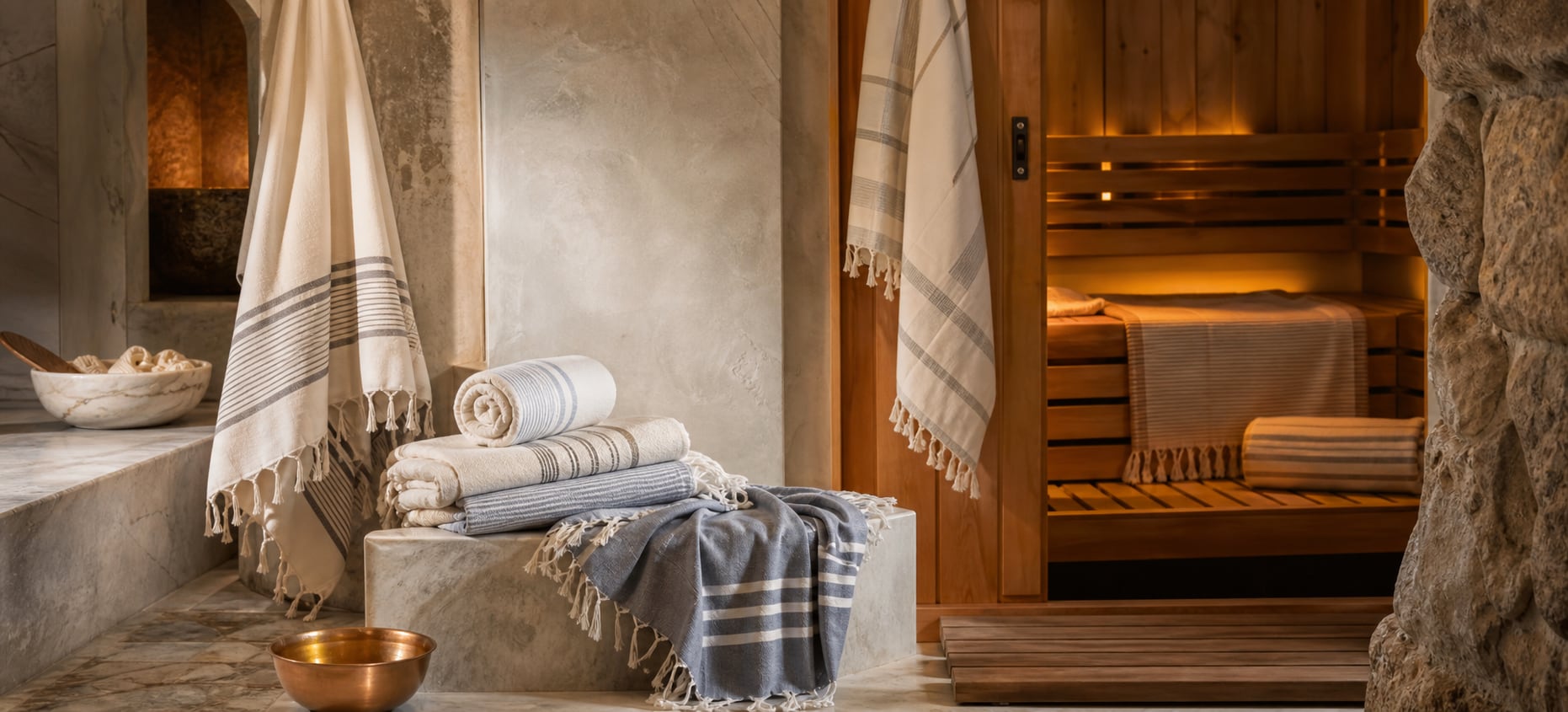
Peshtemal is often the better wrap; terry is often the better final-drying towel. A mixed system can serve a hammam journey better than one universal towel.
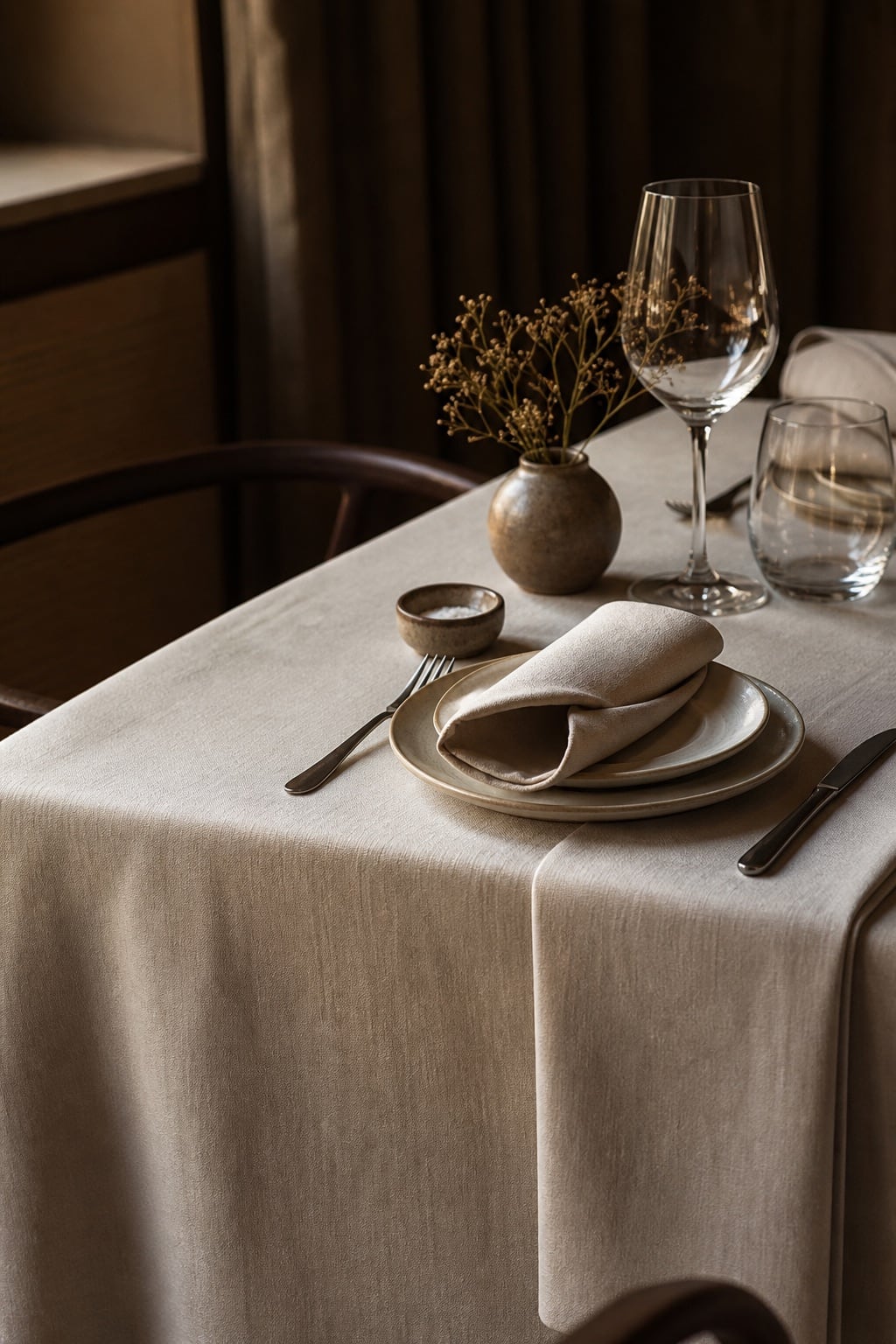
An undercloth earns its place when it improves the table’s feel, reduces contact clatter or steadies the cloth. Waterproofing and heat protection are separate questions.
A freshly laundered protector at each guest changeover is a clear operating policy. Long stays, visible soil and product care limits need their own rules.
Dark linen may disguise some oily marks, while white makes change easier to inspect and may allow a broader wash process. Neither colour removes massage oil.
Cotton usually brings easier wetting and a familiar textile hand; polyester usually brings lower moisture retention and stronger crease recovery. Food soils, finishing and the exact construction can reverse a simple cost assumption.
Pills are attached balls of entangled fibre—not every speck, rough patch or raised surface. Map the defect, review the complete fabric, and test the sheet through its real laundry route.
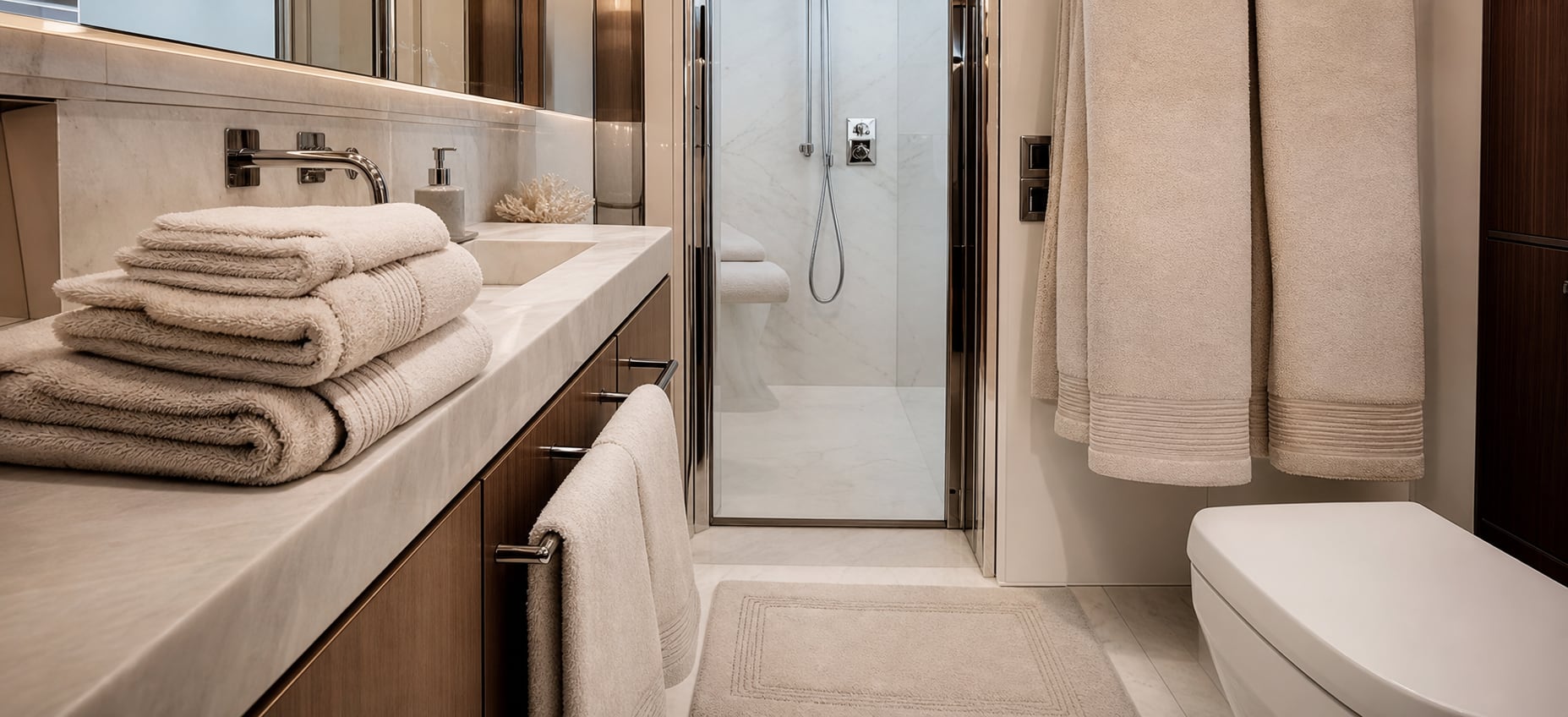
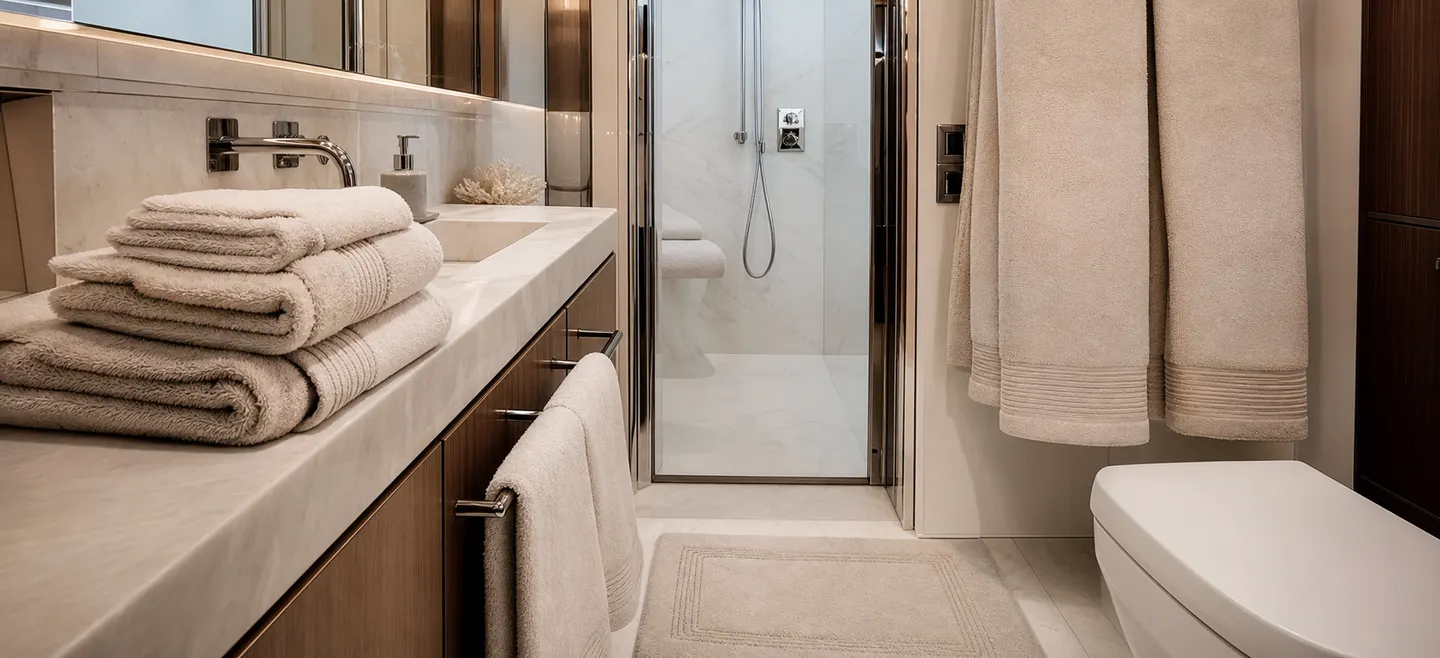
Cotton terry usually suits guest bathrooms; microfiber can make sense for tenders, beach kits and compact fast-turnaround uses. Many yachts need both, clearly zoned.
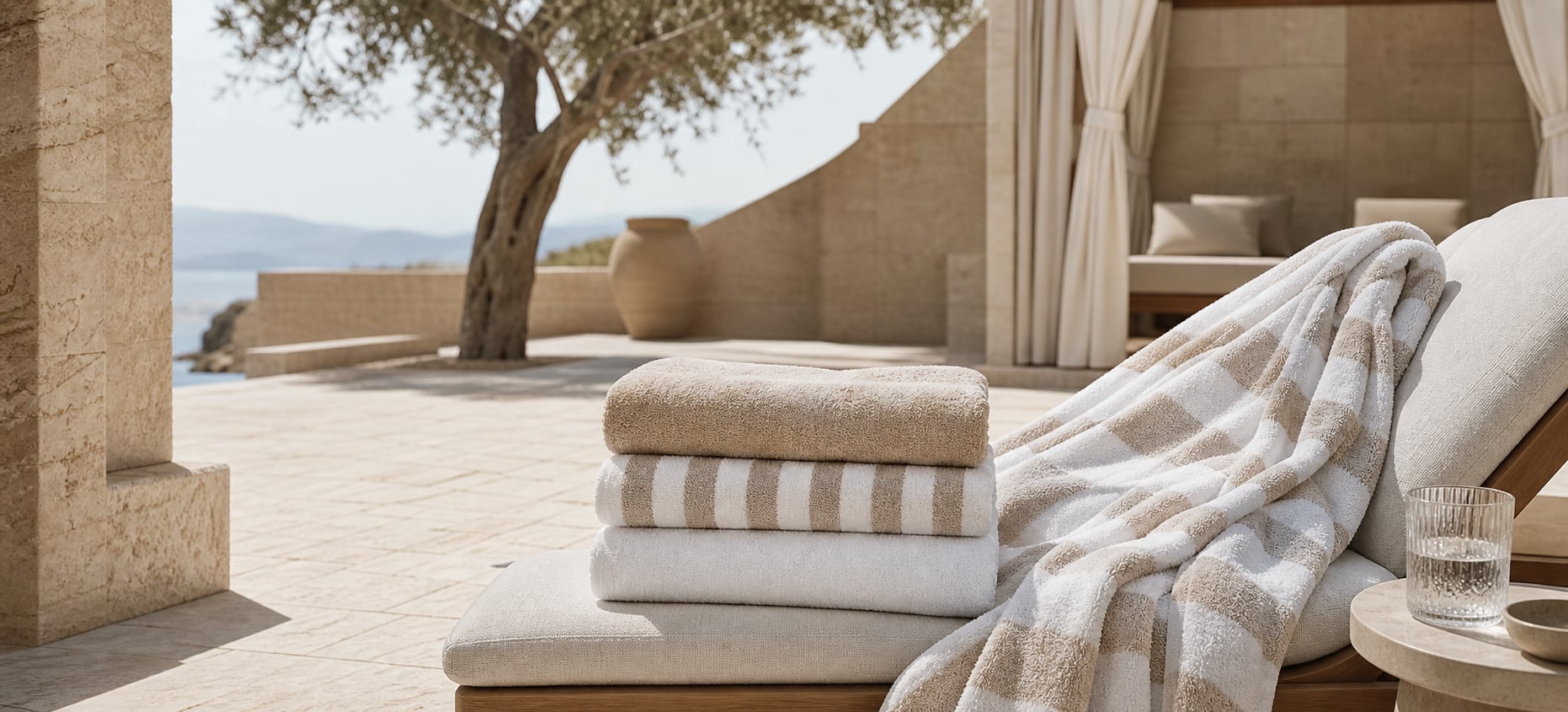
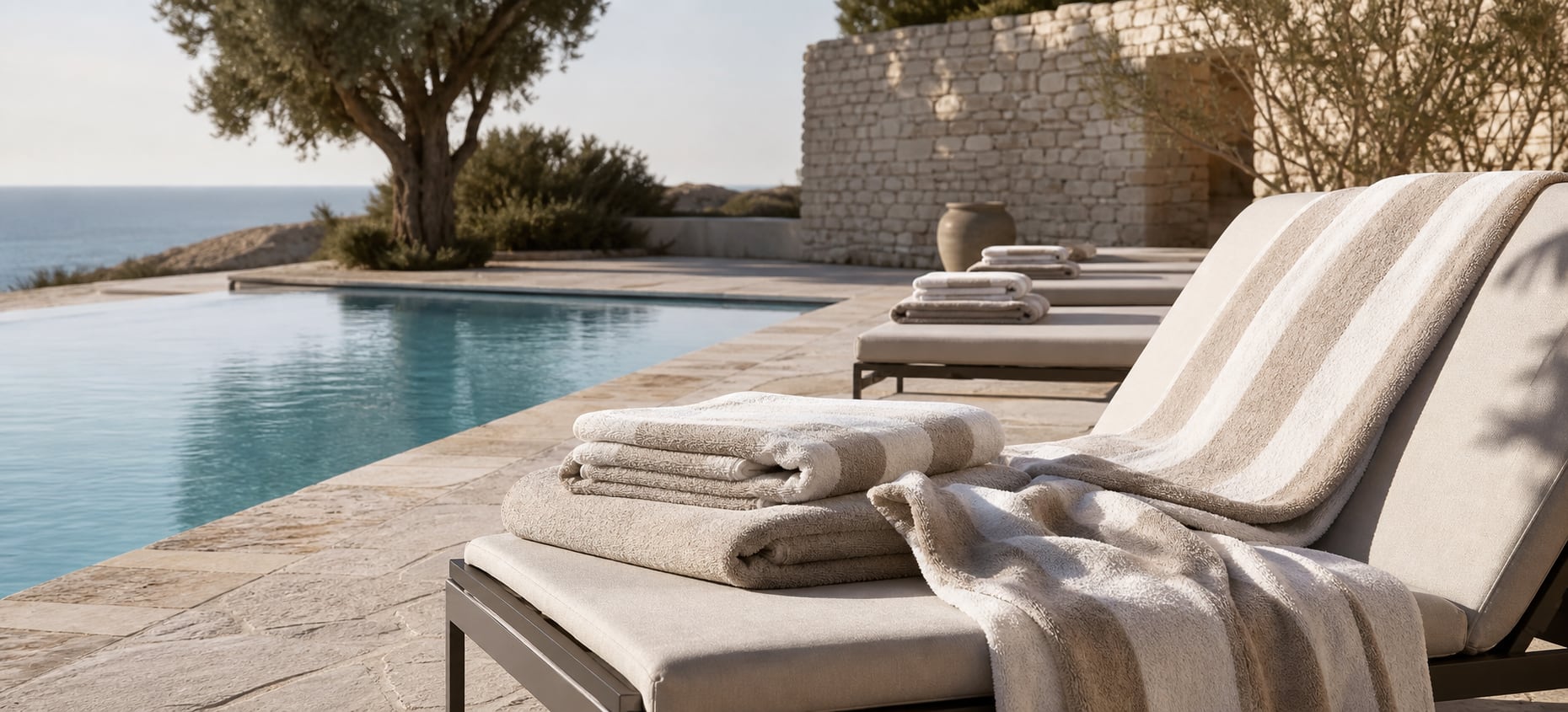
Pool towels face chlorinated water, strong light, sunscreen, rough surfaces and frequent laundry. Diagnose the visible pattern before changing the towel or the wash process.
Cool and lift the solid wax first. Treat the remaining oily or coloured mark only through a method approved for the tablecloth, then inspect it before tumble drying, ironing or returning it to service.
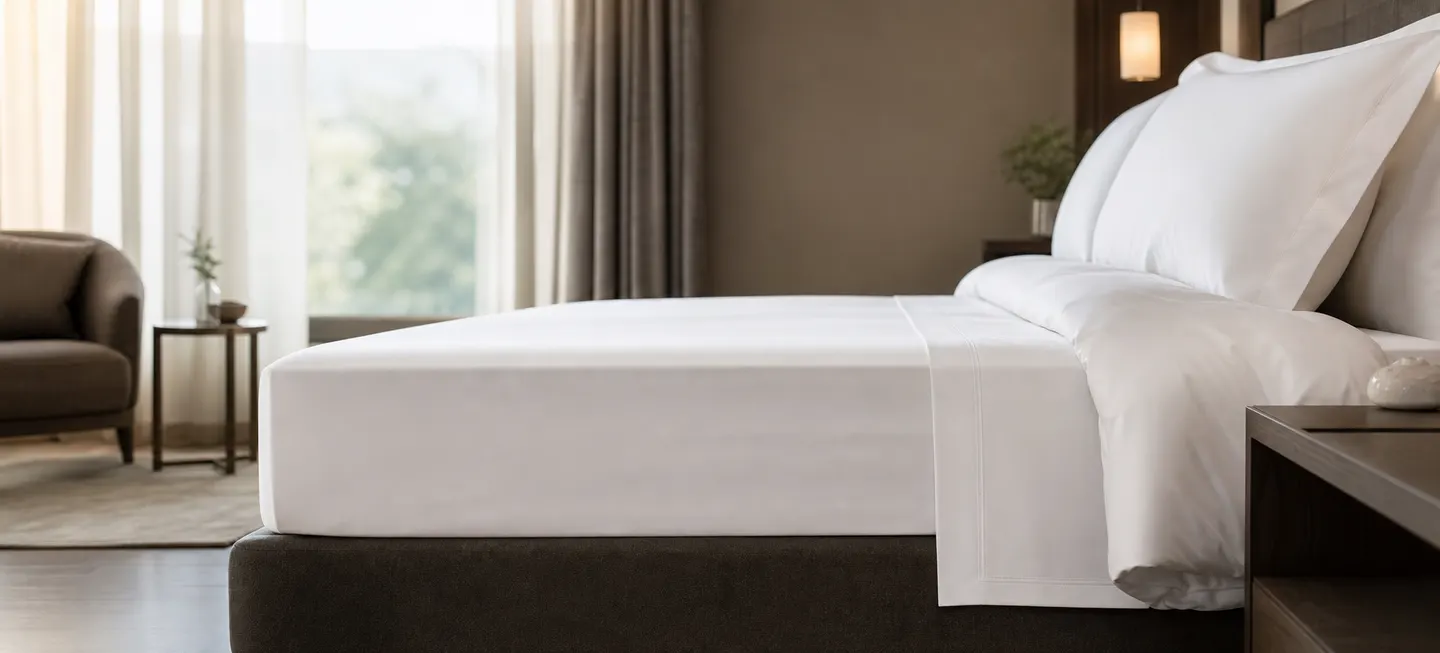
Flat sheets usually simplify flatwork finishing and stock pooling; fitted sheets can support a quick, consistent bottom-sheet fit, but only when processed dimensions, mattress depth and laundry equipment agree.
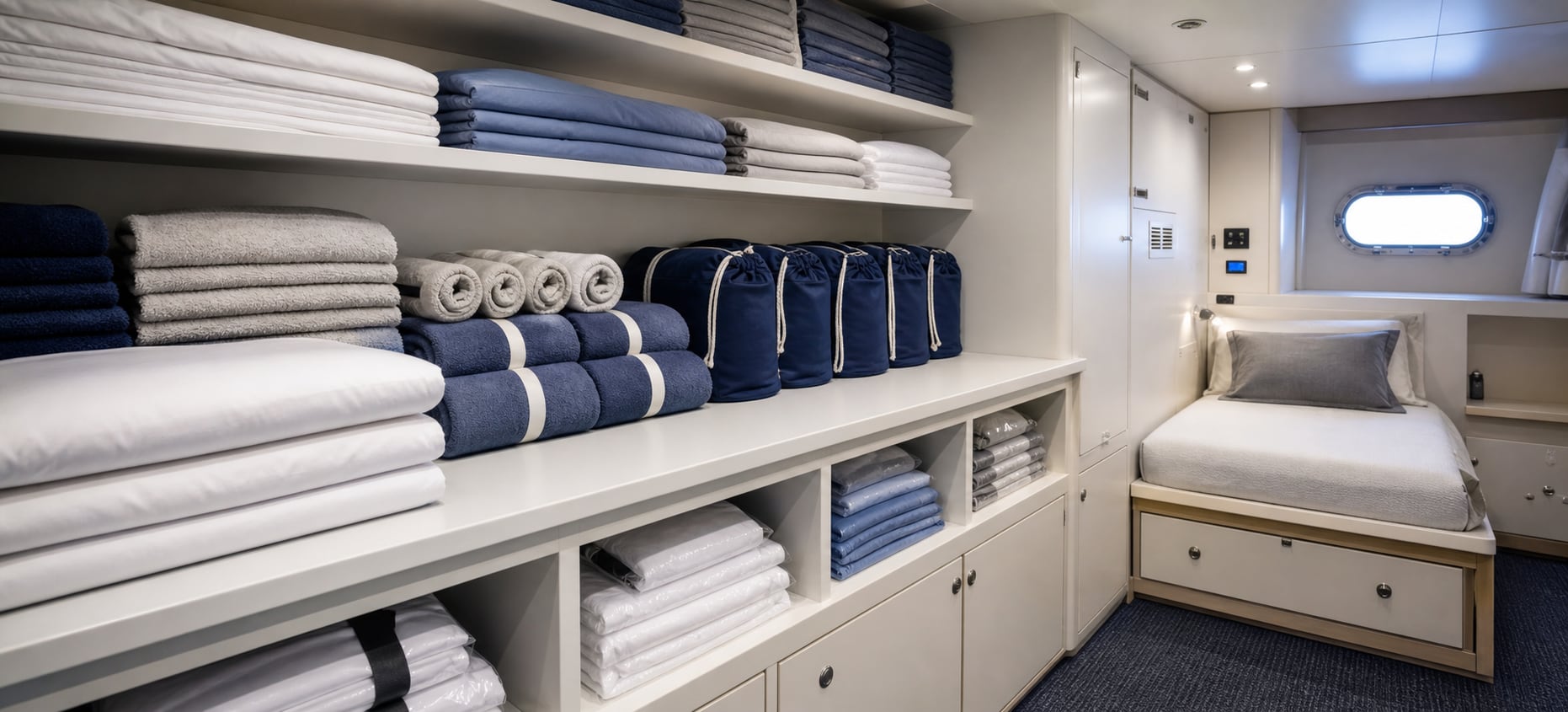
Three complete sets per active guest-bed configuration is a useful first scenario, but the correct stock follows the yacht’s real laundry return time, turnaround plan and cabin layouts.
Many full-size massage tables are around 28–32 inches wide and 73 inches long, but the sheet must also fit the cushioning, added pads, corner shape and laundry process.
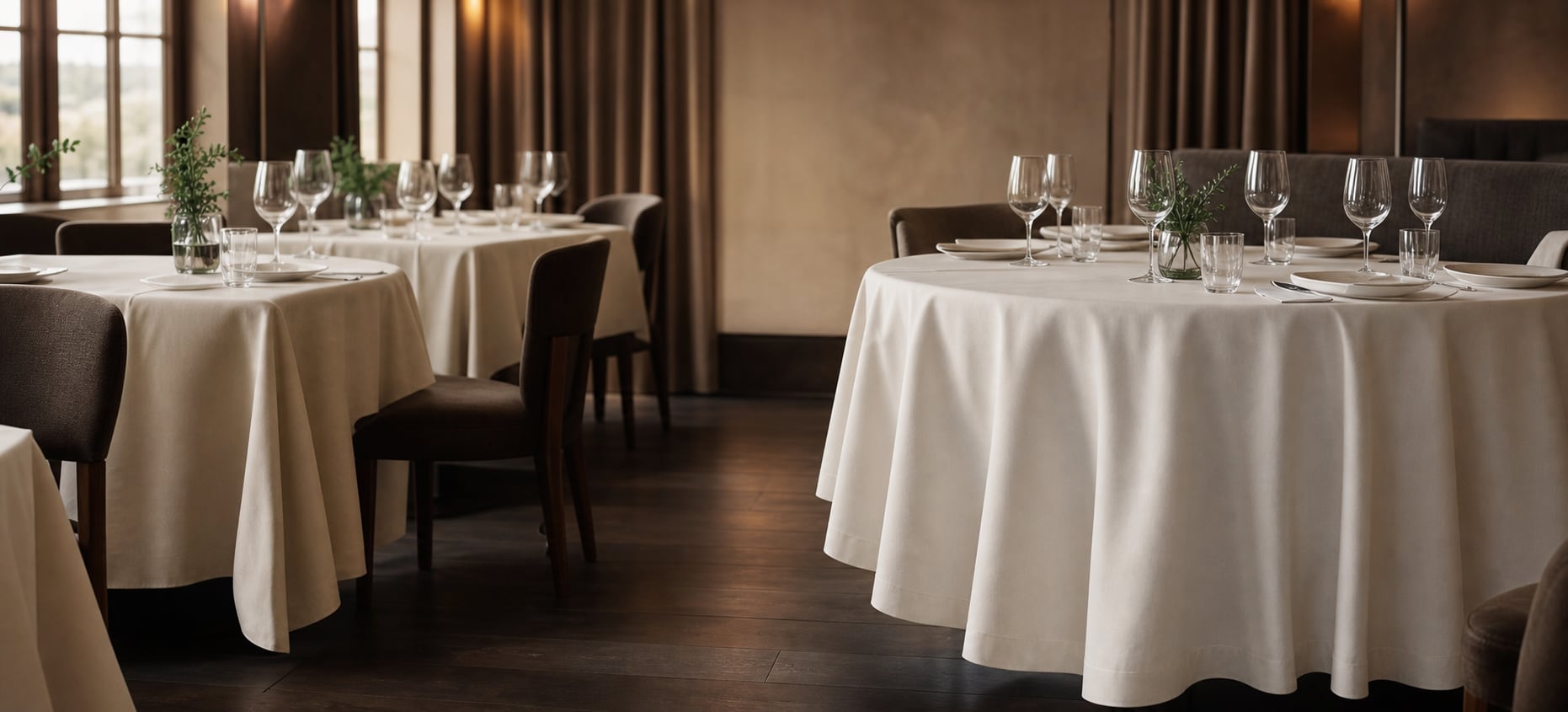
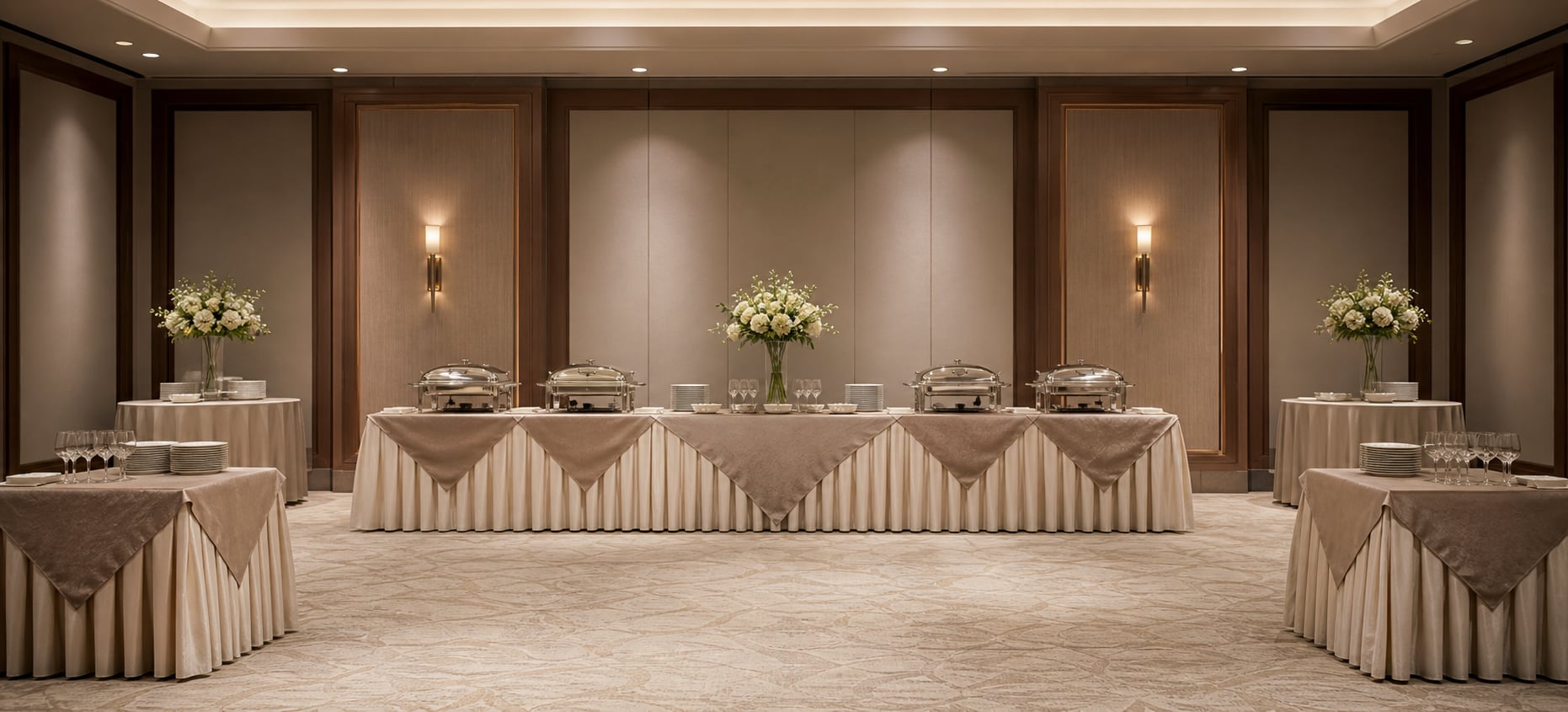
Add the drop twice to every tabletop dimension: a 120 cm round table with a 25 cm drop needs a 170 cm round cloth. The calculation is only the starting point for a processed-size specification.
Some loose fibre release can occur when new terry is first washed and dried. The useful test is whether shedding declines quickly without damaging the pile, hems or finished towel.
Mustiness is a moisture-route warning, not a fragrance problem. Trace whether linen entered storage damp, absorbed condensation in the locker or picked up odour from its surroundings.
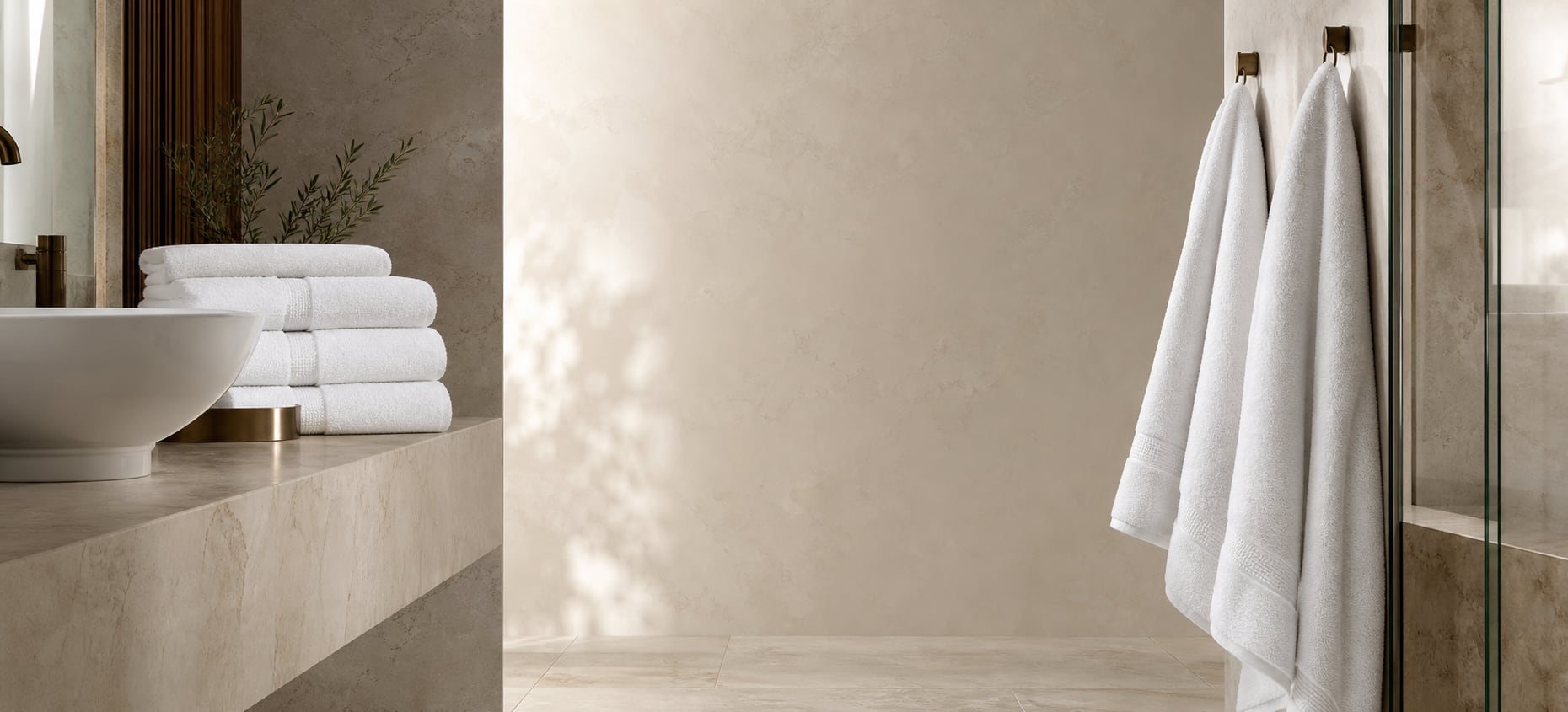
Count every towel format through the busiest interval before clean laundry returns, then add measured unavailable stock and a reserve for a named disruption.
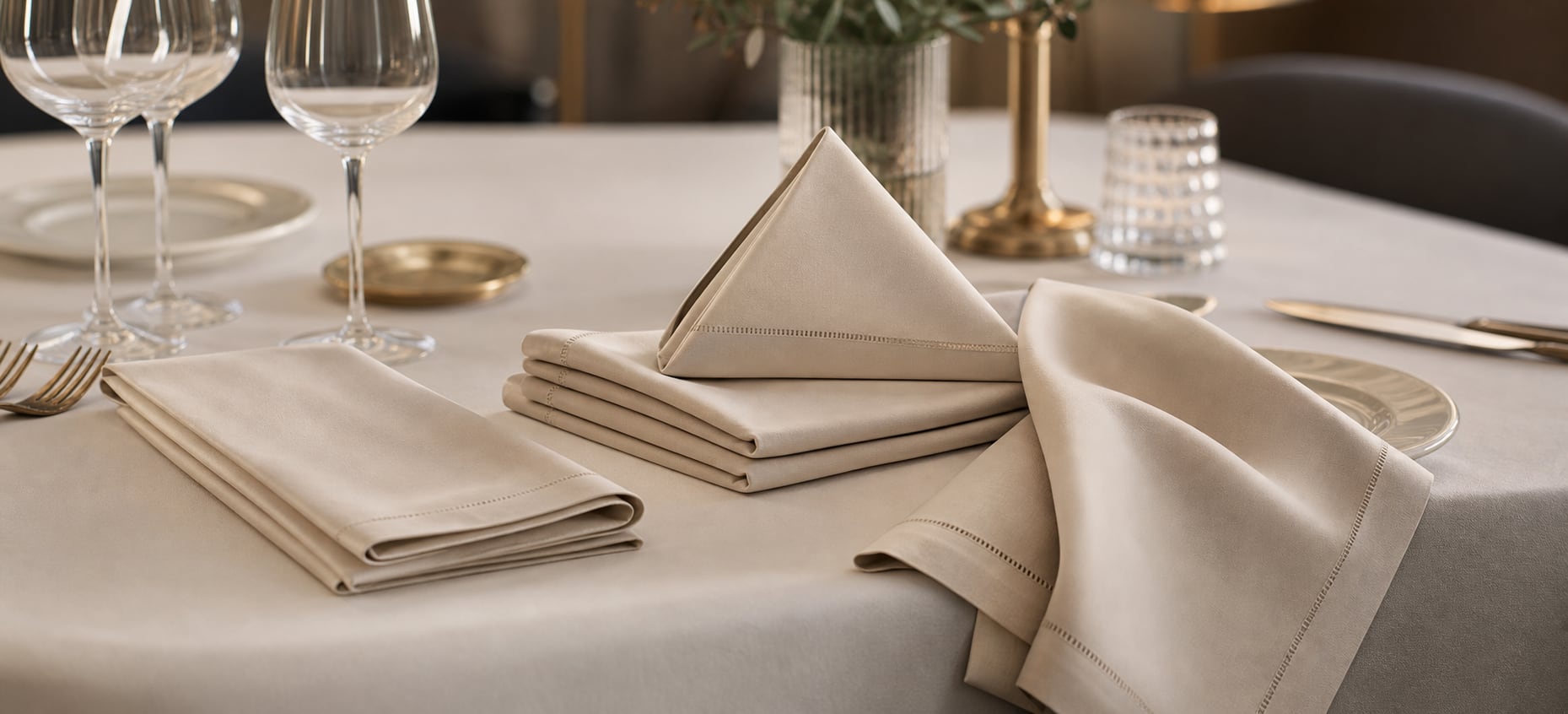
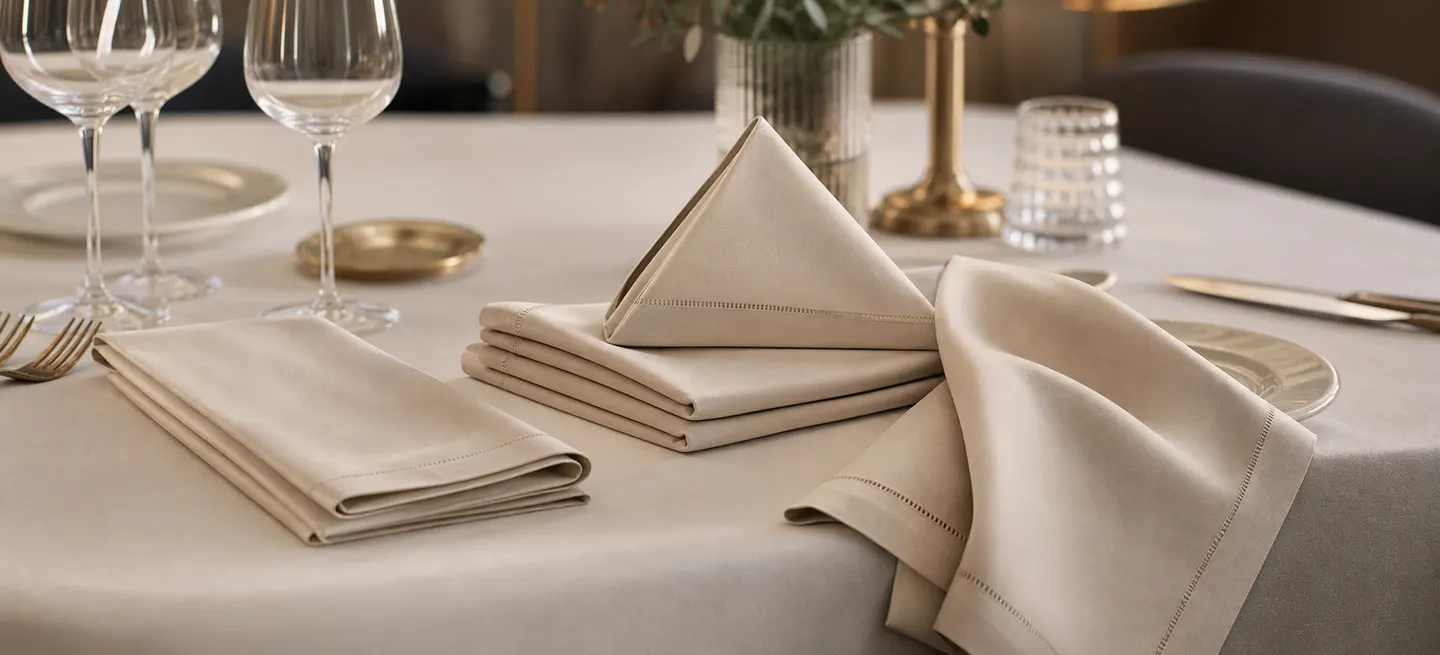
A 50 × 50 cm cloth napkin is a useful starting point for full-service dining. Move smaller or larger only after testing the fold, place setting, lap coverage and processed dimensions.
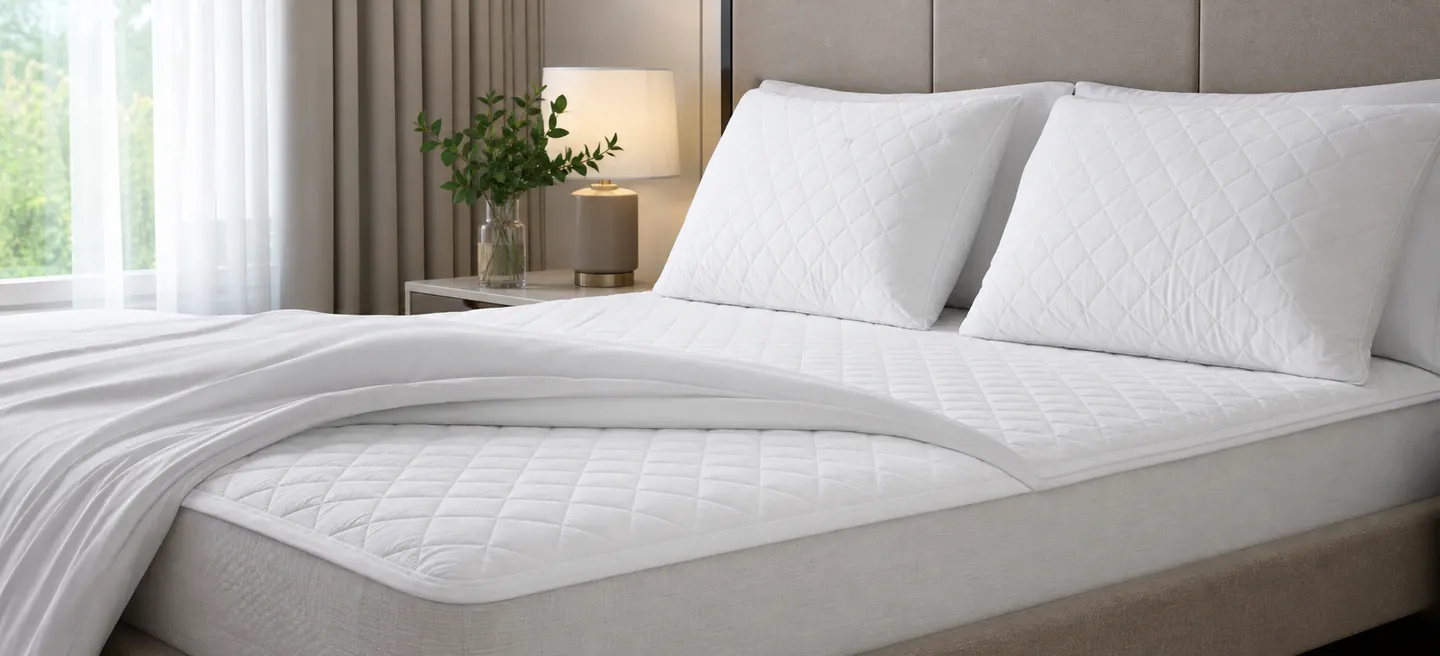
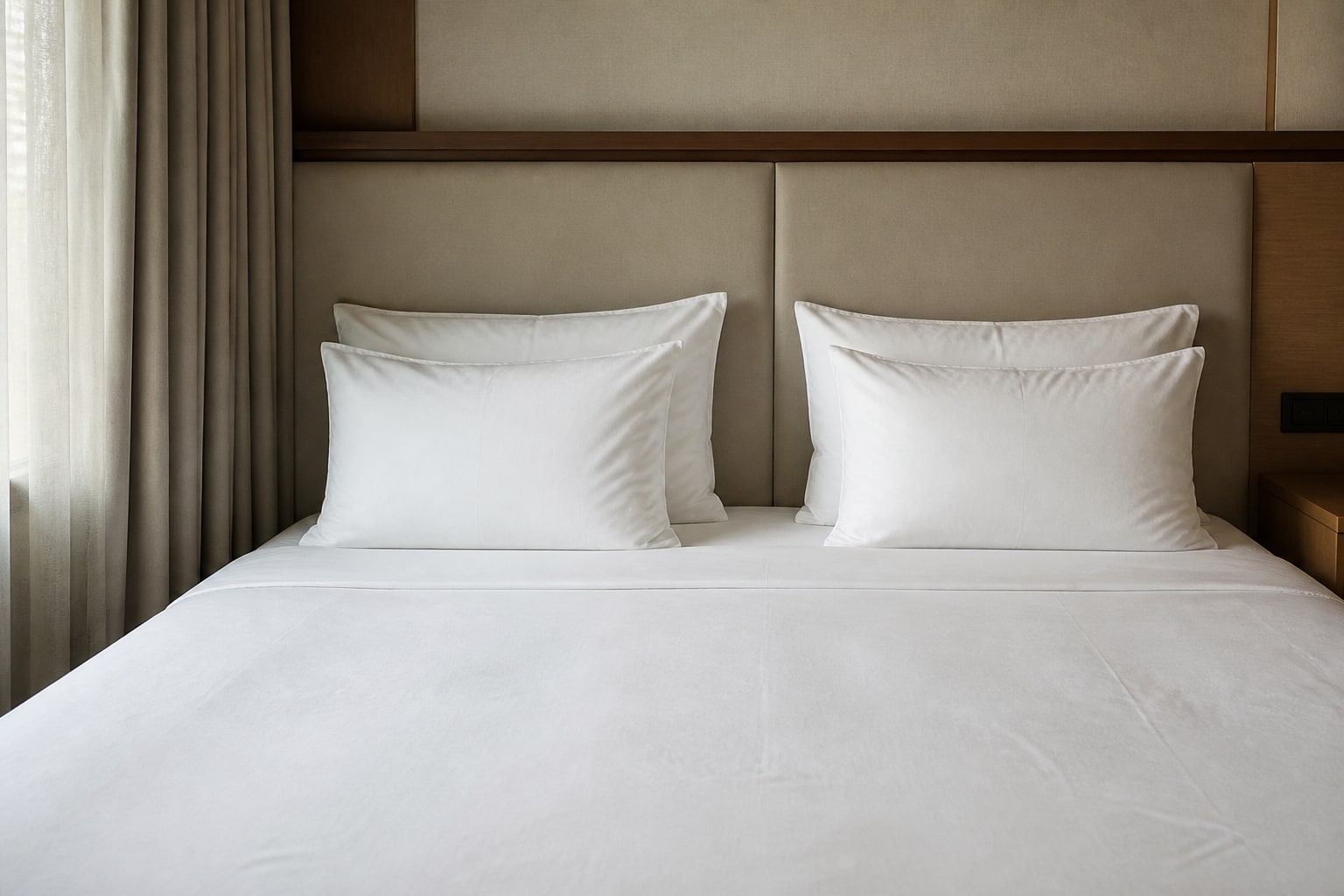
Most hotels need a removable protector for routine mattress care. Add a pad only for a deliberate comfort effect, and specify an encasement when a defined containment plan requires six-sided coverage.
Record the finished mattress as an oriented shape, not a size name. A dimensioned sketch may suit a simple taper; complex curves and bevels usually need a full-size template.
Seats alone do not determine napkin stock. Count the napkins issued across the longest gap between clean returns, then add a measured operating buffer and replacement reserve.
A clean-looking towel can retain massage oil or pick it up again in the wash. Diagnose when the smell appears, then correct the whole treatment-to-laundry route.
Grey and yellow are not one laundry fault. The colour, distribution and timing of the change point to different checks in sorting, water, chemistry, rinsing and drying.
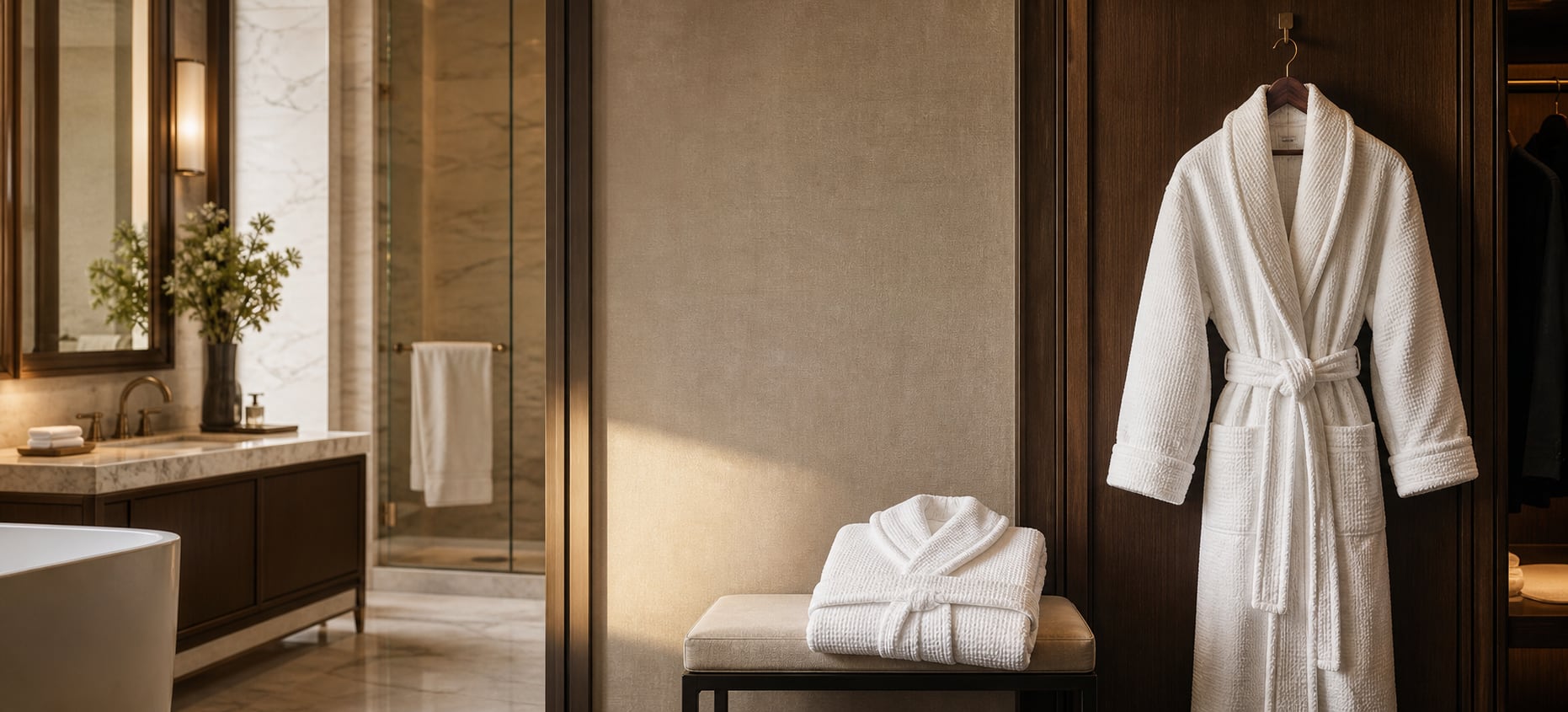
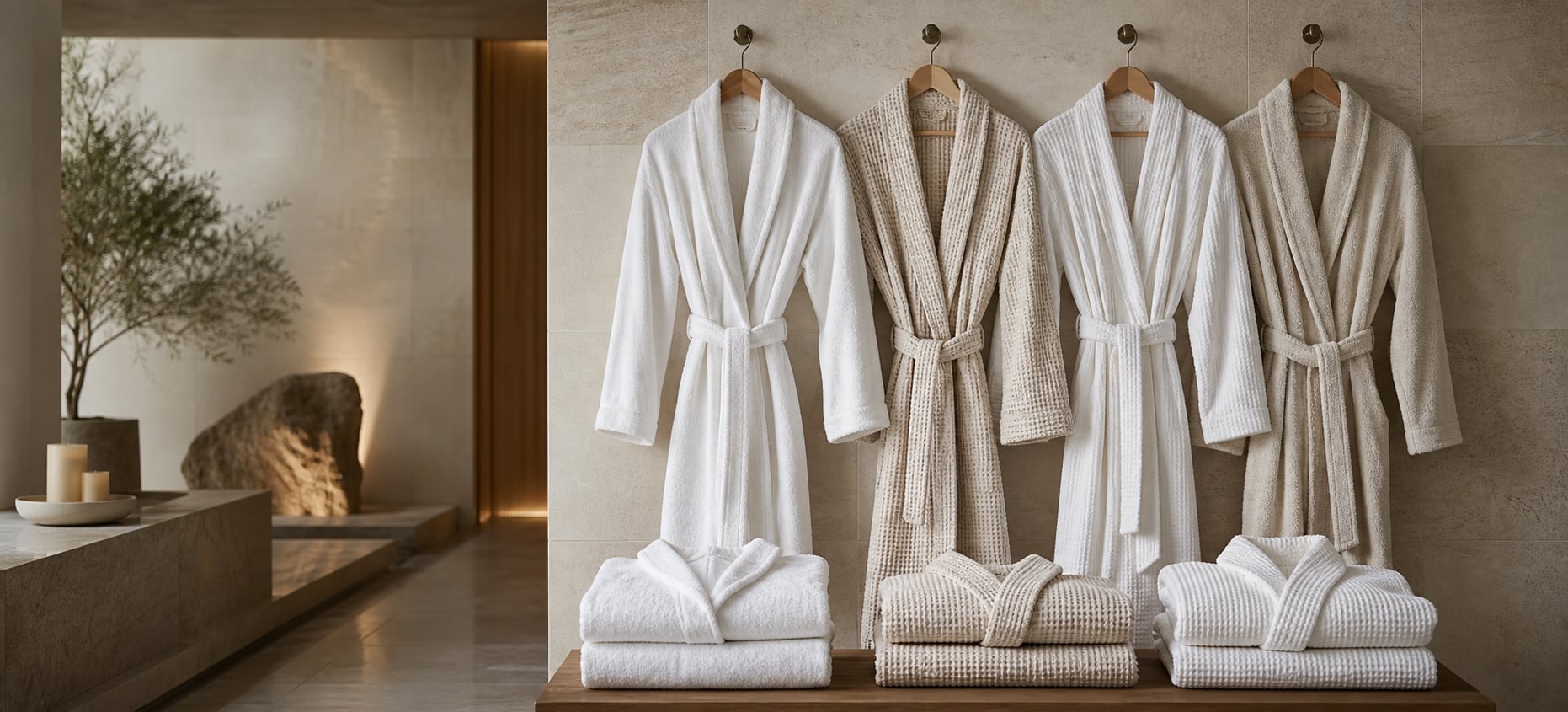
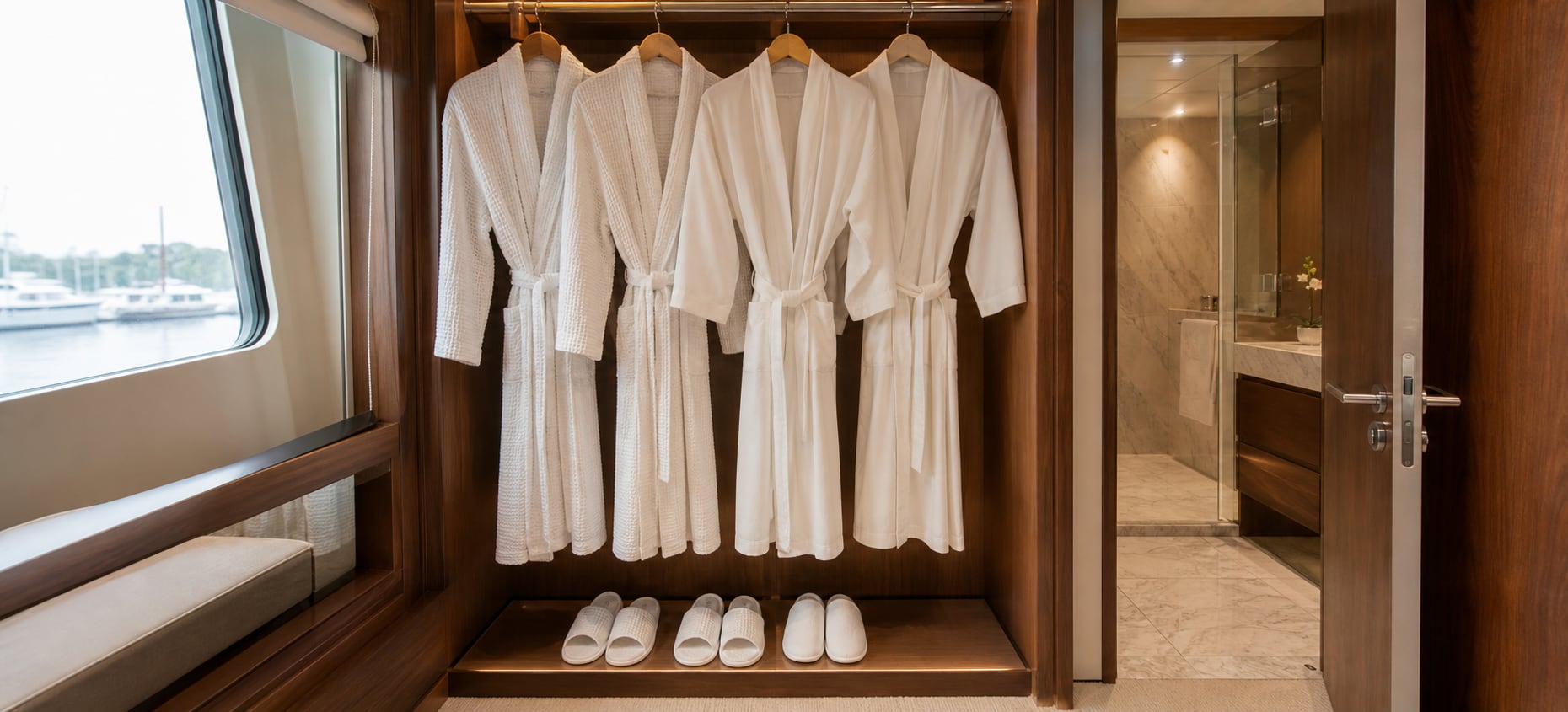
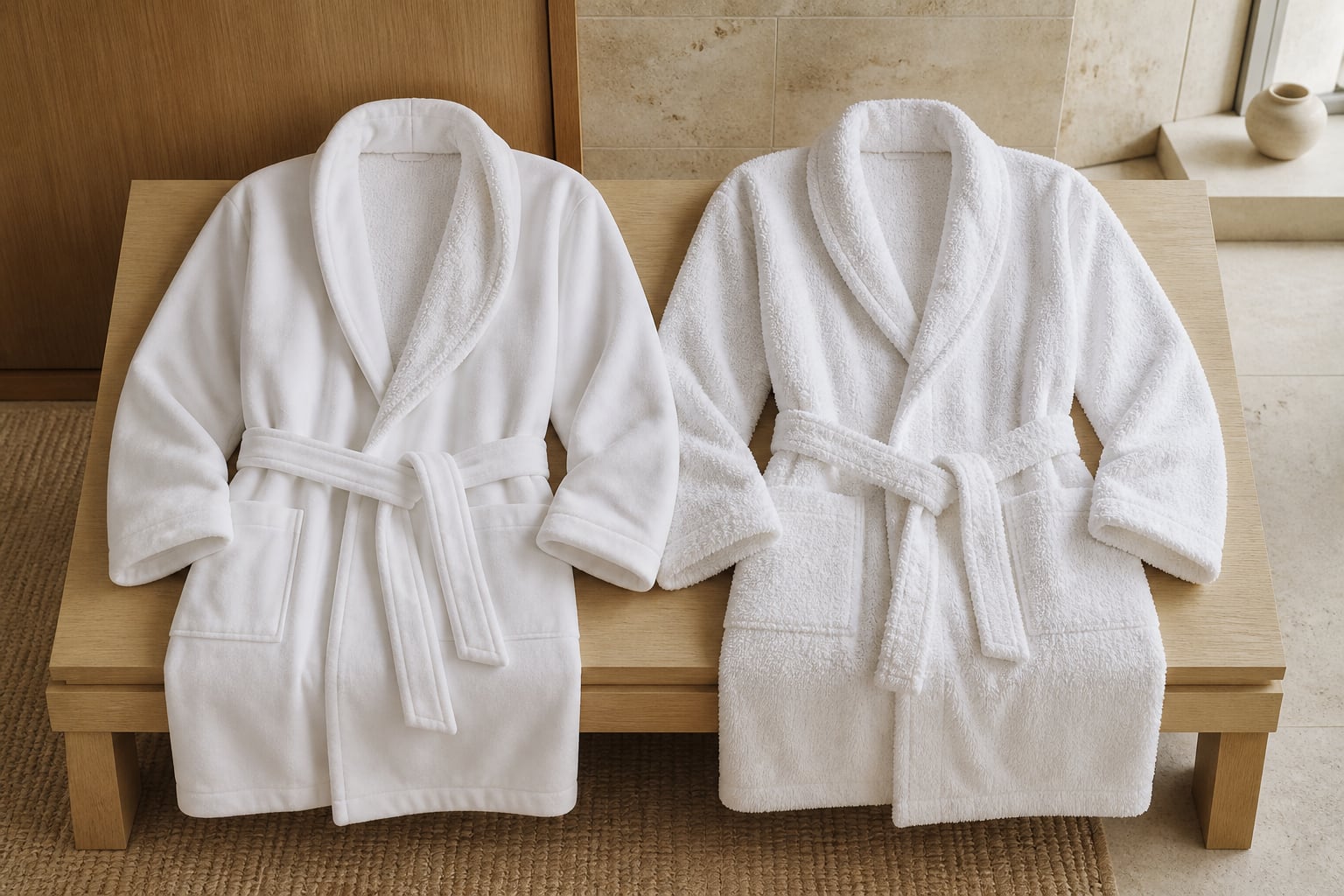
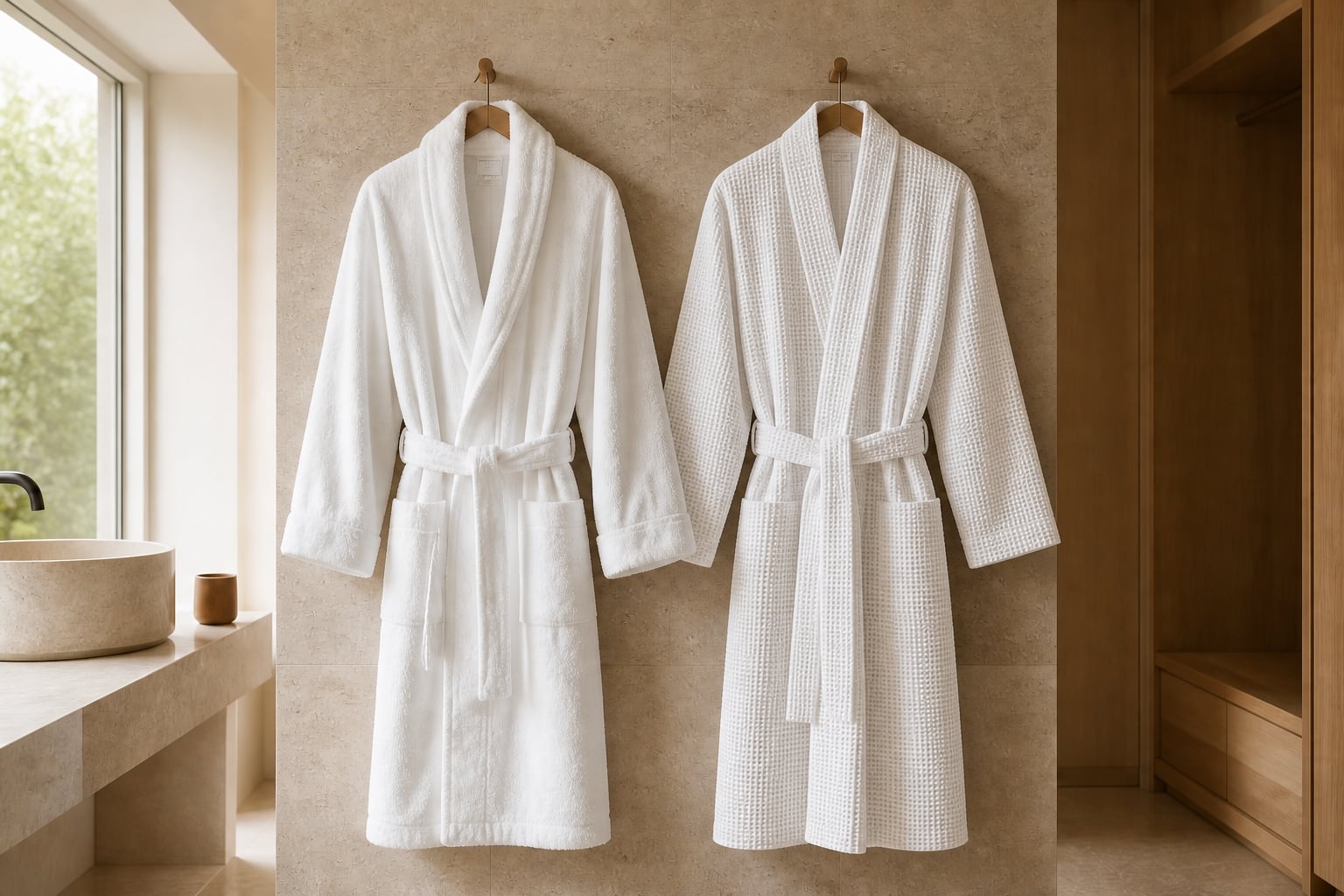
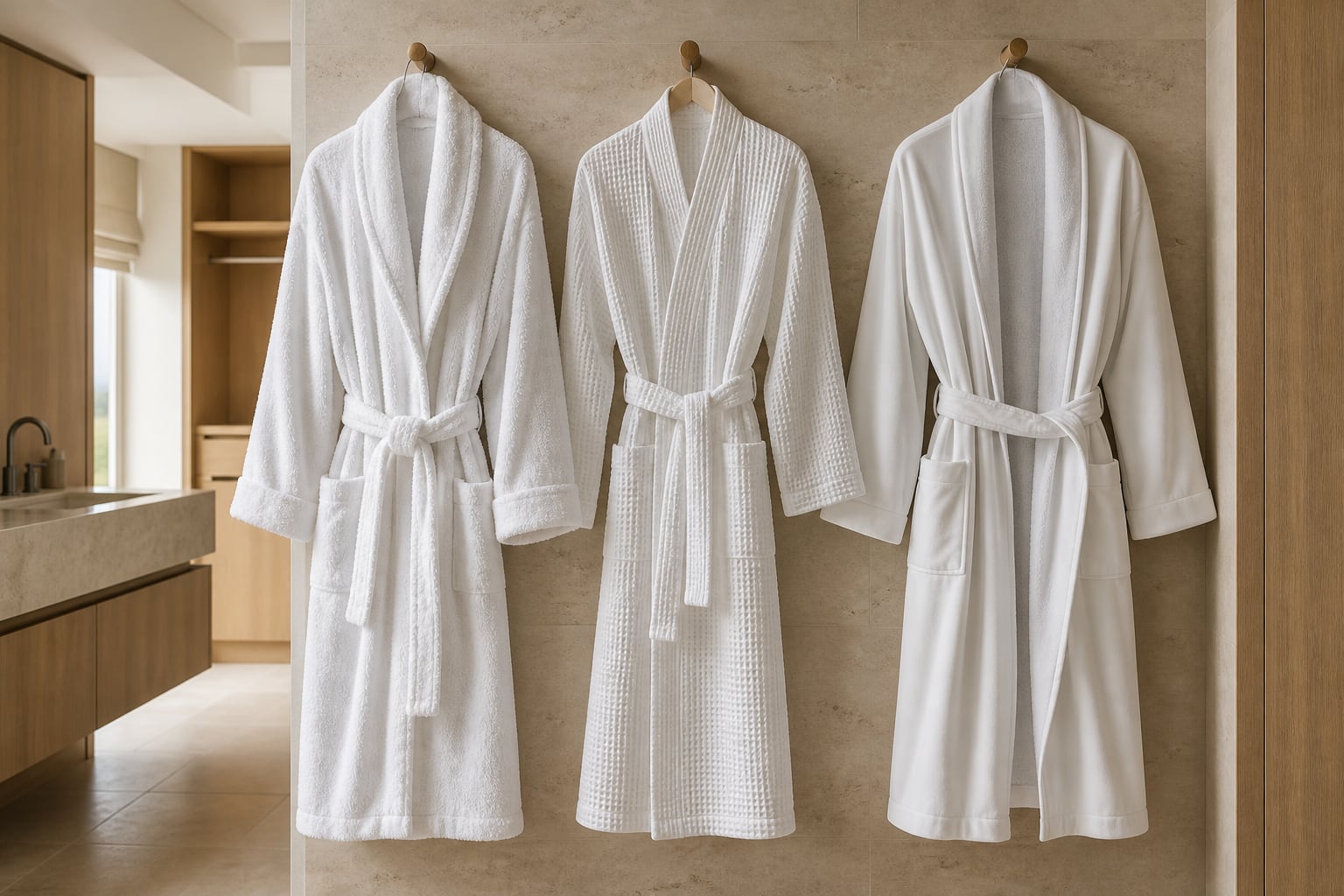
Treat one size, S/M and L/XL as names, not measurements. A hotel robe fits only when it wraps securely, allows easy movement and has sensible sleeve and body length.
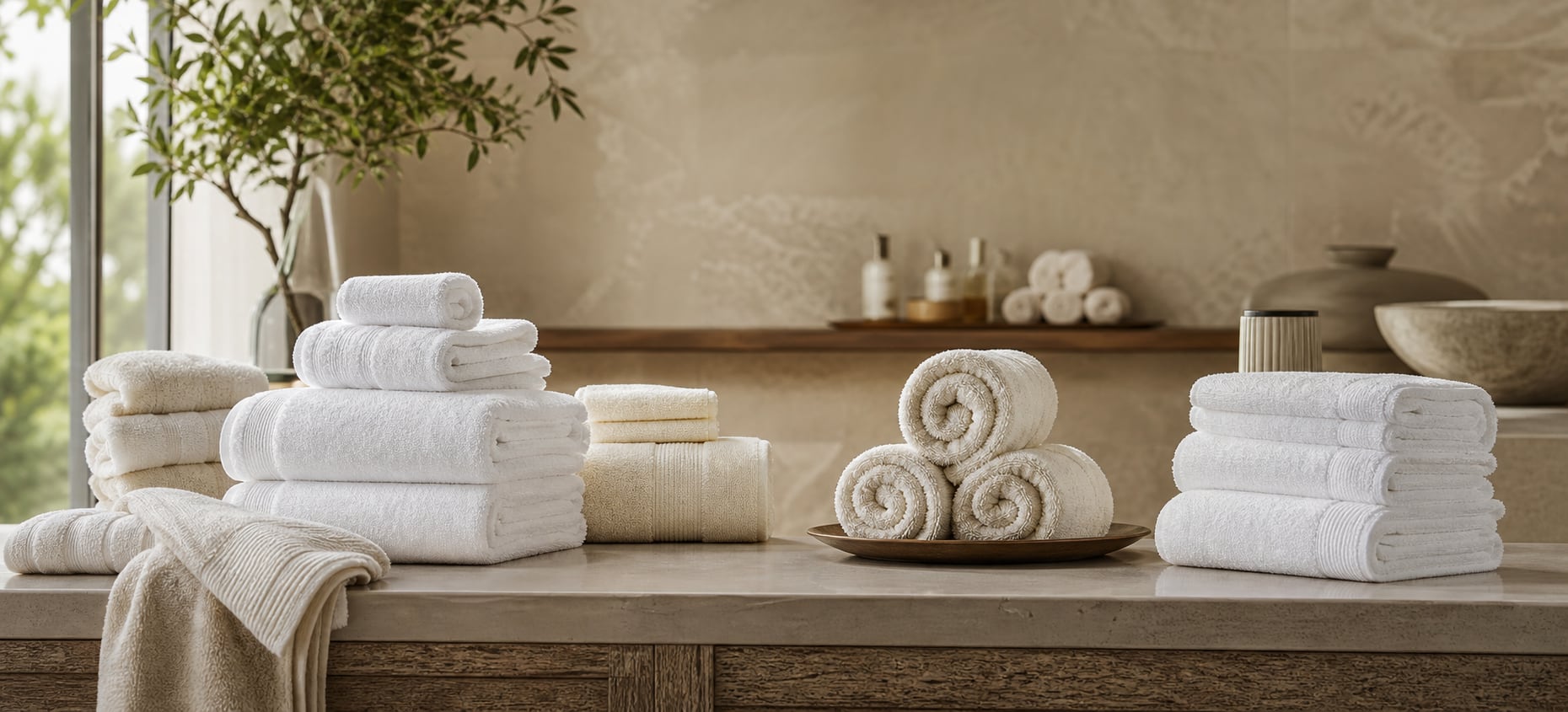
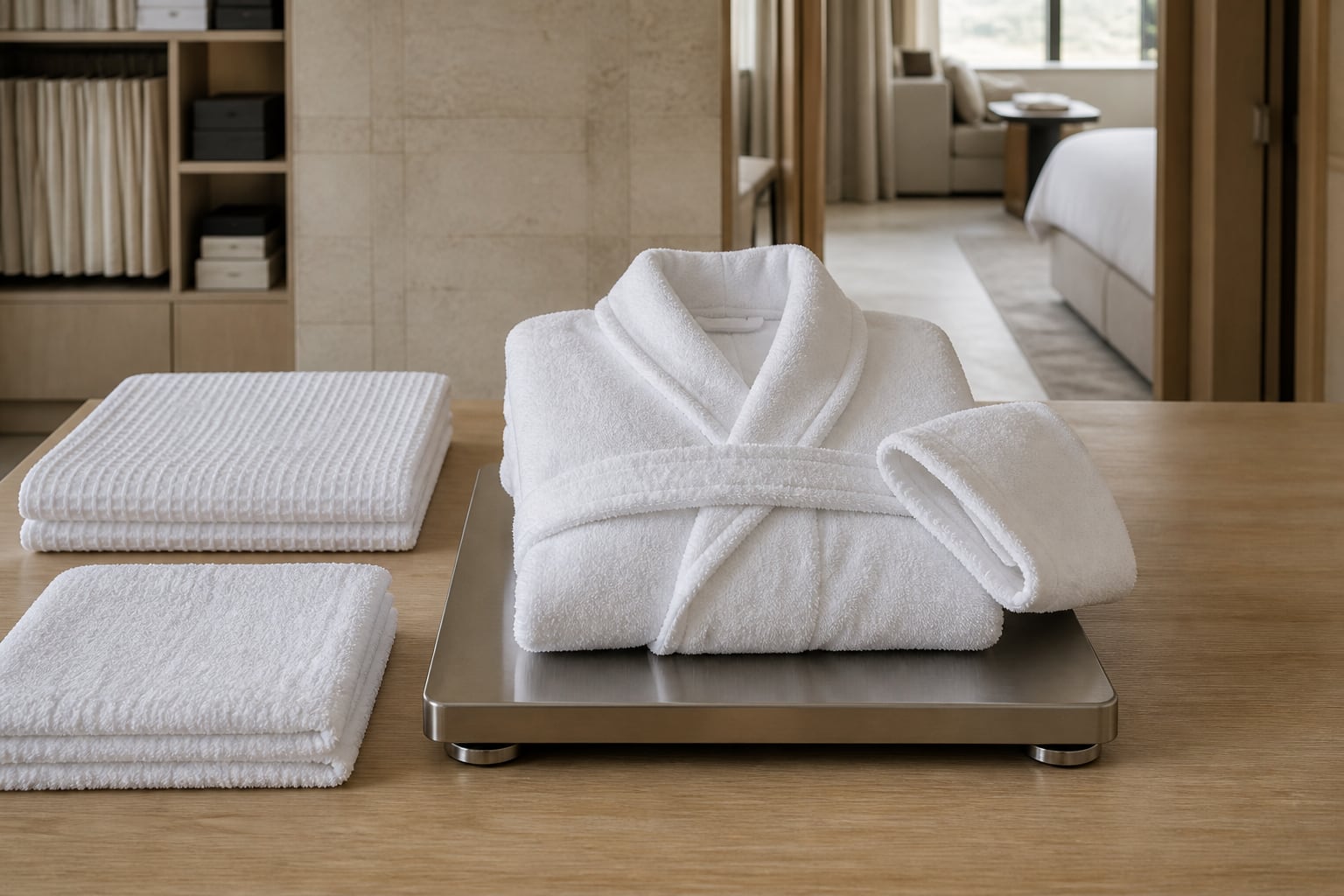
Choose cotton terry velour when a smooth outer face matters and looped terry remains inside. Choose full terry when the same towel-like surface on both sides is more useful.
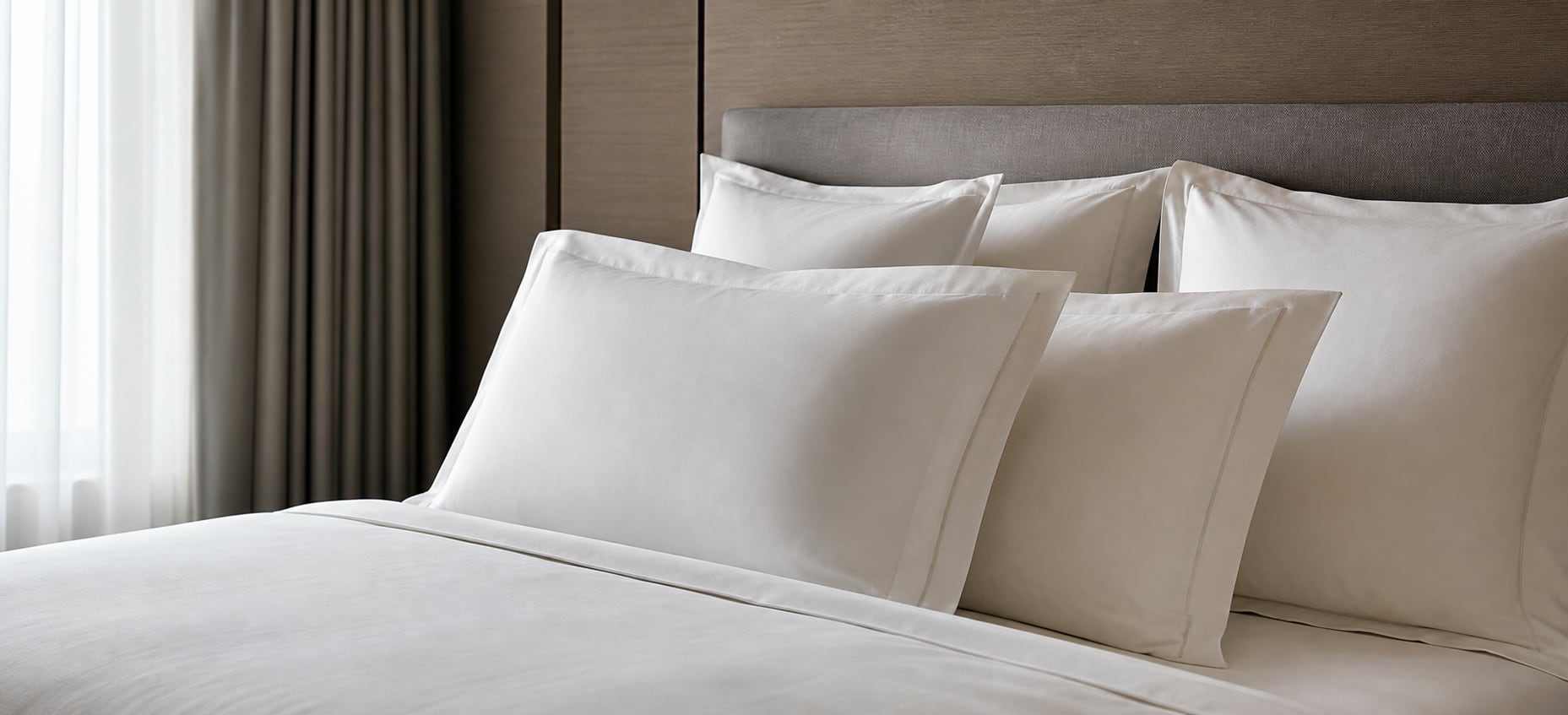
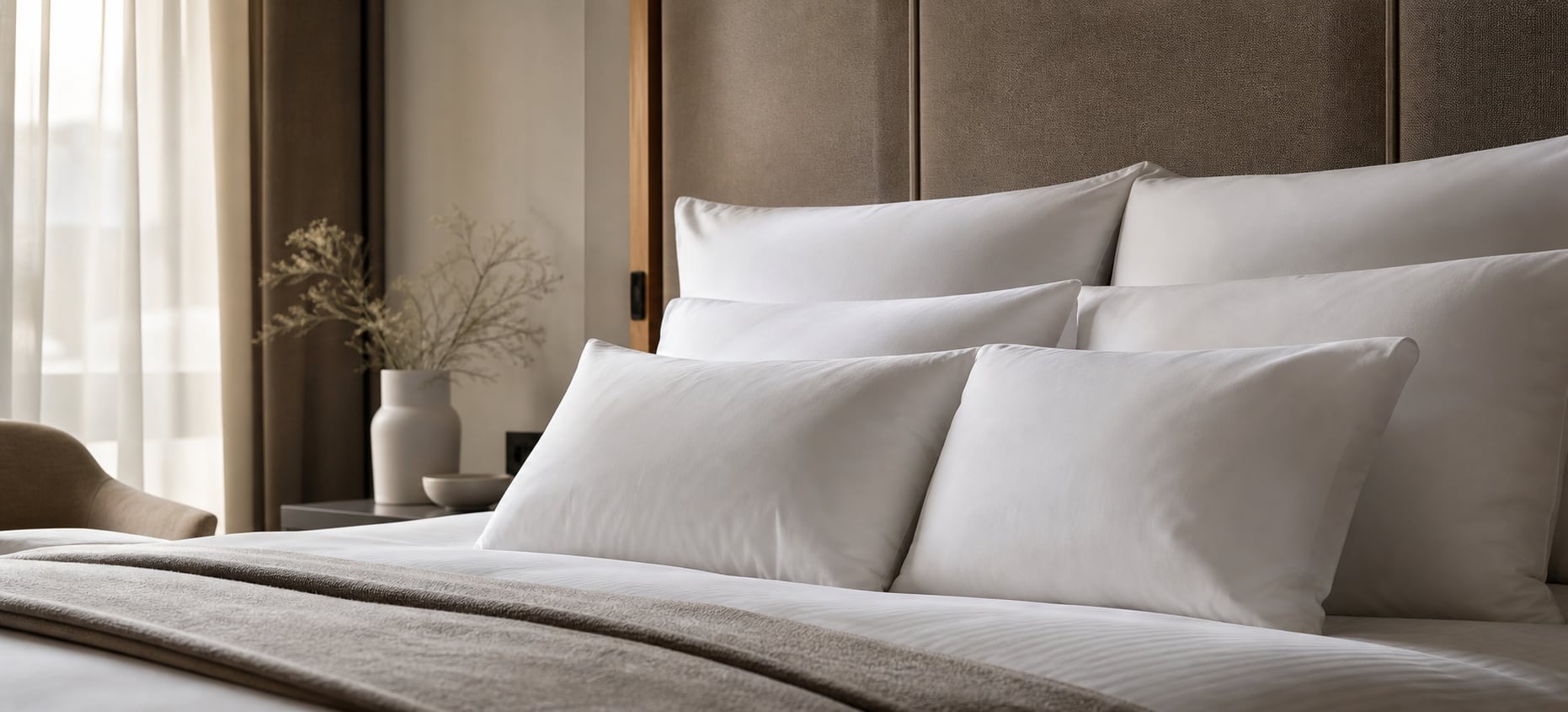
A good synthetic pillow is usually the practical default for standard rooms. Feather and down are useful when the hotel wants a softer, more mouldable alternative and can support its care and sourcing.
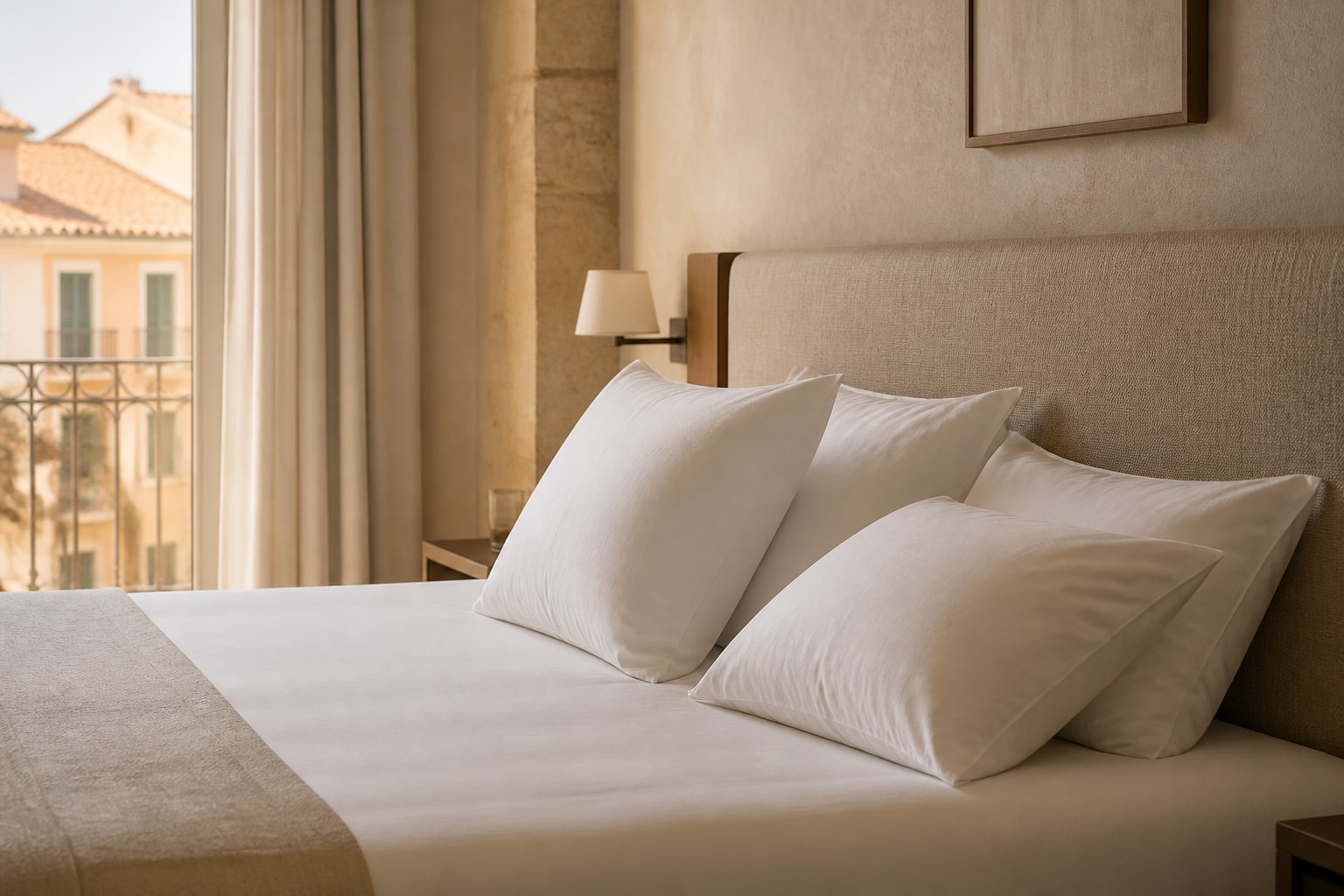
Use medium support when one pillow must cover most guests. If you can offer two choices, make them clearly soft and firm rather than barely different versions of medium.
There is no reliable universal replacement interval. Condition checks and defect records show when a duvet cover can no longer serve its room standard.