
















Bag Style vs Envelope Style Hotel Duvet Covers
A bag-style cover usually leaves a longer open end to tuck beneath the mattress. An envelope style uses an internal flap to contain the duvet. Test both on the actual bed before deciding.
Published by Gencer Textiles

Choose between bag and envelope styles by looking at the open end of the cover and the way the finished bed is made. A bag-style hotel duvet cover is generally longer and remains open so the end can be tucked beneath the mattress. An envelope-style cover has an internal flap that folds around the duvet to help contain it. Those descriptions are useful, but suppliers do not always use the names in exactly the same way. Ask for a drawing or full sample, then let housekeeping make and strip the actual bed before you approve either style.
The decision is not simply speed versus appearance. Duvet size, mattress depth, the amount tucked under the bed, guest movement, room presentation and the laundry finish all change the result. A long open bag may be straightforward in one room and awkward in another with a heavy mattress. An internal flap may hold the insert neatly, yet add a step that staff must repeat during every change.
See the difference at the open end
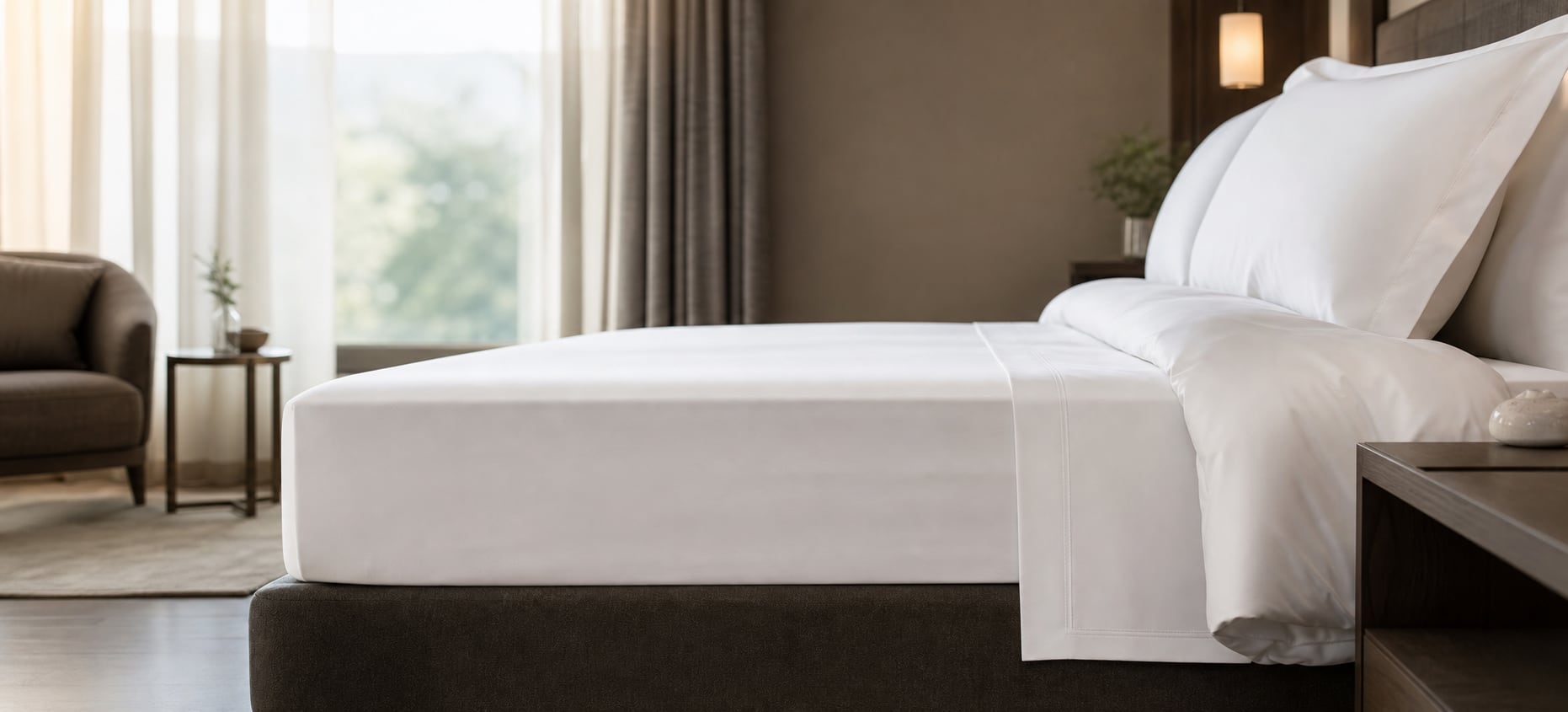
A bag-style cover works like a long open sleeve. Once the duvet is inside, the spare length at the foot is normally folded or tucked beneath the mattress. There is no button, zip or separate fastening to close. The exact length and any hand openings are part of the construction, so “bag style” alone is not a complete order description.
An envelope style adds a flap inside the open end. Housekeeping places the duvet beneath that flap, which creates an overlap rather than a hardware closure. Some suppliers use “envelope”, “flap” and even “hotel closure” for related but different constructions. Record the flap depth, opening width and finished dimensions. A labelled photograph of the approved sample is often clearer than the name.
| Point to compare | Bag style | Envelope style |
|---|---|---|
| Open end | Longer open section, usually tucked beneath the mattress | Internal flap folds around the duvet |
| Hardware | Normally none | Normally none |
| Main handling step | Arrange and tuck the spare length | Place the insert beneath the flap |
| Main trial question | Does the tuck stay neat without slowing the change? | Can staff seat the duvet in the flap consistently? |
Compare the real housekeeping sequence
Time the whole change, not only the moment when the duvet enters the cover. Include collecting the clean piece, finding its orientation, filling the corners, arranging the foot, making the bed and stripping it later. Watch several attendants rather than the fastest person in a demonstration. A style is practical when the team can repeat the result without excessive reaching, lifting or correcting.
Bag style can remove the need to find and secure a flap, but the extra length still has to be managed. If the mattress is deep or difficult to lift, a generous tuck may add effort. Envelope style can contain the duvet without hardware, though staff need to place the insert fully inside the flap. If they miss the corners or leave the flap uneven, the duvet may sit short or form a lump at the foot.
Decide how the foot of the bed should look
The room presentation changes the choice. A bag-style cover is often specified for a bed with the foot tucked in. Check how much fabric remains after the mattress and topper depth have used part of that length. Too little may pull free; too much can create a bulky fold. The trial should include the protector, topper and any decorative layer used in the room.
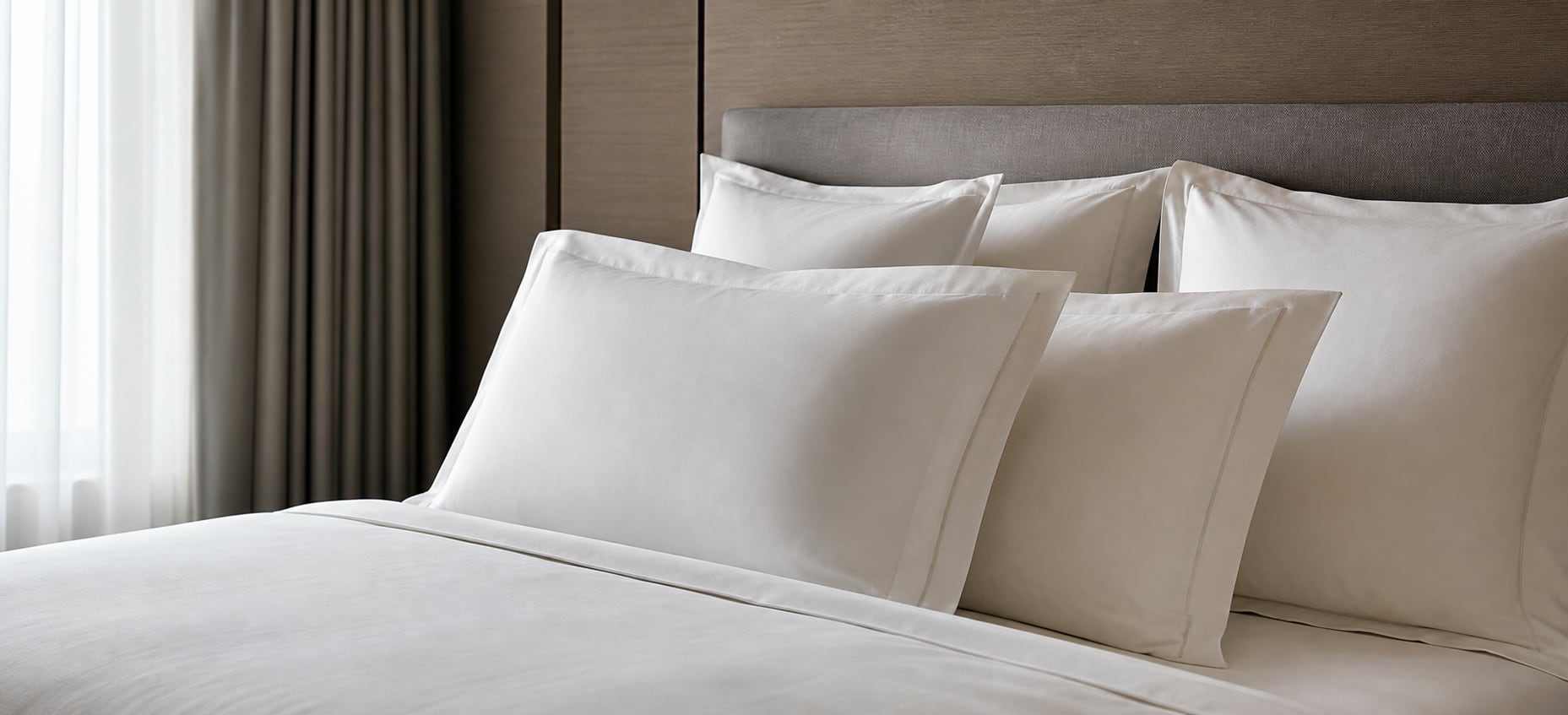
An envelope cover is usually chosen to hold the insert inside the cover rather than create a long under-mattress tuck. Let the made bed rest, then turn it down and remake it. Look at the foot from the guest side and the housekeeping side. The best-looking sample at first placement is not necessarily the one that remains orderly after normal use.
Test duvet control without assuming it
An internal flap can help keep the duvet behind the opening, but it cannot correct a poor size match. A duvet that is much smaller than its cover can still migrate within the body. A cover that is too tight can compress the insert and pull at the seams. Bag style also relies on the correct cover length, a sound tuck and a sensible match between cover and duvet.
Make the bed, turn it down and handle it as a guest would. Then check whether the duvet remains in the corners and whether any insert is exposed. Repeat after laundering, because dimensional change can alter the overlap or tuck. Where different duvet sizes share one linen room, include identification in the trial; a construction problem may actually be a sorting error.
Send both styles through the laundry
Process full-size candidates through the intended washing, drying and finishing route. Compare finished length, flap depth, opening shape, seam puckering and the ease of folding. A flap that behaves well when new may curl or become harder to locate after finishing. A long bag may feed differently through ironing or folding equipment. Ask the laundry team to record what it observes rather than relying on a domestic care label alone.
Keep an untreated control and mark the measurement points. Use the same procedure for both candidates so the comparison is fair. Do not borrow a universal shrinkage allowance from another fabric. The construction, finishing and process all matter, and a small change at the opening can affect how well the style works on the bed.
Approve the sample, not the name
Write the final specification around the physical result: finished width and length, flap or tuck construction, opening width, seams, hand holes if used, labels, tolerances and the approved care route. Add a simple diagram and keep a processed reference. This prevents a later order described as “envelope style” from arriving with a different flap or opening.
If both styles work, choose the one that fits the hotel’s normal bed-making method and is easiest to repeat across room groups. If neither works, first review the size relationship and the foot-of-bed presentation. Changing the closure name will not solve a cover that is dimensionally wrong.
Use the hotel duvet-cover range and the wider Stay textile category to compare the approved construction against the project brief, not as a substitute for the full-size trial.
Frequently asked questions
Do all suppliers mean the same thing by bag and envelope style?
No. The terms often describe an open bag with extra tucking length and a cover with an internal retaining flap, but construction details vary. Ask for a technical drawing or full sample showing finished length, opening width, flap depth, seams and any hand holes. Put those details in the order record so the approved result does not depend on a name alone.
Is a bag-style duvet cover always faster to change?
Not always. It removes buttons, a zip and usually an internal flap, but staff still need to arrange and tuck the longer open end. Mattress depth, duvet weight and access around the bed affect the work. Compare the complete make-and-strip sequence with several attendants before deciding.
Does an envelope flap stop the duvet from moving?
It can help contain the duvet at the opening, but fit still matters. A cover that is too large may allow movement inside, while one that is too small may compress the duvet. Measure the actual insert and review the processed cover using the method in the hotel duvet-cover size guide.
What should a hotel send when requesting a bag or envelope sample?
Send the duvet dimensions, mattress and topper depth, intended bed presentation, normal laundry route and the room groups involved. Ask the supplier to identify the exact construction on the sample. For project-specific dimensions or finishing, the inquiry form provides a place to share those details.
Product catalogue
Request the Stay catalogue
Share your business email and, if useful, your company or property name. We will carry these details into the secure catalogue-request form with the relevant category already selected.
Journal
Continue reading
Button, Zip or Open-End Duvet Covers for Hotels
Buttons, zips and open ends create different handling and maintenance work. A room-and-laundry trial shows which closure fits the hotel.
Read Button, Zip or Open-End Duvet Covers for HotelsHow to Choose Duvet Covers for Hotels
A practical route from the actual bed and laundry process to a duvet cover that housekeeping can use consistently.
Read How to Choose Duvet Covers for HotelsHotel Duvet Cover Size Guide
A measurement-led method for specifying finished duvet-cover sizes across hotel room types.
Read Hotel Duvet Cover Size Guide