

















Why Do Hotel Pillows Become Lumpy After Washing?
A lumpy pillow may still be damp inside, or its filling may no longer distribute evenly. Diagnose the insert before changing the wash or replacing stock.

Journal category
A lumpy pillow may still be damp inside, or its filling may no longer distribute evenly. Diagnose the insert before changing the wash or replacing stock.
Choose the top-of-bed system that performs best through the hotel’s complete room, laundry and stock workflow—not the one with the strongest generic speed claim.
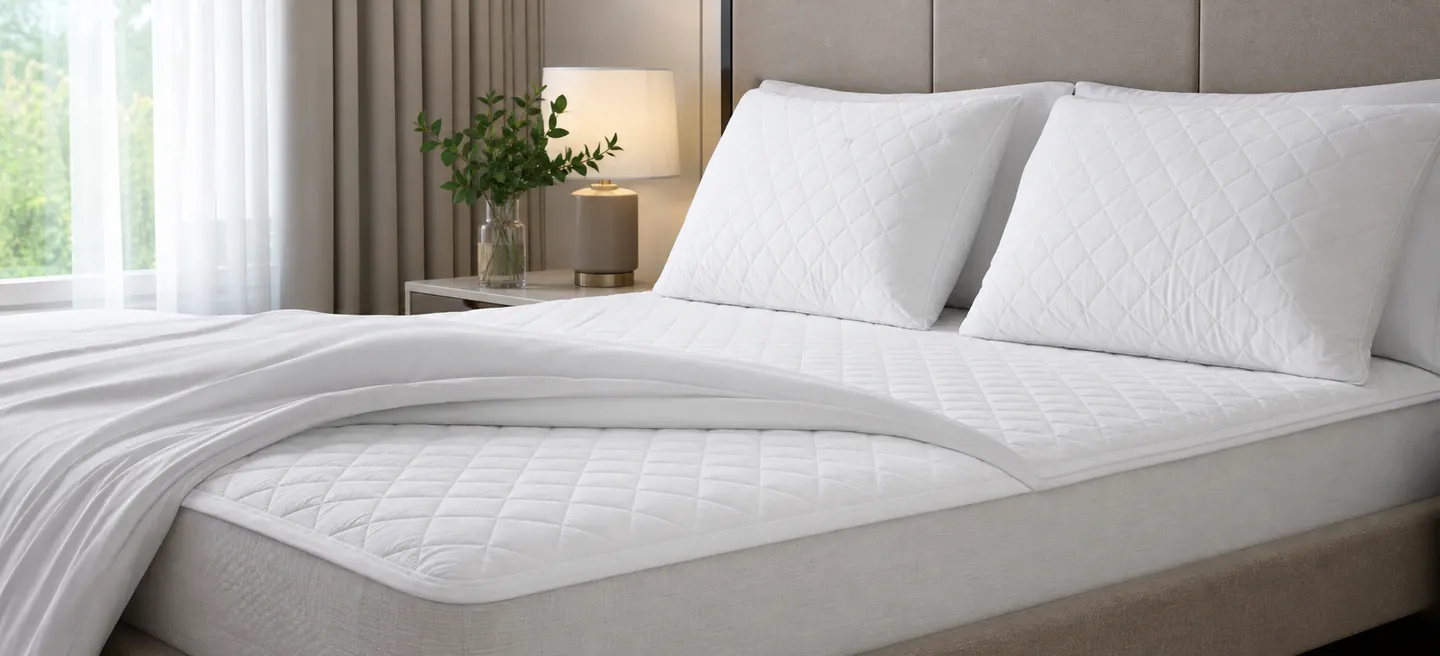
A freshly laundered protector at each guest changeover is a clear operating policy. Long stays, visible soil and product care limits need their own rules.
Pills are attached balls of entangled fibre—not every speck, rough patch or raised surface. Map the defect, review the complete fabric, and test the sheet through its real laundry route.
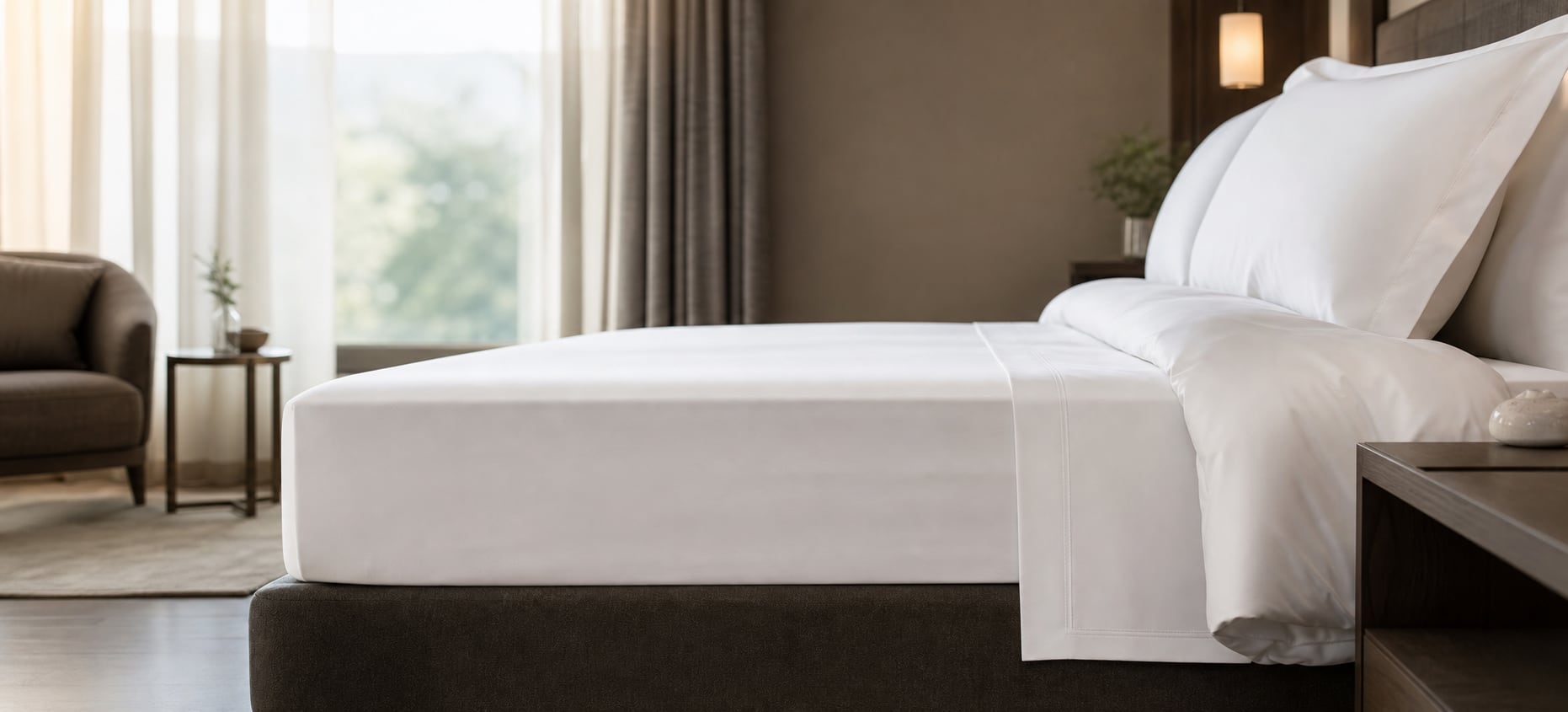
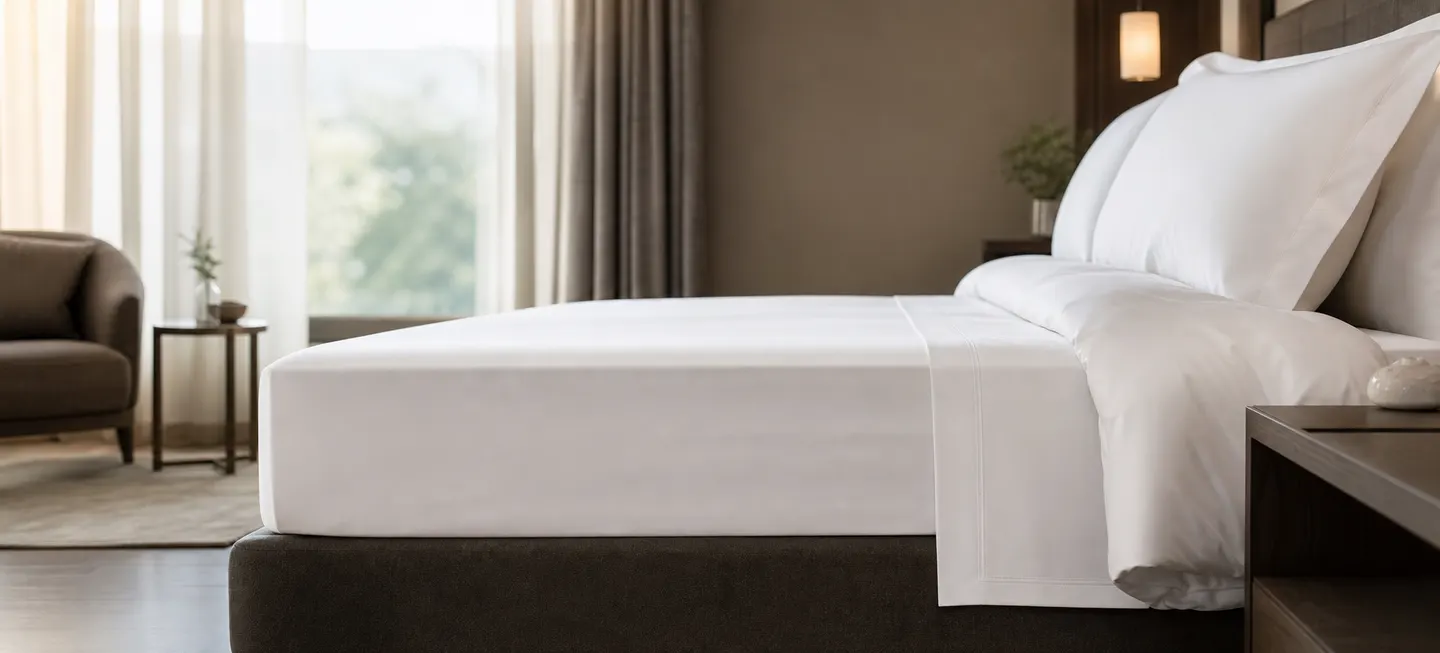
Flat sheets usually simplify flatwork finishing and stock pooling; fitted sheets can support a quick, consistent bottom-sheet fit, but only when processed dimensions, mattress depth and laundry equipment agree.
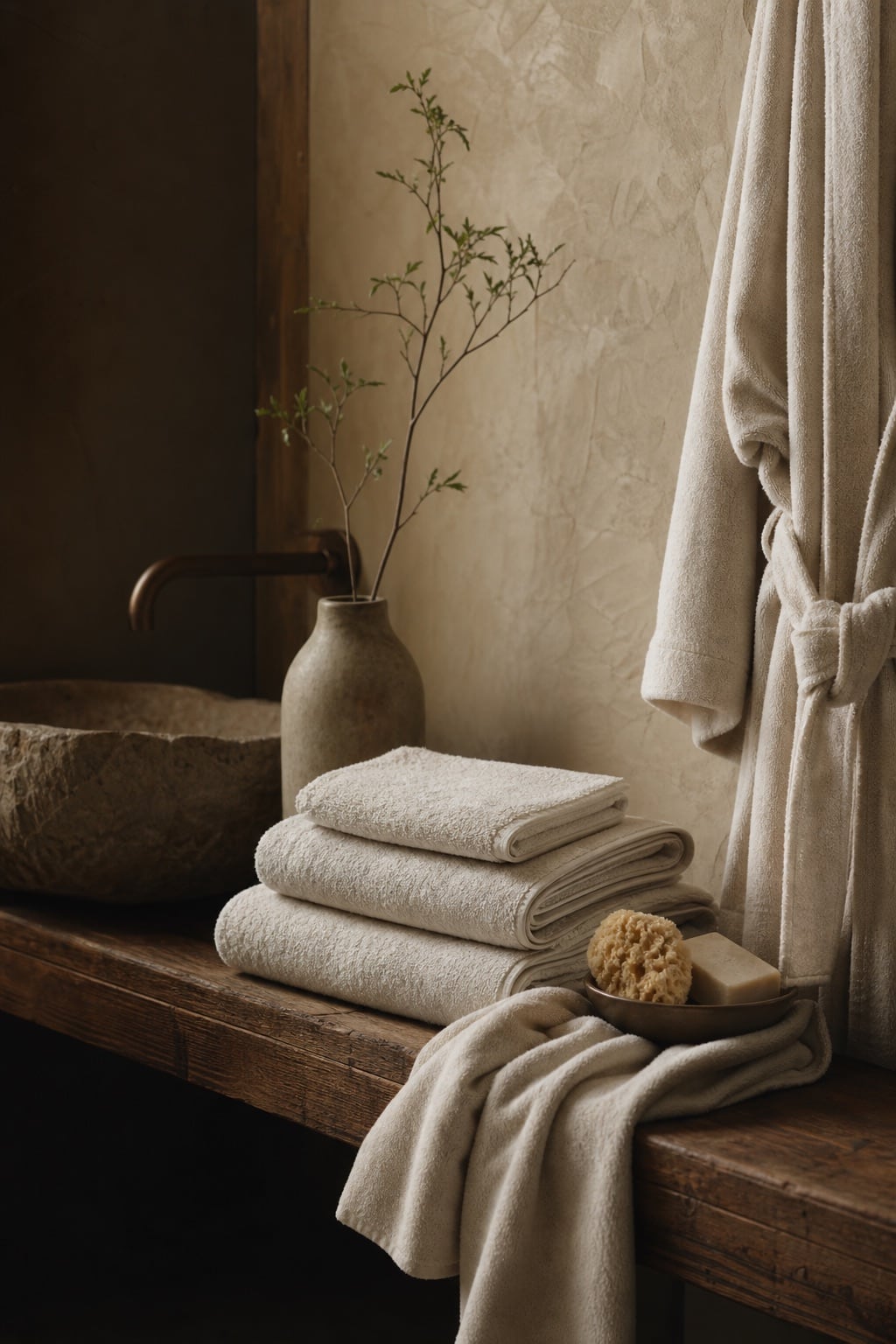
Some loose fibre release can occur when new terry is first washed and dried. The useful test is whether shedding declines quickly without damaging the pile, hems or finished towel.

Most hotels need a removable protector for routine mattress care. Add a pad only for a deliberate comfort effect, and specify an encasement when a defined containment plan requires six-sided coverage.
Grey and yellow are not one laundry fault. The colour, distribution and timing of the change point to different checks in sorting, water, chemistry, rinsing and drying.

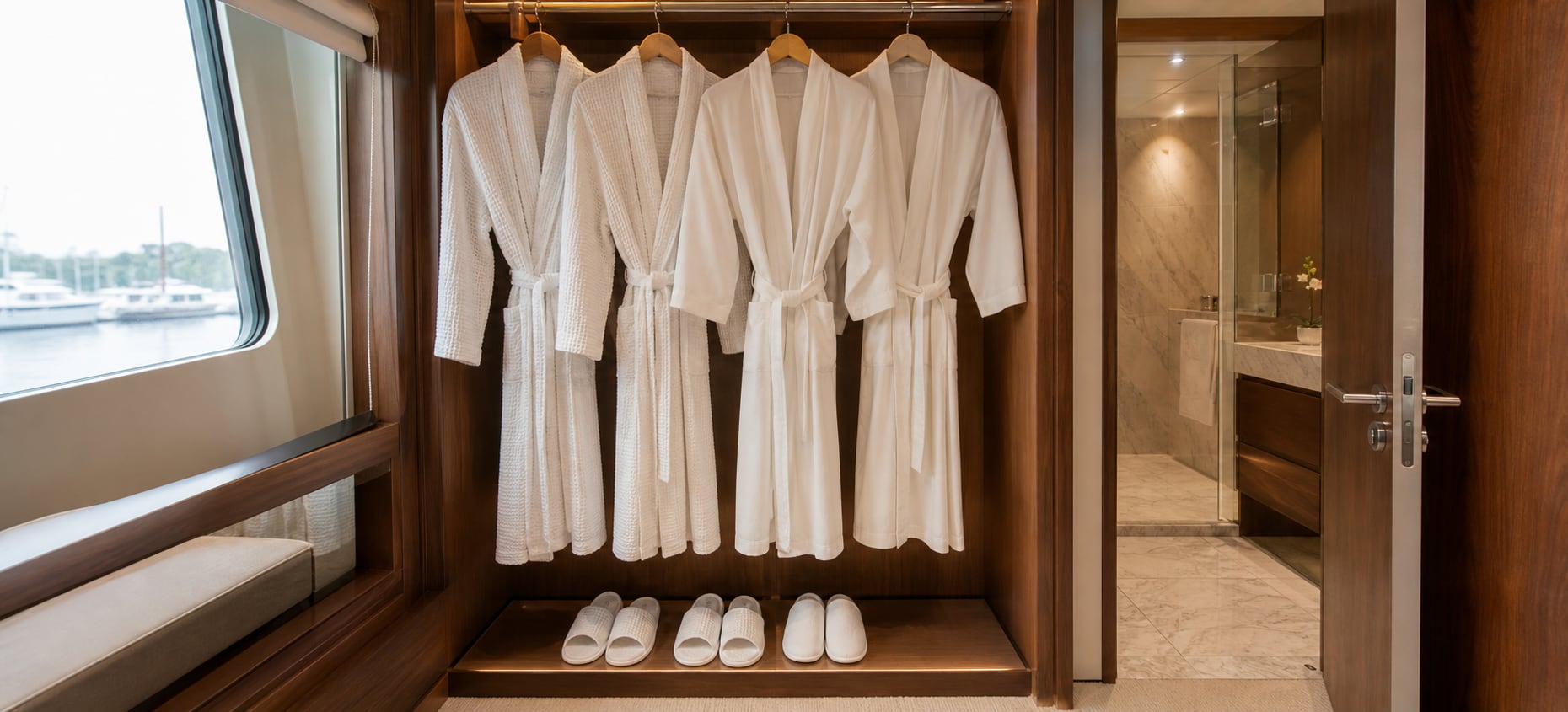
Treat one size, S/M and L/XL as names, not measurements. A hotel robe fits only when it wraps securely, allows easy movement and has sensible sleeve and body length.
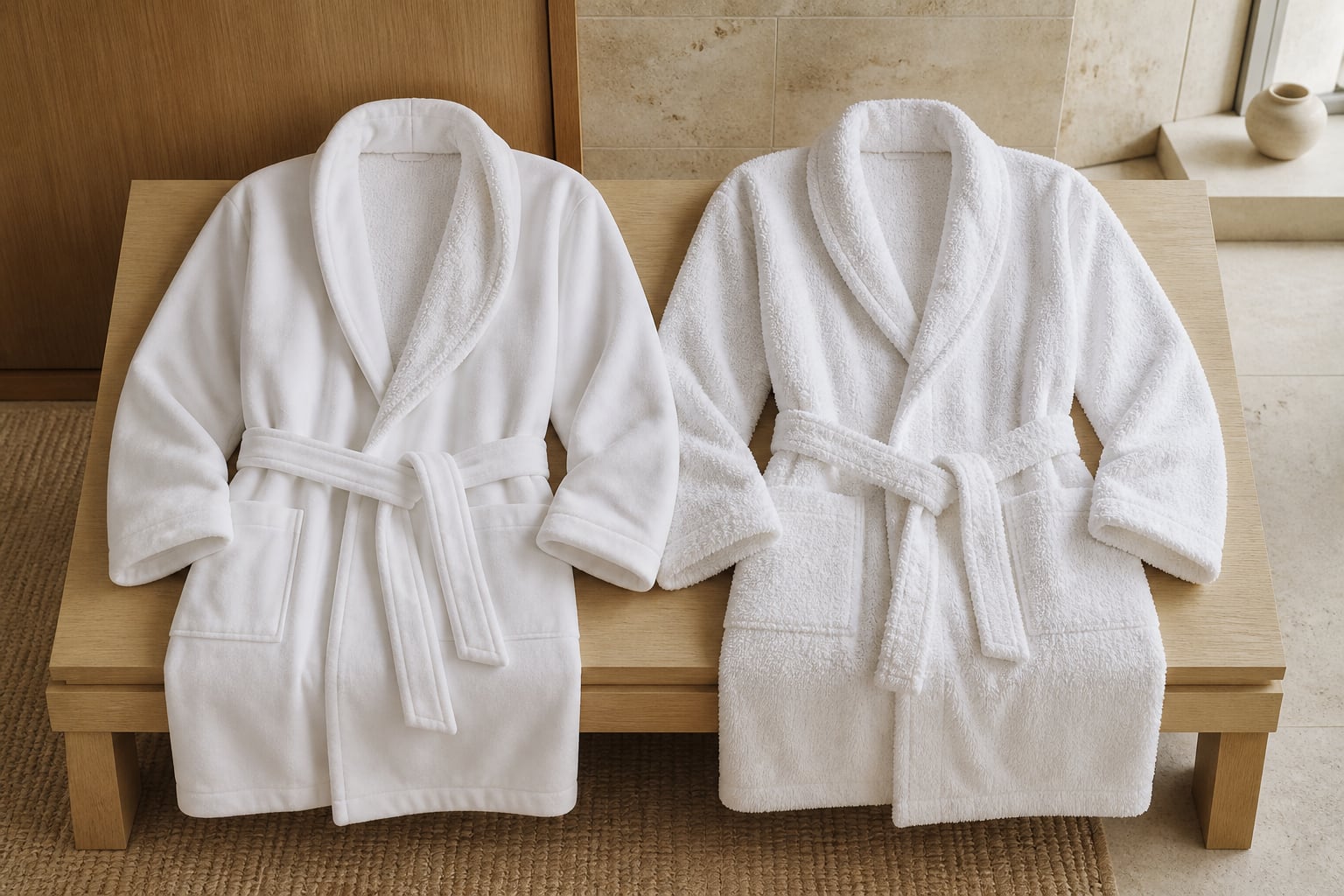
Choose cotton terry velour when a smooth outer face matters and looped terry remains inside. Choose full terry when the same towel-like surface on both sides is more useful.

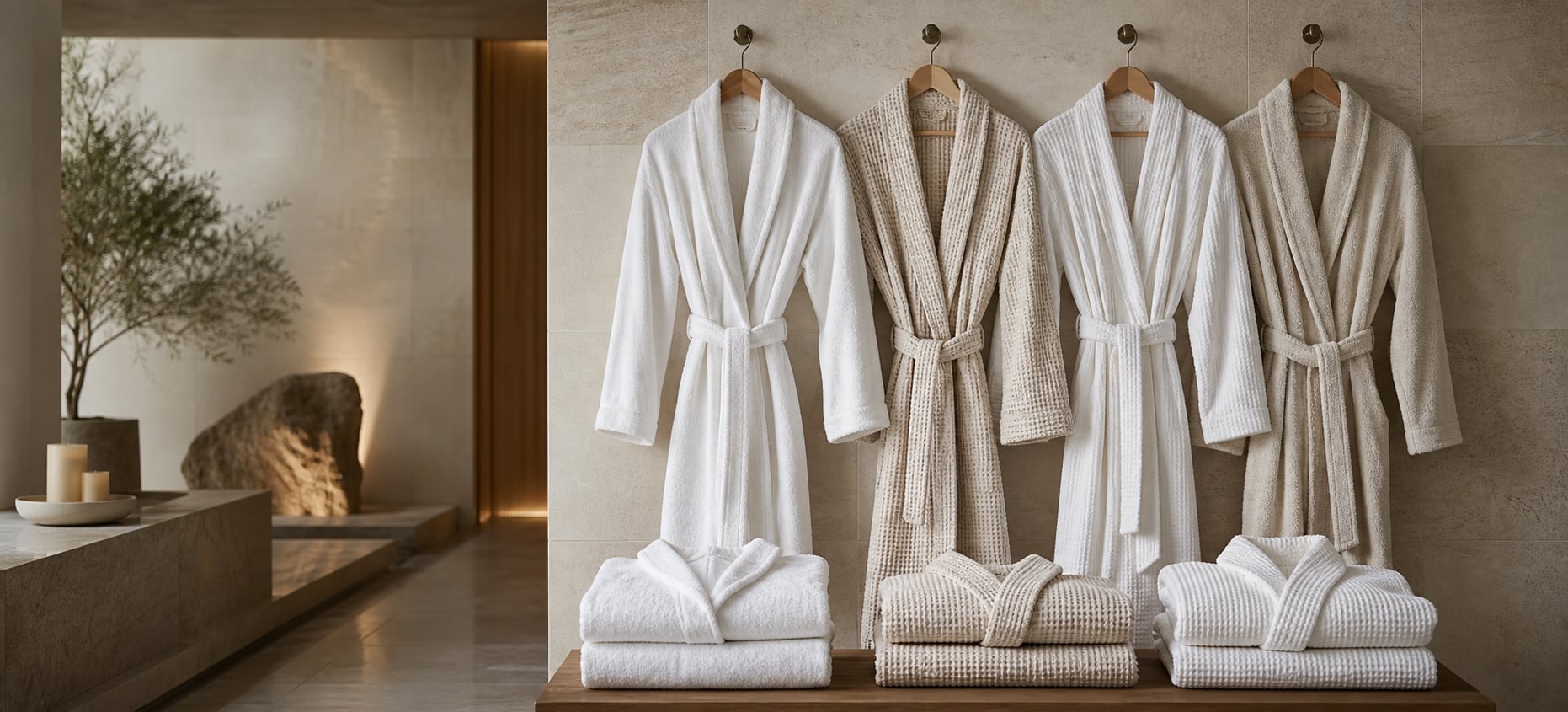
Choose terry when the robe should help dry and warm a guest after bathing. Choose waffle when light coverage matters more than towel-like absorbency.
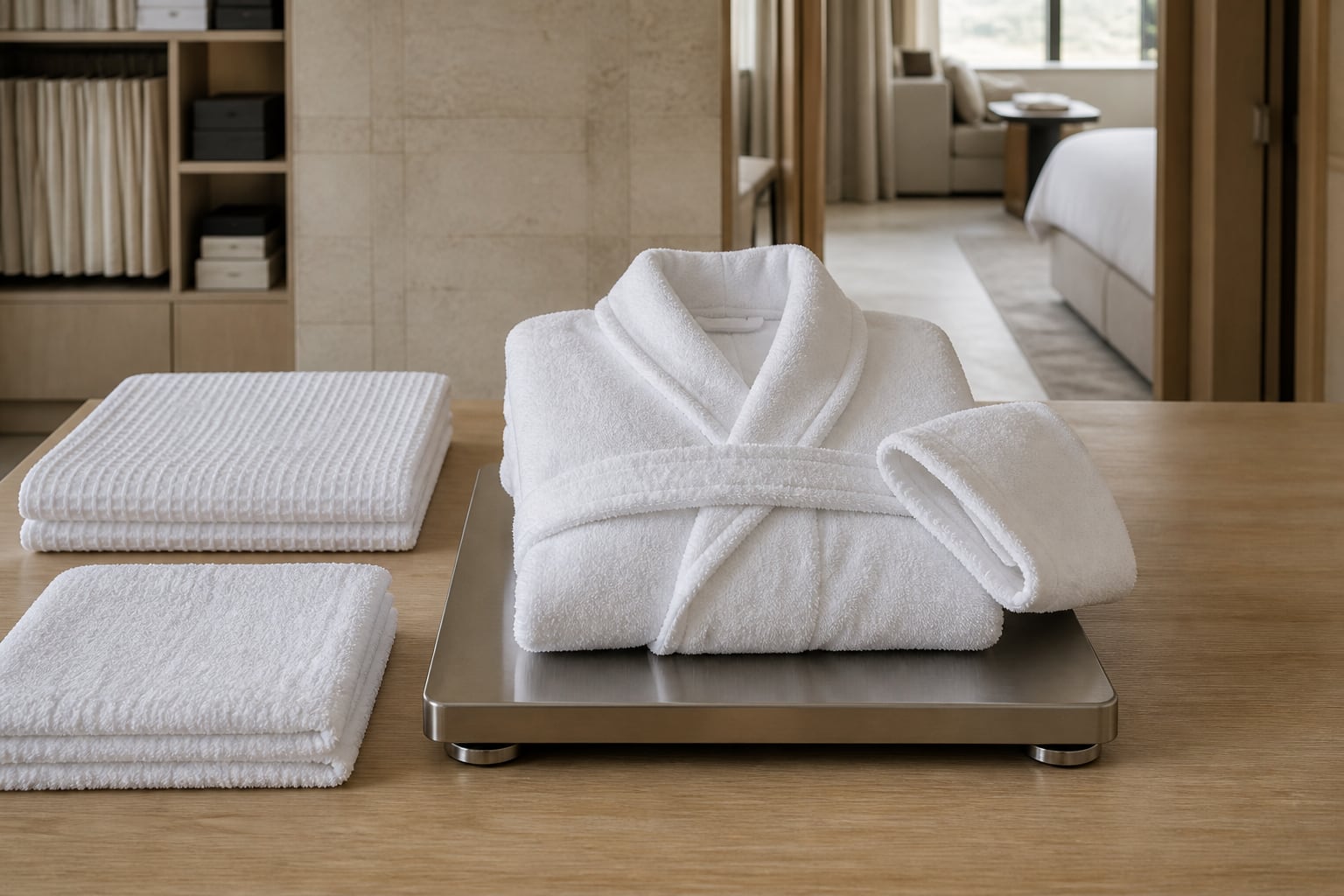
For many hotel guest rooms, 350–450 GSM is a useful starting range for terry robes, while waffle robes normally make sense at a lower weight.
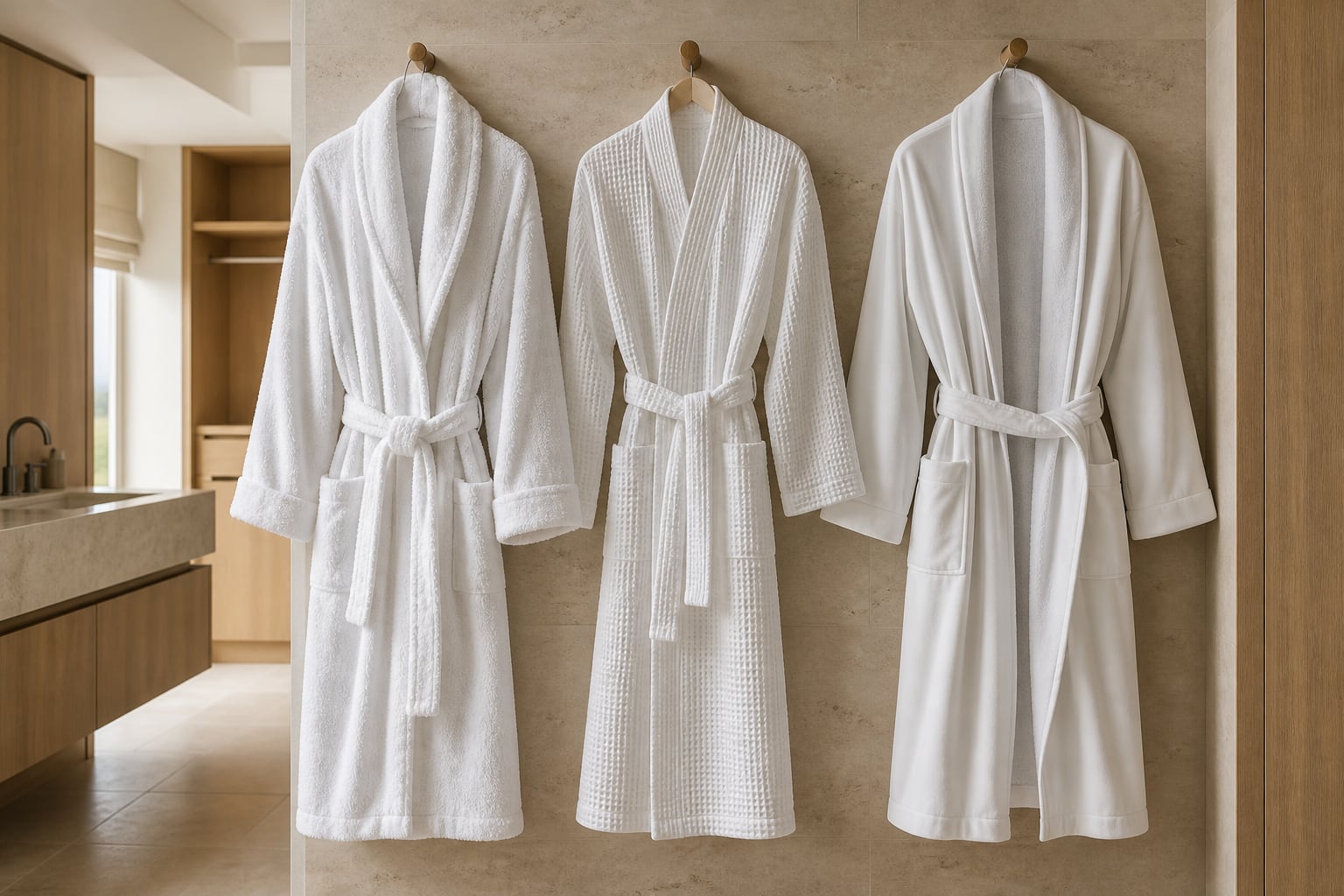
Choose the robe for how guests will use it, then approve its fit, construction and appearance after the hotel’s actual care process.

Two usable sleeping pillows per normal sleeping place are a practical hotel default: four on a double bed and two on each single bed in a twin room.
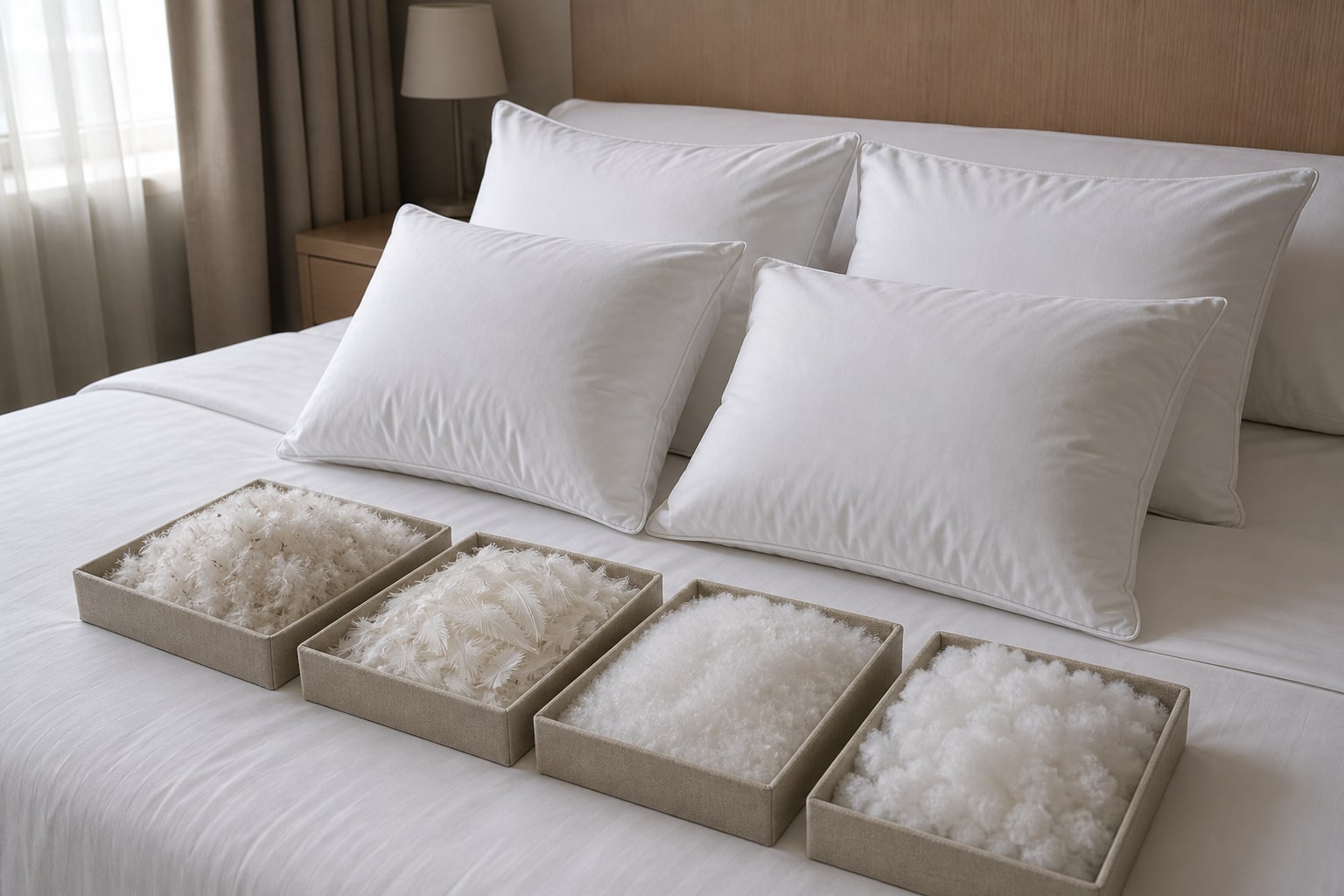
A good synthetic pillow is usually the practical default for standard rooms. Feather and down are useful when the hotel wants a softer, more mouldable alternative and can support its care and sourcing.

Use medium support when one pillow must cover most guests. If you can offer two choices, make them clearly soft and firm rather than barely different versions of medium.
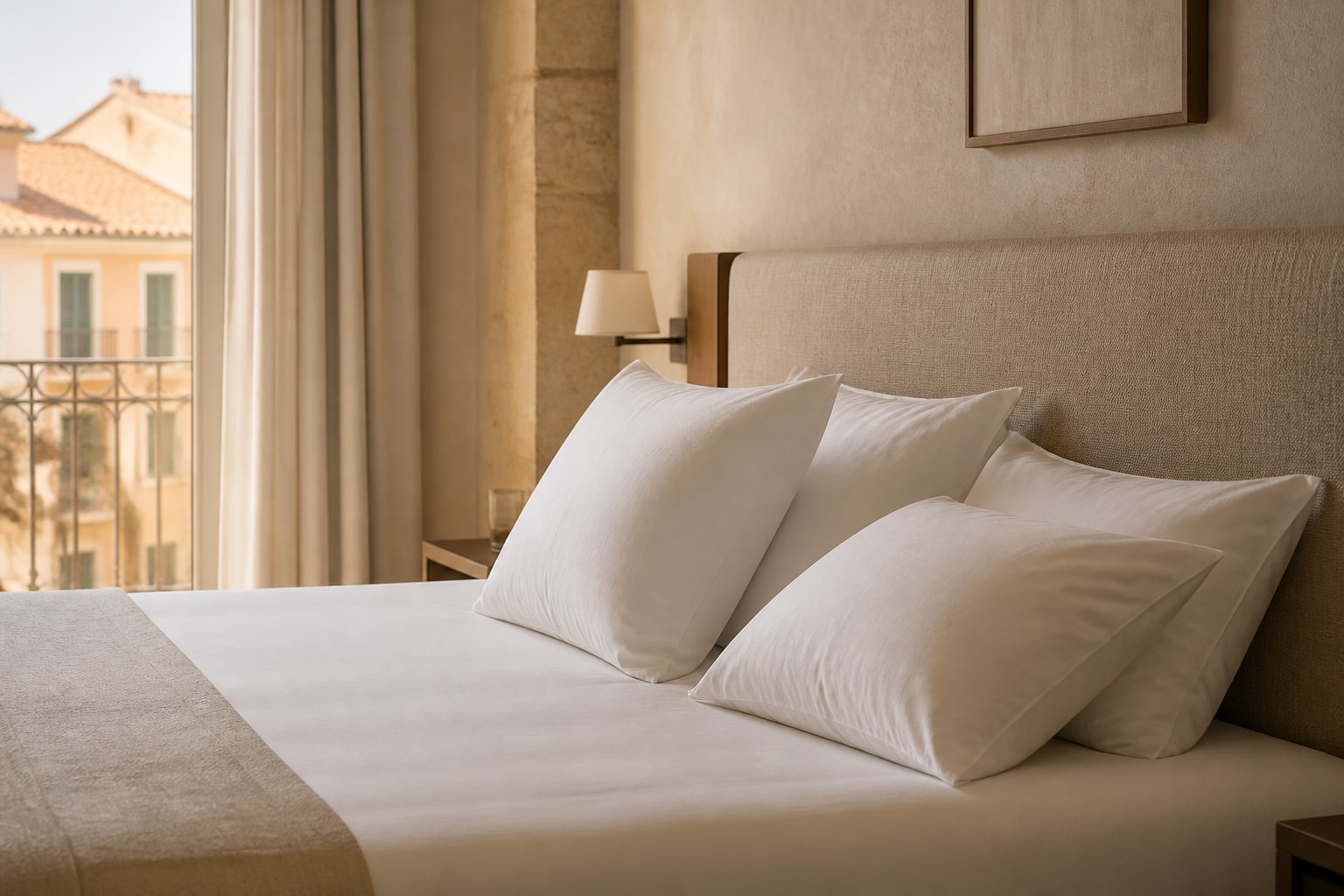
A hotel pillow should be chosen as the guest experiences it: under weight, inside its protector and case, and after a full night in the room.
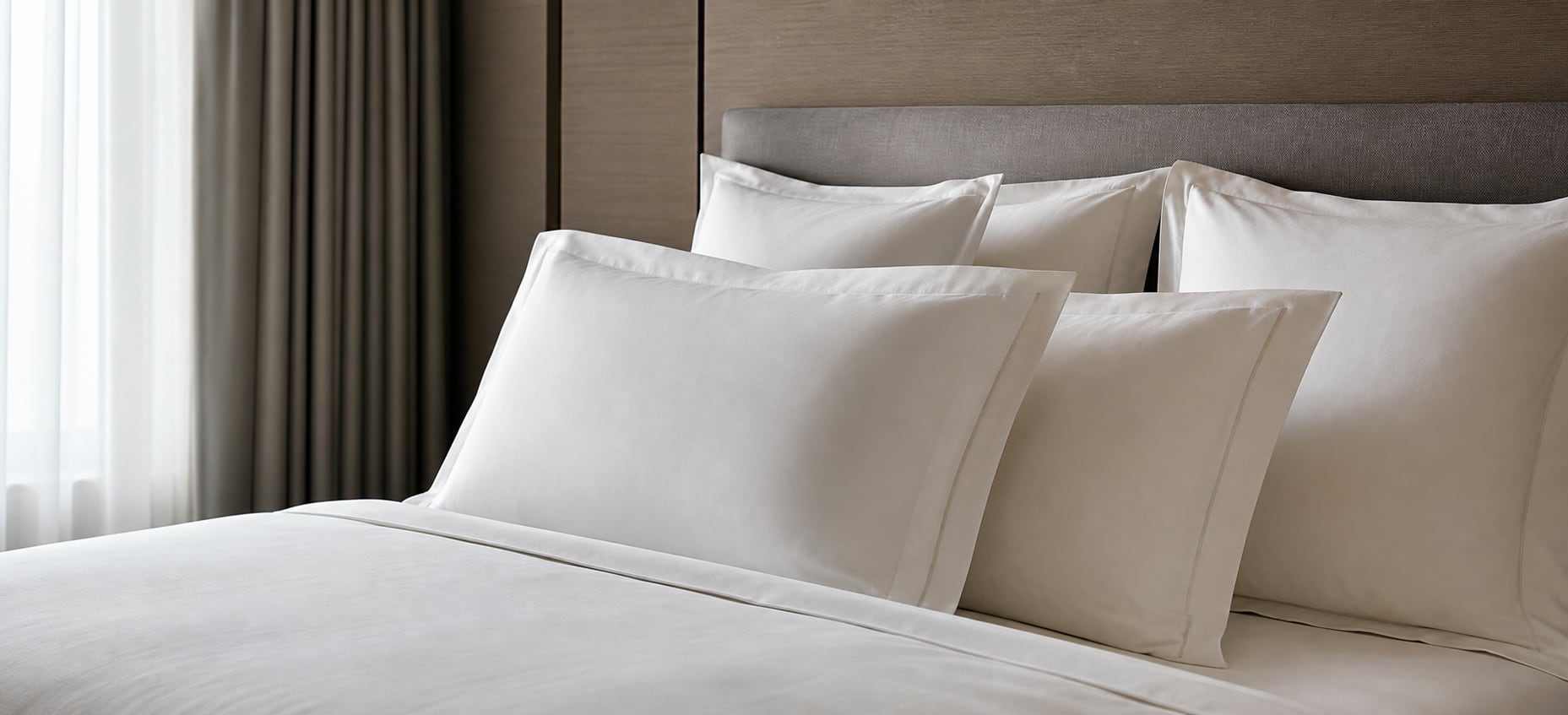
Pillowcases need no arbitrary expiry date. Their post-laundry condition, the made bed and the pattern of failures provide a better replacement rule.
A practical way to match pillowcase fit, fabric and construction to the room, laundry and housekeeping routine.
A component-level method for calculating pillowcases through the hotel’s real room and laundry circulation.
Housewife cases use a plain edge; Oxford cases add a fabric border. Compare both on the bed and after laundry.
There is no universal best fabric. Compare complete pillowcases for face feel, laundering, finishing and fit.
How to measure each pillow, allow for loft and protectors, and approve a finished pillowcase after laundering.
Bag and envelope covers manage the open end differently. The better choice is the one that stays practical through bed making, guest use and laundry.
Buttons, zips and open ends create different handling and maintenance work. A room-and-laundry trial shows which closure fits the hotel.
A duvet cover passes through a full process, not just a wash. Each stage can change its fit, surface, seams, closure and daily handling.
There is no reliable universal replacement interval. Condition checks and defect records show when a duvet cover can no longer serve its room standard.
Shrinkage cannot be managed by guessing an allowance. Measure marked samples, process them correctly and approve the size that works after care.
A practical route from the actual bed and laundry process to a duvet cover that housekeeping can use consistently.
Why there is no single best fibre, and how to approve a fabric against the room and laundry result the hotel needs.
A practical comparison of two weave directions, including what to feel, observe and test before choosing.
A measurement-led method for specifying finished duvet-cover sizes across hotel room types.
A practical stock calculation based on the hotel’s own rooms, change pattern and complete laundry return time.
A practical look at the construction and operating conditions that help a hotel towel remain fit for service.
What spinning method changes, what it leaves unanswered and how to compare complete towels after processing.
A condition-led way to remove individual towels and replenish the pool before service is affected.
A cause-led process for reducing premature retirements, unexplained loss and emergency buying without lowering the room standard.
A practical method for turning unlike towel offers into a fair comparison before price decides the outcome.
A measurement-led guide to flat sheets, fitted sheets, mattress depth, finished dimensions and room-type records.
A calculation method for hotel sheet quantities using actual beds, change events, laundry turnaround and operational reserve.
A condition-led replacement method based on defects, stains, dimensional fit, processing and guest-room standards.
A design and operations comparison covering stain visibility, sorting, colour care and replenishment consistency.
A like-for-like comparison framework that exposes missing data and connects textile construction to operational results.
How to interpret grams per square metre without treating towel weight as a standalone quality score.
A focused guide to choosing finished towel dimensions by function rather than copying universal size labels.
A component-level method for calculating bath, hand, face and mat quantities from real service and laundry flow.
A process-led towel specification covering wash, extraction, drying, lint, borders, folding and guest-room results.
A focused comparison of two common towel weights without treating either as universally superior.
A practical method for specifying hotel sheets around the room, the laundry process, housekeeping and repeat supply.
Why thread count is a useful construction input but an unreliable quality ranking when considered alone.
Percale and sateen create different surfaces and operating trade-offs; neither weave is universally better for hotels.
A fibre comparison that connects guest feel with drying, finishing, stain response and operational control.
A process-based guide to testing sheets through sorting, washing, drying, flatwork finishing, folding and return to the room.
A decision framework for separating useful bath-towel customization from details that add complexity without improving operation.
A calculation and review method for planning duvet-cover replenishment without inventing a universal replacement cycle.
A practical guide to fibre, weave, weight, durability, and guest comfort when specifying hotel bed linen.