
































Custom Sizing: What Should Be Measured on Site?
A useful site survey measures the object, the way the textile sits on it, the clearances around it, and the operating conditions that affect fit.
Published by Gencer Textiles
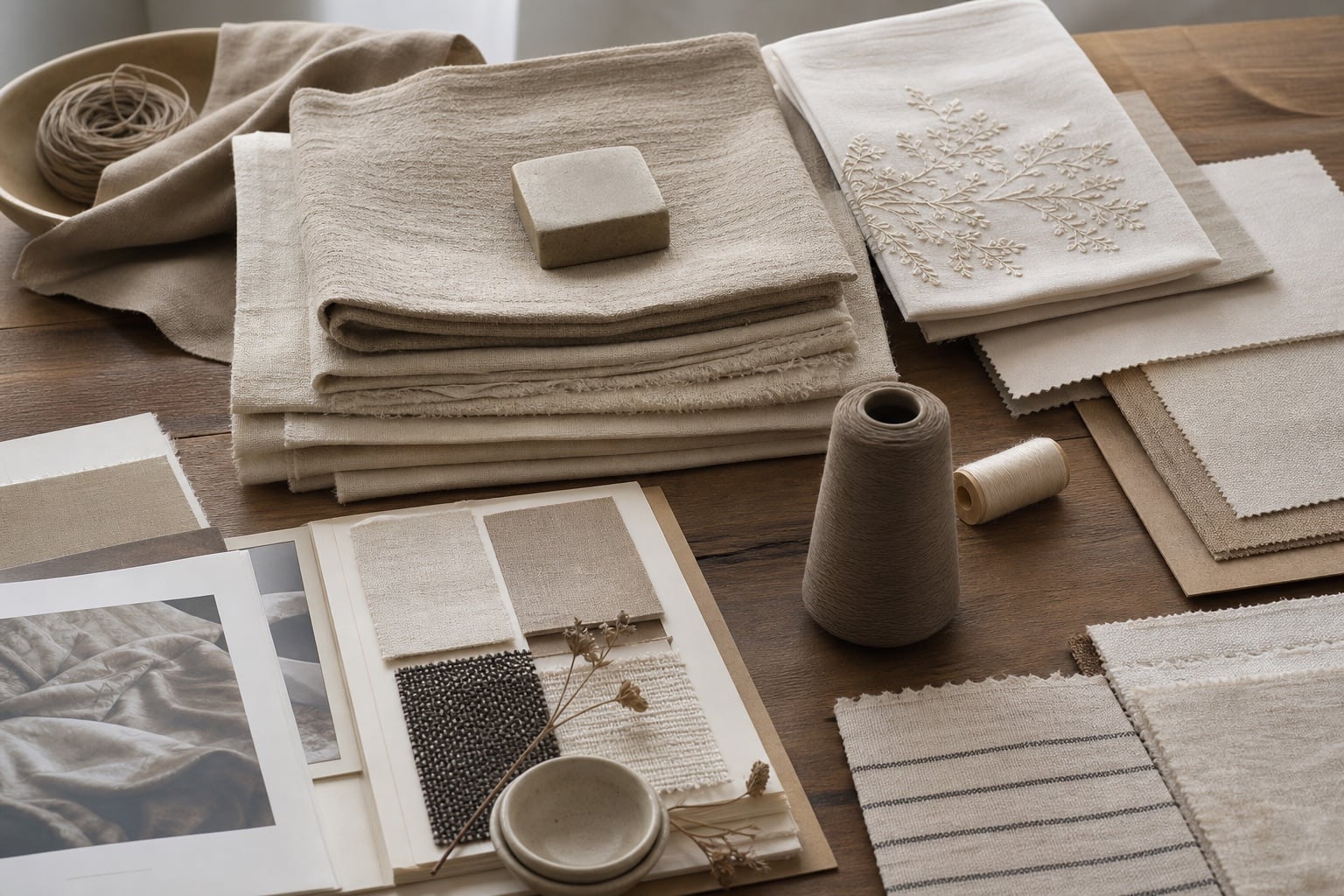
Measure the physical object, the intended finished textile, surrounding clearances, attachment points, use position, storage space, and care conditions. Record everything with a stable location code, annotated photographs, and one agreed unit.
Prepare before the site visit
- List every room, venue, deck, treatment area, or furniture type in scope.
- Assign stable location and item codes.
- Confirm the unit of measurement and required precision.
- Bring a rigid measure, flexible tape, straight edge, labels, and camera.
- Obtain permission for photography and access to movable parts.
- Identify who can explain normal operation and storage.
Measure the object and its shape
Record length, width, depth, height, thickness, radii, tapers, cut-outs, split points, and irregular edges as applicable. Take several measurements where an object may not be square or uniform. Do not infer symmetry without checking it.
| Application | Measure | Also observe |
|---|---|---|
| Bed or berth | Mattress top, depth, corners, splits, and base | Movement, articulation, access, and making method |
| Table | Top dimensions, height, shape, joins, and leaves | Seating, service equipment, and desired drop |
| Treatment bed | Deck, face cradle, bolsters, and controls | Adjustment, hygiene workflow, and changeover |
| Lounger | Deck, cushions, headrest, and pockets | Adjustment, wind exposure, and collection |
| Storage | Shelf, drawer, basket, or locker dimensions | Fold direction, stack height, and access |
Record how the textile will be used
Note where the textile starts and ends, which face is visible, how it is fitted or removed, who handles it, and whether it moves during use. Check door swings, hinges, controls, rails, vents, and walking routes. These observations often explain why a simple overall measurement is insufficient.
Create a reviewable measurement pack
Combine the schedule with labelled photographs and simple drawings. Show where each measurement was taken and distinguish site dimensions from proposed finished-textile dimensions. Record assumptions and unresolved questions clearly instead of filling gaps with estimates.
Verify with a sample
Fit the sample on site whenever the shape, tolerance, movement, or presentation is critical. Review it in normal use, then update the measurement pack with the approved outcome. Site information should remain tied to the item code and sample reference for future work.
Product catalogue
Request the Life on Board catalogue
Share your business email and, if useful, your company or property name. We will carry these details into the secure catalogue-request form with the relevant category already selected.
Journal
Continue reading
How to Record Sizes and Measurements for Yacht Bath Linen
How to document dimensions, placement, storage, and identifiers for guest and crew bath linen on board.
Read How to Record Sizes and Measurements for Yacht Bath LinenHow to Build a Replacement Plan for Duvet Covers
A calculation and review method for planning duvet-cover replenishment without inventing a universal replacement cycle.
Read How to Build a Replacement Plan for Duvet CoversWhich Hospitality Textile Details Should Be Customized?
A framework for deciding which textile details need project-specific development and which should remain standard.
Read Which Hospitality Textile Details Should Be Customized?