







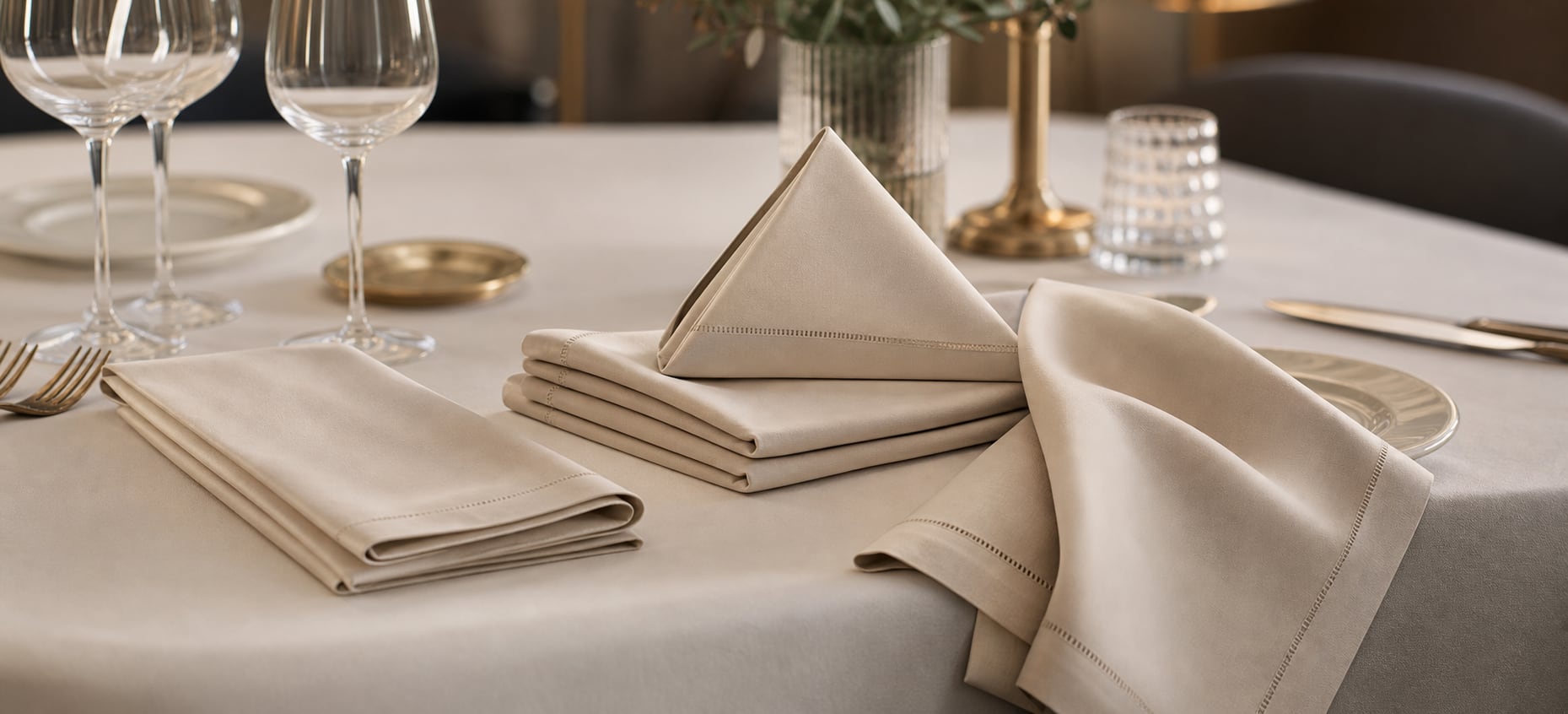
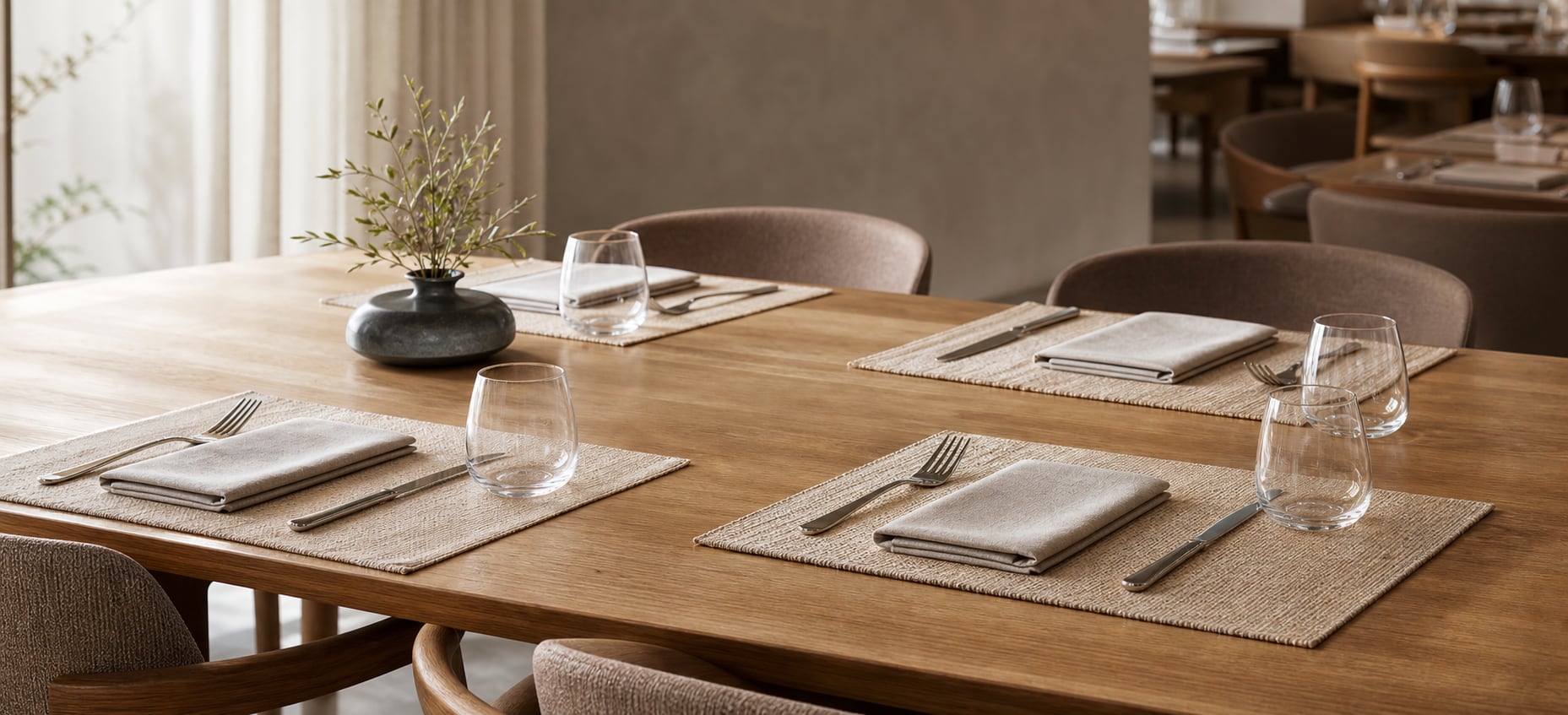
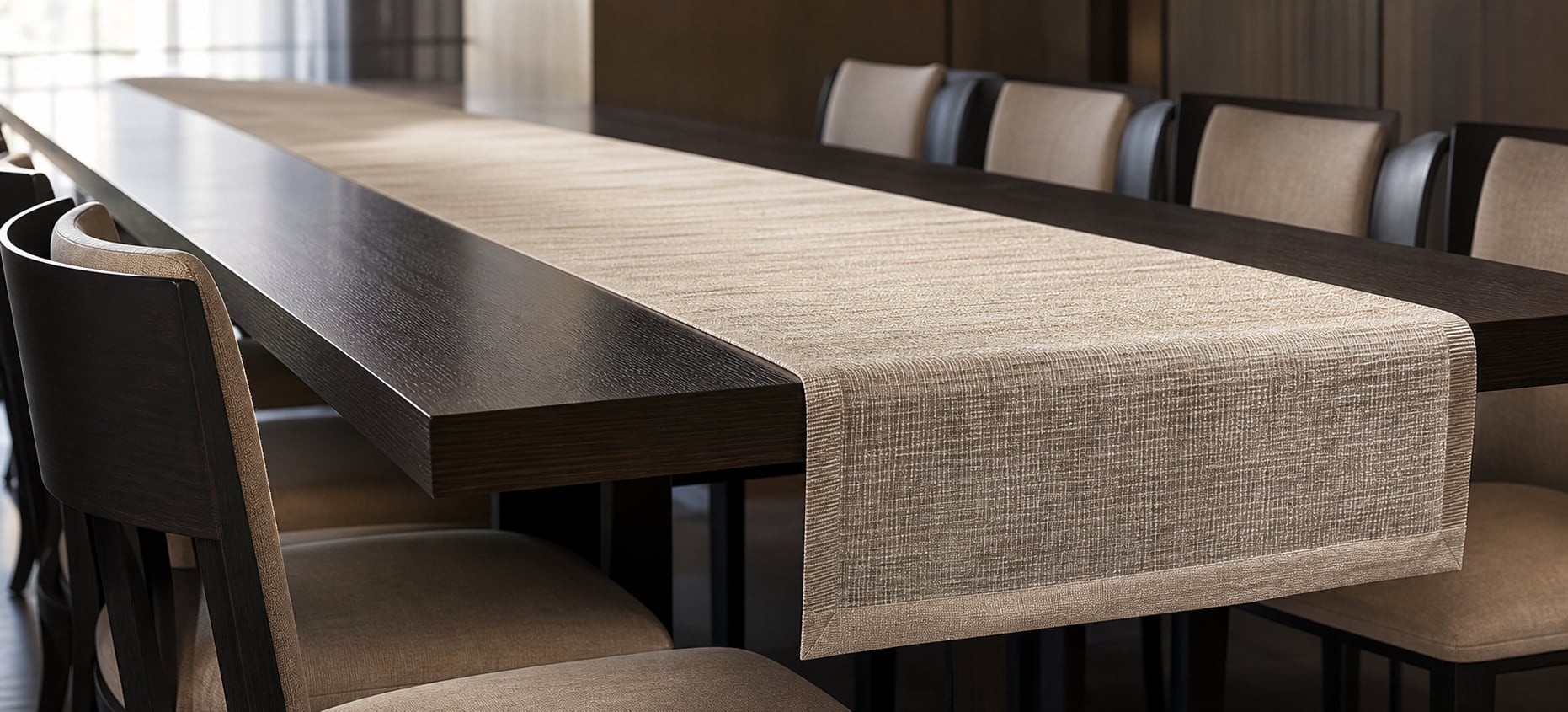
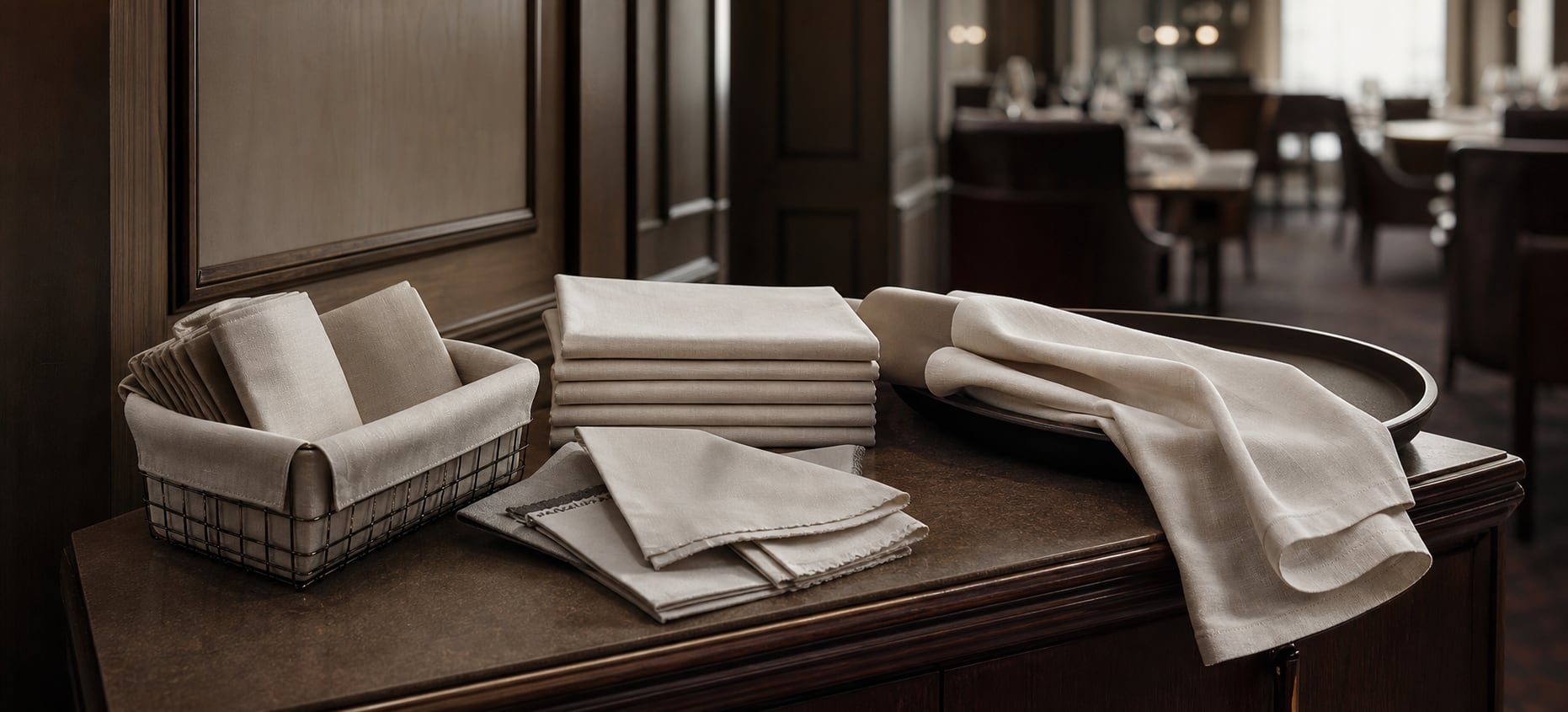






Which Hospitality Textile Details Should Be Customized?
Customize a textile detail when it solves a measurable fit, use, identity, allocation, or presentation requirement. Keep the rest simple enough to approve and repeat.
Published by Gencer Textiles
Customize dimensions, construction, colour, embroidery, identification, packaging, or presentation only when the detail answers a documented project need. A useful custom decision improves fit, operation, identity, or handover; an unnecessary one adds variants and approval work.
Separate essential and optional details
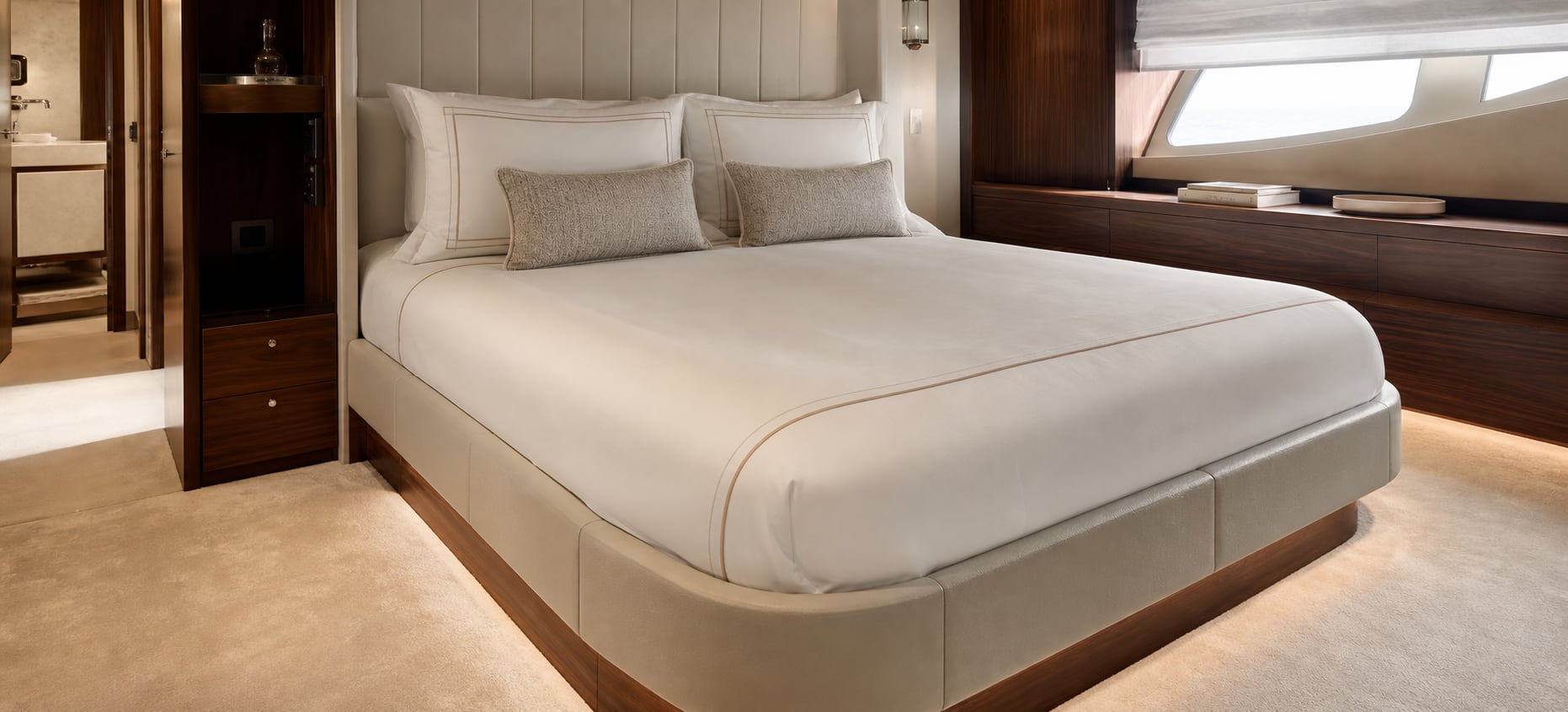
Essential customization may be required by a non-standard mattress, yacht berth, table, lounger, storage space, or established room composition. Optional customization may support identity or presentation. Keep these groups separate so a decorative preference does not obscure a functional requirement.
| Decision area | Customize when | Keep standard when |
|---|---|---|
| Dimensions | The real use point cannot be served by an approved standard size | A standard size fits and simplifies replacement |
| Construction | Closure, fit, handling, or presentation requires a specific solution | The change does not alter use or appearance meaningfully |
| Colour | Zoning or a defined interior palette requires it | Neutral continuity is more valuable than another variant |
| Embroidery | Identity or operational identification has a clear role | The mark is decorative but creates approval and care complexity |
| Packaging | Room, venue, vessel, or opening allocation requires it | Central receiving can distribute items reliably |
Consider the operational cost of complexity
Every variant needs a name, specification, sample, quantity, destination, and replacement reference. It may also require separate sorting or storage. Evaluate this administrative and operational cost alongside visual value before approving the detail.
Use samples to answer specific questions
A sample should test the unresolved decision: fit, hand feel, colour relationship, embroidery scale, closure, laundering, or folding. Define the question and acceptance criteria before requesting the sample. This keeps feedback focused and reduces contradictory comments.
Record the approved outcome
- State the purpose of each custom detail.
- Record dimensions, materials, construction, and finishing.
- Attach artwork and colour references where applicable.
- Name the person or team responsible for approval.
- Retain the dated sample reference and decision notes.
- Reconfirm availability and conditions before repeat requests.
Product catalogue
Request the Stay catalogue
Share your business email and, if useful, your company or property name. We will carry these details into the secure catalogue-request form with the relevant category already selected.
Journal
Continue reading
When Does Customization Add Value to Bath Towels?
A decision framework for separating useful bath-towel customization from details that add complexity without improving operation.
Read When Does Customization Add Value to Bath Towels?Custom Sizing: What Should Be Measured on Site?
A practical field checklist for recording objects, clearances, use conditions, storage, and reference information.
Read Custom Sizing: What Should Be Measured on Site?How to Coordinate Replacement Planning Across Textile Categories
How to coordinate condition reviews, operating inputs, records, and replenishment decisions without relying on universal replacement cycles.
Read How to Coordinate Replacement Planning Across Textile Categories