




What Is the Best Napkin Fold for a Restaurant’s Service Style?
The best fold is the simplest one that makes your table look intentional and lets the guest use the napkin comfortably. Start with a flat rectangle or half-fold; add a pocket or upright presentation only when your service has a reason for it and the team can repeat it consistently.
Published by Gencer Textiles
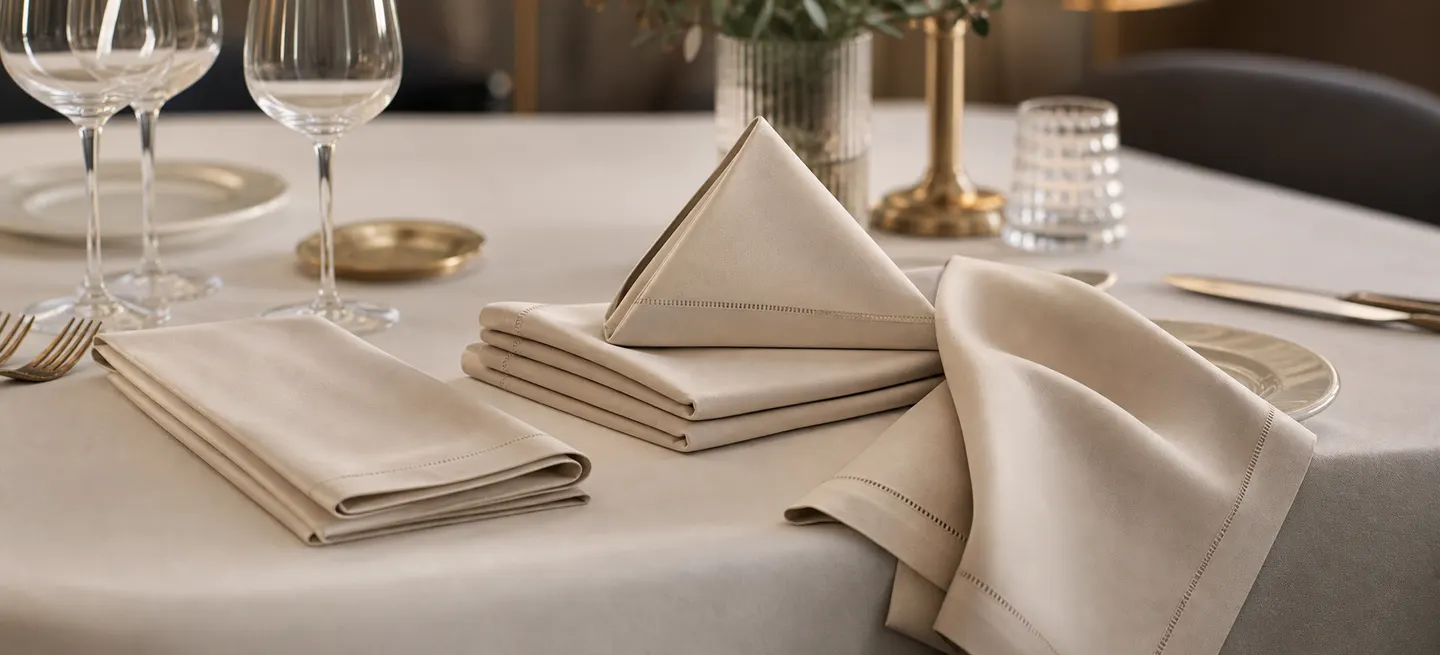
A napkin fold has two jobs: make the place setting look ready and let the guest take a clean napkin into use without a puzzle. For most restaurants, a pressed rectangle or simple half-fold does both. It sits where the table plan needs it, takes little handling, and opens readily on the lap. A more elaborate fold is worthwhile when it adds something specific to the service—not because “fine dining” automatically demands a standing sculpture.
Before choosing a named fold, decide where the napkin goes. A folded piece on a side plate, over the centre of a place setting or beside cutlery uses different space and may be moved at a different point in service. Set the whole cover with glassware, menu, bread plate and shared items in position; then judge the napkin. A beautiful fold that crowds a glass or has to be removed before the first course is not serving the table.
Match the fold to what the service actually does
| Service situation | Useful starting fold | Reason to change it |
|---|---|---|
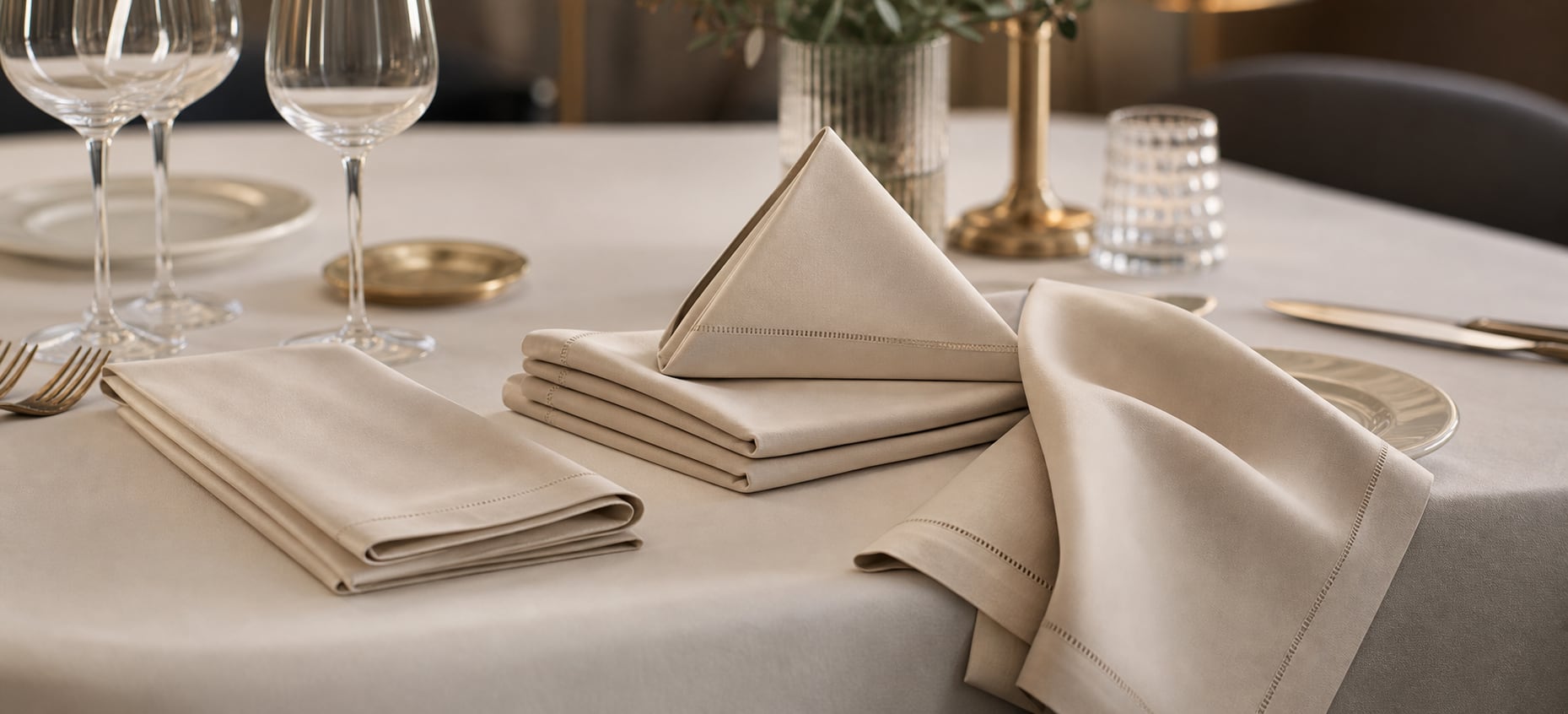
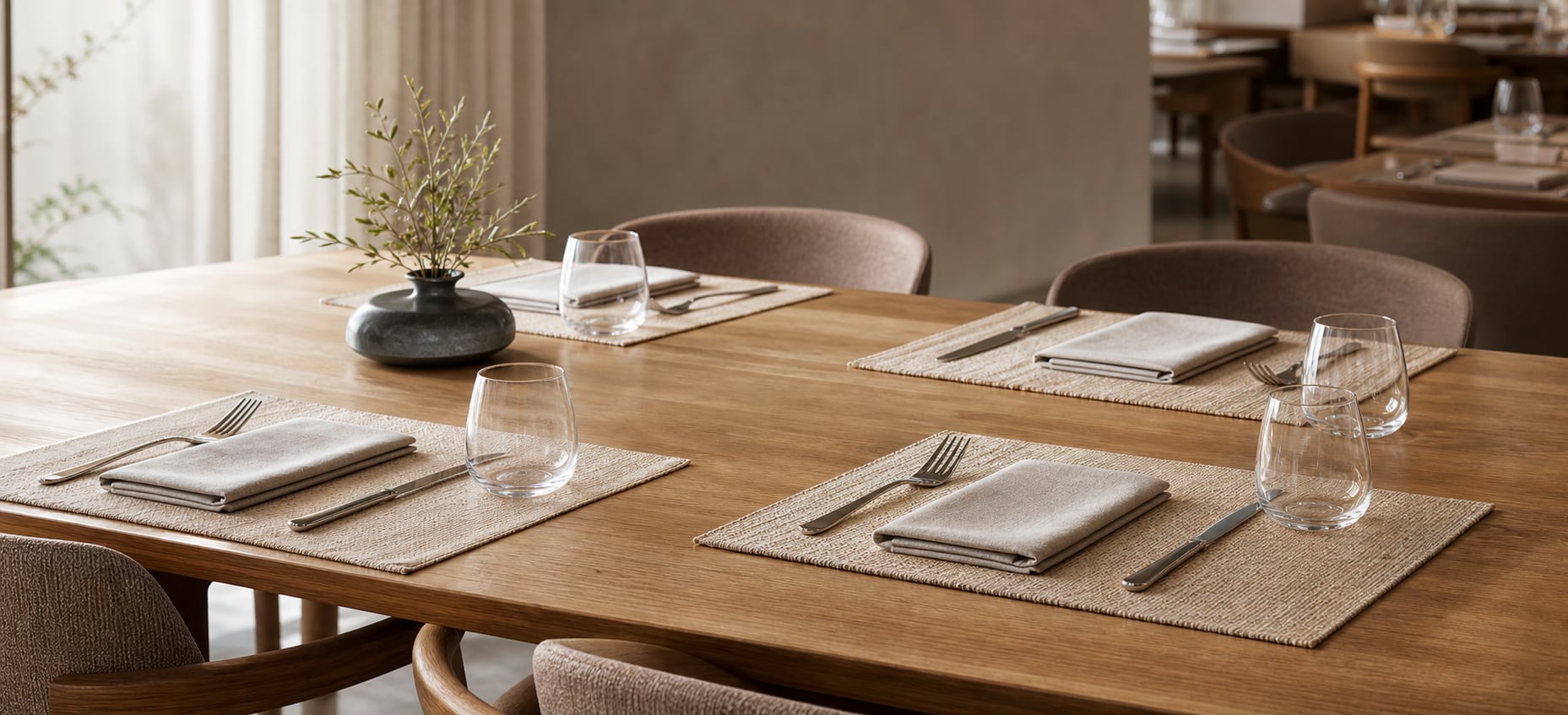
| Everyday dining, breakfast or frequent resets | Flat rectangle or half-fold, placed consistently | Choose another only if it improves the table without slowing resets |
| A menu card, place card or deliberately presented cutlery | Simple pocket or envelope fold | The inserted item must come out cleanly; do not make the guest wrestle with cutlery |
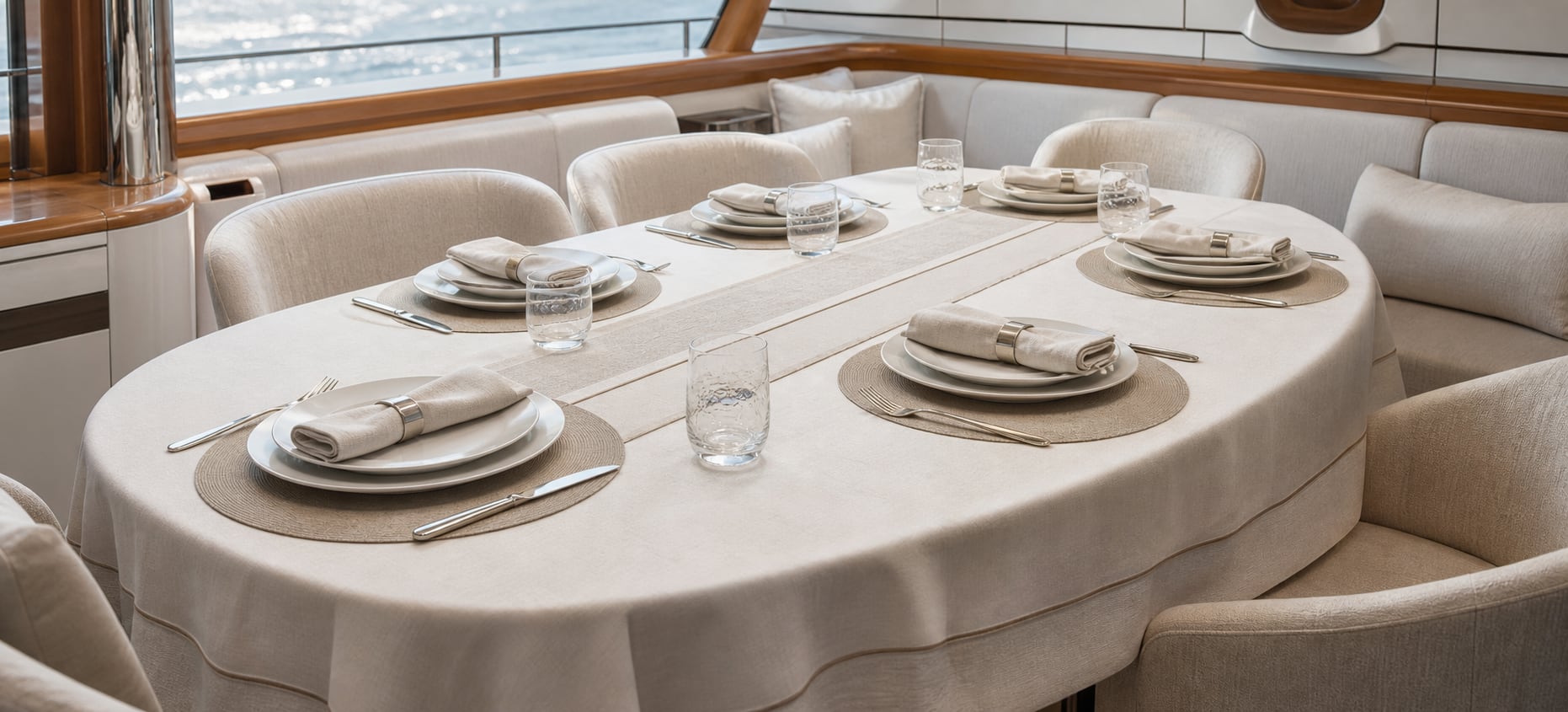
| Formal dinner with space for a quiet textile accent | Precise flat fold or restrained standing fold | Use height only if it holds through setup and does not obstruct sightlines |
| Banquet or event with many identical covers | One easy-to-teach fold, flat or pocketed | A decorative fold must justify its extra handling across the full room |
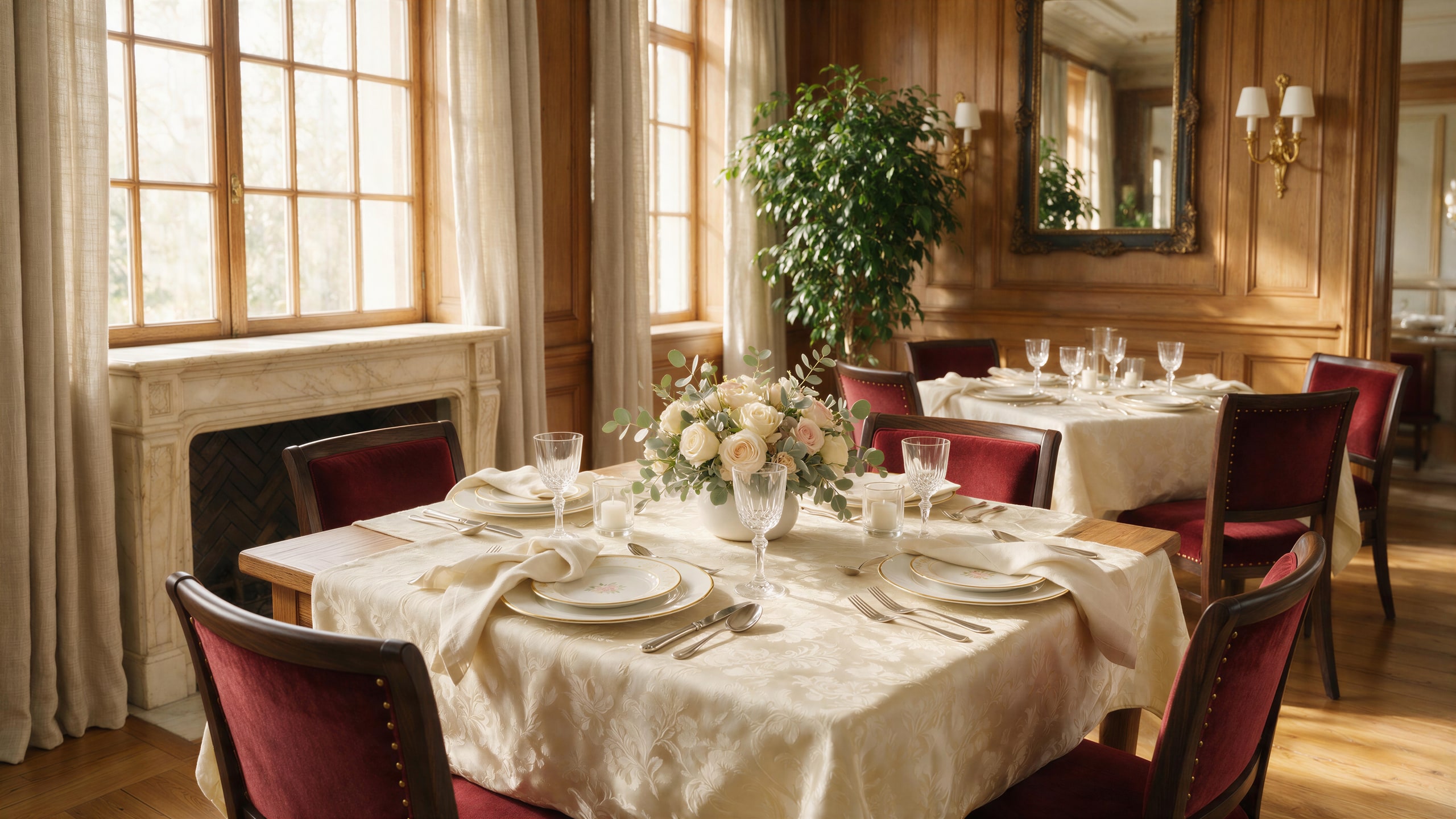
This is a starting point, not a hierarchy of prestige. A flat fold can look more deliberate than a fan if the cloth has a good edge and the plates already carry the visual weight. A pocket can be useful at a banquet where the team places the same card at every cover. A roll may suit a casual cutlery handoff, but test how the guest releases the utensils without dropping or juggling them. Keep any contact with clean tableware in line with the restaurant’s local hygiene rules and handling procedure.
Do not count a fold as successful only because it stands for a photograph. Set the room at the normal lead time and see what happens: does an upright fold slump, a pocket flare open, or an embroidered edge disappear? The best-looking configuration immediately after pressing may not be the one guests see.
Let the actual cloth set the limits
Napkin size, fabric, weave, hem, decoration and finishing change how a fold behaves. A bulky four-hem corner can make a tight pocket lumpy; a soft cloth may drape beautifully but refuse to stand; a logo placed at the centre of the open square may vanish inside the chosen fold. Work with a washed and pressed sample from the approved linen, not a paper diagram or a pristine showroom piece.
If the napkin itself is still being specified, check the restaurant napkin size guide. A fold cannot repair a size that leaves too little useful cloth on the guest’s lap.
Light starch can add body to some compatible napkins, but it is an optional laundry finish, not a reason to force an awkward shape. The guest will unfold the textile and use it against clothing and near the mouth. If extra crispness makes that unpleasant, choose a simpler fold or a different finish. Compare the actual fabric and laundry response before making starch part of the standard.
For the finish decision, see whether restaurants should starch cloth napkins; for a fabric change, compare cotton and polyester napkins in service and laundry.
Run the fold through a real service trial
- Select two or three folds on the same processed napkin. Lay the complete place setting and photograph each from the guest’s seat.
- Ask the usual setup team to fold a realistic group of covers. Record preparation time, repeatability and whether any pieces need re-pressing or excessive handling.
- Leave the settings for the normal setup interval; check shape, edges, placement, sightlines and space for service.
- Have someone unfamiliar with the fold pick up, open and use the napkin on the lap. Watch for trapped cards, awkward cutlery and a stiff or undersized usable surface.
- Choose one standard fold and placement per service or event, document it with a photo, and train staff to reject damaged or soiled pieces rather than hide a defect in a fold.
Keep clean folded napkins protected until setup according to the venue’s handling procedure. Once a napkin has been used, it goes into the used-linen route; it must not be refolded for another guest. The few extra seconds saved by reusing a “clean-looking” piece are not a service efficiency.
A restaurant may approve a flat fold for weekday lunch, a pocket for a set-menu dinner and a more decorative version for a particular event. That is not inconsistency; it is a defined set of service choices. The common standard is a clean, comfortable napkin that the team can present the same way every time.
When ordering or revising the stock, bring the selected fold, service photograph and processed sample to the restaurant napkin specification. The fabric and edge should support the service—not make the service work around them.
Product catalogue
Request the Dine catalogue
Share your business email and, if useful, your company or property name. We will carry these details into the secure catalogue-request form with the relevant category already selected.
Journal
Continue reading
What Size Cloth Napkin Should a Restaurant Use?
A 50 × 50 cm cloth napkin is a useful starting point for full-service dining. Move smaller or larger only after testing the fold, place setting, lap coverage and processed dimensions.
Read What Size Cloth Napkin Should a Restaurant Use?Should Restaurants Starch Cloth Napkins?
Starch can sharpen a formal fold, but a napkin also has to feel good and work throughout the meal. Trial the finish on the actual linen.
Read Should Restaurants Starch Cloth Napkins?Cotton vs Polyester Restaurant Napkins: What Changes in Service and Laundry?
Cotton usually brings easier wetting and a familiar textile hand; polyester usually brings lower moisture retention and stronger crease recovery. Food soils, finishing and the exact construction can reverse a simple cost assumption.
Read Cotton vs Polyester Restaurant Napkins: What Changes in Service and Laundry?