



How to Choose Bathrobes for a Hotel
A good hotel bathrobe feels comfortable on a person, suits the moment in which it is worn and returns from laundry ready for the next guest. Fabric weight matters, but it cannot answer those questions on its own.
Published by Gencer Textiles
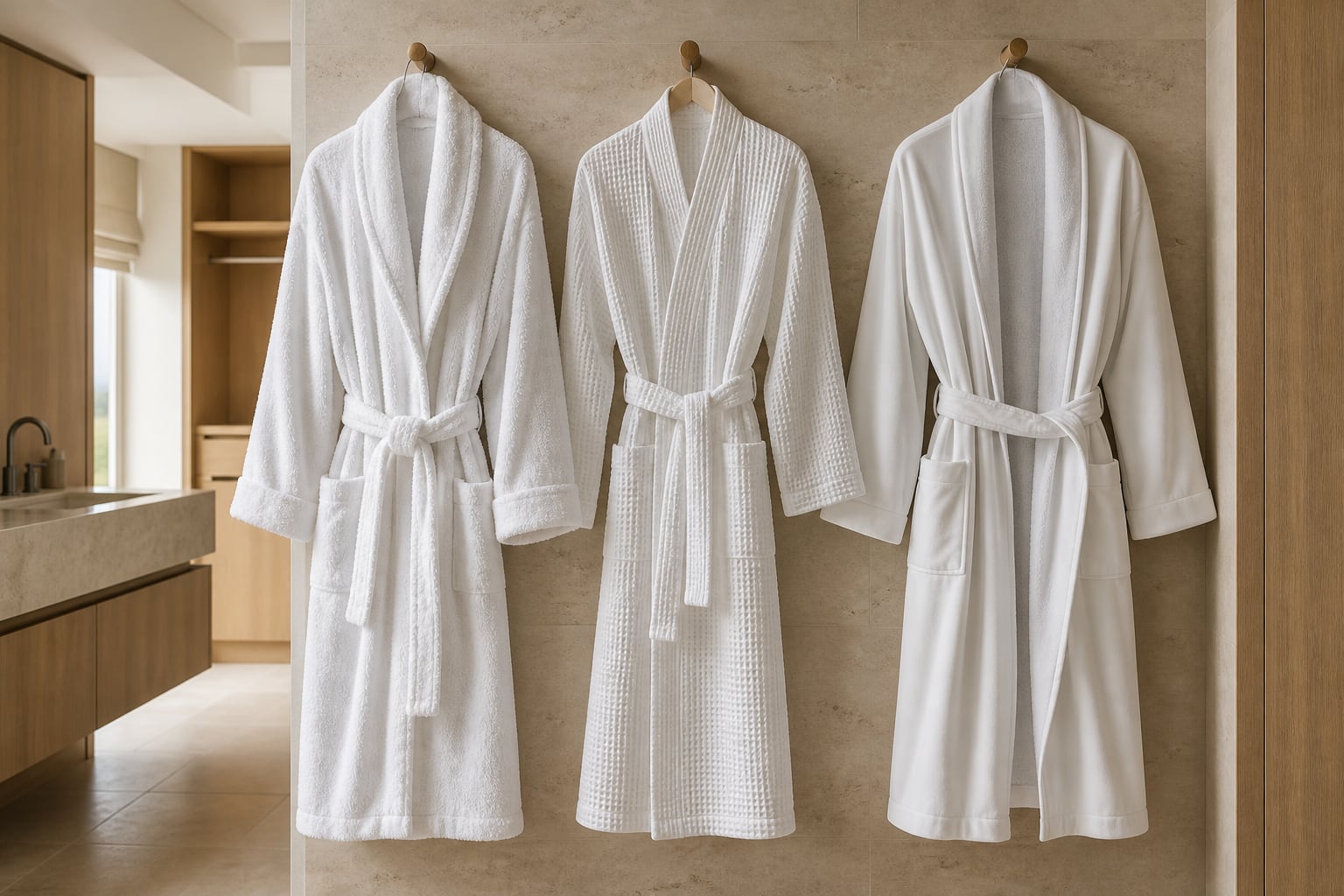
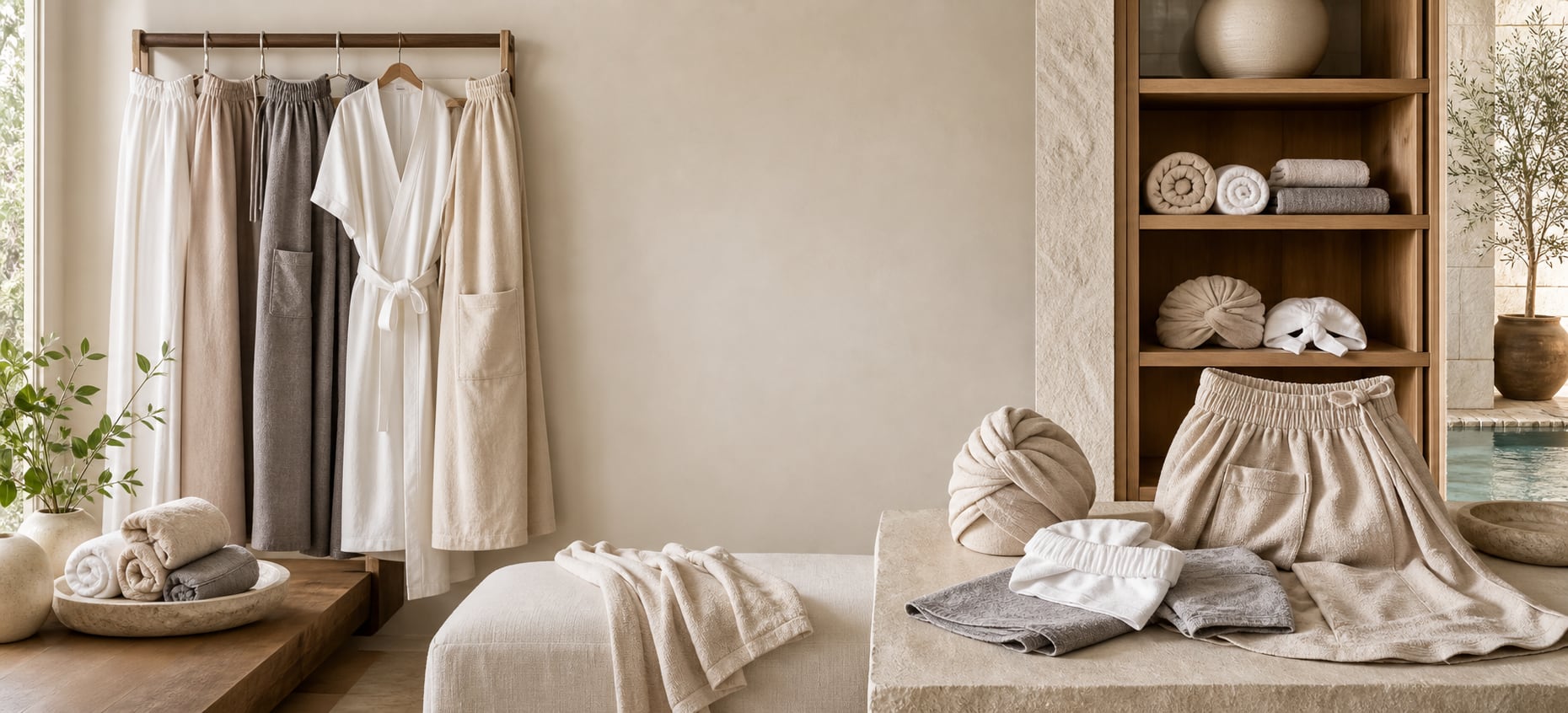
Choose a hotel bathrobe for the way it will actually be used. A robe worn mainly over nightwear in a guest room can be light and easy to store. A robe expected to go straight onto damp skin after a shower needs more absorbency. A pool or spa robe may also need warmth, coverage and a practical way to handle wet garments. The same robe rarely performs every one of these jobs equally well.
After defining the use, compare complete garments rather than choosing from a fabric name or GSM figure. The robe has to wrap securely, allow easy movement, feel comfortable at the collar and cuffs, and survive the hotel’s washing and drying process without losing its fit. A soft new sample is only the beginning of that assessment.
A useful approval test has three moments: wear the robe dry, use it in the wet or warm conditions it is meant for, and wear it again after laundering. This exposes decisions that a catalogue cannot show, including sleeve length after shrinkage, a belt that sits too high, a heavy collar that stays damp or a fabric that no longer feels the same.
Start with where and how the robe will be used
Begin with the guest’s route. In a city hotel, the robe may spend most of its time in the wardrobe and be used for dressing, room service or a short walk to the bathroom. In a resort, it may travel between the room, pool and spa. A villa guest may wear it for longer periods, while a treatment robe needs to work when sitting, walking and lying down. These situations place different demands on absorbency, warmth, coverage and weight.
Climate and room temperature also change the answer. A thick terry robe can feel reassuring in a cool bathroom but excessive in a warm coastal property. A light waffle robe occupies less space and is comfortable in heat, yet may not give a wet guest the same drying or warmth as a looped terry construction. Decide which moment matters most instead of asking one garment to cover every possible use.
Keep guest-room and spa requirements separate. The guide to avoiding bathrobe specification errors in a spa covers treatment journeys, changing areas and wet wellness use in more detail. A hotel can use the same robe in both places only after confirming that it works for both.
Compare construction before choosing a weight
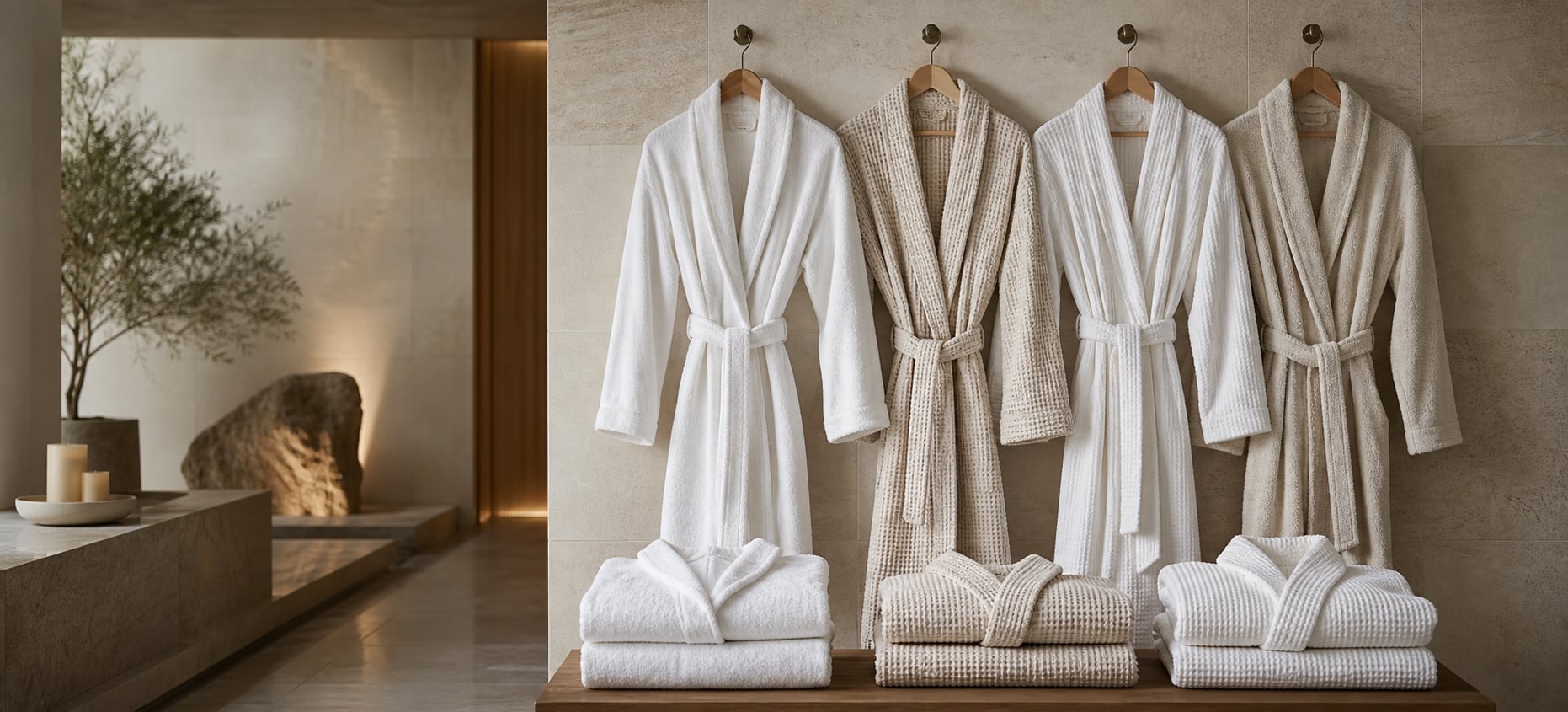
Terry, waffle and velour describe different surfaces, not quality levels. Terry has loops that create a towel-like surface and increase the amount of yarn exposed to moisture. It is a natural choice when the robe must help dry the body, but a generous terry robe becomes heavier when wet and usually takes more room in the washer, dryer and linen store.
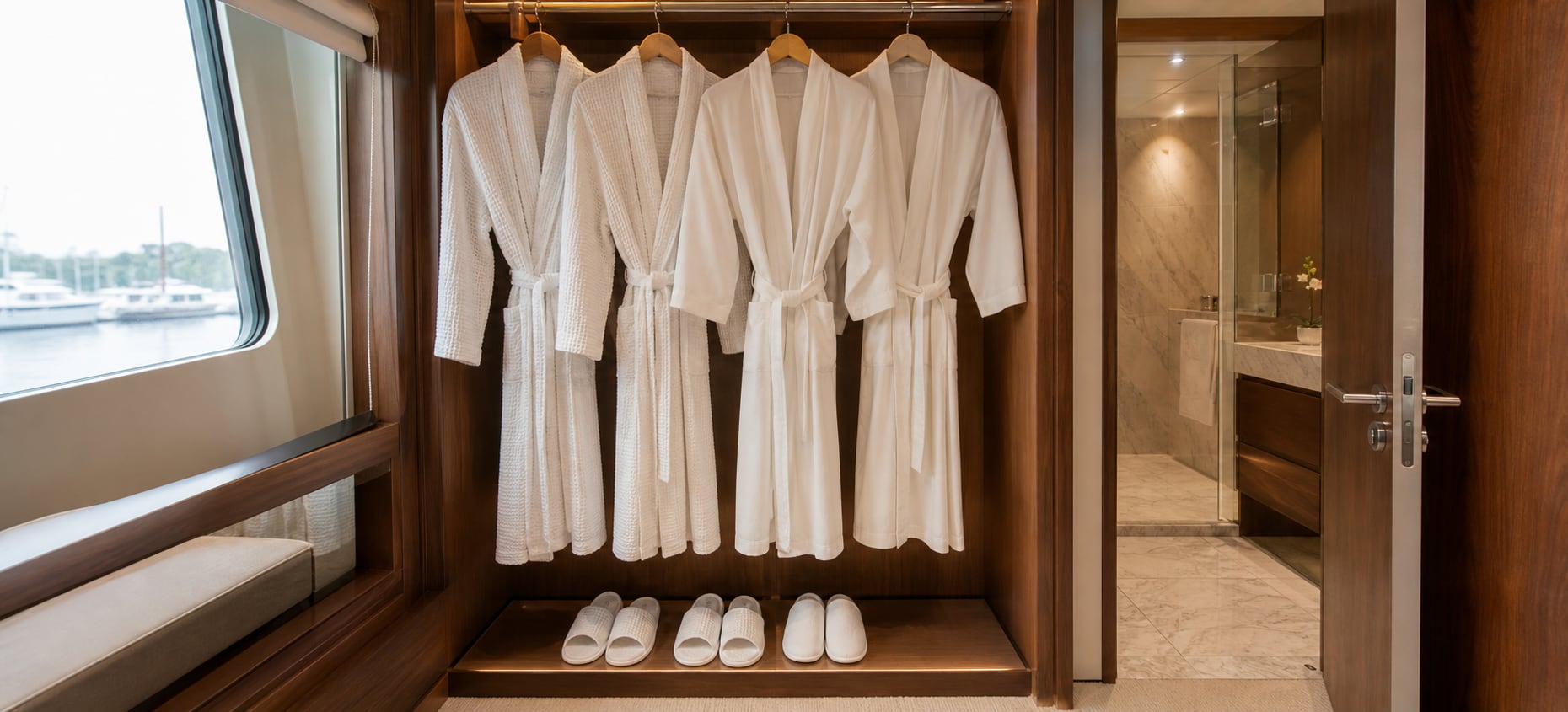
Waffle fabric uses a raised grid that creates texture with less bulk. Waffle robes are usually lighter to wear, fold smaller and dry more readily than comparable terry robes. They work well for warm rooms, dry relaxation and operations where storage or drying capacity is tight. The trade-off is a less enveloping feel and, depending on the construction, less towel-like absorption directly after bathing.
Velour has a smooth cut-pile face. Many bathrobe constructions use velour on the outside and retain loops on the inside, so the visible surface feels smooth while the inner surface handles moisture. This can produce a polished appearance, but the exact fabric needs inspection. The word velour alone does not tell you what touches the skin, how much water the robe will take up or how the pile will look after care.
| Construction | What the guest notices | What the hotel should check |
|---|---|---|
| Looped terry | Absorbent, warm and towel-like | Wet weight, drying time, folded volume and pulled loops |
| Waffle | Light, breathable and less bulky | Coverage, absorbency, shrinkage and grid distortion |
| Velour or terry-velour | Smooth outer surface with a fuller appearance | Inner surface, pile appearance, drying and colour change |
| Lightweight flat or blended fabric | Less warmth and an easy drape | Opacity, static, moisture handling and care compatibility |
Fibre content, yarn, construction and finishing all influence the result. Cotton is widely used because it can provide a comfortable, absorbent surface, while cotton-rich or synthetic blends may be selected for a different balance of drying, shape and handling. Ask for the complete composition and construction, then judge the finished robe. A fibre name cannot replace a wear and laundry test.
Use GSM as a description, not a quality grade
GSM means grams per square metre. It describes the mass of the fabric over a set area, not the quality of the cotton, the strength of the seams or the total weight of the finished robe. Two robes with the same GSM can feel different because their loops, yarns, finishes and garment dimensions are different.
A higher GSM usually means more material in the same area, which can produce a fuller hand. It also adds mass to every sleeve, collar and overlap. That affects how the robe feels when wet, how much can fit into a laundry load, how long drying may take and how much shelf space a folded robe needs. A heavier number is therefore a trade-off, not an automatic upgrade.
Compare weight only within constructions that could genuinely suit the intended use. There is little value in choosing a very light robe if it leaves a wet guest cold, or a dense one if it remains damp at the time it must return to the room. Weight ranges need their own comparison; this buying decision should begin with use and construction.
Check the fit on different people
One size is an inventory choice, not proof of universal fit. Put the sample on people with different heights and builds. The front should overlap securely without needing the belt to hold two narrow edges together. The wearer should be able to sit, raise the arms and walk without the robe pulling open or the hem restricting movement.
Check sleeve length with the arms relaxed and moving. Sleeves that cover the hands become awkward around water, food and bathroom fittings. Sleeves that are too short make an otherwise generous robe feel borrowed. Body length, shoulder width and armhole depth matter too, particularly once the garment has been washed and any dimensional change has occurred.
If one size cannot give reasonable wrap and movement across the guests the hotel needs to serve, add a clear size range. The labels must be easy for staff to read, and housekeeping needs a simple way to place or deliver the right option. Record garment measurements for each approved size rather than relying only on labels such as medium or large, which vary between suppliers.
Choose details that work when the robe is worn
A shawl collar adds warmth and a familiar hotel appearance, but it also adds layers around the neck and can stay damp longer than the body. A flat kimono collar creates less bulk and often suits lighter robes. A hood can be useful after swimming or in a cool resort, although it adds wet weight, drying time and folded volume. Choose the collar for the use rather than for a photograph.
The belt should be long enough for the intended fit range and remain easy to locate after laundering. Fixed or partly attached belts reduce separation but may limit adjustment or complicate repair. Loose belts are easy to replace but need secure loops and a reliable laundry return process. Test the belt position on more than one height, because loops placed comfortably for one wearer may sit at the ribs or hips of another.
Pockets should be large enough to be useful without pulling the front out of shape. Check their position while sitting and walking, and inspect the top corners after washing because repeated pulling concentrates stress there. Hanging loops, cuff depth, side seams and collar joins deserve the same attention. These small parts often reveal whether the complete garment has been designed for repeated use.
Colour and embroidery should follow the same logic. White can simplify coordination with white bath linen, while colour can support the room identity or help distinguish uses. Neither choice is maintenance-free. Confirm the laundry chemistry, colour stability and replacement route. Approve any embroidery on the complete robe so its backing, stiffness, placement and behaviour after washing are visible before production.
Test the finished robe in the real care process
The care label tells you the treatments the supplier permits. It does not prove that the robe will suit the hotel’s actual washer, chemistry, load, dryer, finishing method and turnaround. Send a finished sample through the same route used for the future stock. If an outsourced laundry will handle it, involve that laundry before approval rather than after the first bulk delivery.
The same principle applies when choosing hotel towels for commercial laundry: agree the process first, then judge the textile after that process. Do not copy a wash temperature, cycle count or shrinkage limit from a generic guide when the product and care conditions have not been matched.
Measure the robe before and after care at the chest, body length, sleeve, belt and other points that affect fit. Then put it on again. Look for a smaller wrap, twisted side seams, puckered embroidery, distorted waffle cells, flattened or pulled pile, hard cuffs, stretched pockets and a belt that no longer sits correctly. Note how long the robe needs to dry completely and whether the laundry can identify each size.
Repeat the process enough to understand the early direction of change. The purpose is not to make a new sample look old. It is to discover whether the approved feel, fit and appearance remain credible after the process the hotel will actually use. If the wash test changes the recommendation, trust the washed robe rather than the sales sample.
Approve the robe in three stages
First, wear the new robe dry in a guest room. Check the wrap, movement, collar, cuffs, belt, pockets and how easily it can be taken from its hanger or folded presentation. This shows whether the garment works as an amenity before absorbency or laundry is considered.
Second, use it in the condition it is intended for. Put an absorbent robe on after a shower, or wear a lightweight room robe for the length of time a guest realistically might. Notice where damp fabric becomes heavy, whether the collar irritates the neck, whether sleeves need rolling and whether the robe provides enough coverage while walking or sitting.
Third, wash and dry the complete sample through the intended route, measure it and repeat the wear test. Compare the washed garment with the original specification rather than relying on memory. A robe is ready for approval only when the same construction makes sense at all three stages.
Record the complete approved robe
The purchase record should identify fabric composition and construction, GSM where useful, colour, finished garment measurements by size, collar, cuffs, pockets, belt and loops, hanging loop, seams, labels, embroidery and care method. Keep a dated washed sample as well as the written specification. A replacement order can then be compared with a physical reference that has already passed through use and care.
Also record where the robe will be placed, which rooms or facilities receive it and how sizes are identified. Quantity, replacement timing, logo treatment and white-versus-colour decisions can then be developed without changing the approved foundation. Those specialist questions deserve their own calculations and tests, but they should all refer back to the same garment specification.
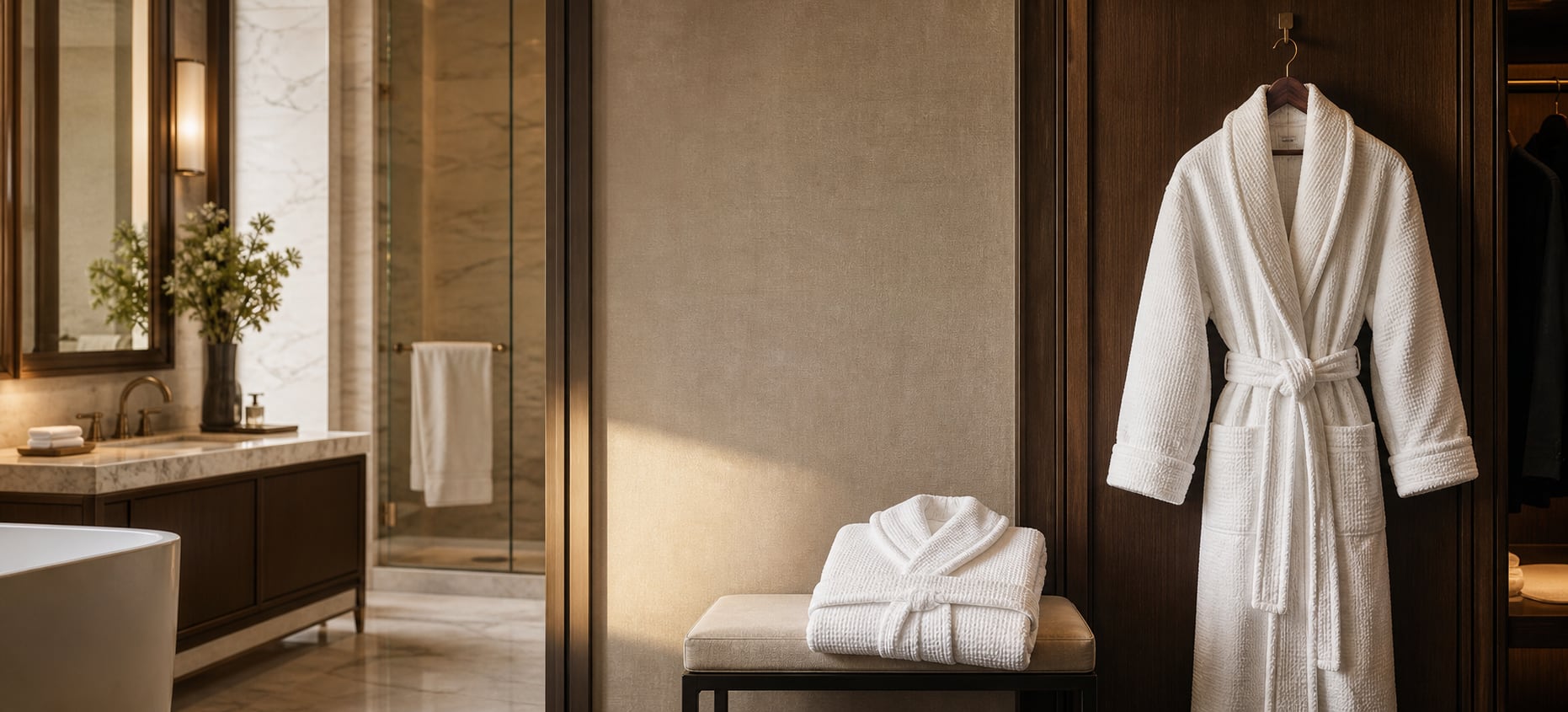
Before placing the full order, compare shortlisted samples from the Gencer hotel bathrobe collection on different people, in the intended guest setting and after the real care process. Approve the robe that still fits, feels and presents correctly at the end of that sequence.
Product catalogue
Request the Stay catalogue
Share your business email and, if useful, your company or property name. We will carry these details into the secure catalogue-request form with the relevant category already selected.
Journal
Continue reading
Avoiding Costly Errors in a Spa Bathrobe Specification
A practical review of bathrobe decisions that create friction for guests, treatment teams, laundry, and storage.
Read Avoiding Costly Errors in a Spa Bathrobe SpecificationHow to Choose Hotel Towels for Commercial Laundry
A process-led towel specification covering wash, extraction, drying, lint, borders, folding and guest-room results.
Read How to Choose Hotel Towels for Commercial LaundryWhat Makes a Hotel Towel Durable?
A practical look at the construction and operating conditions that help a hotel towel remain fit for service.
Read What Makes a Hotel Towel Durable?