












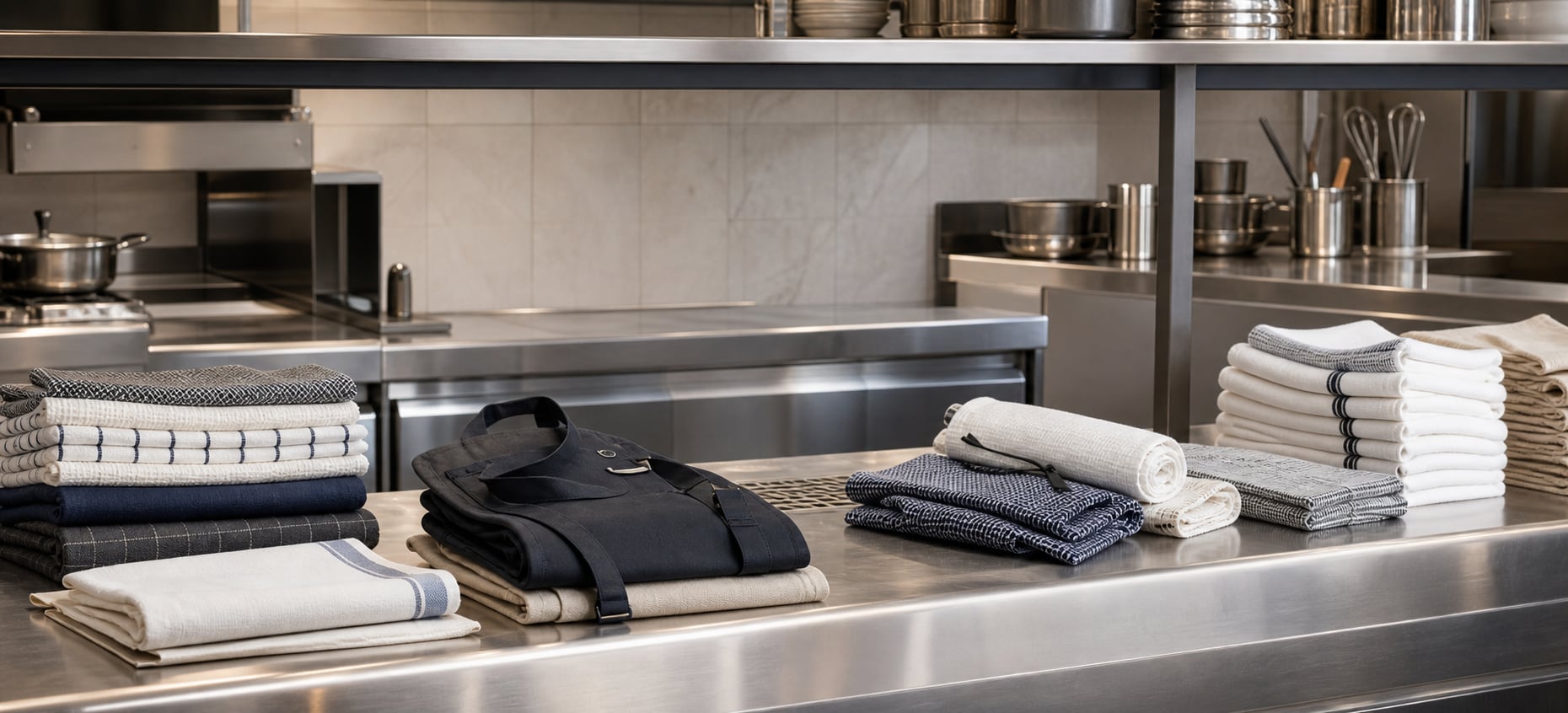


















What Makes a Hotel Towel Durable?
A durable hotel towel is a balanced product: its pile, ground, borders and hems must suit the way it will be washed, dried, handled and replaced.
Published by Gencer Textiles
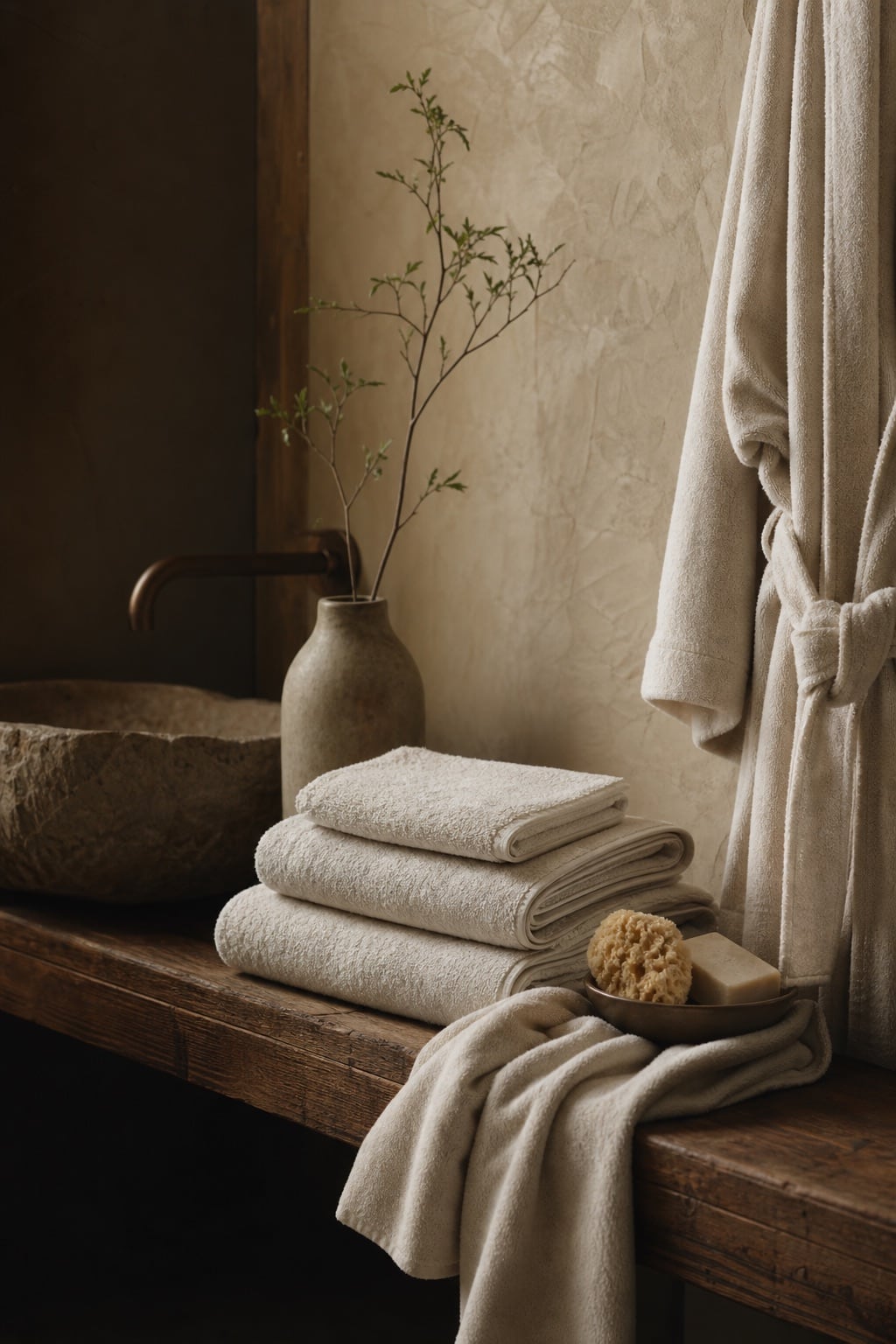
A hotel towel is durable when the whole construction stays usable through the property’s real service cycle. Start by checking the pile, the woven ground beneath it, the borders and the hems after representative laundering. A heavy towel is not automatically a durable one. Yarn structure, loop security, sewing, chemistry, drying and daily handling can each become the first point of failure.
Define “usable” before comparing products. The towel may need to retain acceptable absorbency, coverage, hand, shape and appearance while remaining easy to sort, fold and present. Durability ends when one of those functions falls below the hotel’s agreed room standard, even if the rest of the towel still looks sound.
Durability begins with a balanced terry construction
A terry towel has raised loops for drying and a ground structure that holds those loops in place. Long or bulky loops can create a generous hand, but they still need a stable base. If the ground becomes visible, distorts or releases loops too easily, extra pile weight does not solve the weakness.
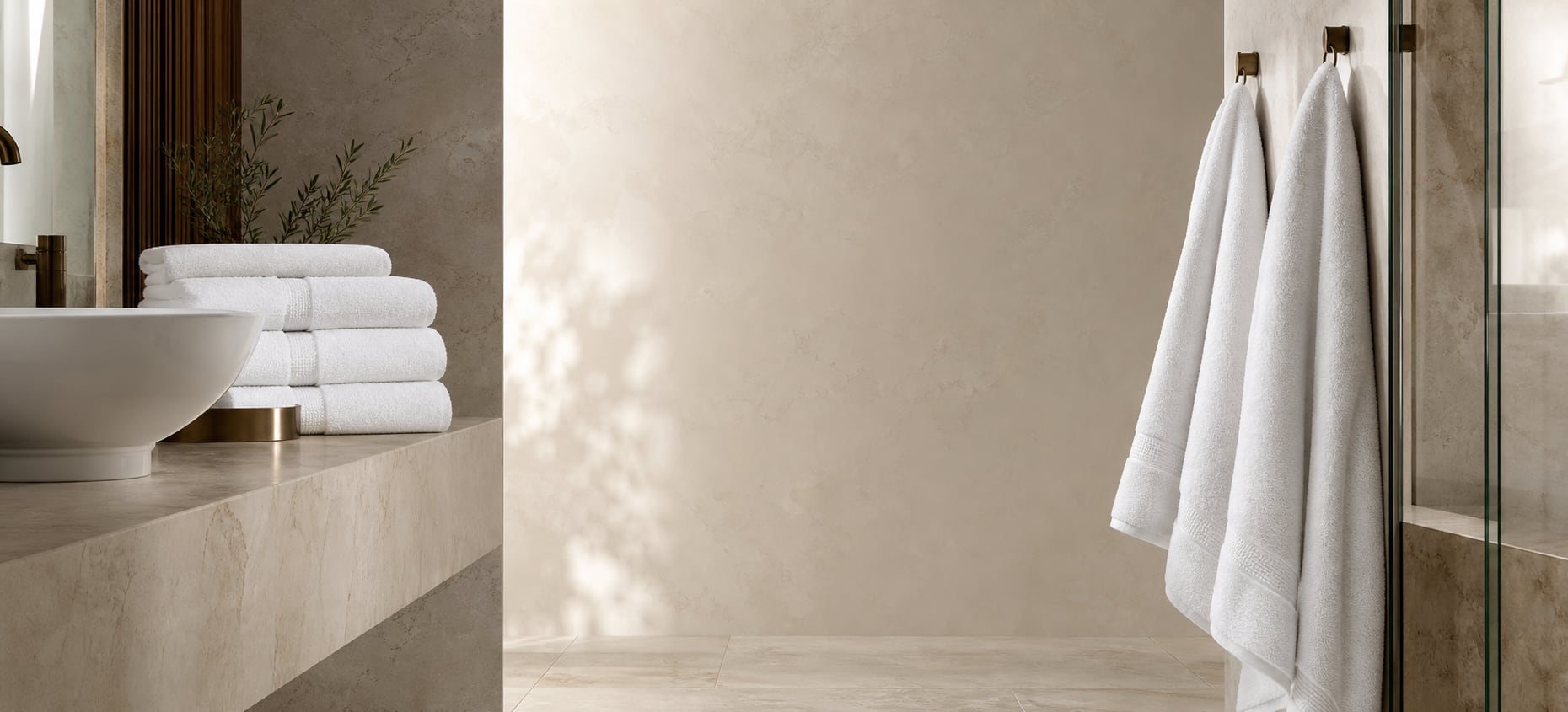
Inspect both faces and hold the towel to the light. Look for thin areas, uneven pile, loose yarn, pulled loops and stripes caused by construction variation. Compare several pieces rather than the most attractive sample. Mass per square metre helps describe the product, but it does not show how that mass is divided between pile, ground and borders.
Yarn labels need construction context
Ring-spun, open-end, combed, carded, single, plied and low-twist describe different parts of yarn preparation or structure. None is a complete durability verdict. A stronger yarn can still sit in a weak ground, and a soft pile can still fail at the hem. Ask which yarn is used in the pile, ground and borders rather than accepting one term for the entire towel.
If two spinning systems are being quoted, the ring-spun and open-end towel comparison explains what the labels can and cannot tell you.
Borders and hems often reveal weakness first
Check the transition between terry and any decorative border. A dense border and a more open pile area may change at different rates during care, creating puckering or distortion. At the ends, review hem depth, stitch coverage, loose thread and whether the folded edge stays flat after processing.
A useful sample review includes twisting, seam opening, edge curl and thread breaks. Pulling hard on one new towel is not a repeatable test. Instead, agree how many pieces will be processed, how they will be measured and which visible defects lead to rejection.
The laundry can protect or shorten service life
The wash formula, load, mechanical action, extraction, drying endpoint and finishing all affect a towel. The right settings depend on soil, hygiene needs, fibre, equipment and chemical guidance, so there is no universal recipe. Record the process used for the sample and repeat the trial in a representative load.
Overdrying, incompatible chemistry, poor rinsing or damaged equipment may contribute to harshness, strength loss or local damage. Those causes must be investigated by the laundry team rather than inferred from the towel alone. The broader guide to choosing towels for commercial laundry can help map the complete route.
Handling damage can look like product failure
Sharp trolley edges, rough chute joints, exposed fasteners and using towels as cleaning cloths can create tears or chemical marks that no construction was designed to absorb. Note where damage appears. Repeated failures in the same position or after the same handling step often give a better clue than the age of the towel.
Approve durability with a processed sample and a clear record
- Record finished size, mass per area, composition and declared yarn details.
- Inspect pile, ground, borders, hems, labels and shade on several pieces.
- Process marked samples through a documented representative laundry route.
- Recheck dimensions, hand, absorbency, loops, distortion and sewing.
- Ask housekeeping and laundry staff to fold, place and handle the samples.
- Keep a treated reference and record why pilot towels leave service.
The most useful durability claim is not a promised number of washes. It is a repeatable result tied to a complete construction, an agreed process and a condition standard. Take that record into the bath-towel review so suppliers can respond to the actual failure risks rather than offering a heavier towel as a simple answer.
Review the hotel bath-towels family and the wider Stay textile category with the processed reference and inspection notes in hand.
Product catalogue
Request the Stay catalogue
Share your business email and, if useful, your company or property name. We will carry these details into the secure catalogue-request form with the relevant category already selected.
Journal
Continue reading
What GSM Is Best for Hotel Towels?
How to interpret grams per square metre without treating towel weight as a standalone quality score.
Read What GSM Is Best for Hotel Towels?How to Choose Hotel Towels for Commercial Laundry
A process-led towel specification covering wash, extraction, drying, lint, borders, folding and guest-room results.
Read How to Choose Hotel Towels for Commercial LaundryRing-Spun vs Open-End Cotton Towels for Hotels
What spinning method changes, what it leaves unanswered and how to compare complete towels after processing.
Read Ring-Spun vs Open-End Cotton Towels for Hotels