






Percale vs Sateen Duvet Covers for Hospitality
Percale is usually crisper and more matte; sateen is usually smoother and more lustrous, but the processed full-size cover decides the better fit.
Published by Gencer Textiles
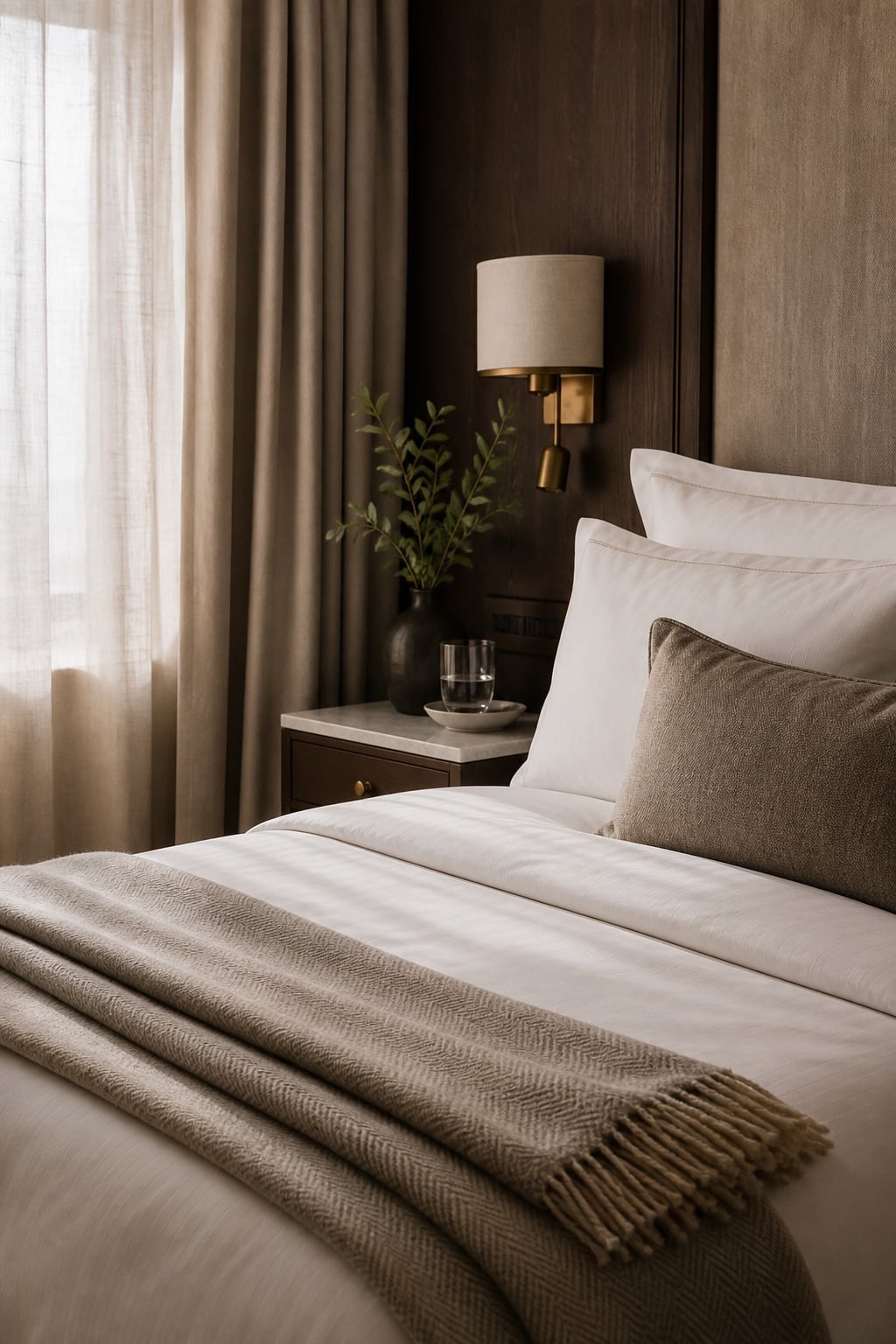
Choose percale when the hotel wants a crisper, more matte duvet cover; choose sateen when it wants a smoother hand, softer drape and more visible lustre. That is the useful first distinction, not a guarantee. Yarn, density, finishing and laundry can change either fabric. Compare full-size covers built to similar specifications and processed in the same intended route before deciding.
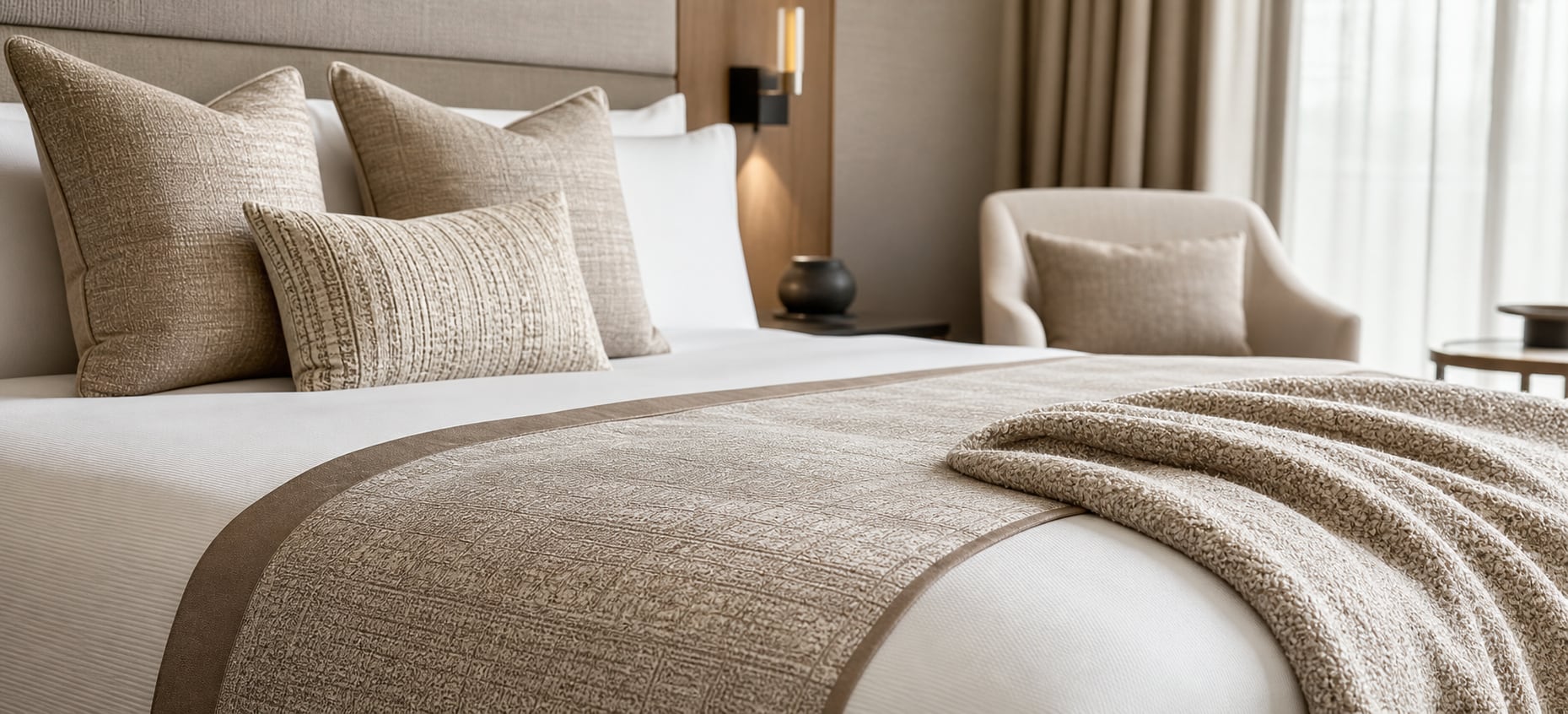
The guest meets the finished bed, not the weave diagram. Put both options on the actual duvet and view them in room light. Feel the surface after the same conditioning, listen for rustle, check how the cloth settles at the corners and observe creasing. Then ask housekeeping and laundry what each option requires to reach the approved presentation.
The weaves create different surfaces
Percale is a plain-weave direction, with yarns crossing in a simple alternating pattern. It commonly produces a balanced, matte surface and a clean hand. Sateen uses longer floats on the face, which can create a smoother touch and subtle sheen. The longer exposed path also changes how the surface reflects light and may change how snags or abrasion appear.
These descriptions are tendencies. Fine yarn, density, preparation and finishing can make one percale feel smoother than another sateen. Do not compare a light percale with a much heavier sateen and attribute every difference to weave. Ask for comparable constructions or record the variables that remain different.
Match the hand to the room and climate
A crisp percale can suit a fresh, tailored bed and may feel appealing in a warm room. A fluid sateen can support a softer, more enveloping presentation. Climate alone does not choose the fabric because duvet filling, air conditioning, garment worn to bed and individual preference also affect comfort. Use the weave to shape the experience, then test it in the complete bedding arrangement.
Check both sides if the construction has a clear face. Staff need to orient the cover correctly if lustre or touch changes by side. Consider whether room lighting exaggerates sheen, creases or pressure marks. White is not visually identical across constructions, and a replacement lot can look different beside older pieces even when the nominal colour is the same.
Compare how each option finishes
Run coded samples through the same wash, extraction, drying and finishing route when their care requirements allow it. Compare the result before extra hand finishing is added. Percale may support a deliberately crisp look, while sateen may show a smoother face, but either can crease or distort if the construction and process are poorly matched.
Ask the laundry to record feeding, ironing, folding and stacking, not only wash performance. A fabric that looks good after careful sample-room pressing may be impractical at normal volume. Another may finish acceptably with less handling but miss the tactile direction. The decision is the balance the hotel actually values.
Do not use thread count as the tiebreaker
Thread count does not convert percale and sateen into levels on one ladder. Counting conventions, yarn ply and construction affect the reported figure. More threads do not automatically mean better comfort or service life. Record the figure for the approved fabric, but base approval on hand, opacity, surface, strength evidence, dimensional result and the hotel’s ability to care for the cover.
If a supplier proposes a higher count as an upgrade, ask what else changed. Compare finished weight, yarn, weave, finish and care result. A denser fabric may alter air movement, drape, drying or finishing, but the direction and scale need to be demonstrated for the actual product. Avoid universal claims that one count lasts longer.
Look at wear on the complete cover
Inspect broad surfaces, seams, opening and corners after the trial. Sateen’s longer face floats may show certain snags or abrasion differently, while a percale surface may reveal creasing or local wear in another way. Construction quality and handling can outweigh the weave label, so record the defect location and compare more than one piece.
A duvet cover may fail at a closure or seam before the main cloth. Include fastening, stripping and finishing in the comparison. If one sample has a different closure, do not credit the entire result to weave. Either align the make-up or note the confounding difference in the decision record.
Run a blind room and laundry trial
| Check | Percale direction | Sateen direction |
|---|---|---|
| Touch | Crisper and cleaner | Smoother and more fluid |
| Appearance | Matte and tailored | Subtle lustre and softer drape |
| Trial | Assess after the intended process | Assess after the intended process |
| Decision | Choose the complete result | Choose the complete result |
Code the covers where practical and gather observations before naming the weave. Ask guests or room reviewers about comfort and appearance, attendants about changing and presentation, and laundry staff about finishing. Decide which results are required and which are preferences. A small preference in hand may not justify extra work; a meaningful room difference may.
Keep the chosen processed cover, specification and process record together. When a future lot arrives, compare it with the reference rather than relying on the words percale or sateen. That protects the decision the hotel made and makes any change visible before the pieces spread across rooms.
If the two options remain close, repeat the comparison at normal working volume. Small differences in folding, orientation or pressing may become clearer when the team handles a full batch. Record the extra work as an observation, not an invented financial saving, and decide whether the room effect is worth that operating difference.
Compare suitable constructions in the hotel duvet-cover range, and return to the fabric guide if fibre or blend remains unresolved.
Frequently asked questions
Does percale always sleep cooler than sateen?
Not always. Percale is commonly associated with a crisp, airy hand, but comfort also depends on yarn, density, finishing, duvet filling, room temperature and the guest. Compare complete processed covers in the intended bedding setup. Avoid promising a universal temperature result from the weave name alone.
Is percale more durable than sateen for hotels?
The weave name alone cannot prove service life. Sateen has longer face floats, while percale has a simpler interlacing pattern, but yarn, density, sewing, care and handling decide where a cover fails. Request relevant evidence, process full-size samples and inspect surface, seams, corners and closure.
Will sateen keep its lustre after commercial laundering?
It may change. Lustre comes from the surface structure and finishing, both of which can look different after washing, drying and ironing. Test the offered cover through the intended route and compare it with an unused control under the room’s lighting. Record the lowest acceptable appearance for repeat orders.
Can a hotel use percale and sateen in different room categories?
Yes, if the distinction is deliberate and manageable. Separate the item codes, storage and room allocation, and explain the presentation standard to housekeeping. Test both against the same operational requirements. Mixing them without clear identification can create inconsistent rooms and complicate reordering.
Product catalogue
Request the Stay catalogue
Share your business email and, if useful, your company or property name. We will carry these details into the secure catalogue-request form with the relevant category already selected.
Journal
Continue reading
What Fabric Is Best for Hotel Duvet Covers?
Why there is no single best fibre, and how to approve a fabric against the room and laundry result the hotel needs.
Read What Fabric Is Best for Hotel Duvet Covers?Percale vs Sateen Sheets: Which Is Better for Hotels?
Percale and sateen create different surfaces and operating trade-offs; neither weave is universally better for hotels.
Read Percale vs Sateen Sheets: Which Is Better for Hotels?How to Choose Duvet Covers for Hotels
A practical route from the actual bed and laundry process to a duvet cover that housekeeping can use consistently.
Read How to Choose Duvet Covers for Hotels