





























Why Do White Hotel Towels Turn Grey or Yellow After Washing?
An overall grey cast usually points towards soil or residue returning to the towel. Yellowing may come from oily soil, iron, residual chemistry or a change in optical brightness. Diagnose the pattern before changing the wash formula.
Published by Gencer Textiles
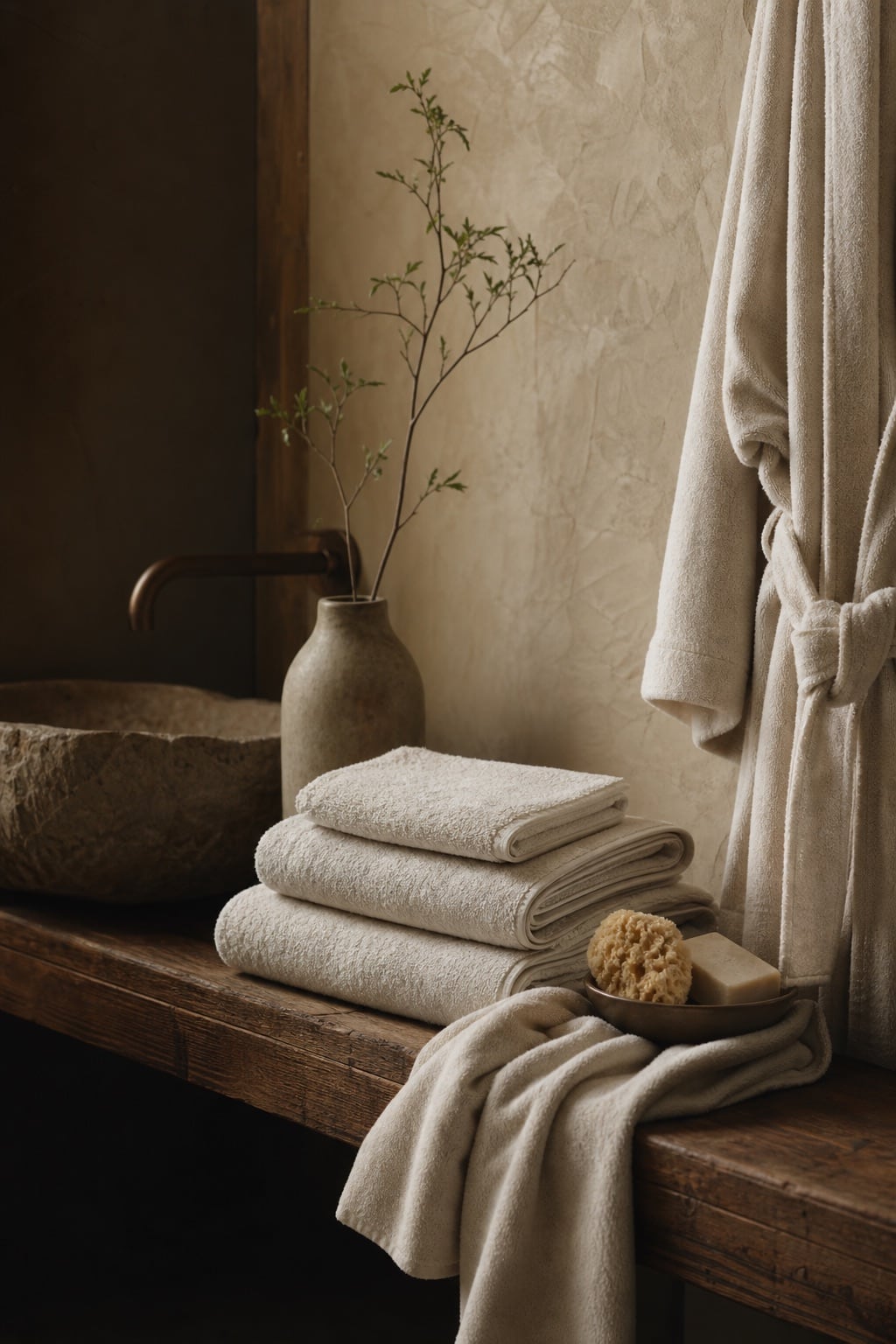
White hotel towels do not turn grey or yellow for one universal reason. A grey cast often means removed soil, lint or residue has not left the wash system and has settled back onto the textile. Yellowing needs a different investigation: oily body soil or cosmetics may remain, iron or manganese may be present in the water, residual chemistry may be affecting the finish, or the towel may have lost part of the optical brightness that made it look blue-white when new.
The useful first question is not “Which bleach should we add?” but “What does the change look like, where does it occur and which loads are affected?” Hold the affected towels out of room-ready stock, compare them in consistent light and trace the load before changing chemistry. A stronger treatment aimed at the wrong cause can waste a serviceable towel or make a mineral stain darker.
Grey and yellow are different clues
Inspect several dry towels, not one piece while it is still warm or damp. Open each towel fully and compare the pile, borders and hems with a processed reference that is still within the hotel standard. Surface feel and odour also matter: a greasy area suggests a different route from a dry, even cast across the entire piece.
| Observed pattern | More likely areas to investigate | Evidence to collect |
|---|---|---|
| Even grey cast across many towels | Soil redeposition, mixed soil classes, inadequate wash conditions, poor draining or rinsing, water hardness | Load weight, soil class, formula record, water levels, drain and rinse performance |
| Uneven grey or greasy patches | Residual oils, cosmetics, softener or local contact with dirty equipment | Location of marks, feel, odour, dispenser and equipment checks |
| Yellow areas where skin or products contact the towel | Body oils, hair or skin products, make-up and other oxidised oily soil | Room or outlet source, delay before washing, sorting and pre-treatment record |
| Yellow, orange or brown spots | Iron, manganese, rusting pipework or equipment contact | Incoming water and equipment inspection; mineral testing by the responsible specialist |
| Cream or yellow cast across a batch | Residual alkalinity or bleach, incomplete neutralisation or rinsing, heat exposure, loss of optical brightener | Final-rinse checks, dosing record, drying endpoint and comparison with older and unused controls |
| Only one age group or delivery looks dull | Different original white, finish, construction or accumulated service history | Batch identity, retained sample, specification and processed comparison |
Why white towels turn grey
Washing has two jobs: release soil from the towel and carry it away. Detergent builders and anti-redeposition agents help keep released soil suspended so it leaves with the bath. If a washer is overloaded, the formula does not suit the soil and water, water movement is restricted, or draining and rinsing are ineffective, some of that material can return to the pile. Repetition produces the familiar dull grey result.
Hardness minerals such as calcium and magnesium can also reduce cleaning efficiency when the wash system does not control them. That does not mean every hard-water property will have grey towels; it means the formula has to be designed for the measured supply water. Soil classification matters just as much. Bath towels carrying body oils should not inherit a light-soil formula merely because the pieces began white.
- Confirm the actual dry load weight and the machine programme used.
- Check that bath, pool, spa, kitchen and cleaning textiles are not being mixed through convenience.
- Verify chemical delivery rather than assuming the programmed dose reached the washer.
- Review fill, mechanical action, drain time and rinse performance with the equipment and chemical specialists.
- Test supply water and any reclaimed water against the wash programme in use.
Why yellow towels need a different check
Yellowing often begins with material that was not visibly yellow before washing. Body oils, sunscreen, make-up, hair products and other oily soils can be colourless or faint when deposited, then become more visible through oxidation and heat. A concentrated mark near the face, hairline or one edge of the towel therefore points first to use, collection, sorting and soil removal—not automatically to the cotton itself.
Yellow-brown or orange spotting suggests another path. Iron or manganese can enter through the water supply, heaters, pipes or corroding equipment. Chlorine bleach is not a rust remover and can intensify iron-related discoloration. An overall creamy cast can instead indicate residual alkalinity, incomplete rinsing or neutralisation, excessive process exposure, or the gradual loss of fluorescent brighteners used to influence the perceived shade of white. These possibilities need measurements and batch evidence; they cannot be separated reliably by colour name alone.
Bleach is not a diagnosis
A bleaching stage can be part of a professionally designed white-towel formula, but more bleach is not a universal correction for dullness. The correct oxidising system, concentration, temperature, contact time and neutralisation depend on fibre, construction, soil, water, equipment and the chemical supplier’s instructions. An incompatible or uncontrolled change can affect shade, strength, absorbency and service life.
Keep hygiene and whiteness as two separate control questions. A validated hygienic process does not guarantee that a permanently stained towel meets the room standard, and a visually bright towel is not proof that the required hygienic process occurred.
Trace the pattern before changing the process
A simple incident record is more valuable than a speculative remedy. Photograph the affected pieces beside the approved reference under the same light. Record towel format, product reference, batch where known, room or outlet source, date, washer, programme, dry load weight, operator, chemical delivery record and dryer. Note whether sheets or other white goods from the same wash route changed too.
| Pattern in the operation | What it helps separate |
|---|---|
| One towel only | Local product contact, accidental contamination or an isolated construction issue |
| One complete load | Sorting, load weight, dosing, programme, drain, rinse or dryer event |
| One washer or one day | Equipment, supply-water or chemical-delivery variation |
| Every white category | Shared water, chemistry, process or storage issue |
| Only towels, not sheets | Terry-specific soil, bulk, water retention, drying or finish interaction |
| Only older or newer stock | Service history, mixed original whites, finish or specification difference |
Prove the correction with a controlled trial
Once the likely cause has been narrowed, the laundry team should run a documented corrective trial. Use coded pieces from the affected group, a sound processed reference and, when available, an unused control from the same delivery. Keep the load and evaluation method representative. Change only the variables the responsible specialists have approved, then compare colour, odour, hand, absorbency, dimensions, lint, loops, borders and hems after the complete wash and dry route.
- Define the observed defect and the acceptance reference before the trial.
- Confirm water quality, machine condition and chemical delivery.
- Record every process stage used for the test pieces.
- Assess towels fully dry and under consistent lighting.
- Check that improved whiteness has not concealed damage, harshness or reduced absorbency.
- Repeat the result on a representative load before changing the normal formula.
Do not judge success only by making the towel look brighter once. The correction should remove or control the cause and return a towel that remains fit for hotel use. If the same cast reappears after the next ordinary cycle, the process has disguised the symptom rather than resolved it.
Reclaim or retire on evidence
Some towels can return to service after an approved reclaim process and a successful inspection. Others remain permanently discoloured, or the repeated chemistry and heat needed to improve them would leave the pile harsh, weak or poorly absorbent. Retire those pieces from guest use according to the hotel’s textile policy rather than sending them through uncontrolled rewash cycles.
The lasting fix belongs in the operating record: corrected soil class, verified load limit, repaired drain, water treatment, dosing adjustment, rinse control, drying endpoint or clearer batch separation. Procurement should become involved when the pattern follows one construction or delivery after the process variables have been checked.
Use the full commercial-laundry towel guide to connect the corrected process to future samples, review the hotel bath-towel family, and apply the condition-led replacement method when a piece cannot return to the room standard.
Product catalogue
Request the Stay catalogue
Share your business email and, if useful, your company or property name. We will carry these details into the secure catalogue-request form with the relevant category already selected.
Journal
Continue reading
How to Choose Hotel Towels for Commercial Laundry
A process-led towel specification covering wash, extraction, drying, lint, borders, folding and guest-room results.
Read How to Choose Hotel Towels for Commercial LaundryWhat Makes a Hotel Towel Durable?
A practical look at the construction and operating conditions that help a hotel towel remain fit for service.
Read What Makes a Hotel Towel Durable?How Often Should Hotels Replace Their Towels?
A condition-led way to remove individual towels and replenish the pool before service is affected.
Read How Often Should Hotels Replace Their Towels?