

A Practical Table Runner Buying Guide for Restaurant Procurement Teams
A restaurant table runner should support the service concept without obstructing place settings, creating unstable layers, or adding avoidable handling.
Published by Gencer Textiles
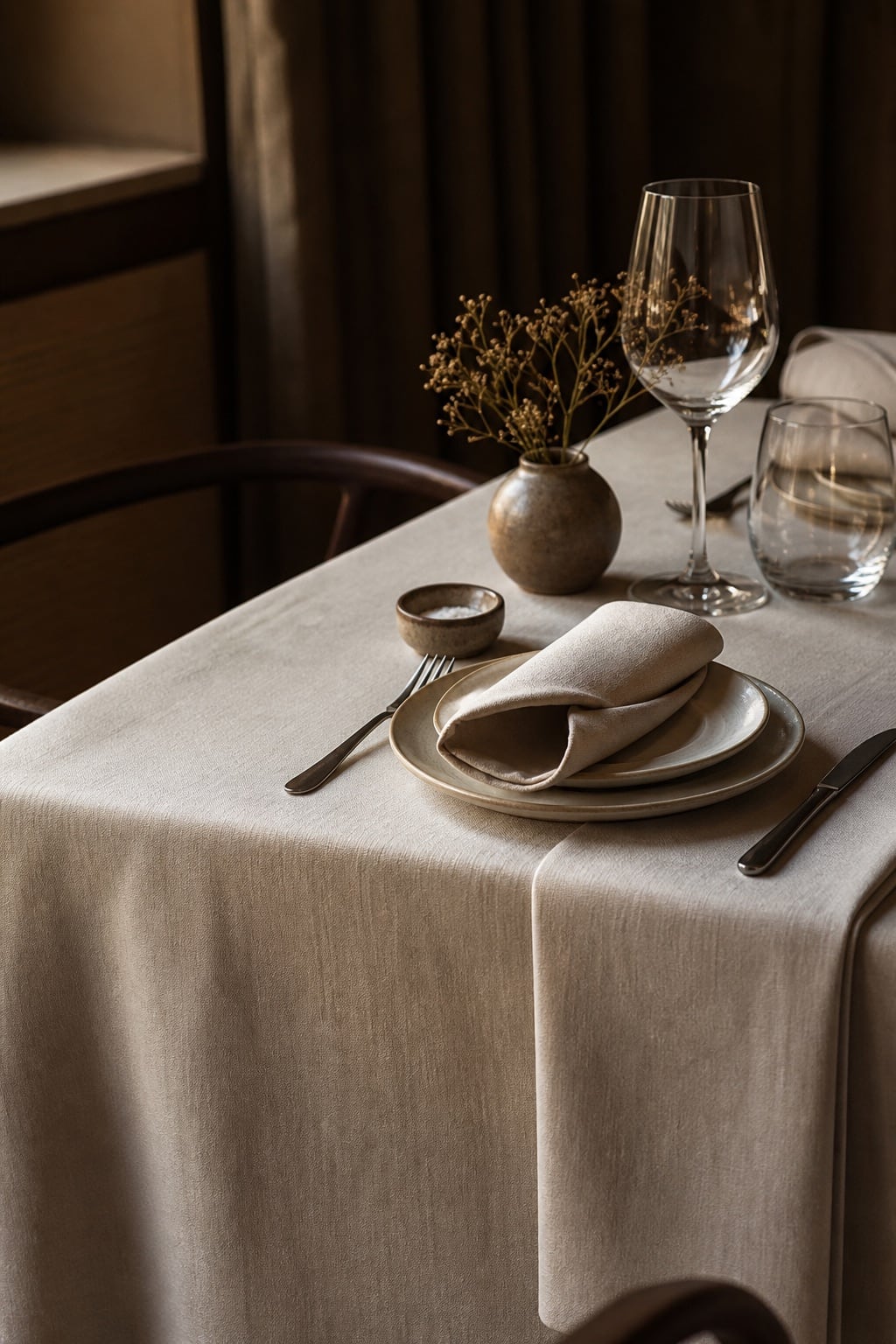
Choose table runners by testing their width, length, material, and placement on the actual tables with a complete place setting. The right runner clarifies the table composition and remains practical for service, clearing, laundering, and storage.
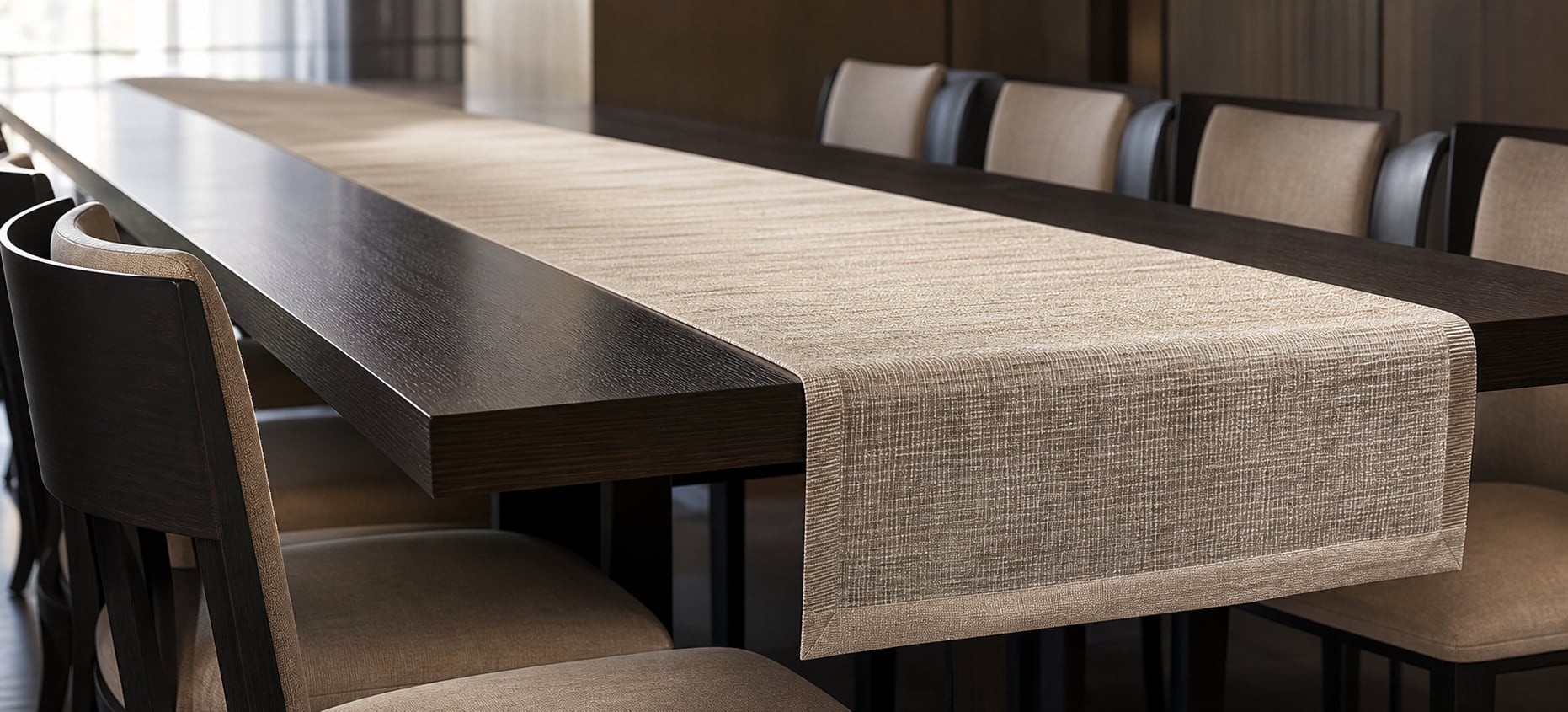
Begin with the service model. A runner used across a long communal table, down the centre of a two-top, or as a crosswise place-setting layer performs a different job and needs a different dimensional relationship.
Define the runner’s role on the table
Decide whether the runner is a permanent layer, an event detail, a buffet accent, or an alternative to full table covering. This determines how often it is handled, how many variants are needed, and how closely it must coordinate with tablecloths and napkins.
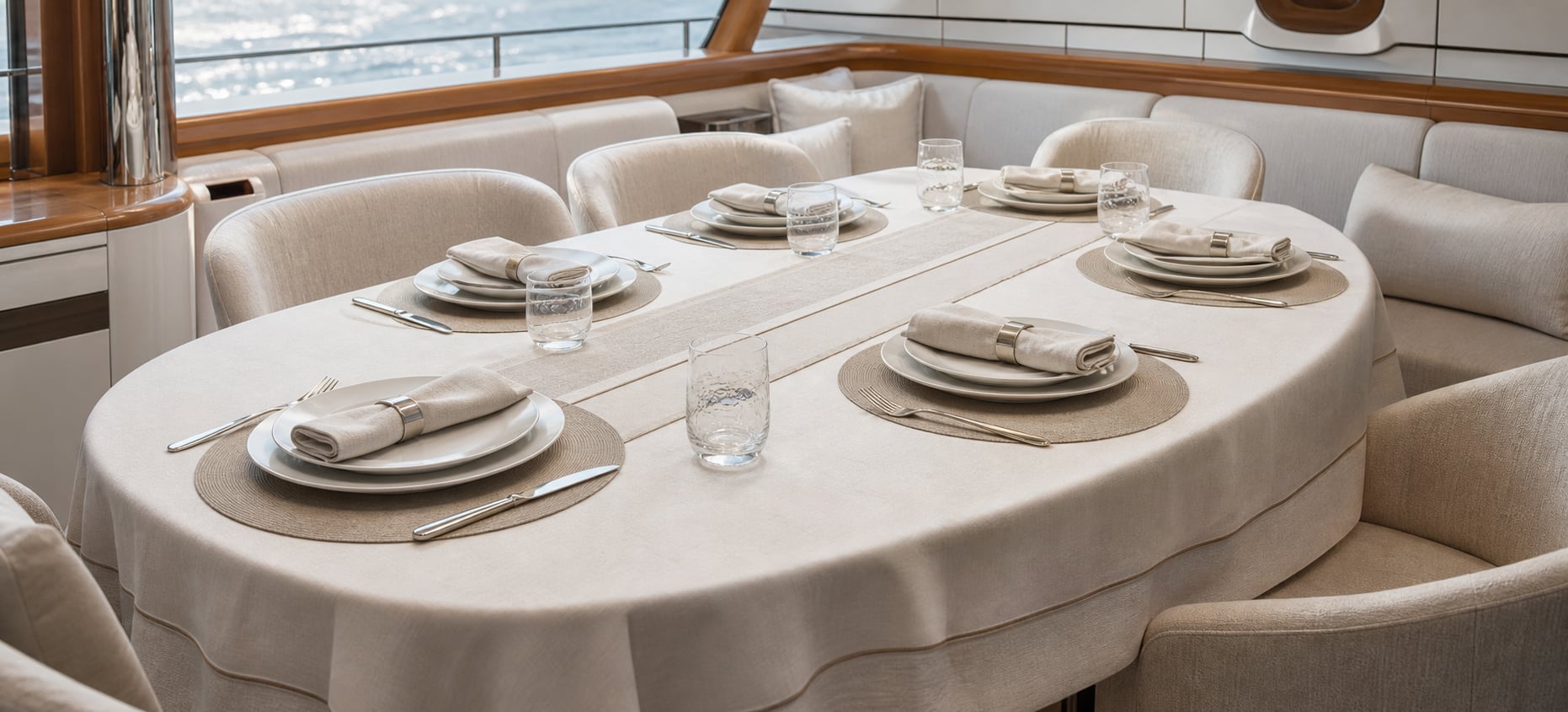
Test proportion with a complete setting
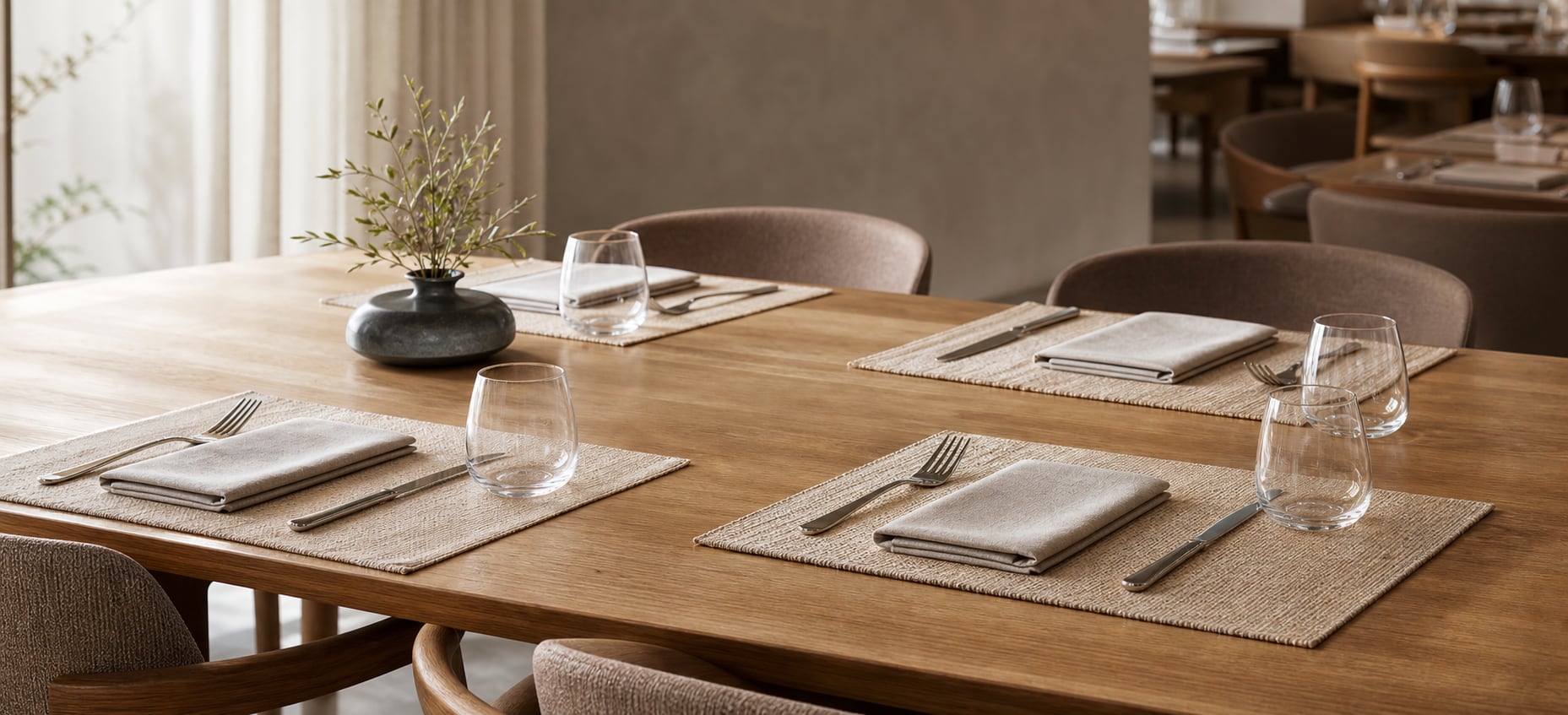
Measure the usable tabletop and place plates, glassware, cutlery, service pieces, lamps, menus, and shared dishes before confirming the runner. A dimension that looks balanced on an empty table can become crowded once service equipment is present.
| Use | Review in the sample setup | Operational question |
|---|---|---|
| Central runner | Width relative to table and shared pieces | Can staff clear and reset without shifting it? |
| Crosswise runner | Place-setting width and seat alignment | Does it remain stable as guests sit and leave? |
| Layer over tablecloth | Texture, colour, and movement between layers | Will the layers finish and fold consistently? |
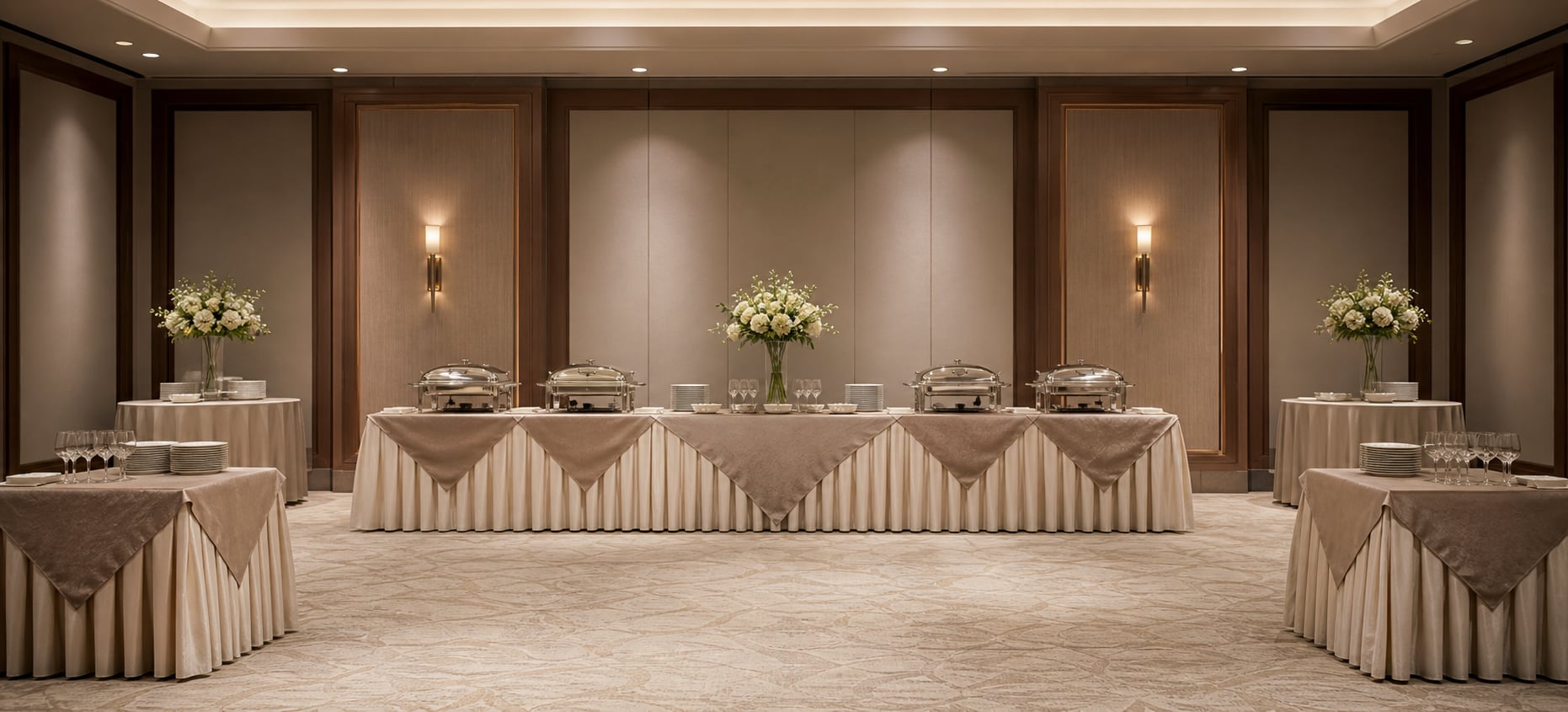
| Buffet or banquet | Table joins, drop, and repeated modules | Can the layout be reproduced across the venue? |
Match the material to care and service
Evaluate stain release, dimensional stability, finish, ironing or finishing needs, and the way the runner behaves after laundering. Confirm these points with the intended laundry process. A visually refined material is not operationally useful if it cannot return to the table consistently.
Consider the underside and edges as well as the face. Hem weight, seams, embroidery, and layered constructions can influence flatness. Outdoor service also requires a realistic review of movement, moisture, and handling; avoid promising wind resistance without project testing.
Plan quantities and approve the complete system
- List every table format and service arrangement.
- Record the approved runner dimensions and orientation.
- Test the runner with the complete place setting.
- Confirm coordination with tablecloths, napkins, and service textiles.
- Map quantities to covers, turns, laundry turnaround, events, and reserve.
- Retain a finished sample and care record.
Treat quantities as a planning calculation rather than a universal ratio. Use the venue’s actual table count, service frequency, laundry turnaround, event pattern, and replacement reserve as inputs.
Product catalogue
Request the Dine catalogue
Share your business email and, if useful, your company or property name. We will carry these details into the secure catalogue-request form with the relevant category already selected.
Journal
Continue reading
Why Table Linen Still Matters in Modern Hospitality
How proportion, texture, drape, and care influence the experience of a restaurant or hotel dining room.
Read Why Table Linen Still Matters in Modern HospitalityTablecloths and Commercial Laundry: Inputs to Confirm
A working handover between restaurant, procurement, and laundry teams before tablecloth approval.
Read Tablecloths and Commercial Laundry: Inputs to ConfirmWhich Hospitality Textile Details Should Be Customized?
A framework for deciding which textile details need project-specific development and which should remain standard.
Read Which Hospitality Textile Details Should Be Customized?