

















How Often Should Hotels Wash Pillow Protectors?
A pillowcase change is easy to see; the protector underneath is easier to overlook. Give that hidden layer a recorded washing schedule, a care-compatible laundry process and a clear inspection before it returns to the bed.
Published by Gencer Textiles
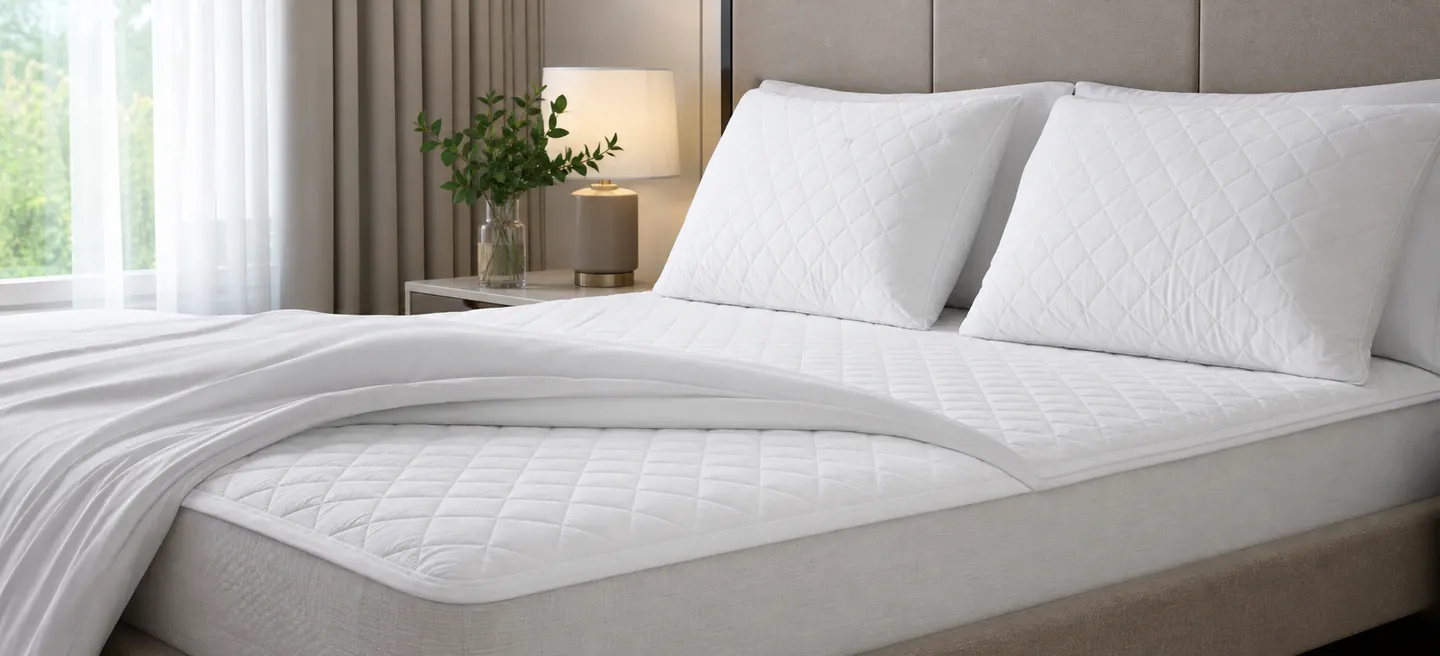
For removable, washable hotel pillow protectors, a clear conservative policy is to fit a freshly laundered protector at every guest changeover, change it sooner if it becomes damp, soiled or odorous, and set a recorded change interval for long stays. This is an operating recommendation, not a universal hotel rule. The protector’s care instructions and any applicable hygiene requirements still govern how it is processed.
Supplier advice genuinely differs. Inhaven recommends washing protectors after every departure; Venus Group describes a cyclical approach, including monthly or quarterly washing or washing when visibly soiled. Neither establishes one interval for every hotel. A changeover-based policy is easier to verify than an unrecorded “occasionally” and avoids carrying the same exposed protector from one guest’s stay into the next.
Give each pillow layer its own job
The pillowcase is the outer linen that touches the guest. The protector is the removable cover underneath it, often with a zip. The pillow itself has a shell and filling with a separate care label. Changing the case does not clean the protector, and washing the protector does not clean the pillow inside.
A fabric protector may offer a washable sacrificial layer without being waterproof. A waterproof model adds a barrier, but its outer surface still needs cleaning. Wipe-clean vinyl covers are a different product again: follow their manufacturer’s approved cleaning and, where required, disinfection procedure rather than putting them into a fabric-protector wash by default.
Use precise product names in the housekeeping procedure. The same distinction matters when comparing mattress pads, protectors and encasements: a protective cover’s name alone does not tell staff how to clean it.
Write the change schedule down
Put the protector on the room checklist as a separate item from pillowcases. For long stays, tie it to a recorded full linen change—for example, weekly if that is the property’s approved cycle. That example is a scheduling choice, not a seven-day hygiene guarantee; use a shorter interval where conditions or the hotel’s requirements call for it.
| Situation | Action | Check |
|---|---|---|
| Guest departure | Remove the used washable protector and fit a freshly laundered one | Include every protected pillow left ready for the next guest |
| Long stay | Change at the recorded full linen-change interval | Date of the last and next planned change; earlier exceptions still apply |
| Dampness, soil or persistent odour | Remove promptly, regardless of the calendar | Inspect the pillow underneath and identify the cause |
| Illness, body-fluid contamination or suspected pests | Follow the hotel’s specific response procedure | Contain and report; do not treat as an ordinary calendar change |
A fresh pillowcase is not a reason to put an already used protector back into clean stock. Equally, a guest staying several nights does not automatically require a daily protector change if the approved routine and its condition do not call for one. The useful distinction is between a scheduled stayover change and a new guest arriving.
Match the wash process to the protector
Read the sewn-in label for the exact product, including its membrane, quilting and fastening. Agree a compatible wash, rinse and drying process with the laundry provider. There is no single temperature suitable for every protector, and a temperature printed on a care label is not, by itself, proof of a complete hygienic laundry process.
Chemical compatibility matters as much as heat. Protect-A-Bed’s New Zealand care guidance, for example, restricts bleach and warns that overheating can blister its waterproof backing. Those are instructions for that manufacturer’s products, not a recipe for all covers. Confirm detergent, stain treatment, bleach and softener compatibility for each stocked model; do not improvise to fit an unsuitable item into the hotel’s normal sheet cycle.
Follow the specific instructions for zip position, loading and drying with other linen. Do not assume every zip should be closed or every protector can be dried alone. If the required laundry process and the product’s care limits cannot both be met, resolve the mismatch with the supplier and laundry team before buying more of it.
Make removal and drying part of the routine
Remove used protectors without shaking them and place them in the designated used-linen container. Keep them off the trolley’s clean shelf. Follow the hotel’s hand-hygiene procedure before handling replacements, and keep clean returns separate from used stock throughout transport and storage.
After laundering, check that the whole protector is dry, including quilted areas, seams and the inside of a membrane-backed cover. Surface warmth is not proof that hidden areas are dry. Let the laundry’s approved drying and cooling cycle finish before packing; do not store a damp protector or fit it over a pillow to finish drying on the bed.
If a processed protector still smells, feels tacky or carries soil, keep it out of the clean supply and investigate the wash and drying process. Fragrance does not correct residue. Repeat laundering only with a suitable process; repeated blind rewashing can consume stock without solving the cause.
Inspect the pillow as well as the cover
Removal is the opportunity to check the pillow underneath for staining, moisture, odour or damage. A fresh protector should not hide an unacceptable pillow. Take the pillow out of service where needed and follow its own cleaning or replacement procedure; this article’s protector schedule is not a pillow-washing schedule.
The guide to choosing pillows for hotel guest rooms helps with the separate filling and care decision. For the protector, distinguish a removable stain from a physical failure: holes, open seams, a broken zip or a peeling waterproof layer need assessment for replacement, not simply another wash.
Illness, body-fluid contamination and suspected bedbugs belong outside the routine changeover process. Contain affected items, alert the responsible team and follow the hotel’s approved response. Do not carry suspect linen loose into clean areas or improvise a hotter cycle. In an active pest-control programme, do not remove a containment encasement without the pest professional’s instructions.
Stock for the laundry turnaround, not just the beds
Count protected pillows, not rooms. Forty departing rooms with four protected pillows each create 160 protector changes, before stayover changes or rejected pieces. This is a workload example, not a universal stock allowance. The quantity held must also cover items in use, those waiting for or undergoing laundry, and a defined clean reserve.
Check how long protectors actually take to return ready for use. A membrane-backed or quilted item may follow a different route from flat pillowcases. Record sizes clearly so a clean protector fits the intended pillow without forcing the zip or leaving excessive loose fabric.
Keep the calculation separate from pillowcase stock planning. When reviewing hotel bedding protection, bring the pillow dimensions and the agreed laundry process as well as the quantity. A workable washing policy needs a compatible protector and enough clean replacements for housekeeping to follow it every day.
Product catalogue
Request the Stay catalogue
Share your business email and, if useful, your company or property name. We will carry these details into the secure catalogue-request form with the relevant category already selected.
Journal
Continue reading
How to Choose Pillows for Hotel Guest Rooms
A hotel pillow should be chosen as the guest experiences it: under weight, inside its protector and case, and after a full night in the room.
Read How to Choose Pillows for Hotel Guest RoomsMattress Pad vs Protector vs Encasement: What Does a Hotel Need?
Most hotels need a removable protector for routine mattress care. Add a pad only for a deliberate comfort effect, and specify an encasement when a defined containment plan requires six-sided coverage.
Read Mattress Pad vs Protector vs Encasement: What Does a Hotel Need?How Many Pillowcases Does a Hotel Need?
A component-level method for calculating pillowcases through the hotel’s real room and laundry circulation.
Read How Many Pillowcases Does a Hotel Need?