



How to Choose Bed Linen for a Boutique Hotel
Hotel bed linen should be chosen for comfort, laundering resilience, visual consistency, and the daily rhythm of housekeeping. The right specification supports both the guest experience and the team maintaining it.
Published by Gencer Textiles
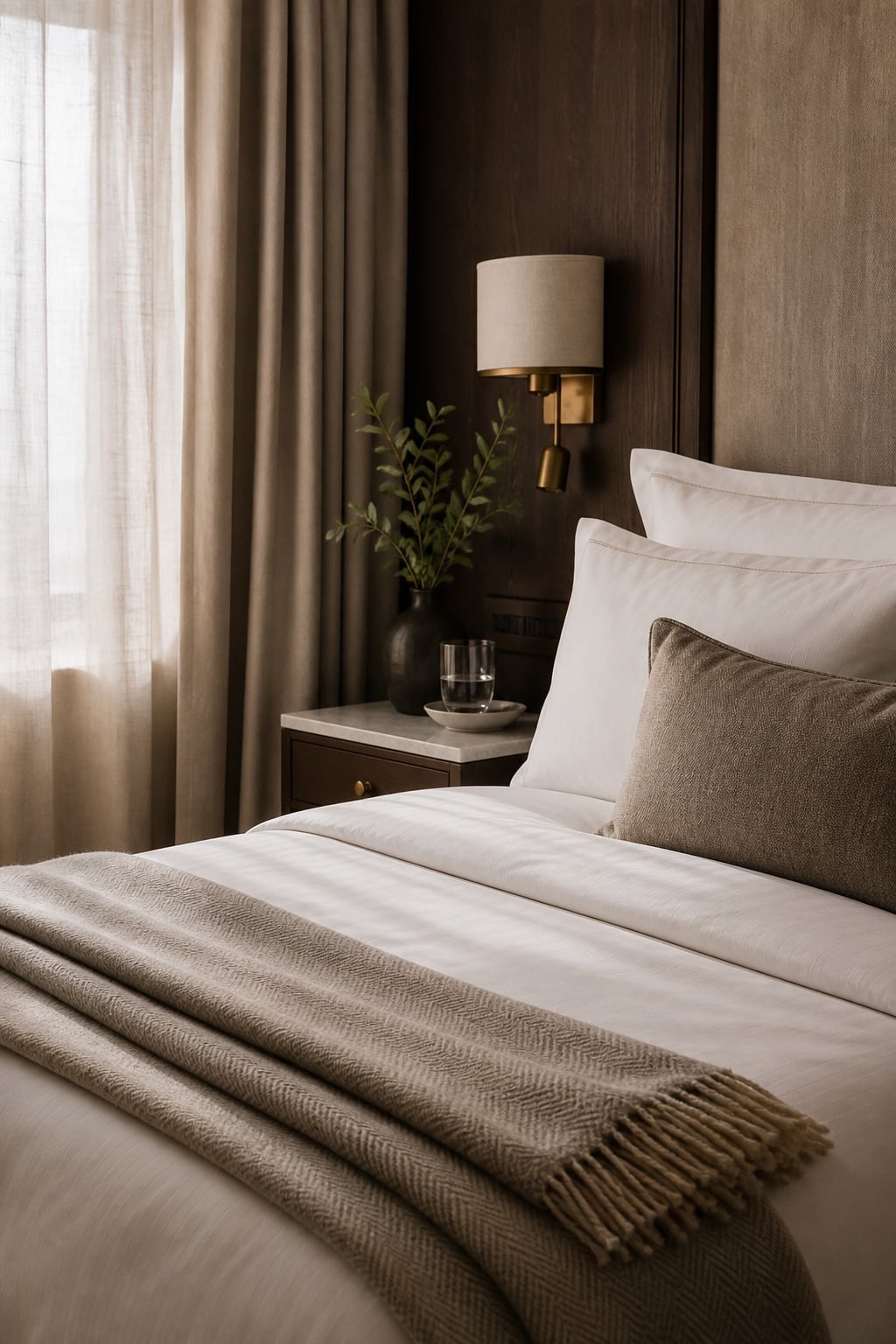
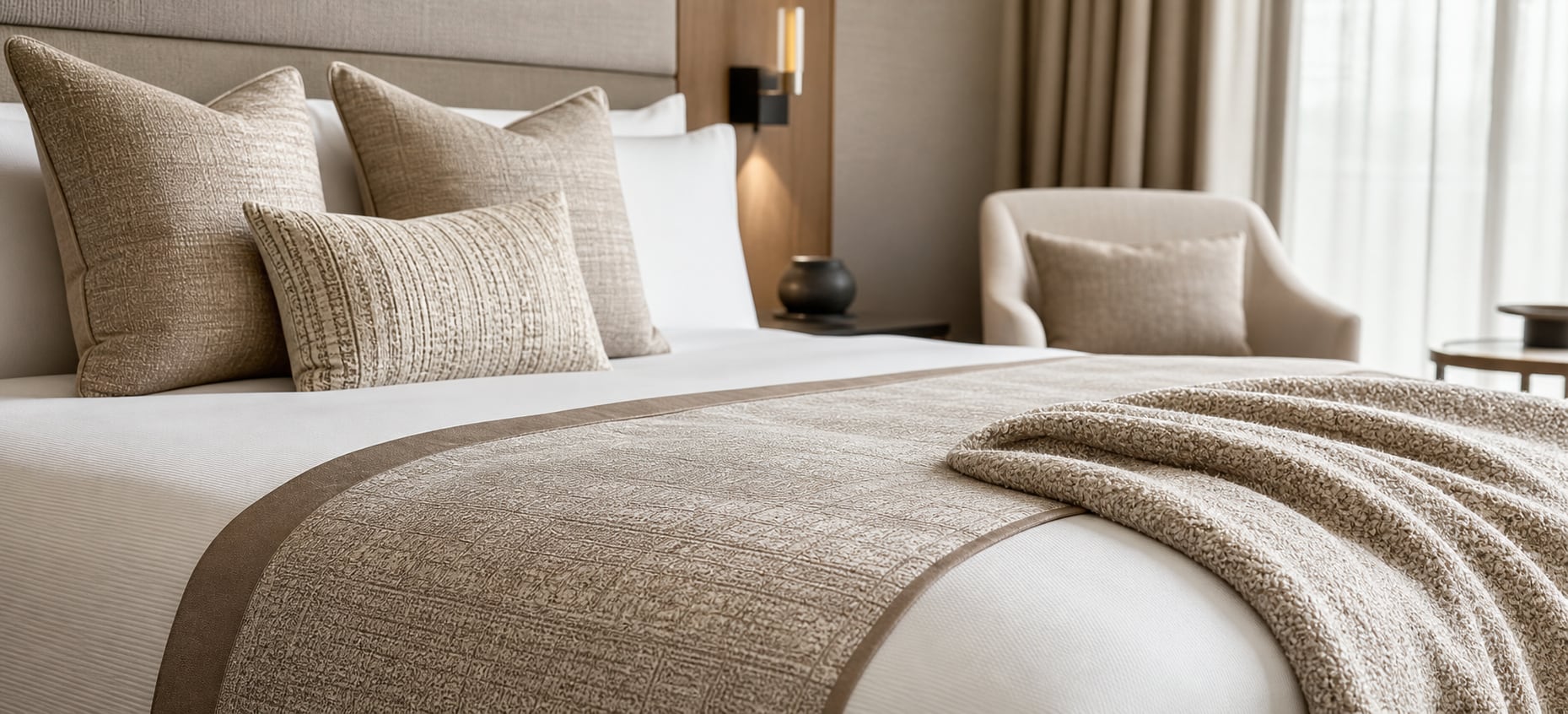
Choose bed linen by starting with the way the property operates, then balance guest perception with fibre and construction, climate, commercial laundering, bed dimensions, replacement planning, and visual identity. Thread count is only one input; it cannot define the right specification on its own.
A useful approval process compares samples in the room, tests them through the intended laundry cycle, and records the final dimensions and finishing. That creates a bed that feels considered to the guest and remains workable for housekeeping.
Begin with the operating environment
Before discussing weave or finish, define the conditions the linen must work within. A low-key coastal property, a design-led city hotel, and a seasonal mountain retreat may all want a refined guest room, but their climate, occupancy rhythm, laundry access, and expected feel can point to different constructions.
Map room categories and bed configurations alongside occupancy, change frequency, storage capacity, and the way linen moves between the floor and the laundry. Ask whether washing and finishing are managed in-house or by a commercial partner, and whether that process is consistent across the year.
- Define the property position and the tactile impression the room should communicate.
- Separate room types that have different mattresses, toppers, pillows, or service standards.
- Document laundry equipment or partner processes before approving the final fabric.
- Consider climate, drying conditions, housekeeping handling, and the intended replacement approach together.
Choose fibre and construction deliberately
Cotton is widely considered for bed linen because its hand, breathability, and familiar appearance can suit many hospitality settings. The relevant question is not simply whether a fabric is cotton, but how the fibre, yarn, weave, density, and finishing work together. Cotton blends may also be appropriate where a property is balancing a particular feel with handling and care requirements.
Evaluate the cloth as a complete construction. Look at the evenness of the surface, opacity, drape, seam behaviour, touch, and appearance after laundering. A soft initial finish can change, while a fabric that feels crisp when new may settle differently after repeated use. Samples should therefore be assessed both before and after the expected care process.
Percale and sateen are different directions
Percale and sateen describe different weave directions rather than levels on a single quality scale. Percale is often selected for a cleaner, crisper surface; sateen can offer a smoother hand and more visible lustre. Either can be appropriate when its yarn, finishing, laundering response, and room context are well judged.
| Consideration | Percale | Sateen |
|---|---|---|
| Feel | Typically crisp and clean to the touch | Typically smoother with a softer drape |
| Appearance | More matte and visually quiet | Subtle lustre with a more fluid surface |
| Breathability | Often chosen where an airy feel is preferred | Should be assessed with weight, density, and climate |
| Typical visual direction | Tailored, fresh, understated rooms | Layered, polished, more enveloping rooms |
| Operational considerations | Creasing and pressing expectations need review | Surface appearance and laundering response need review |
| Best evaluated against | Climate, desired crispness, laundry and pressing process | Room character, desired hand, laundry and finishing process |
Evaluate thread count in context
Thread count is a construction measure, not a complete quality verdict. It does not explain fibre quality, yarn structure, weave, finishing, fabric weight, or how the cloth behaves after laundering. Two fabrics presented with a similar count can feel, perform, and age differently.
Compare thread count only after confirming the other variables. Ask how the yarn and weave create the intended hand, whether the fabric remains balanced after washing and pressing, and whether the construction supports the property’s visual and operational requirements.
Design around commercial laundering
The approved fabric must be considered alongside the actual washing, drying, and pressing process. Temperature, chemistry, extraction, dryer settings, ironing or calendaring, and manual handling can all affect dimensions, touch, colour, and surface appearance. A supplier can help define suitable product directions, but the laundry operator should confirm the care process used on site.
Request a realistic test that follows the intended process, then review shrinkage, seam stability, closure performance, touch, appearance, and ease of finishing. The goal is not simply to preserve the first-day feel. It is to understand how the linen settles into service and what housekeeping will receive after repeated cycles.
Confirm sizing and bed configuration
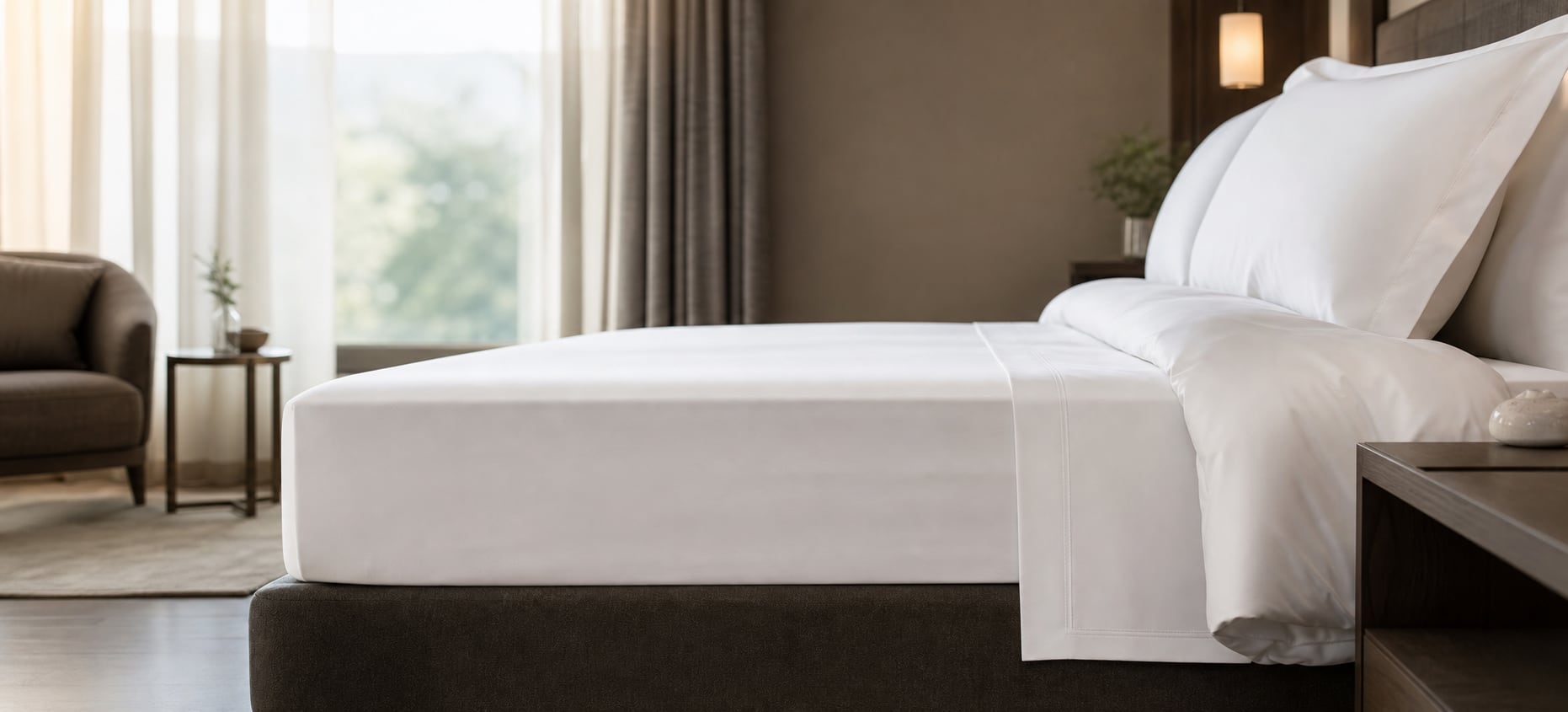
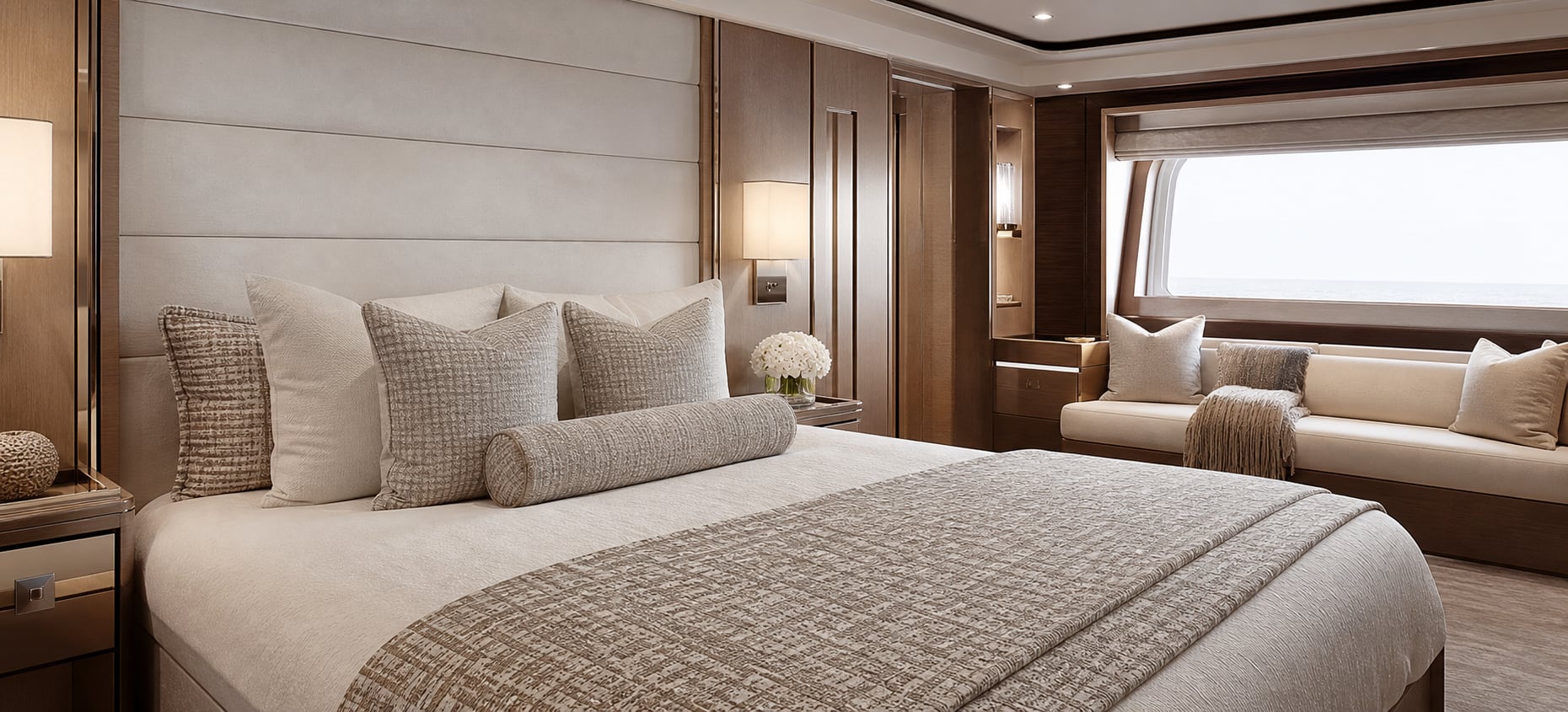
Record the actual mattress width, length, and depth for every bed type, including toppers and protectors. Decide whether Bed Sheets will be flat, fitted, or a combination, and allow for the intended tuck, drop, and post-laundry dimensions. Fitted sheets need particular care because mattress depth and shrinkage allowance directly affect fit.
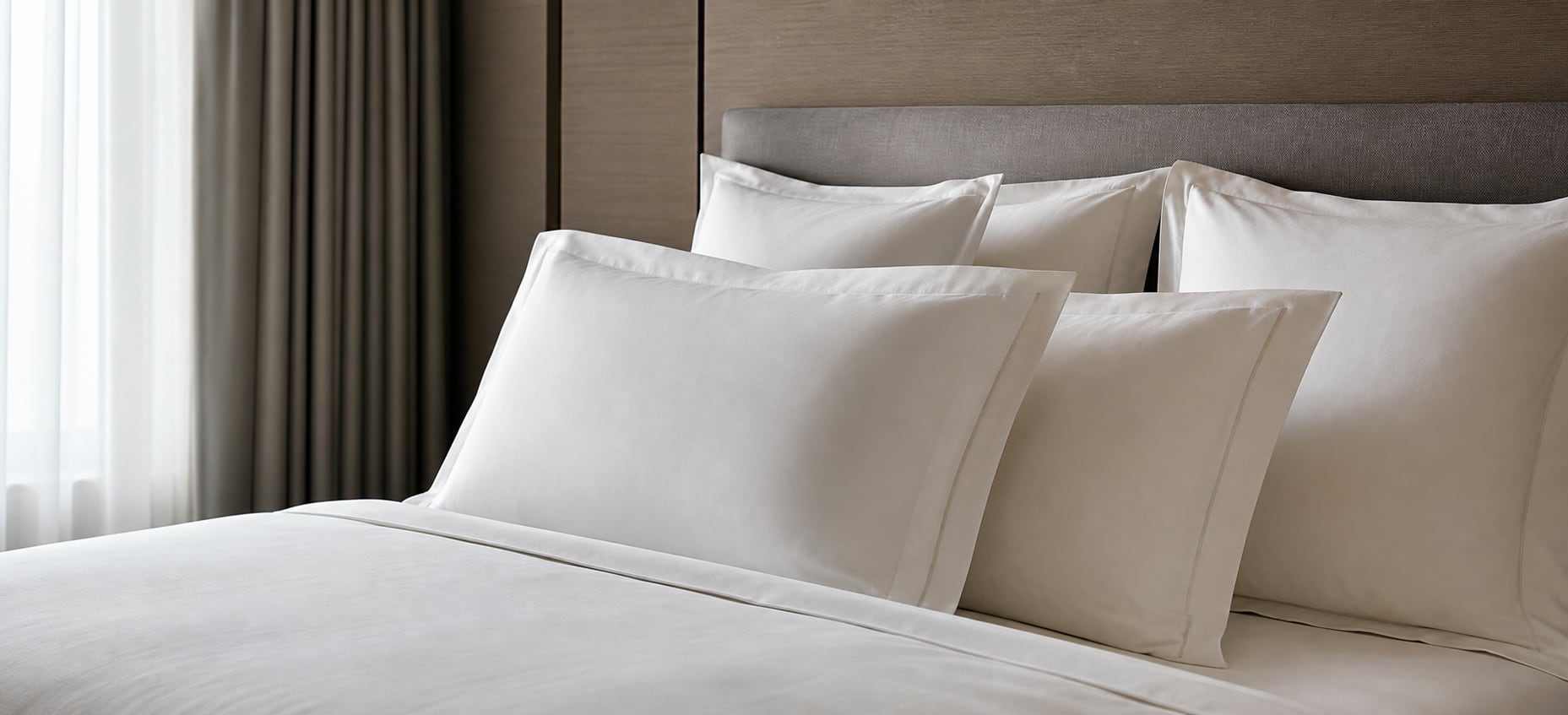
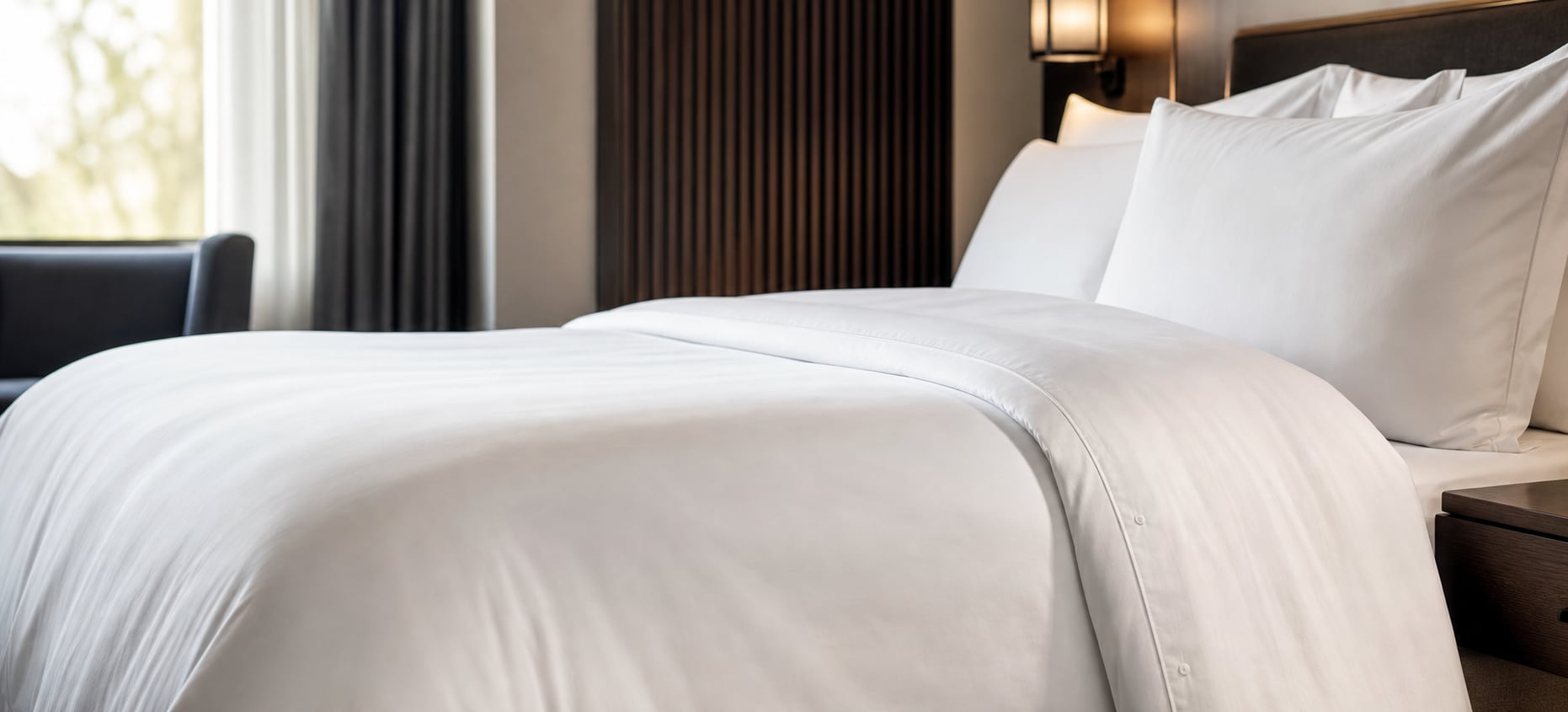
Coordinate sheet sizes with duvet dimensions, closure direction, and the formats of Pillowcases and Duvet Covers. Local naming conventions are not always reliable, so use recorded measurements rather than labels such as king or double alone. Consistent room-to-room specifications also help housekeeping identify and replace the correct pieces.
Plan rotation, replacement, and continuity
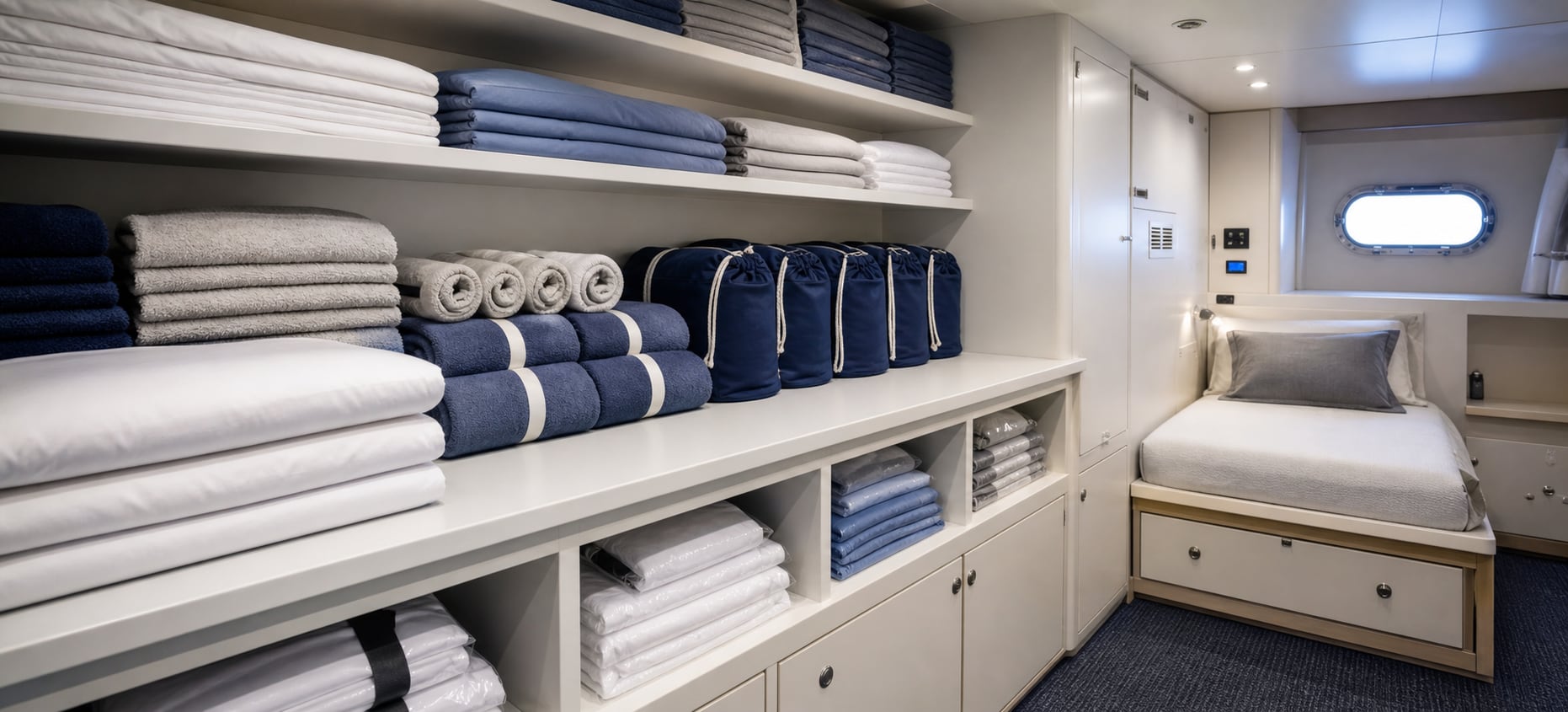
Rotation levels should reflect occupancy, change frequency, laundry turnaround, emergency cover, storage, and the property’s service model. There is no single formula that suits every hotel. Build the plan with housekeeping and operations, then review it against actual use once the linen is in service.
Keep an approved sample and a concise specification record covering dimensions, construction, colour, hems, closures, embroidery, labels, and care assumptions. This makes wear reviews and repeat orders more controlled. Material and production continuity should still be reconfirmed when replenishment is required.
Decide where customisation matters
Customisation is most useful when it solves a clear identity or operating need. Embroidery, monograms, coloured piping, specific hems, labels, and non-standard sizing can help distinguish a property or make room allocation clearer. Gencer Studio can review feasibility according to the specification and project scope; not every detail needs to be customised to create a coherent room.
Decide which details guests will notice, which details housekeeping must identify, and which elements need to remain repeatable. Keep decoration proportionate to the fabric and laundering process, and confirm placement and scale on a physical sample before approval.
A practical decision framework
The right bed-linen specification balances the guest experience with housekeeping, laundering, sizing, rotation, replacement, and the identity of the property. Begin with operating conditions, compare complete fabric constructions rather than isolated numbers, test the intended care process, and record the approved result.
For a wider view of coordinated bed, bath, and guest-room textiles, explore the Stay collection. A clear brief and a tested reference give the property a stronger basis for both opening quantities and future replacement.
Product catalogue
Request the Stay catalogue
Share your business email and, if useful, your company or property name. We will carry these details into the secure catalogue-request form with the relevant category already selected.
Journal
Continue reading
Choosing Textiles for Life on Board
What to consider when selecting cabin, deck, bathroom, and beach textiles for marine hospitality environments.
Read Choosing Textiles for Life on BoardWhat Makes a Towel Suitable for Spa and Wellness Use?
Understanding absorbency, weight, softness, drying time, and operational consistency in professional wellness settings.
Read What Makes a Towel Suitable for Spa and Wellness Use?