



Terry vs Waffle Bathrobes for Hotels
Terry and waffle robes do different jobs. The useful comparison starts with when the guest puts the robe on, then checks whether the complete garment still makes sense when it is damp, washed and returned to the room.
Published by Gencer Textiles
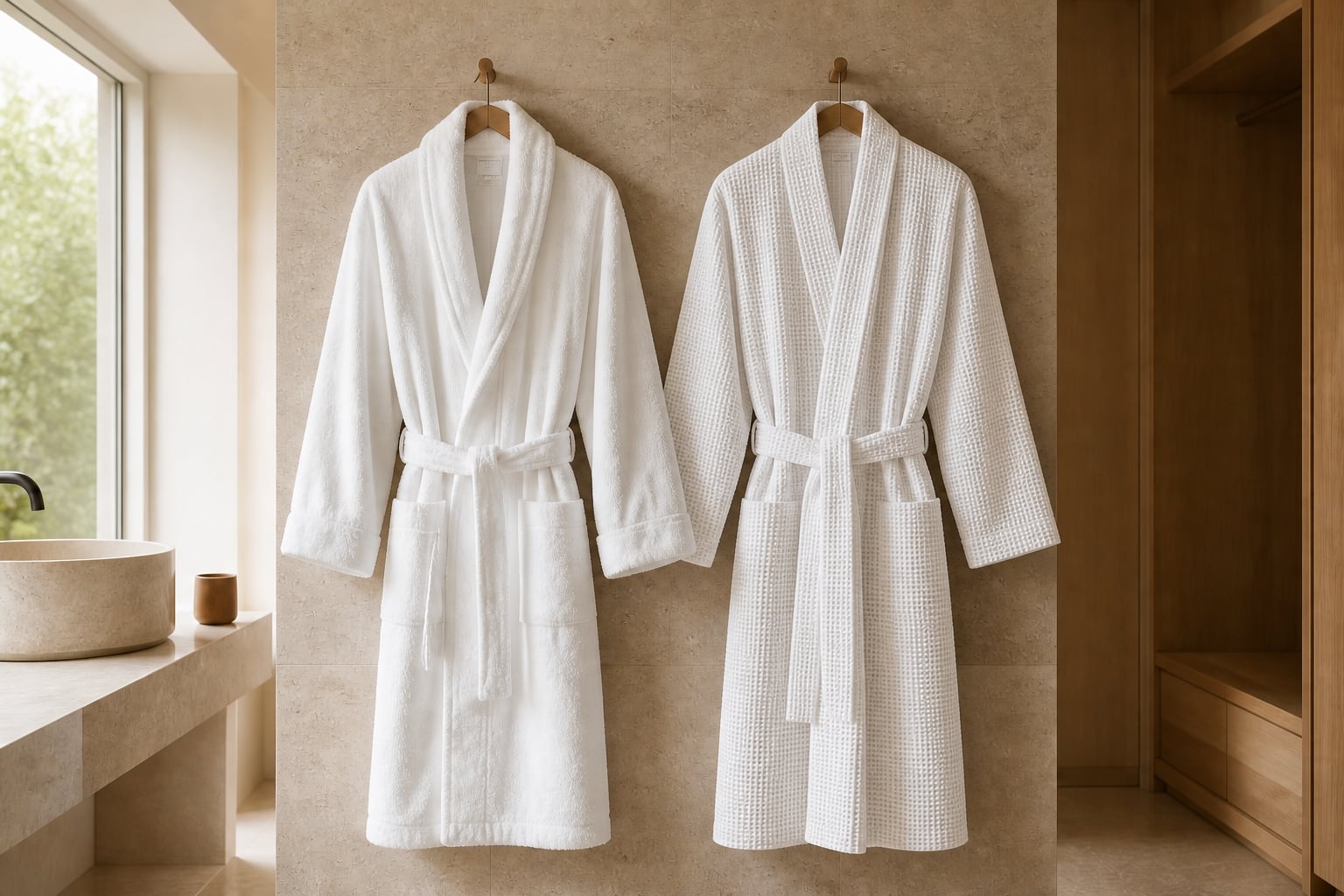
Choose terry when the bathrobe is expected to help dry wet skin and keep the guest warm after bathing. Choose waffle when the guest is likely to use a towel first and wants a lighter layer for relaxing, moving through a spa or staying comfortable in a warm room. Neither construction is automatically more luxurious. The right choice depends on when the robe is worn.
This comparison assumes two well-made robes with suitable fibre content, fit and finishing. The words terry and waffle describe the fabric surface, not the complete specification. A heavy waffle robe can be less convenient than a light terry robe, and a poor finish can make either one slow to absorb water.
For many guest rooms, the simplest question is whether the robe needs to do part of the towel’s job. If it does, begin with terry. If the towel has already done that job and the robe mainly provides coverage, begin with waffle.
Choose according to when the robe is worn
A guest who steps straight from a shower into a robe brings water into the fabric. Looped terry is the more natural choice here because it can offer the towel-like contact, moisture capacity and warmth that the guest expects. This is especially useful in a cool bathroom or when the robe may be worn for some time after bathing.
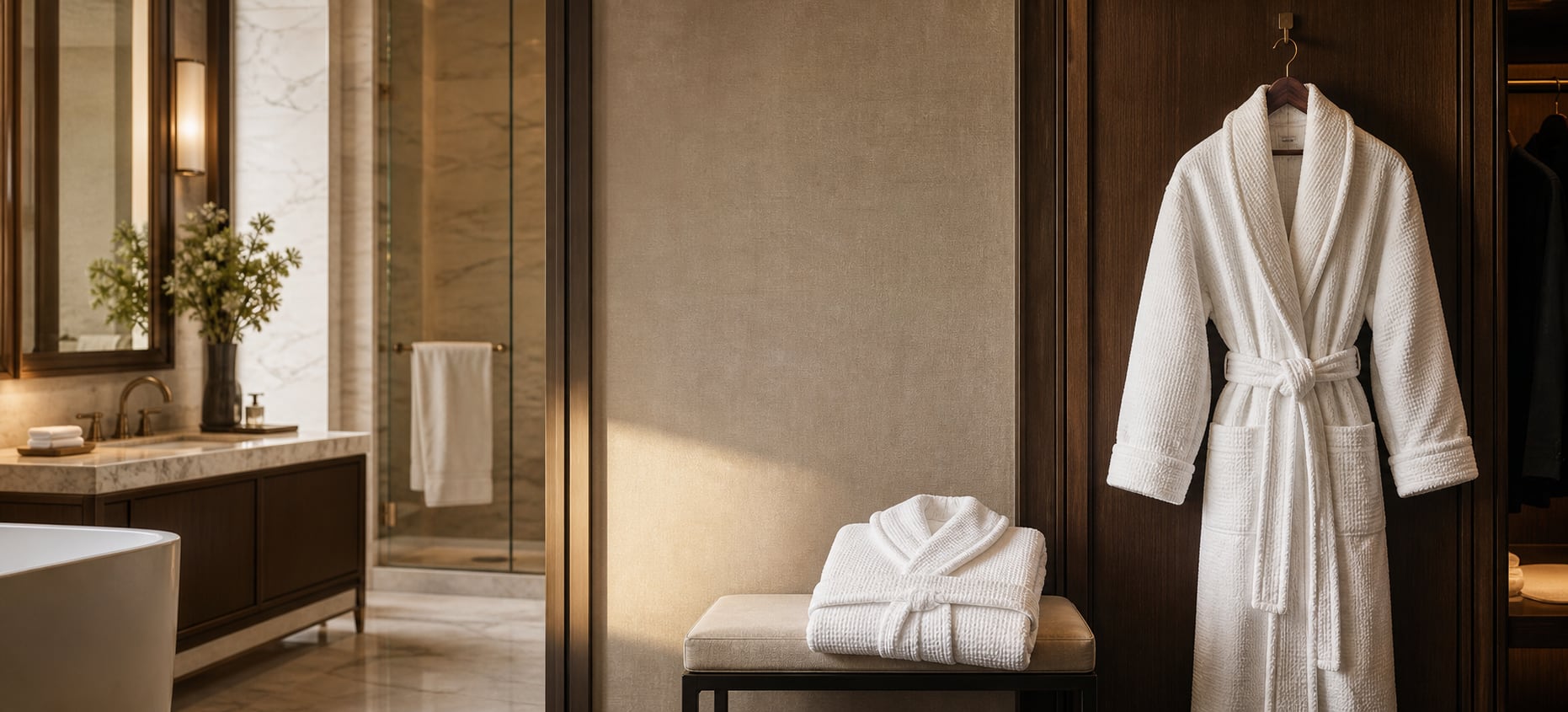
A waffle robe suits a different sequence. The guest dries with a towel, then puts on the robe to sit, dress, visit a relaxation area or move between warm spaces. Its lower bulk can feel easier on the shoulders and less enclosing around the neck and arms. In a warm coastal room, that may be more comfortable than a full terry garment.
The setting can change during one stay. A robe that works well for dry room use may feel insufficient beside an outdoor pool in cool weather. A dense terry robe that is welcome after an evening bath may be excessive in a heated treatment area. Decide which moment matters most rather than asking one robe to perform every role equally.
If use, fit, collar and care are still open decisions, start with the broader guide to choosing bathrobes for a hotel. This article deals only with the choice between terry and waffle once the intended use is understood.
How terry and waffle are built
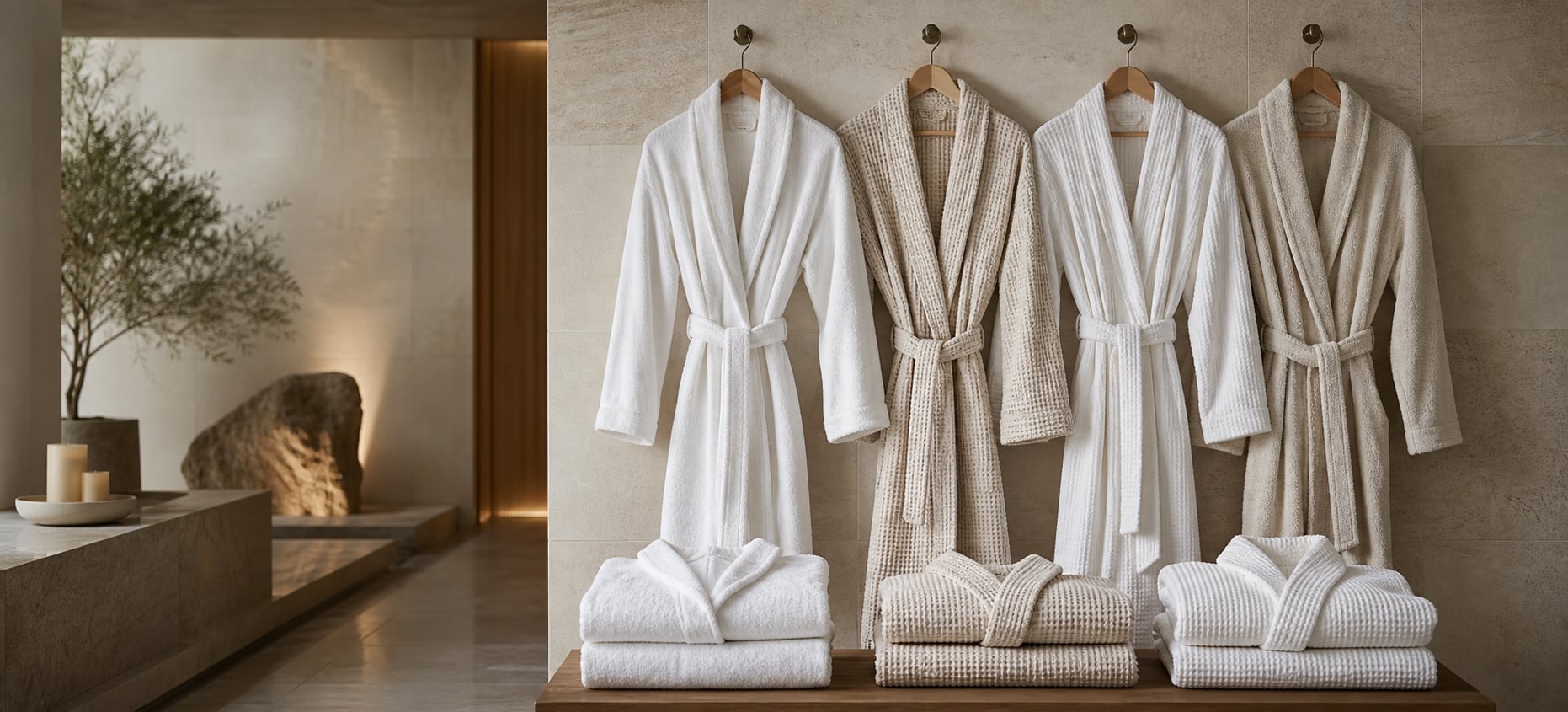
Terry has uncut yarn loops raised from a woven or knitted base. Those loops put more yarn at the surface and create the familiar towel-like hand. Absorbency still depends on the fibre, loop density, yarn, finish and fabric weight, so visible loops alone do not guarantee a good robe.
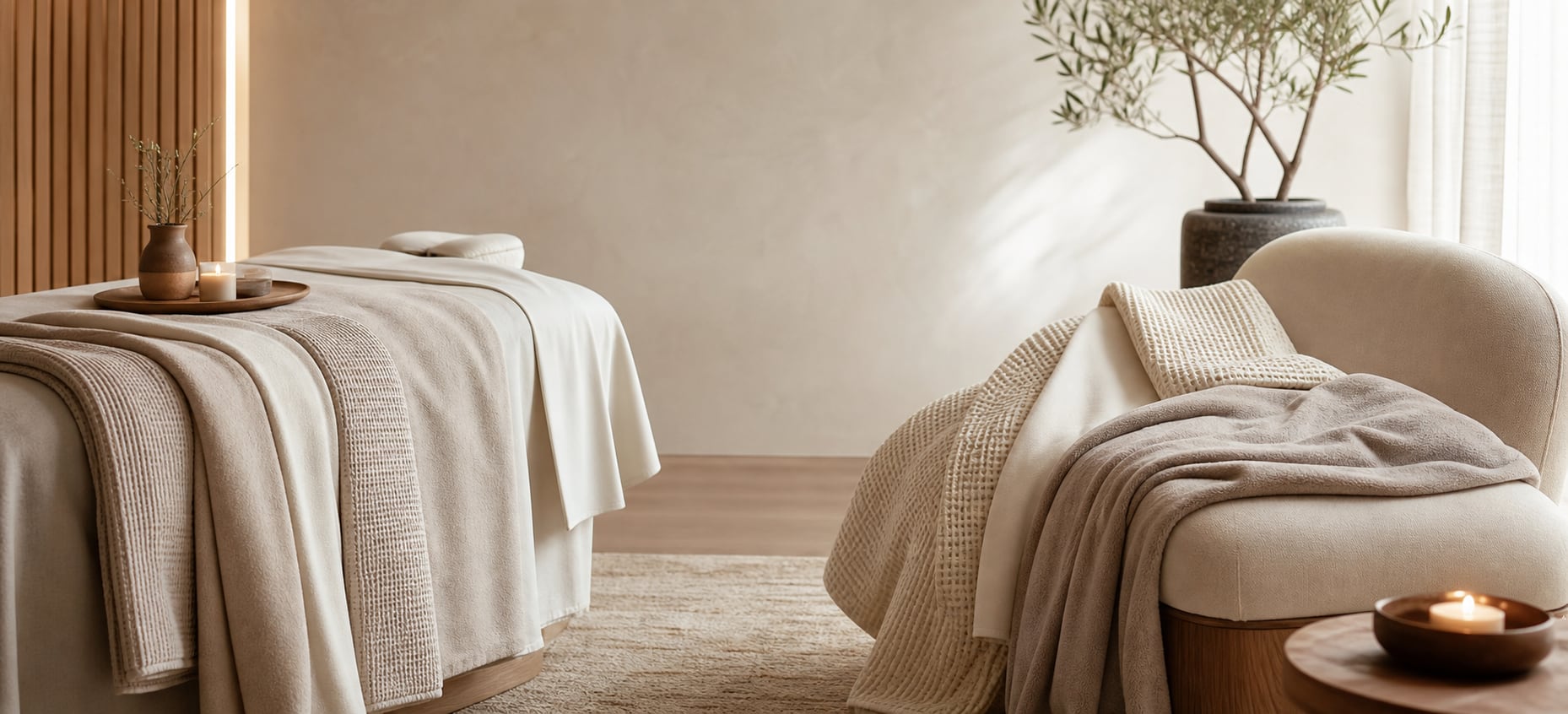
Waffle, also called honeycomb, forms a grid of raised lines and recessed cells. It normally has much less pile than terry and is commonly made into lighter robes. The textured surface can absorb moisture, but the name does not promise the same water capacity as a looped terry garment. Fibre, weave and finish still decide how readily the fabric wets.
| What changes | Terry robe | Waffle robe |
|---|---|---|
| On damp skin | More towel-like contact and usually greater moisture capacity | Best after towelling off when only light moisture remains |
| Warmth and feel | Fuller, warmer and more cushioning | Lighter, less enclosing and often cooler to wear |
| Weight when damp | Can become noticeably heavier at the shoulders, collar and cuffs | Usually carries less water and remains easier to wear when specified lightly |
| Laundry and storage | More fabric and pile usually mean greater load and folded volume | A lower-mass robe usually dries and stores with less bulk |
| What to inspect | Loop pulls, collar thickness and complete drying | Grid distortion, shrinkage, opacity and shape after washing |
These are typical differences, not guarantees. Compare the actual robes, because length, overlap, collar, cuffs, belt and pockets can outweigh what the fabric name suggests.
Do not use GSM as a score
Terry and waffle should not be placed on one GSM ladder. Waffle is normally specified at a lower fabric weight because lightness is part of its purpose. A lower number therefore does not make it a lower-quality robe. It describes a different construction doing a different job.
Compare GSM only within the same construction and a similar garment pattern. If a 250 GSM waffle robe and a 400 GSM terry robe also have different lengths and collars, the numbers cannot tell you which complete robe feels heavier, absorbs more readily or returns from laundry sooner.
The guide to GSM for hotel bathrobes explains useful starting ranges and why finished piece weight belongs beside fabric weight.
What changes after the robe gets wet
A robe can feel easy on a hanger and very different after a shower. Terry holds moisture in its loops and body, which is useful for drying but adds weight. The change is most noticeable where fabric is layered, such as a shawl collar, deep cuff, pocket or generous front overlap. If those areas remain damp, the guest carries the consequence around the neck and arms.
A light waffle robe normally takes on less water because there is less fabric mass and no deep loop pile. That can make it easier to wear and return to a dry condition, but it also explains why it may not satisfy someone who expects the robe to replace a towel. “Quick drying” and “highly absorbent” are not interchangeable promises.
Laundry comparisons need the same discipline. A lower-mass waffle robe will often require less drying work than a full terry robe of the same size, but weave, fibre, extraction, load, equipment and drying endpoint all affect the result. Do not accept a universal time or cost saving without testing the finished garments in the intended process.
Hybrid robes need their own comparison
Some robes use a waffle exterior with a terry lining, or place terry only on selected panels. They can give the outside a crisp waffle appearance while keeping absorbent loops against the skin. They are not lightweight waffle robes in the usual sense, and the second layer can make them as warm and bulky as a conventional terry garment.
When a description says waffle-terry, check which surface touches the skin, whether the lining covers the complete robe, and what the finished piece weighs. Judge the combined garment rather than assigning it automatically to either side of the comparison.
Compare complete washed robes
Shortlist one terry robe and one waffle robe with a similar length, overlap and size. Wear each dry, then use it at the point in the guest journey it is meant to serve. For post-shower use, pay attention to how quickly the fabric accepts water, the weight at the shoulders and whether the neck and cuffs stay comfortable. For dry relaxation, compare heat, freedom of movement and how much fabric gathers when sitting.
Wash and dry both samples in the intended process, then try them again. Check the terry for pulled loops, hard or damp layered areas and changes in feel. Check the waffle grid for distortion, shrinkage, loss of shape and reduced coverage. The better choice is the one that still performs its intended role after care, not the one that looked fuller when new.
A hotel can use both constructions when their roles are clear, for example terry in cool guest bathrooms and waffle in warm relaxation spaces. If one robe must cover the whole property, choose for the most important use and verify that its compromise remains acceptable elsewhere.
Compare complete terry and waffle samples from the Gencer hotel bathrobe collection in the actual room, after bathing and in the intended care process before approving the specification.
Product catalogue
Request the Stay catalogue
Share your business email and, if useful, your company or property name. We will carry these details into the secure catalogue-request form with the relevant category already selected.
Journal
Continue reading
How to Choose Bathrobes for a Hotel
Choose the robe for how guests will use it, then approve its fit, construction and appearance after the hotel’s actual care process.
Read How to Choose Bathrobes for a HotelWhat GSM Is Best for Hotel Bathrobes?
For many hotel guest rooms, 350–450 GSM is a useful starting range for terry robes, while waffle robes normally make sense at a lower weight.
Read What GSM Is Best for Hotel Bathrobes?Avoiding Costly Errors in a Spa Bathrobe Specification
A practical review of bathrobe decisions that create friction for guests, treatment teams, laundry, and storage.
Read Avoiding Costly Errors in a Spa Bathrobe Specification