







White vs Coloured Bed Sheets for Hotels
White sheets simplify visual cleanliness checks and coordination in many hotels; coloured sheets can support a deliberate room concept but require tighter colour and process control.
Published by Gencer Textiles
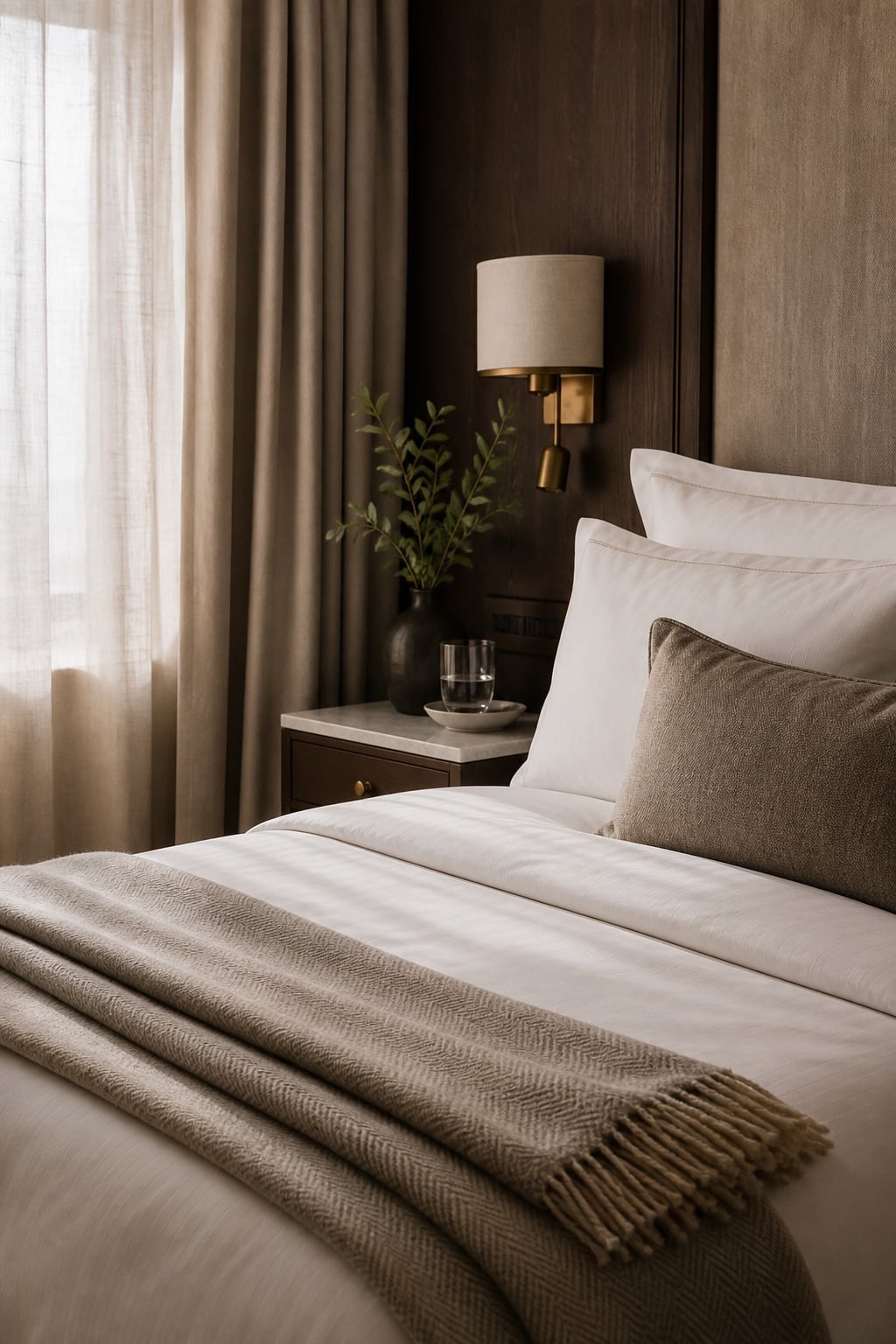
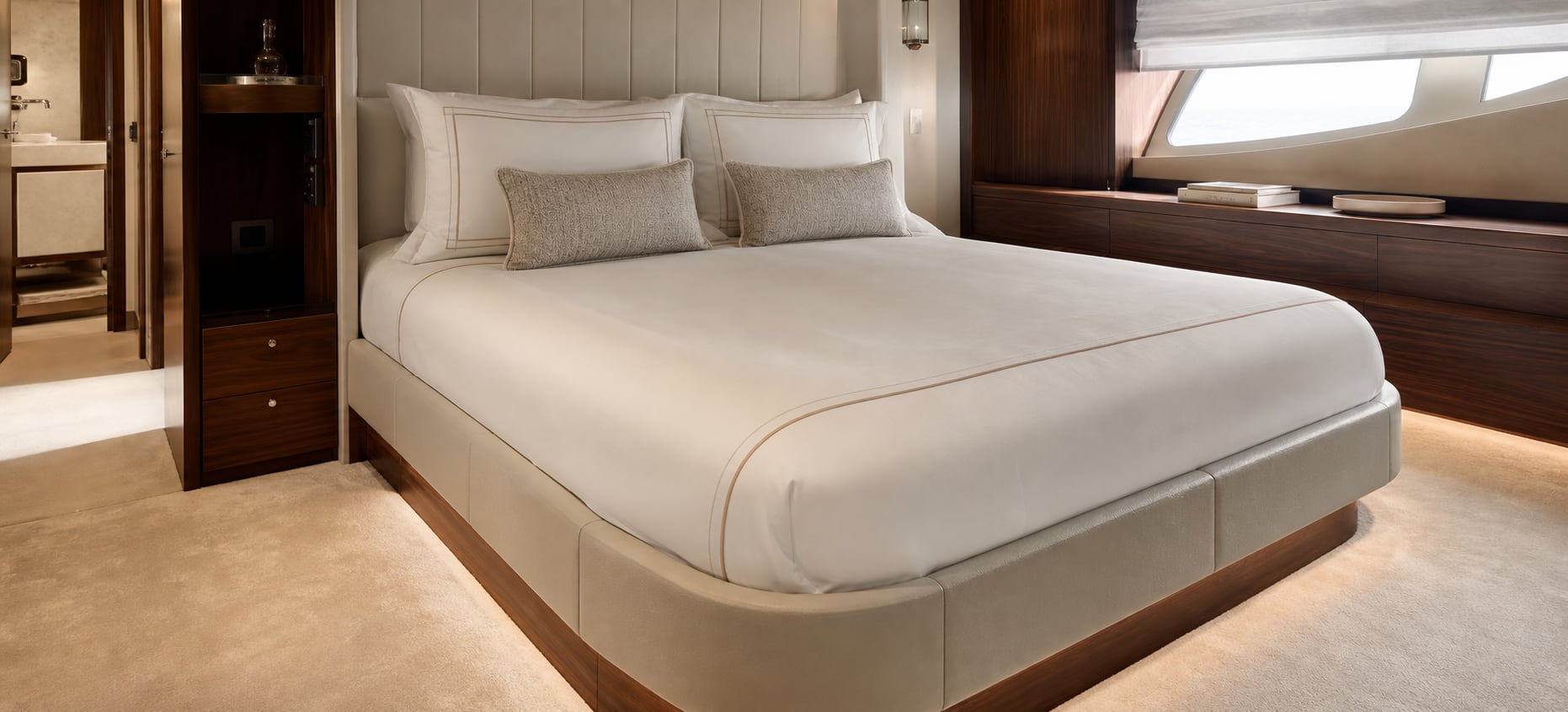
White sheets are often the more manageable hotel standard because they make many residual marks visible, coordinate across room schemes and reduce shade-matching complexity. Coloured sheets can be appropriate when colour has a clear design or zoning purpose, but they add sorting, colourfastness, chemistry, fade and replenishment questions. Neither option removes the need for a tested construction and controlled laundry process.
The choice should be made on processed full-size samples in the actual room. A colour selected from a screen or small swatch can change under warm lighting, against the headboard and beside towels or duvet covers. White also varies in tone and optical appearance, especially when new and in-service pieces are mixed.
Start with the job the colour must do
Colour may support a brand palette, distinguish a room category, reduce visible contrast with a specific interior or zone linen operationally. Write down the purpose. If the colour has no identifiable effect beyond being different, the additional sorting and continuity burden may not be justified.
White can act as a neutral system across changing interiors and simplify redeployment between rooms that share dimensions. That flexibility matters during refurbishment or uneven occupancy. It is not a claim that every guest prefers white. The hotel should align the decision with its room concept and the visual signal it intends to send.
| Decision area | White-sheet implication | Coloured-sheet implication |
|---|---|---|
| Room design | Neutral coordination and easy redeployment | Specific design contribution or zoning |
| Inspection | Many stains and residues are readily visible | Some marks may be less visible; others more pronounced |
| Sorting | Can simplify colour grouping subject to process | Requires shade and colour-family control |
| Chemistry | Process must protect whiteness and fibre | Process must protect shade and colourfastness |
| Replenishment | White tone and finish still need matching | Shade, lot and fade make matching more demanding |
| Stock complexity | Potentially fewer visual variants | Additional codes, storage and room allocation |
Do not confuse stain visibility with cleanliness
White makes many residual soils easier to see, which supports inspection, but visible whiteness does not prove hygienic processing. A coloured sheet can be clean even when a stain is harder to see, and a white sheet can look bright while retaining an unacceptable residue or odour. Hygiene depends on the validated process and local requirements, not colour alone.
Define lighting and inspection method. Cosmetics, oils, self-tan products, medicines and beverages show differently on different shades. Trial representative soil with the laundry and chemical specialist. Do not select a dark colour simply to hide marks; concealed residual soil remains a quality problem and can accumulate if the process is not corrected.
White and colour need different control strategies
White programmes may focus on soil removal, brightness consistency, greying, yellowing and avoidance of chemical or thermal damage. Coloured programmes must also protect shade and prevent dye transfer. The responsible laundry should define sorting, chemistry and settings for the product, equipment and soil profile. This article cannot prescribe a universal bleach, detergent or temperature.
Coloured sheets may require separate loads or limited mixing, affecting minimum practical batch sizes and turnaround. White sheets can also require separation by fibre, soil or finish. Ask the laundry to model the exact proposed range rather than assuming “all white together” or “all colours separate” describes a safe, efficient process.
Test colourfastness and appearance in the intended process
Colourfastness is not one universal property. Exposure to washing, rubbing, perspiration, light and cleaning agents can create different changes. Request relevant product evidence where available and run project-specific care trials. Evaluate shade, crocking or transfer risk, surface appearance and contrast with adjacent textiles.
Use multiple pieces and include pale and dark adjacent items only under a test agreed by the laundry. Record the colour reference, lot, programme and number of cycles. A short trial can reveal early incompatibility but should not be converted into a guarantee that the shade will remain unchanged for a fixed lifetime.
Manage white tone and shade as specification data
White is not a single visual reference. Warm, cool, optical and natural whites can look different under room lighting and after processing. Record an approved physical sample and compare new deliveries after the agreed laundry trial. Matching only a digital colour value or written word “white” is insufficient.
For colour, use an approved reference under defined lighting and specify how production lots are reviewed. Decide whether small shade variation can be mixed within one room, separated by floor or phased by room group. A policy avoids ad hoc sorting after a delivery arrives.
The article on customising hospitality textile details explains when a distinctive colour or identity detail has a defined operational or visual purpose.
Consider the complete bed and room light
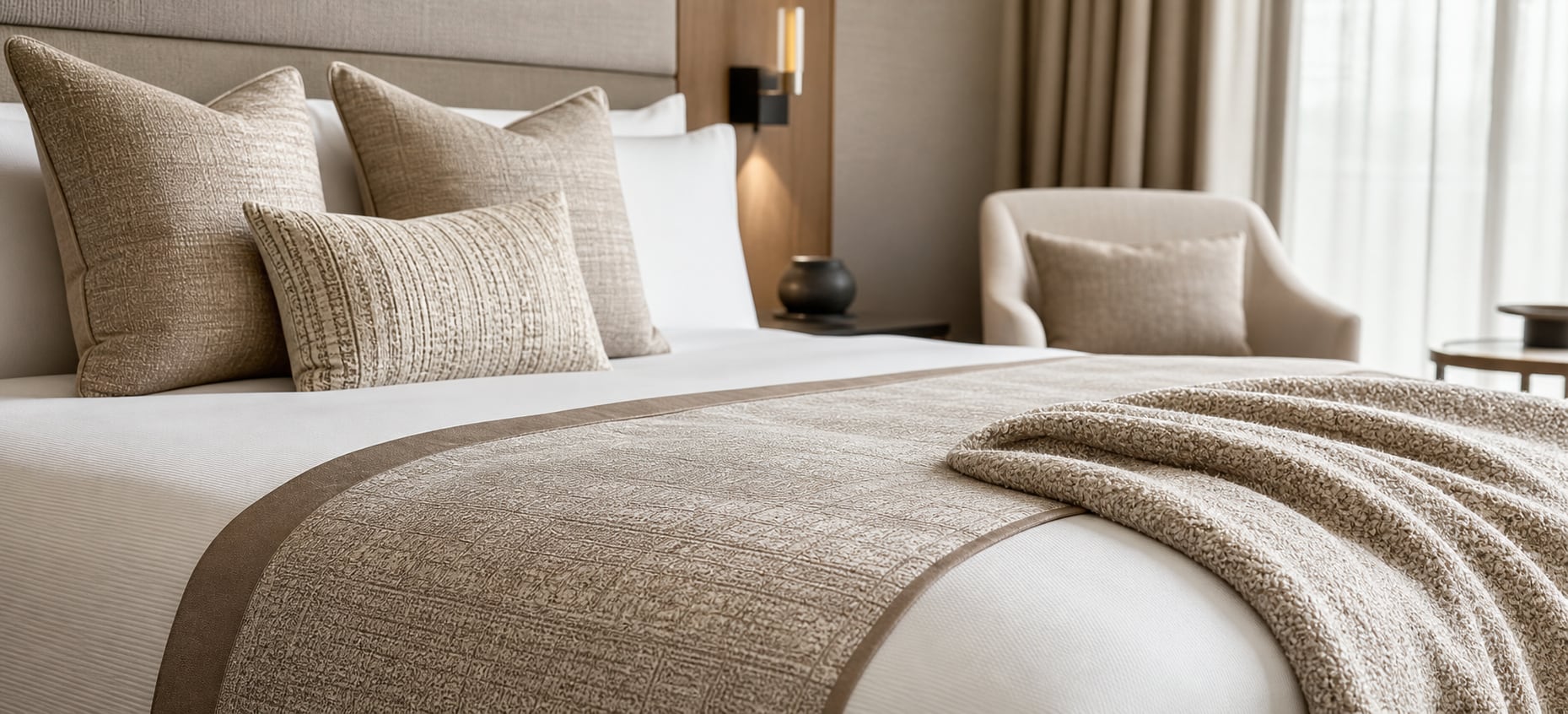
Review sheets with pillowcases, duvet cover, bed runner, headboard, carpet and wall finish. Colour reflected from surrounding surfaces can alter the perceived white or shade. Assess daylight and night lighting, and photograph only as supporting evidence because cameras and screens may shift colour.
A coloured bottom sheet paired with a white duvet cover may be mostly hidden when the bed is made but highly visible during turndown or guest use. Decide whether that contrast is intended. Also inspect opacity: the protector or mattress colour can affect a light or thin sheet regardless of whether it is white or coloured.
Calculate the stock cost of colour variants
Every shade tied to a room group creates its own quantity, reserve and replacement exposure. A small suite category may struggle to form efficient laundry loads or maintain enough reserve when one colour is delayed. Model pieces per bed, turnaround and reserve separately for each shade.
If colours are used for operational zoning, confirm that the visual code remains clear after repeated care and that staff do not rely on colour when labels are required for size or process. Colour coding can support identification, but it should not be the sole control when similar shades or colour-vision differences could create errors.
Plan how new and aged stock will coexist
Replacement pieces may look different beside stock that has undergone many cycles. The effect can be more obvious with saturated colours, but white tone and finish can also shift. Compare processed new stock with in-service reference pieces and decide whether to mix, phase or allocate it.
Use the condition and lot controls in how often hotels should replace bed sheets before setting a replenishment policy.
Approve colour as an operating system, not a swatch
Include an incoming-lot procedure. Select pieces from different packages, process them, and compare colour, white tone, dimensions and hand with the approved controls. Keep a delivery isolated while a material difference is investigated. Mixing it immediately with existing stock makes shade and process problems harder to trace and can place visibly different pieces on one bed.
- State the design or operational purpose of white or each proposed colour.
- Review full-size processed samples in representative rooms and lighting.
- Agree soil, sorting, chemistry and colourfastness checks with the laundry.
- Record physical colour references and lot-review conditions.
- Calculate stock and reserve separately for non-interchangeable shades.
- Test labels, folding, storage and room allocation.
- Define how new and aged stock will be mixed or phased.
- Approve the construction and colour together rather than colour alone.
White remains a practical starting point where the hotel values neutral coordination, visible inspection and simpler variant control. Coloured sheets make sense when their purpose is strong enough to justify dedicated shade, laundry and replenishment management. In either case, confirm the full construction and processed colour on the bed before committing the programme.
Review candidate constructions in the hotel bed-sheets family and coordinate them with the wider Stay collection.
Product catalogue
Request the Stay catalogue
Share your business email and, if useful, your company or property name. We will carry these details into the secure catalogue-request form with the relevant category already selected.
Journal
Continue reading
How to Choose Bed Sheets for a Hotel
A practical method for specifying hotel sheets around the room, the laundry process, housekeeping and repeat supply.
Read How to Choose Bed Sheets for a HotelHow Often Should Hotels Replace Bed Sheets?
A condition-led replacement method based on defects, stains, dimensional fit, processing and guest-room standards.
Read How Often Should Hotels Replace Bed Sheets?Which Hospitality Textile Details Should Be Customized?
A framework for deciding which textile details need project-specific development and which should remain standard.
Read Which Hospitality Textile Details Should Be Customized?