













How to Choose Bed Sheets for a Hotel
A hotel sheet should feel appropriate in the room and return from the property’s real laundry process at the right size, finish and handling cost.
Published by Gencer Textiles

Choose hotel bed sheets by defining the room experience and the operating process before comparing fabric labels. The useful specification is the one that gives guests the intended feel while fitting the mattress, moving efficiently through housekeeping, surviving the agreed care process and remaining identifiable for repeat orders. Thread count, cotton percentage and price matter, but none of them can answer the question alone.
Start with one room type and follow a sheet through its complete cycle: clean storage, bed making, guest use, stripping, collection, washing, drying, finishing, folding and return to the floor. That exercise reveals requirements that a showroom sample cannot show, including fold size, ironer compatibility, finished dimensions and the number of variants staff must recognise.
Write the room and service brief first
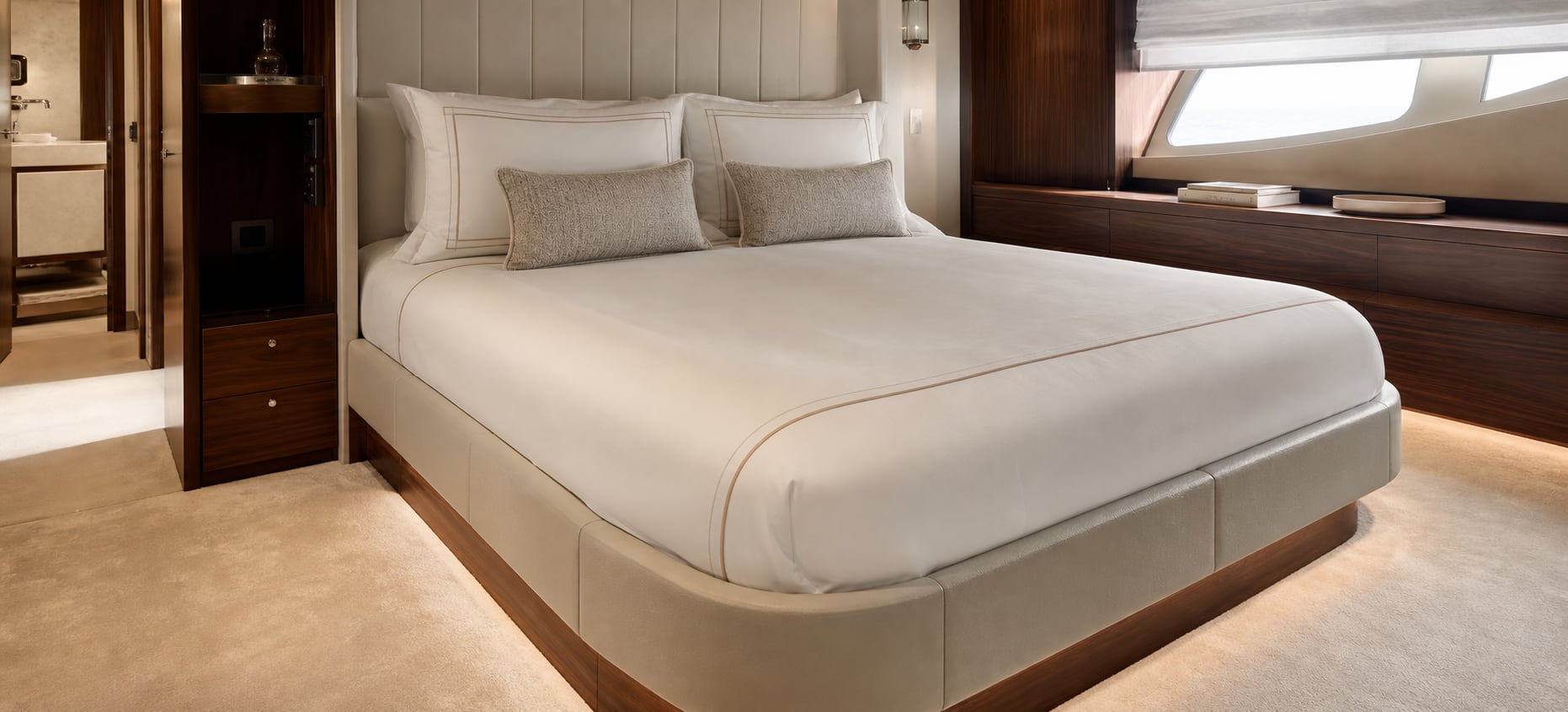
Describe what the made bed should communicate in ordinary language. A warm, smooth surface for a formal suite is a different brief from a crisp, quiet sheet for a coastal room. Connect that expectation to climate, heating or cooling, duvet weight and guest profile. The sheet does not work in isolation, so assess it with the mattress protector, topper, duvet and pillow arrangement that guests will actually encounter.
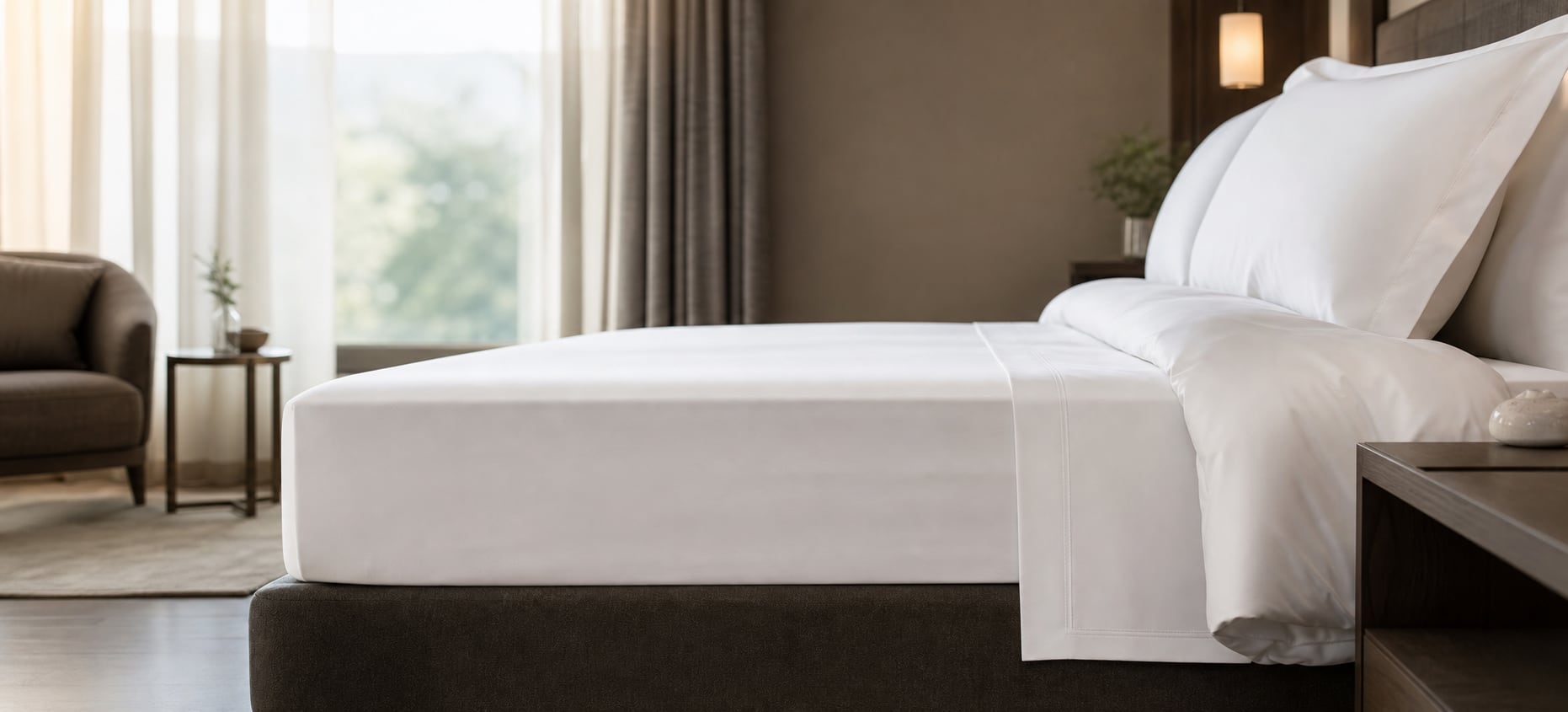
Record how often beds are changed, which room categories use turndown service, whether flat or fitted bottom sheets are preferred and how quickly rooms must be released. A fitted sheet may help maintain a particular presentation, yet it also creates size-specific stock and elastic components to inspect. Flat sheets can simplify standardisation in some operations, but only if the dimensions provide enough tuck after laundering.
| Input | Question to settle | Operational consequence |
|---|---|---|
| Room feel | Crisp and matte, or smooth with more lustre? | Directs the weave and finishing comparison |
| Bed build | What are the mattress, topper and protector dimensions? | Determines finished sheet size and pocket depth |
| Service | Flat or fitted bottom sheet, and is turndown used? | Changes handling, stock variants and presentation |
| Laundry | Who washes, dries, finishes and folds the sheets? | Defines the representative test process |
| Continuity | How will the approved reference be recorded? | Supports consistent replenishment |
Compare fibre, yarn, weave and finish as one construction
Fibre content affects moisture behaviour, hand, drying and crease response, but the result also depends on yarn size, spinning, density, weave and finishing. Cotton can provide an absorbent, familiar hand; polyester in a blend can contribute crease resistance and quicker drying. Those are tendencies, not promises about an unidentified fabric. Two sheets with the same composition can behave differently because their yarns and construction are different.
Percale is a plain-weave sheet construction associated with a crisp, matte character. Sateen uses longer floats to create a smoother face and more lustre. The longer floats can also change snagging and abrasion behaviour, so weave selection should follow the hotel’s desired feel and test conditions. A high thread-count number should not override a better-balanced construction with suitable yarns, weight, cover and finishing.
For a fuller comparison of the two structures, use the percale versus sateen guide. The thread-count guide explains how to read density claims without treating the largest number as a quality grade.
Specify finished dimensions, not only bed names
“King”, “queen” and “double” are not enough for a purchasing record. Measure mattress width, length and depth, then include toppers and protectors in the working bed depth. For a fitted sheet, confirm the intended pocket, elastic construction and how much material remains beneath the mattress after the agreed test. For a flat sheet, define the finished width and length needed for the hotel’s tuck and fold method.
Separate nominal manufactured dimensions from the accepted finished dimensions after processing. Fabric can change during wet processing, washing and drying, and the amount depends on the construction and treatment history. A supplier should be asked what stage its dimensions describe. The hotel and laundry should then agree the conditioning, measurement points, number of trial cycles and acceptable result rather than applying an unsupported universal shrinkage allowance.
Make the laundry part of the purchase decision
Ask the in-house team or outsourced laundry to document sorting, wash chemistry, programme, loading practice, extraction, drying, ironer or press settings, folding and transport. Do not prescribe a generic temperature from an article. Hygiene requirements, soil level, fibre content, colour, equipment and local procedures can change the correct process. The approved care route must be confirmed by the responsible laundry specialist and supported by the product information.
Sheet construction can affect productivity as much as replacement cost. A fabric that needs slower finishing, extensive manual correction or a separate programme may add labour and create bottlenecks even if its unit price looks favourable. Conversely, a lighter or blended sheet should not be assumed to be cheaper over its life without checking guest feel, damage, staining, rejection and replacement records. Procurement needs both textile and process evidence.
Review the full set of questions in what makes hotel sheets suitable for commercial laundry, then compare the proposed construction with the hotel’s actual equipment or laundry partner. The relevant Stay textile category and hotel bed-sheets range provide the appropriate product context.
Review housekeeping work before approval
Invite room attendants to make several representative beds with trial sheets. Observe alignment, tucking, corner formation, fitted-sheet installation, surface creasing and the time required to correct the bed. Include the largest mattress depth and any split or zip-linked configuration. A sheet that looks convincing after specialist styling may prove awkward during normal turnover, particularly when dimensions leave little tolerance.
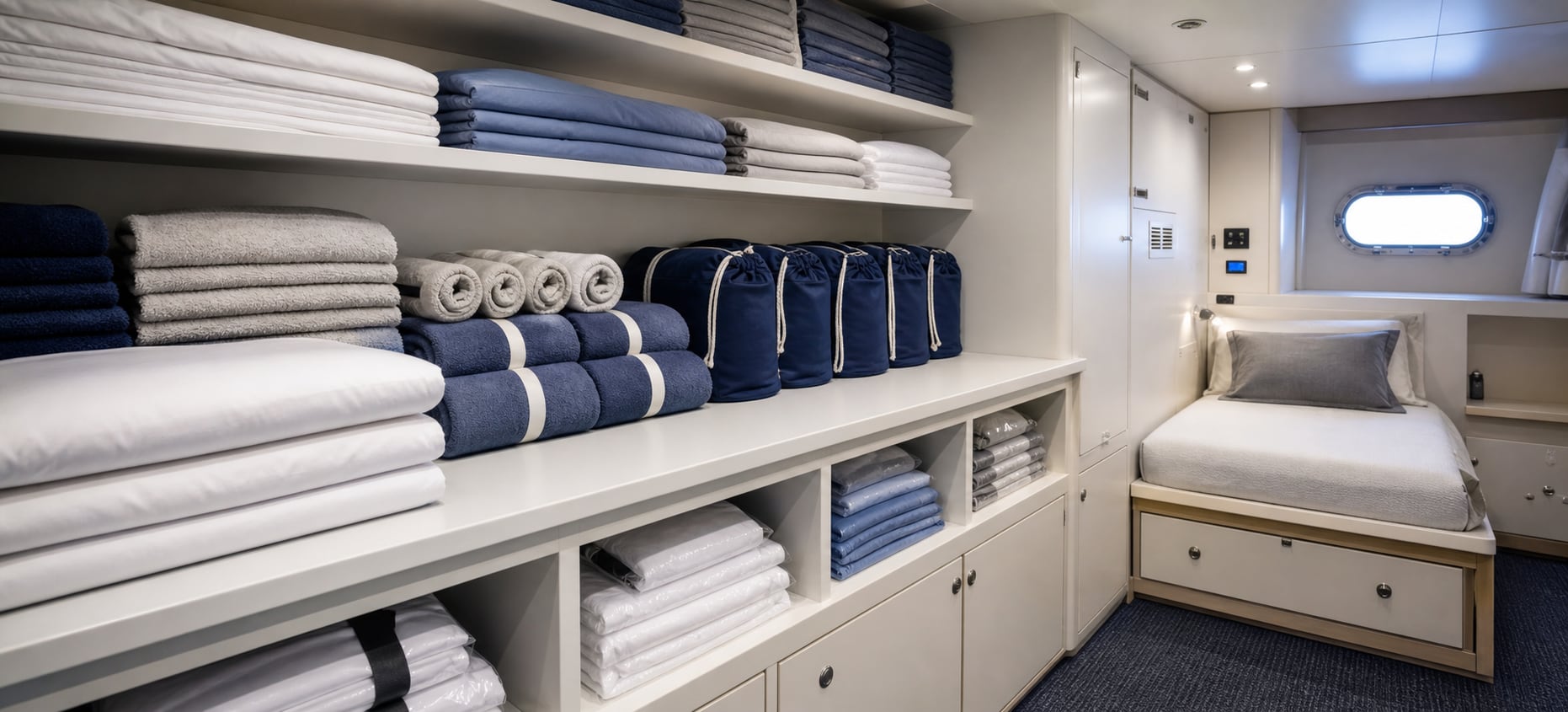
Also test stripping and sorting. Ask whether size labels remain readable, whether different room categories are easy to distinguish and whether fold dimensions suit linen-room shelves and trolleys. Standardisation can reduce errors, but only where the same finished specification genuinely fits the rooms. Creating one nominal size that is poor on several beds transfers the saving from procurement to extra work on the floor.
Evaluate cost through use, not unit price alone
A useful comparison includes purchase price, laundry processing, finishing labour, rejected pieces, damage, stock complexity and replacement frequency. The hotel does not need a speculative lifetime claim to start. It can run controlled trials, mark samples, record the number and type of cycles, and note why each piece leaves service. That produces project-specific evidence without pretending that every property creates the same wear.
Compare like with like. Quotations should state composition, weave, yarn and construction information where available, finished dimensions, tolerances, colour, hem details, care guidance, packaging and identification. If one offer omits a material point, request clarification before calculating a price difference. A cheaper sheet with an unspecified finished size or untested laundry route is not yet an equivalent alternative.
Run a controlled sample and bed trial
- Label each trial sheet with a reference that survives the evaluation process, and retain an unused control sample.
- Measure the agreed points before laundering, using the same conditioning and method for every candidate.
- Process the samples through a representative wash, dry and finishing route documented by the laundry team.
- Measure again, make the relevant beds and review feel, opacity, fit, creasing, seams, hems and surface condition.
- Repeat enough cycles to expose early movement or finishing problems; the project team should define the number rather than borrow a universal figure.
- Record the approved construction, finished dimensions, tolerances, care route, labels and physical reference sample.
Keep commercial trial loads separate from guest-ready stock until the responsible teams approve them. If samples are processed by a supplier rather than the hotel’s normal laundry, document the difference and arrange a representative local test before the full order. Approval should be signed by procurement, housekeeping and laundry because each team sees a different part of performance.
Turn the choice into a repeatable specification
The final record should allow a colleague to identify the same sheet later without relying on memory. Include the product reference, fibre composition, weave, colour, finished dimensions, tolerance, hem or elastic details, labels, care instructions, approved sample date and any room restrictions. Photographing the bed can support the record, but it cannot replace the physical sample and measured specification.
Choose only after the sheet has been tested on the room’s real bed and through the intended care process. If the property is still deciding between fibre blends, weaves or density levels, isolate one variable at a time. That makes the result easier to interpret and gives Gencer Textiles or another prospective supplier a clearer brief for sampling and project discussion.
Product catalogue
Request the Stay catalogue
Share your business email and, if useful, your company or property name. We will carry these details into the secure catalogue-request form with the relevant category already selected.
Journal
Continue reading
How to Choose Bed Linen for a Boutique Hotel
A practical guide to fibre, weave, weight, durability, and guest comfort when specifying hotel bed linen.
Read How to Choose Bed Linen for a Boutique HotelWhat Thread Count Is Best for Hotel Sheets?
Why thread count is a useful construction input but an unreliable quality ranking when considered alone.
Read What Thread Count Is Best for Hotel Sheets?What Makes Hotel Sheets Suitable for Commercial Laundry?
A process-based guide to testing sheets through sorting, washing, drying, flatwork finishing, folding and return to the room.
Read What Makes Hotel Sheets Suitable for Commercial Laundry?