


Hotel Bathrobe Size Guide
A supplier size chart should connect body dimensions with the measurements of the finished robe. Front overlap matters most, but sleeve reach, length and belt position decide whether the same size feels comfortable on different guests.
Published by Gencer Textiles
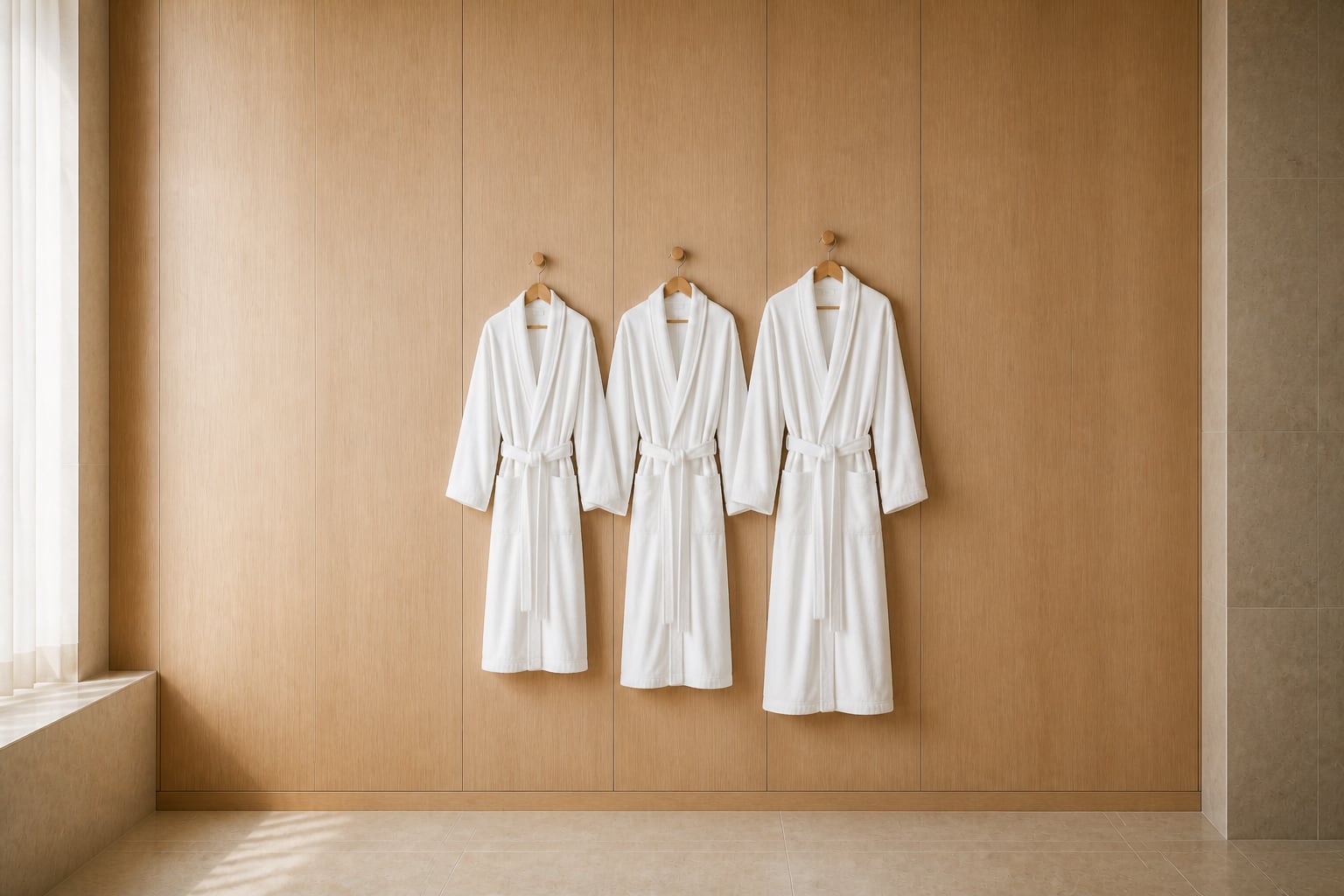
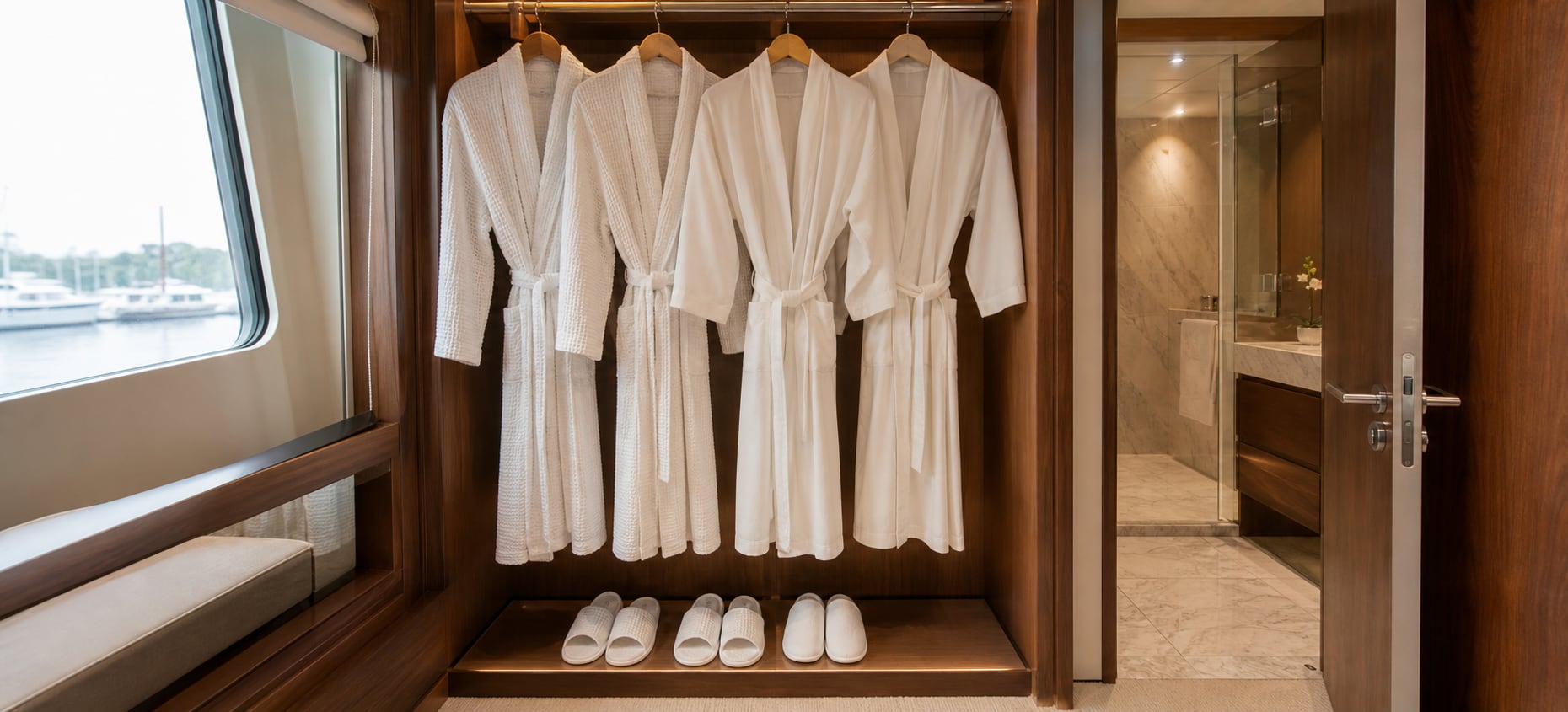
Treat one size, S/M and L/XL as names, not proof of fit. The right hotel bathrobe size is the one that gives a guest secure front overlap, comfortable movement and sensible sleeve and body length. If one garment cannot do that across the people the hotel needs to serve, the hotel needs more than one size.
There is no universal set of centimetres behind a robe marked large or one size. Ask for two kinds of information: the body measurements each size is intended to fit and the finished measurements of the robe itself. Those numbers answer different questions. The first describes the wearer; the second describes the garment being supplied.
Front overlap deserves the closest attention. A belt can draw a generous robe closer around the waist, but it cannot add missing fabric across the chest or hips. A robe that only appears closed because the belt holds two narrow front edges together is too small for that wearer.
A size label is not a measurement
Clothing size systems use body dimensions to describe the person a garment is meant to fit. A supplier may instead show flat garment measurements, such as width across the chest, shoulder width, sleeve length and body length. Both approaches are useful, but only when the chart says which one it uses and shows exactly where every garment measurement begins and ends.
This distinction matters more with a wrap robe than with a closed garment. A flat width measured from one side seam to the other may describe the back and part of the front, yet say little about how far the two front panels overlap. Ask for the full sweep or front-panel dimensions as well as the usual chest width, then confirm the overlap on a person.
| Measurement | What it should clarify |
|---|---|
| Intended body chest, waist and hip range | Which wearers the size is designed to cover |
| Finished chest width or circumference | How much room the garment provides at the upper body |
| Front-panel width or full sweep | Whether the robe can overlap securely rather than merely meet at the belt |
| Shoulder, back and armhole | Whether the arms can move without pulling the robe open |
| Sleeve length with stated measuring points | Where the cuff will sit and whether different charts can be compared |
| Body length from a stated neck or shoulder point | Where the hem should fall on guests of different heights |
| Belt length and loop position | Whether the robe can tie comfortably and the belt sits near the natural waist |
Do not compare two charts until their measuring methods match. One supplier may measure a sleeve from the shoulder seam, another from the centre back of the neck. A number without its starting point can make two identical robes look different or two different robes look the same.
Front overlap is the first fit check
Fit the robe to the fullest part of the torso that affects closure. For one guest that may be the chest; for another it may be the hips. Both front panels should overlap comfortably when the guest is standing, walking and sitting. The overlap will reduce as the body moves, so a robe that looks adequate only in a still standing pose has very little margin.
The belt should secure an overlap that already exists. If tightening it creates a deep V below the collar, pulls the side seams towards the front or leaves the lower panels separating when the wearer sits, moving to the next size is usually more useful than tying the robe more firmly.
Check the robe over whatever the guest is likely to wear underneath. A post-shower robe may be worn directly on the body, while a guest-room robe may go over nightwear. Thick terry also occupies more space inside the garment than a light waffle fabric. The same pattern measurements can therefore feel different in different constructions.
Sleeves and length need separate decisions
A robe can close well and still fit poorly elsewhere. The shoulders and armholes need enough room for the guest to reach, sit and bend an arm without dragging the front panels apart. Excess width is not harmless, however. A very broad shoulder can drop the sleeve seam down the arm and push an already long cuff over the hand.
Sleeves should leave the hands usable around taps, breakfast trays and bathroom fittings. Shorter sleeves are often practical, but the cuff should not sit so high that a tall guest feels the robe belongs to somebody else. Judge the result after movement rather than choosing a sleeve number in isolation.
Body length is a choice about coverage and use, not a universal sign of quality. A longer robe can feel warmer and more private, while a shorter robe may be easier around steps, wet floors or a warm room. Keep the hem clear of the floor and make sure the lower front still overlaps when the guest walks or sits. Belt loops and pockets should also remain in reachable positions across the height range intended for that size.
One size has a real limit
A one-size robe can be a reasonable hotel choice when a tested garment covers the intended guest range. It simplifies presentation and identification, and the loose wrap construction tolerates more variation than fitted clothing. It is still one physical cut. Making it wide enough for a larger guest can leave excess sleeve and body length on a smaller guest, while shortening it for easier universal handling reduces coverage for taller guests.
The words one size fits most should therefore lead to a measurement range, not end the conversation. Ask which body dimensions most refers to, then test people near the lower and upper ends of that range. If the smaller wearer is overwhelmed or the larger wearer loses overlap, the label is describing stock simplicity rather than acceptable fit.
Do not assume that switching from one size to S/M and L/XL solves the problem. The two garments need meaningfully different measurements. If only the label changes, or if the larger size adds body width without adjusting sleeves, length and belt position where needed, the range may still exclude the same people.
Build the size range around real guests
Begin with the body range the hotel intends to accommodate, then map it to garments. Chest, waist, hip and height are more useful than the usual shirt or dress size because those retail labels vary between brands and countries. The hotel does not need a custom robe for every body. It does need clear boundaries for each stocked size and an honest answer about who falls outside them.
For many hotels, two well-separated adult sizes provide a more credible range than one very generous robe. That is a starting structure, not a rule. A compact property with a narrow guest profile may validate one size, while a resort, wellness programme or property serving a wider range may need additional sizes. Children need a separate pattern rather than a shorter adult robe with excessively wide sleeves and collar.
Try each candidate size on people near the lower, middle and upper parts of its stated range. Look for secure overlap, free arm movement, usable cuffs and enough length in both standing and seated positions. Where two sizes overlap, choose the one that closes comfortably without making the shoulders, sleeves or hem cumbersome.
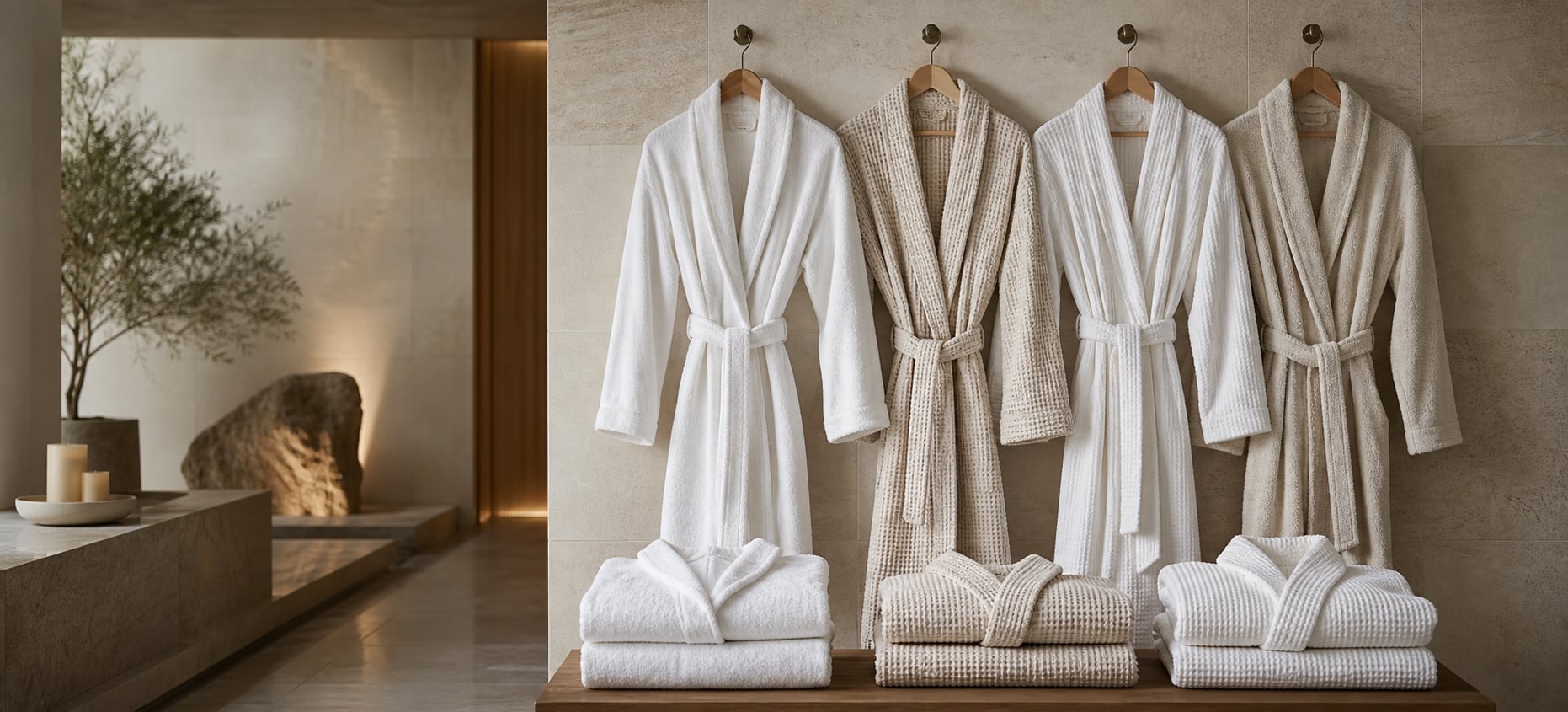
Use neutral size names and put the garment measurements in the specification. Labels such as women’s and men’s are weak substitutes for actual dimensions, especially for a unisex wrap garment. A clear sewn-in size mark also helps the right robe return to the right group after care, but the mark should point back to a defined measurement chart.
Approve the washed size, not only the new one
Measure every sample before care, then wash and dry it through the intended process and measure the same points again. Lay the robe naturally and do not stretch it to recover the original number. Record the method as well as the result so a future sample can be compared in the same way.
Wear the robe again after it is fully dry. A small change at several points can combine into a noticeable loss of fit: less front overlap, a higher cuff, a shorter hem and belt loops that sit above the waist. Changes in skew or seam position can also affect movement even when the main width looks acceptable.
Fabric and construction influence these results, but this size guide should not be used as a fabric guide. Compare the separate advice on GSM for hotel bathrobes and on terry and waffle bathrobes before changing the size range to compensate for the wrong material choice.
Approve the body range and the finished, washed garment measurements together. Keep the measurement diagram and a washed reference sample with the final specification. The next order can then be checked against the fit the hotel actually approved, rather than against a letter that may mean something different to another supplier.
If construction, collar and use are still undecided, start with the broader guide to choosing bathrobes for a hotel. When the garment direction is clear, compare measured samples from the Gencer hotel bathrobe collection and approve the size range only after the washed robes fit the people they are intended to serve.
Product catalogue
Request the Stay catalogue
Share your business email and, if useful, your company or property name. We will carry these details into the secure catalogue-request form with the relevant category already selected.
Journal
Continue reading
How to Choose Bathrobes for a Hotel
Choose the robe for how guests will use it, then approve its fit, construction and appearance after the hotel’s actual care process.
Read How to Choose Bathrobes for a HotelWhat GSM Is Best for Hotel Bathrobes?
For many hotel guest rooms, 350–450 GSM is a useful starting range for terry robes, while waffle robes normally make sense at a lower weight.
Read What GSM Is Best for Hotel Bathrobes?Terry vs Waffle Bathrobes for Hotels
Choose terry when the robe should help dry and warm a guest after bathing. Choose waffle when light coverage matters more than towel-like absorbency.
Read Terry vs Waffle Bathrobes for Hotels