
























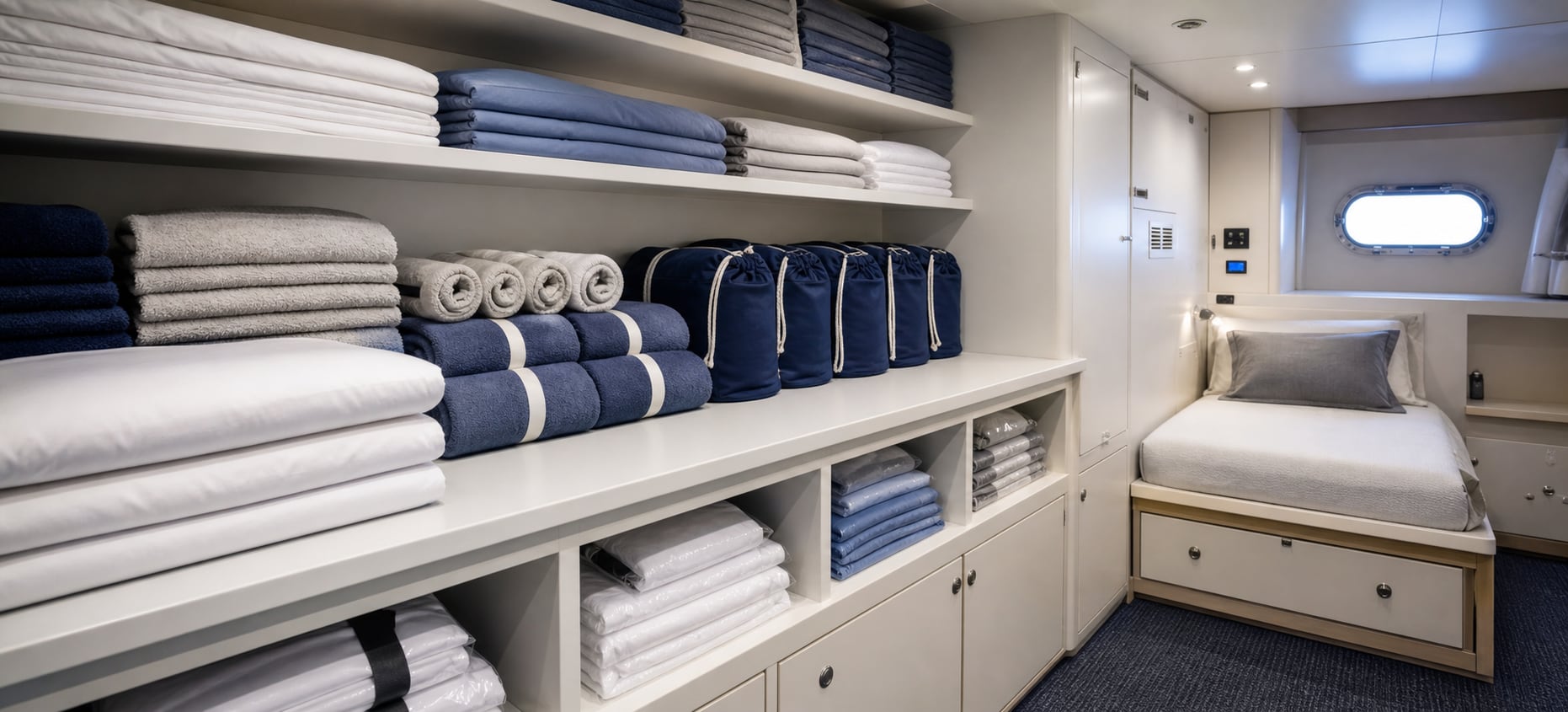


Hotel Bed Sheet Size Guide
Hotel sheet sizes should be derived from the measured bed build and housekeeping method, then confirmed after the intended laundry process.
Published by Gencer Textiles

A hotel bed sheet size should come from the measured mattress, topper and protector rather than from a name such as king, queen or double. The finished sheet must still fit after the agreed laundry process and allow housekeeping to make the bed using the property’s normal method. Bed labels are useful for grouping rooms, but measured width, length, depth and required tuck are the specification.
Begin with a room-by-room bed schedule. Hotels often discover that beds sharing a marketing name have different mattress depths, topper arrangements or joined configurations. Recording those differences before sampling prevents a nominal standard from becoming too tight on one room type and unnecessarily large on another.
Measure the complete bed build, not the bare mattress
Measure mattress width and length at several points because soft components and use can create small variations. Record depth with the protector and topper fitted, using the actual combination planned for service. If seasonal toppers or mattress pads are introduced, include their effect or identify them as a separate configuration. A fitted sheet sized only to the mattress carcass may fail once the protective layers are installed.
Note bed frames, platform recesses and clearance around the mattress. Housekeeping needs enough space to grip and tuck the sheet without excessive lifting. For zip-linked or split beds, record both the joined and separated arrangements, including any bridging layer. Photograph the measurement points and assign each configuration a stable room or bed code.
| Measurement | How to record it | Why it changes the sheet |
|---|---|---|
| Width and length | Measured on the dressed, uncompressed bed | Sets the central panel and usable coverage |
| Working depth | Mattress plus protector and topper | Determines pocket or tuck requirement |
| Frame clearance | Space available around and below the mattress | Affects how much material staff can handle |
| Bed configuration | Single, joined, split or convertible | May require distinct sizes or identification |
| Housekeeping method | Approved corners, tuck and presentation | Turns dimensions into an operating fit |
Size flat sheets around the approved tuck and fold
For a flat bottom sheet, add the material needed to travel across the mattress, down both sides and under the bed by the amount housekeeping requires. Do the same along the length, accounting for the head and foot treatment. The property should define whether the head is tucked, folded or left with a particular allowance. A formula is useful only after those decisions are explicit.
A top sheet may need a different size from the bottom sheet. It can be turned over at the head, tucked at the foot or left untucked according to the bed design. Consider duvet width, desired reveal and the guest’s usable coverage. Do not assume that one flat-sheet dimension can perform every role merely because procurement wants fewer references. Test whether standardisation improves or obstructs the actual bed.
A worked method without a universal size
Suppose a measured bed has width W, working depth D and desired under-mattress tuck T on each side. A starting width is W + 2D + 2T. For length, begin with mattress length L, then add the depth and tuck required at each treated end. If the head is not tucked, its allowance will differ from the foot. These are project variables, not recommended centimetres; substitute measurements from the room and confirm the processed sample.
Define the fitted-sheet pocket and elastic as part of the size
A fitted sheet specification needs more than top-panel width and length. Record finished pocket depth, corner construction, elastic position, elastic extent and the amount intended to remain beneath the mattress. Full-perimeter elastic and elasticated corners can handle differently during installation, removal and folding. The preferred system should be tested by the people who make the beds.
An excessively shallow pocket can ride up or strain seams. An unnecessarily deep pocket may leave loose material that slows smoothing or creates a poor surface. The answer changes with mattress firmness, frame access and turnover pace. Measure elastic recovery after the agreed cycles and define a functional acceptance check rather than relying only on an unstretched dimension.
Separate manufacturing dimensions from finished acceptance
Fabric may change during production wet processing and later laundering. The amount depends on fibre, yarn, weave, finish and care, so a universal shrinkage allowance is not credible. Ask whether a quotation states cut size, manufactured size, pre-wash size or expected finished size. The hotel’s specification should identify the stage at which acceptance is measured.
Agree a method: how the sample is conditioned, where it is measured, how many cycles are used and which process settings are recorded. Measure several pieces, not only one. A supplier can build production allowance into the article, but the hotel should approve the finished result on the bed rather than a hidden calculation it cannot verify.
The commercial-laundry suitability guide explains how to document that process. For the wider construction decision, use how to choose hotel sheets.
Set tolerances that protect fit without false precision
Textile dimensions require a tolerance because production and conditioning create variation. The tolerance should be proposed and confirmed for the specific construction, measurement method and operational need. A value acceptable for a generously tucked flat sheet may not suit a closely fitted elasticated sheet. Define which dimension is critical and what happens when a sample approaches the limit.
Review tolerances in both directions. A smaller result may reduce tuck or strain corners; a larger result may increase folds, handling and inconsistency. Use several finished pieces to see the distribution. Do not write a tight number simply to make the document look precise if the manufacturing and measurement system cannot support it.
Reduce size variants only after testing standardisation
Fewer sizes simplify ordering, labels, storage and laundry sorting. That benefit is real when one processed size fits several room groups without extra work. It is not real when attendants must improvise, double-fold or stretch the same item differently across beds. Compare the time, appearance and error rate before combining references.
A property with several mattress depths may standardise flat sheets while retaining multiple fitted-sheet pockets. Another may use one fitted construction across most rooms but keep a separate size for sofa beds or split configurations. The room schedule should explain each exception so that it remains visible during replenishment.
Label and record every approved size
The label should allow staff to identify the intended configuration after repeated care. Use stable internal codes, not only bed names. Record composition, weave, colour, finished dimensions, tolerance, pocket, elastic, hem, laundry route and approved sample date in the product file. Align the code across purchasing, laundry, linen-room shelves and replacement reports.
Keep a processed reference sample as well as the measurement sheet. When a new delivery arrives, select pieces from more than one package, process a small group and compare fit before mixing them with existing stock. The same nominal dimensions on an invoice do not prove that the finished result is unchanged.
Approve the size on several representative beds
- Measure the complete dressed mattress in each distinct room configuration.
- Record the housekeeping tuck, fold and presentation method.
- Calculate separate requirements for flat bottom sheets, top sheets and fitted sheets.
- Process multiple labelled samples through the intended laundry route.
- Measure after care and test the smallest, deepest and convertible bed configurations.
- Confirm tolerance, elastic behaviour, labels, fold size and storage.
- Retain the approved processed sample and update the room schedule before ordering.
A useful hotel sheet size guide is therefore a measurement and approval process, not a table of universal bed names. Once the hotel has documented its actual configurations, the resulting brief can be used with the relevant bed-sheets product family to request samples and confirm which dimensions should be retained as standard or treated as exceptions.
Review the hotel bed-sheets product family and the wider Stay textile category with the completed bed schedule and finished-size requirements in hand.
Product catalogue
Request the Stay catalogue
Share your business email and, if useful, your company or property name. We will carry these details into the secure catalogue-request form with the relevant category already selected.
Journal
Continue reading
How to Choose Bed Sheets for a Hotel
A practical method for specifying hotel sheets around the room, the laundry process, housekeeping and repeat supply.
Read How to Choose Bed Sheets for a HotelWhat Makes Hotel Sheets Suitable for Commercial Laundry?
A process-based guide to testing sheets through sorting, washing, drying, flatwork finishing, folding and return to the room.
Read What Makes Hotel Sheets Suitable for Commercial Laundry?Custom Sizing: What Should Be Measured on Site?
A practical field checklist for recording objects, clearances, use conditions, storage, and reference information.
Read Custom Sizing: What Should Be Measured on Site?