










How Many Pillows Should Be Placed on a Hotel Bed?
Count pillows by the room’s normal sleeping capacity, not by mattress width or decorative style. Each pillow should be usable, easy to identify and supported by the hotel’s cleaning and replacement plan.
Published by Gencer Textiles
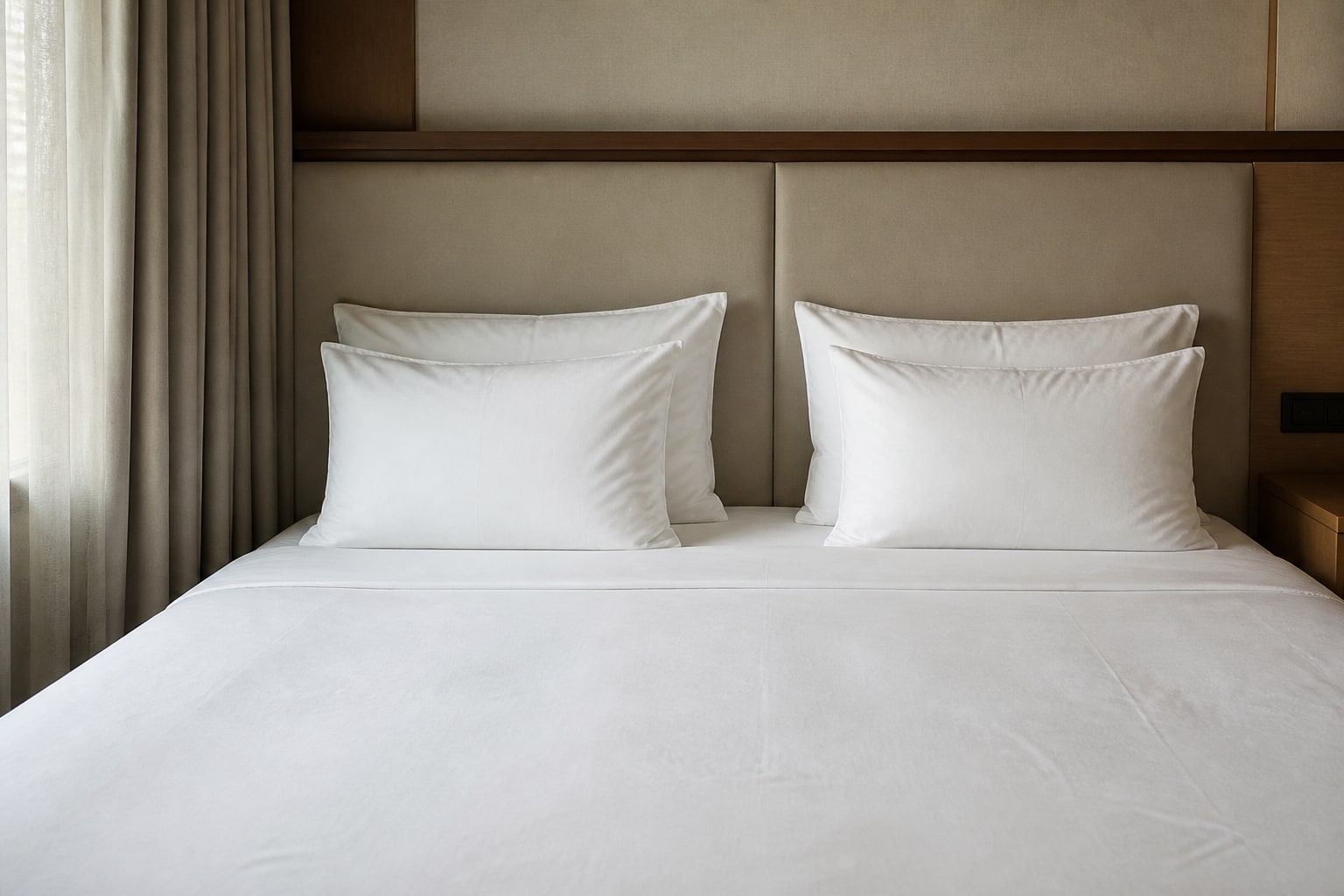
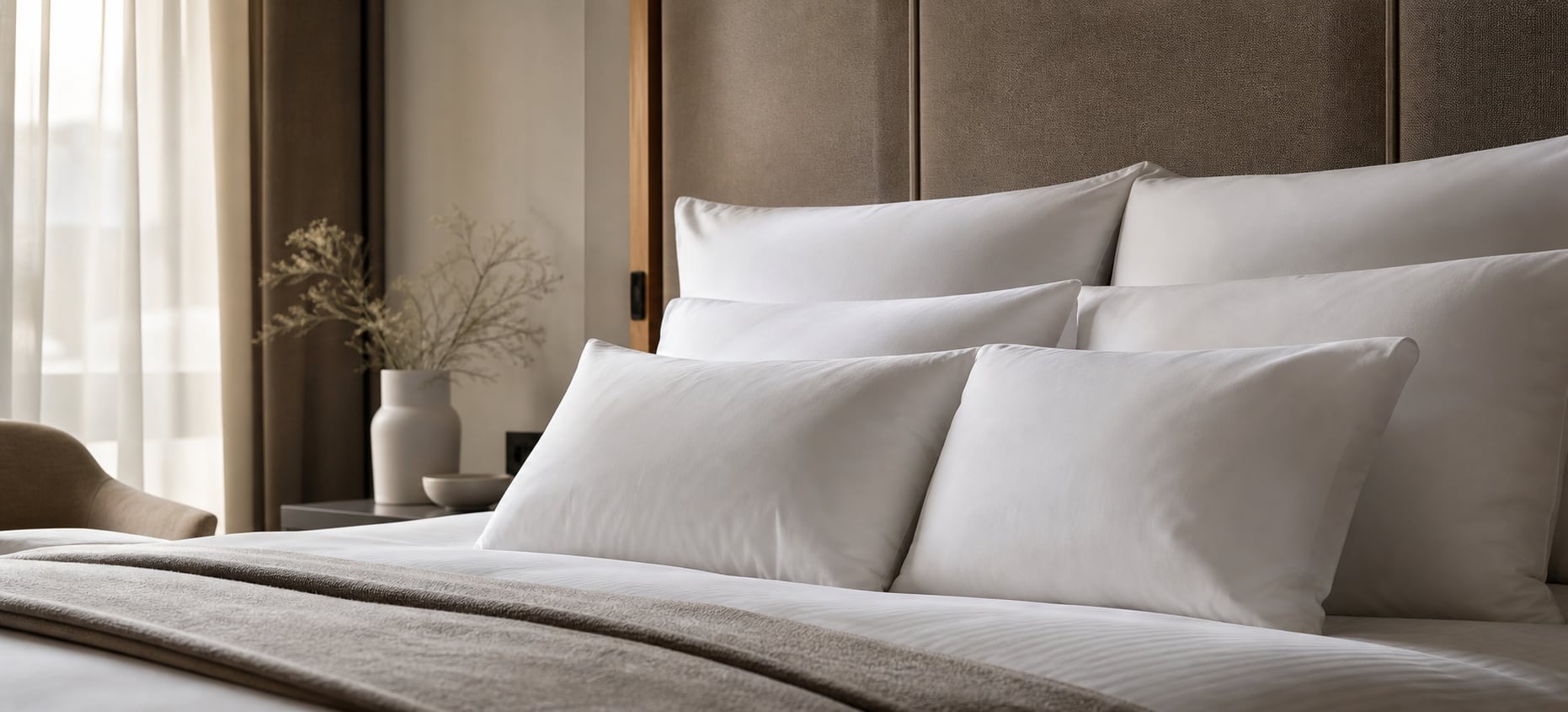
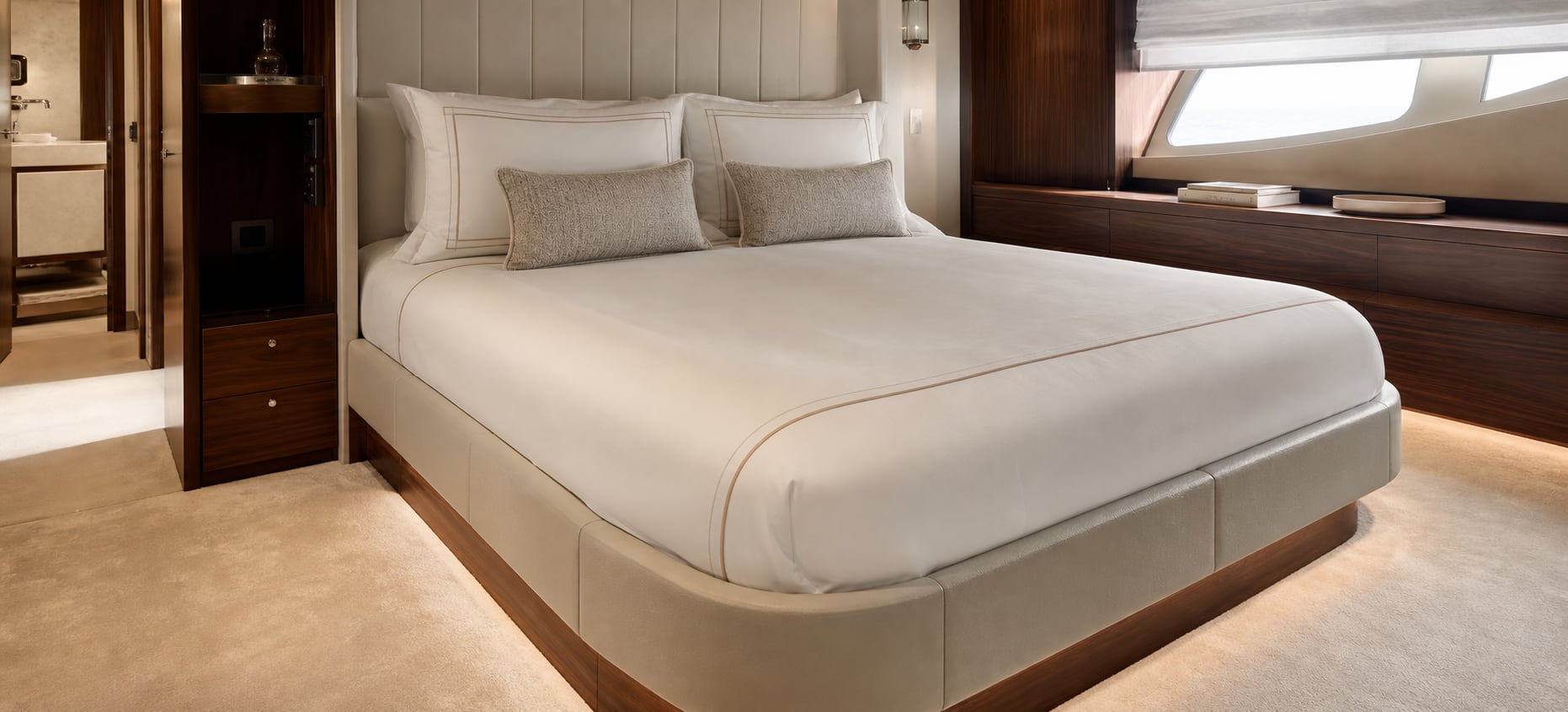
Two usable sleeping pillows for each normal sleeping place are a practical default for most hotels. That means four pillows on a double, queen or king bed intended for two people, and two pillows on each single bed in a twin room. Each guest can sleep on one pillow and use the second to change the height, sit up in bed or choose a different feel.
This is a service recommendation, not a universal legal rule. A local hotel classification, brand standard or operating model may require something different. One pillow per person can work in a compact limited-service room when the applicable rules allow it and an extra is easy to obtain, but it gives the guest no choice without making a request.
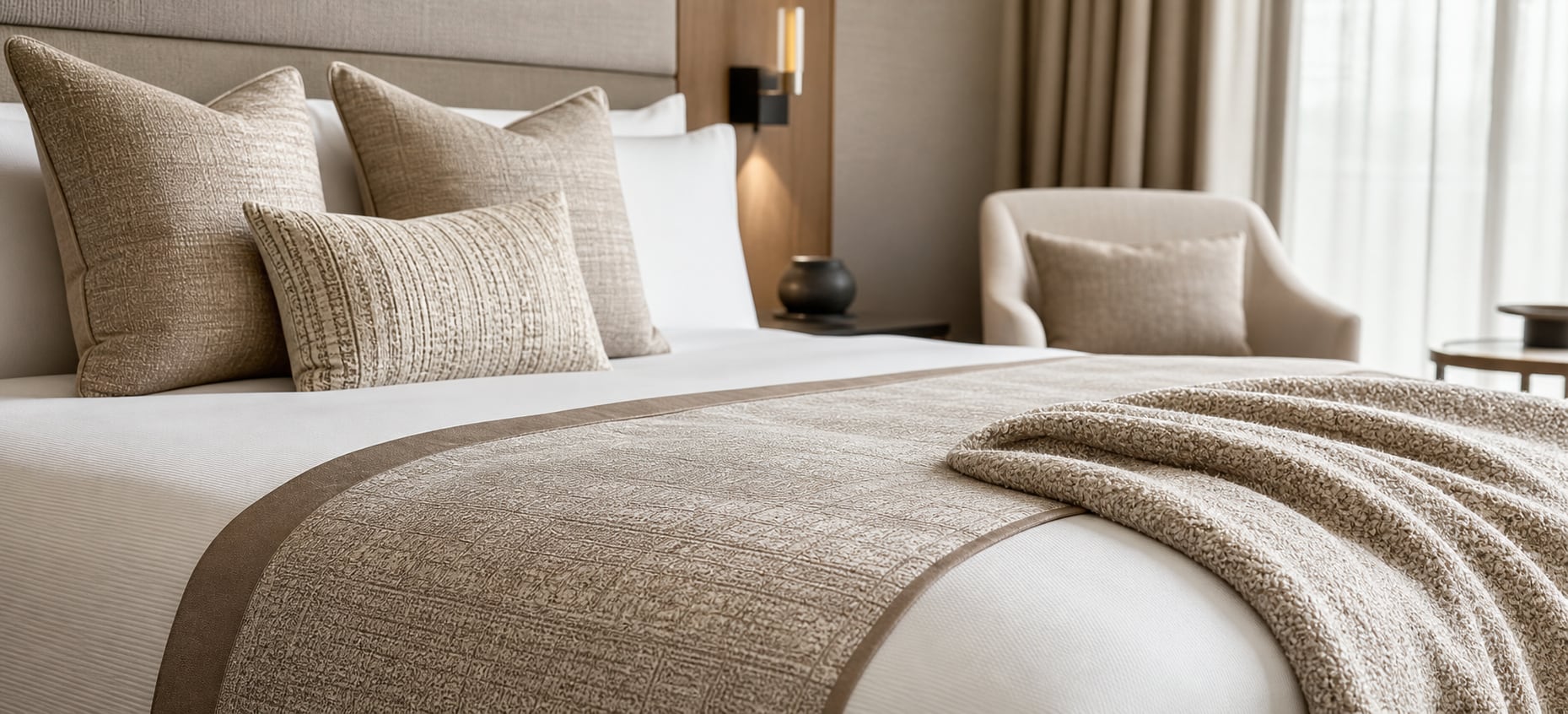
Decorative cushions do not count toward this number. The useful count covers full sleeping pillows with the approved protector and pillowcase. Once that distinction is clear, the room can look complete without filling the bed with items guests have to move before they can lie down.
Use two sleeping pillows per person as the default
Two pillows give a guest more than a fuller-looking bed. Someone who sleeps on one pillow can set the other aside. Another guest can stack both for reading, place one behind the back or choose the softer of the pair. The second pillow therefore has a clear use even when it is not under the head all night.
More is not automatically better. Six or eight sleeping pillows on a double bed can crowd the mattress and leave no obvious place to put the extras. They also increase the number of pillows in protectors and cases that housekeeping must inspect, arrange and replace. Add pillows only when they provide a deliberate choice or satisfy a room standard, not simply to make the bed look fuller.
Count sleeping places, not the mattress name
Base the standard on the room’s normal sleeping capacity. A wide mattress does not automatically need more pillows, and the pillow count should not change every time a double room is booked by one person. A stable room standard is easier for guests to understand, easier for housekeeping to reproduce and consistent with the room photographs used at booking.
| Room or bed layout | Normal sleeping places | Pillows placed in the room |
|---|---|---|
| Single room with one bed | One | Two on the bed |
| Twin room with two single beds | Two | Two per bed, four in total |
| Double, queen or king bed | Two | Two per side, four in total |
| Permanent family or triple layout | Count each normal sleeping place | Two per sleeping place |
| Rollaway or sofa bed | Only when prepared for use | Add the approved pair when the bed is made |
A sofa bed or rollaway does not need to display pillows while it is closed or stored. The pair should enter the room when that sleeping place is prepared, protected and dressed. This keeps the visible count connected to beds that are actually ready for a guest.
Make the two pillows useful
Two identical medium pillows still let a guest stack or separate them. If the hotel can manage two genuinely different options, one softer and one firmer pillow per person offer a clearer choice. The difference should be easy to feel on the actual mattress and easy for staff to identify after the pillowcases are removed.
Use the guide to soft, medium and firm hotel pillows to decide whether the pair should be identical or deliberately different. A discreet internal label, coloured stock mark or separate product reference can identify the options without adding visible branding to the bed.
Different feel does not necessarily require a different filling. The comparison of feather, down, microfibre and hollowfibre hotel pillows explains why construction and fill quantity matter alongside the material name.
Do not count decorative cushions as sleeping pillows
A decorative cushion may support the visual design of the room, but it is not a substitute for a protected sleeping pillow. Guests should not have to guess which items are intended for sleep. The room standard, inventory and housekeeping instructions should record decorative cushions separately from sleeping pillows.
Use decorative pieces only when they earn their place. Their covers need a defined cleaning route, the insert needs appropriate care and the finished bed should still leave space for the guest. If a cushion is regularly put on the floor at bedtime, difficult to clean or time-consuming to position, a simpler bed is usually the more practical choice.
This separation also prevents false stock calculations. Four sleeping pillows and two decorative cushions do not create six pillowcase positions. Only the sleeping pillows use the approved bed pillowcase unless the decorative cover is intentionally part of the same specification.
Keep extra pillows available without crowding the bed
A hotel can offer more choice without placing every pillow on the mattress. An additional soft, firm or non-feather option can be available on request. Some rooms may also hold a protected spare in a clean storage location when the hotel can keep it dry, identifiable and ready for use.
The extra-pillow service must be real. Guests should know that it exists, and staff should be able to find the correct pillow without pressing several unlabelled inserts and guessing. If delivery is slow or uncertain, placing the most commonly requested alternative in the room may be better than promising a wider menu.
Check the arrangement in the room
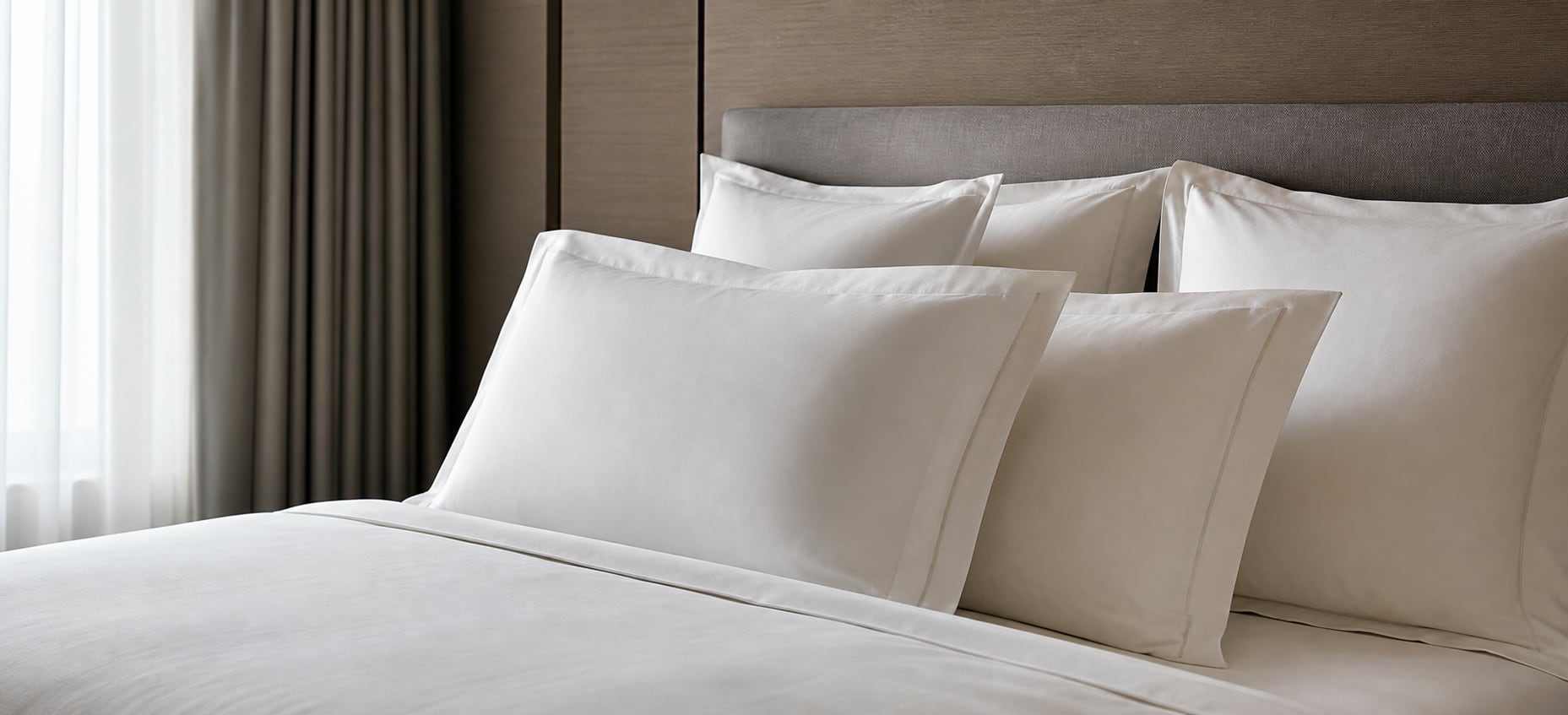
Place the exact pillows on each real bed with their protectors and pillowcases. Four standard pillows may sit comfortably in two rows on one double bed but overlap awkwardly on another because the pillow size, headboard and mattress width differ. King-size pillows can cover more of the bed with fewer visible units. Judge the finished combination rather than copying a photograph from another room.
Ask housekeeping to make the single, twin and double arrangements at normal room speed. Check that each side is easy to read, that twin beds remain consistent and that a soft and firm pair cannot be confused. The best-looking arrangement is not useful if it needs repeated correction or hides which pillow the guest has chosen.
Once the visible room standard is approved, use the hotel pillowcase quantity guide to calculate the cases needed through use, laundry turnaround and reserve. The number on the bed is only the starting point for total stock.
For most room schedules, the practical answer is two usable pillows for every normal sleeping place, with extras available only where they add a clear option. Record the count, size, pillow references, position and case used for each room type, then keep the same standard in room setup, photography and replenishment.
The Gencer hotel pillow collection provides a practical starting point for comparing the sizes and support options that will make up that room standard.
Product catalogue
Request the Stay catalogue
Share your business email and, if useful, your company or property name. We will carry these details into the secure catalogue-request form with the relevant category already selected.
Journal
Continue reading
How to Choose Pillows for Hotel Guest Rooms
A hotel pillow should be chosen as the guest experiences it: under weight, inside its protector and case, and after a full night in the room.
Read How to Choose Pillows for Hotel Guest RoomsSoft, Medium or Firm: Which Pillows Should Hotels Offer?
Use medium support when one pillow must cover most guests. If you can offer two choices, make them clearly soft and firm rather than barely different versions of medium.
Read Soft, Medium or Firm: Which Pillows Should Hotels Offer?Feather, Down, Microfibre or Hollowfibre Hotel Pillows
A good synthetic pillow is usually the practical default for standard rooms. Feather and down are useful when the hotel wants a softer, more mouldable alternative and can support its care and sourcing.
Read Feather, Down, Microfibre or Hollowfibre Hotel Pillows