




























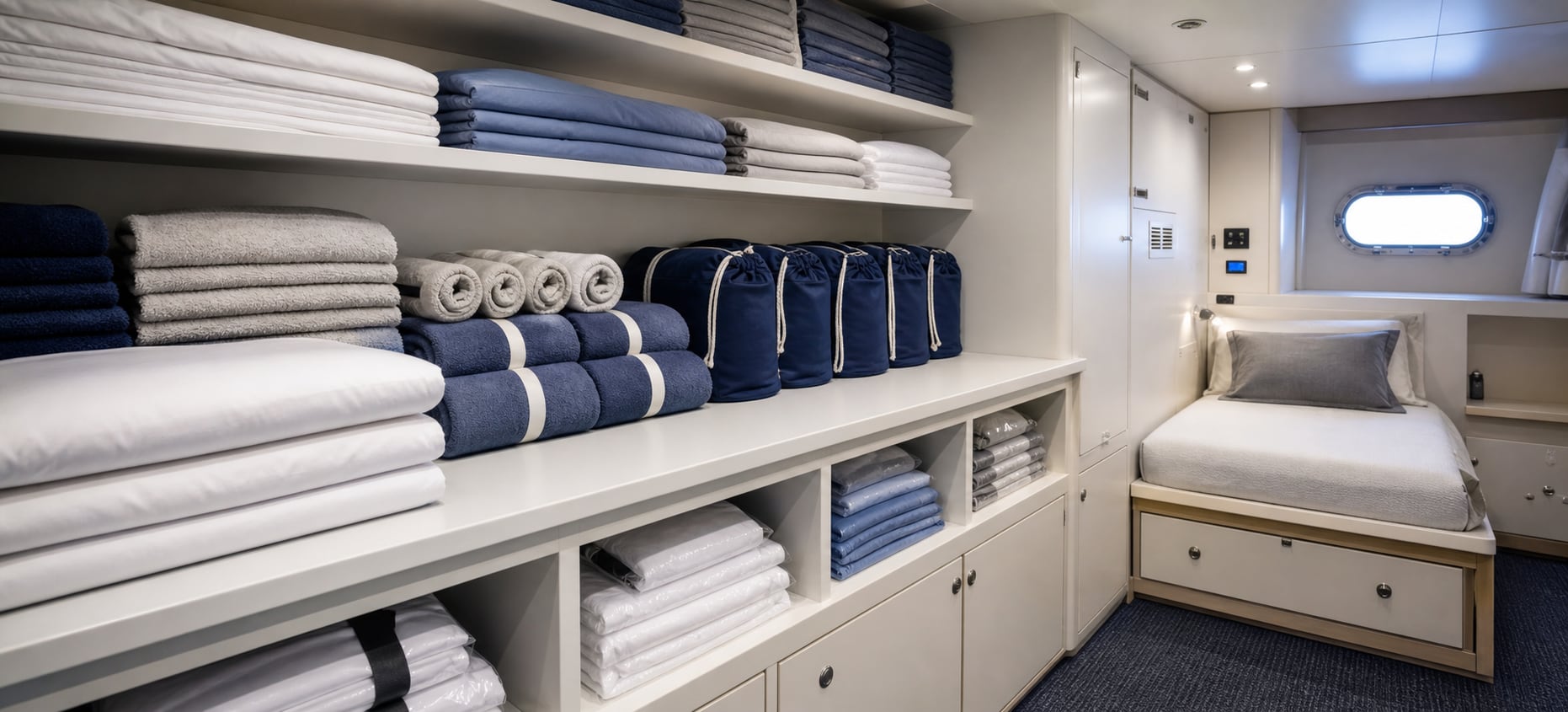


How to Compare Hotel Bed Sheet Specifications
Hotel sheet specifications should be compared line by line and then verified through processed samples; matching one headline number does not make two offers equivalent.
Published by Gencer Textiles

Compare hotel bed sheet specifications by aligning composition, yarn, weave, fabric weight, thread-count method, finish, finished dimensions, tolerances, seams, hems, elastic, labels and care requirements. Then test the proposed products through the same representative process. Two quotations are not equivalent merely because both say cotton, percale or 300 thread count.
Build the comparison around the hotel’s approved room and operating brief. If the brief is vague, suppliers will solve different problems and the spreadsheet will create false precision. State bed configuration, desired hand, colour, use, laundry route, housekeeping method and acceptance tests before asking for a final comparison.
Normalise the language in every quotation
Suppliers may use different units, stages and terminology. Convert measurements to one unit, identify whether weight refers to unfinished or finished fabric, and confirm whether dimensions are before or after care. Expand general descriptions such as “hotel quality” into observable data. Keep the original statement alongside the normalised field so the source is traceable.
Mark missing information rather than estimating it. An empty field is a procurement question; a guessed value becomes a hidden assumption. Ask for the revision in writing and date the specification. If a supplier cannot provide a construction detail, record that limitation and decide whether the sample evidence is sufficient for the project’s risk.
| Comparison field | Question to ask | Evidence to retain |
|---|---|---|
| Composition | Exact percentages and fibre arrangement? | Product declaration and sample code |
| Yarn | Title, ply, spinning or relevant description? | Technical sheet where available |
| Weave and density | Which armature and counting method? | Warp/filling data and unit |
| Weight and finish | At what production stage are they stated? | Finished sample and declared basis |
| Dimensions | Nominal or finished, with what tolerance? | Measurement method and processed results |
| Make-up | Hem, seam, corner, elastic and label details? | Construction drawing or approved piece |
| Care and testing | Which process and acceptance criteria? | Trial record and responsible sign-off |
Compare composition without making it a quality grade
Fibre percentages influence moisture, hand, crease and drying behaviour, but they do not describe yarn quality, weave or finish. A cotton sheet and a polycotton sheet may address different operating priorities. If the hotel permits both, compare them as complete alternatives and state which trade-offs the sample confirms.
Names such as long-staple, Egyptian or Turkish cotton require evidence and still do not guarantee the finished product. Avoid translating origin or fibre claims directly into service-life scores. The hotel needs a traceable declaration and a processed result that meets its brief.
The cotton versus polycotton comparison provides the operational questions needed when composition differs.
Read thread count with yarn, weave and weight
Thread count describes yarn density under a stated method. It should be supported by the unit, warp and filling breakdown, yarn title or size and ply. Plied yarns should not be multiplied into an inflated count. Compare the number only when the method and construction are sufficiently aligned.
A high count may come with fine yarns, multiple filling insertion or a dense structure. Weight and cover help interpret it. Percale and sateen use different interlacing, so equal counts do not create equal surfaces. The processed sample determines hand, drape, opacity and finishing behaviour.
Use the detailed guides to hotel sheet thread count and percale versus sateen when quotations use those terms as headline differentiators.
Make finished size and tolerance critical comparison lines
Measure the complete bed and state the accepted result after the agreed care process. A larger pre-wash dimension is not necessarily more generous if it changes differently in processing. Ask each supplier to identify manufacturing allowance and the measurement stage without assuming one universal shrinkage percentage.
For fitted sheets, include top panel, pocket, elastic extent and functional fit. For flat sheets, include width, length, hem and required tuck. A quote that lists only a bed name cannot be compared confidently.
The hotel bed sheet size guide provides the measurement schedule and worked method.
Inspect make-up and identification details
Seams, hems, stitch density, sewing thread, corner construction, joins, elastic and labels can determine serviceability. Record permitted joins, label position and any discomfort or finishing concern. Compare actual construction, not a generic photograph that may not represent the quoted product.
Identification affects sorting and replenishment. Size, composition, care and product code should remain legible. If the hotel needs colour coding or tracking technology, confirm compatibility and placement on the sample. Include packaging and pack quantities only as logistics data, not textile performance.
Connect care information to the real laundry
Care labels and supplier guidance set boundaries, while the responsible laundry defines the working programme from soil, hygiene, equipment, chemistry and local rules. Compare whether each candidate can enter the established route or needs a dedicated sort. A separate programme may be acceptable, but its cost and complexity must be visible.
Request trial evidence that states process conditions. A claim of dimensional stability or stain performance without sample history, test method and acceptance criteria is not comparable. Supplier testing can support the decision; local validation remains important when equipment and process differ.
Use commercial comparison only after qualitative gates
First remove or clarify options that fail mandatory fit, care, documentation or room requirements. Then compare unit cost, processing work, stock complexity, rejection and replacement risk. A numerical score should not hide a failed mandatory requirement or pretend that uncertain evidence is exact.
Where costs cannot be measured reliably, describe the observed difference. “Required manual smoothing on most trial beds” is more useful than an invented labour percentage. Keep assumptions visible and use the same observation period for candidates.
Run a coded, like-for-like sample trial
- Assign neutral codes and retain unused controls from each candidate.
- Verify the delivered sample against its quoted construction and dimensions.
- Measure before processing with one method and record the lot.
- Use the same representative wash, dry, finish and conditioning route.
- Measure again and inspect surface, seams, hems, labels and colour.
- Make representative beds and collect separate room, housekeeping and laundry notes.
- Repeat cycles according to project risk and record exceptions.
- Approve the final dated specification and physical processed sample.
If candidates cannot be made like-for-like, state the differences and judge each complete proposition against the brief. Do not attribute a result to thread count, composition or weave when several variables changed. A transparent limitation is more useful than a neat conclusion unsupported by the trial design.
Create a specification that survives reordering
Add revision control. Every clarification, approved tolerance, sample change or process exception should update the dated specification and identify who accepted it. Retire obsolete versions from active purchasing folders without deleting the audit trail. Otherwise a repeat order may use an early quotation while the linen room and laundry operate to a later approval.
Plan incoming inspection before the purchase order is placed. Define sample size, measurement points, conditioning, visual checks and the response to a nonconforming lot. Check several packages and process representative pieces before general release. Incoming inspection does not replace supplier quality control; it confirms that the delivered article corresponds to the hotel’s approved reference under the hotel’s relevant process.
- Use one unit and terminology set across all quotations.
- Identify missing, assumed and supplier-confirmed information separately.
- Record fibre, yarn, weave, weight, density method and finish.
- State finished dimensions, tolerances and make-up details.
- Attach care boundaries and the approved local process reference.
- Link every result to a sample code, lot and test date.
- Retain the approved processed sample for incoming and repeat-order checks.
The best comparison is not the longest spreadsheet. It is a traceable connection between the hotel’s requirements, the supplier’s declared construction and the processed sample’s observed result. With that record, procurement can discuss the relevant bed-sheets family and price on a genuinely comparable basis.
Use the completed matrix when reviewing the hotel bed-sheets product family and related Stay textiles.
Product catalogue
Request the Stay catalogue
Share your business email and, if useful, your company or property name. We will carry these details into the secure catalogue-request form with the relevant category already selected.
Journal
Continue reading
How to Choose Bed Sheets for a Hotel
A practical method for specifying hotel sheets around the room, the laundry process, housekeeping and repeat supply.
Read How to Choose Bed Sheets for a HotelWhat Thread Count Is Best for Hotel Sheets?
Why thread count is a useful construction input but an unreliable quality ranking when considered alone.
Read What Thread Count Is Best for Hotel Sheets?Hotel Bed Sheet Size Guide
A measurement-led guide to flat sheets, fitted sheets, mattress depth, finished dimensions and room-type records.
Read Hotel Bed Sheet Size Guide